> >Paul,
> >
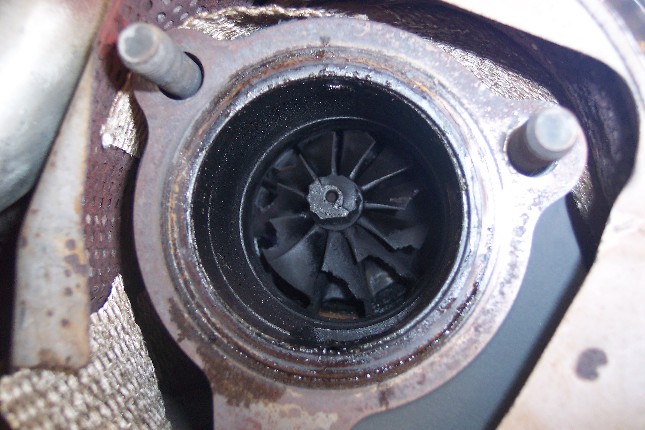
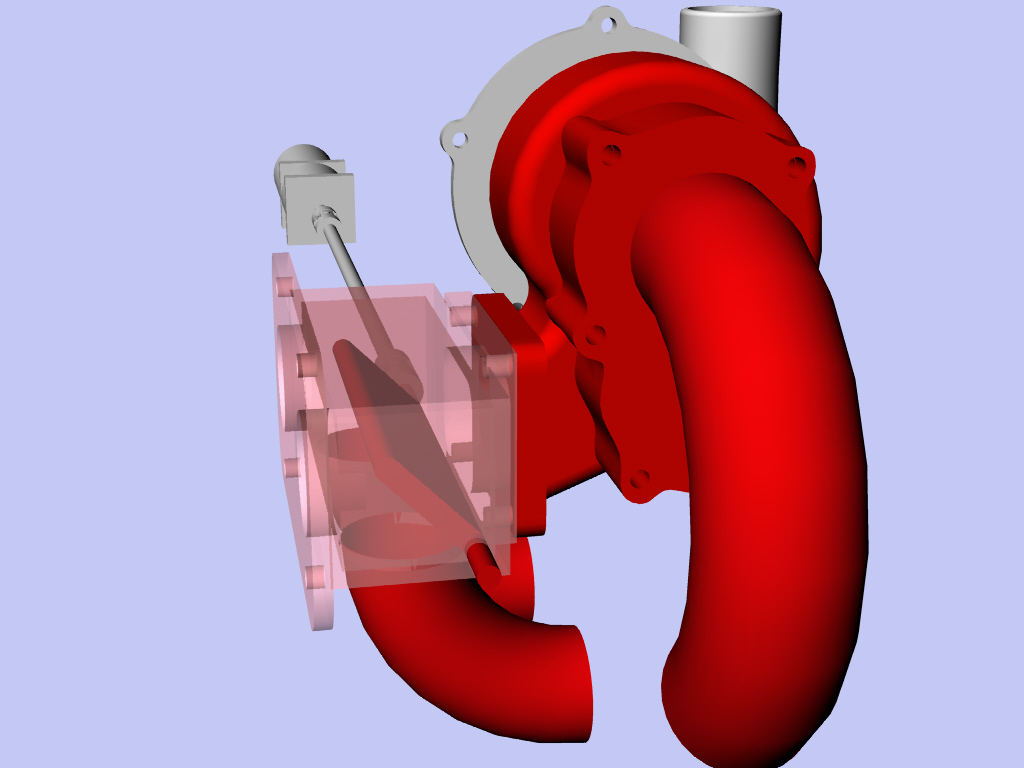
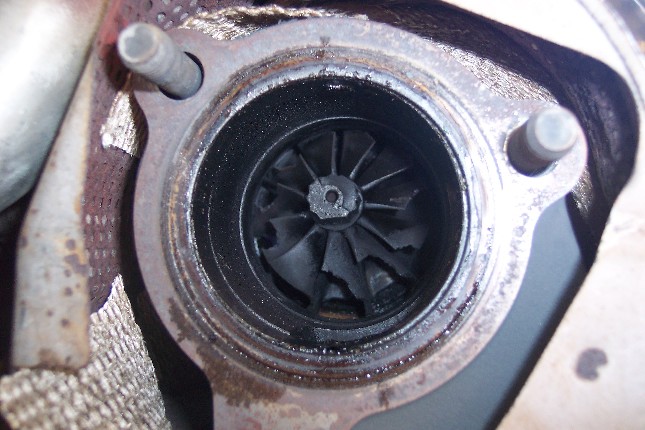
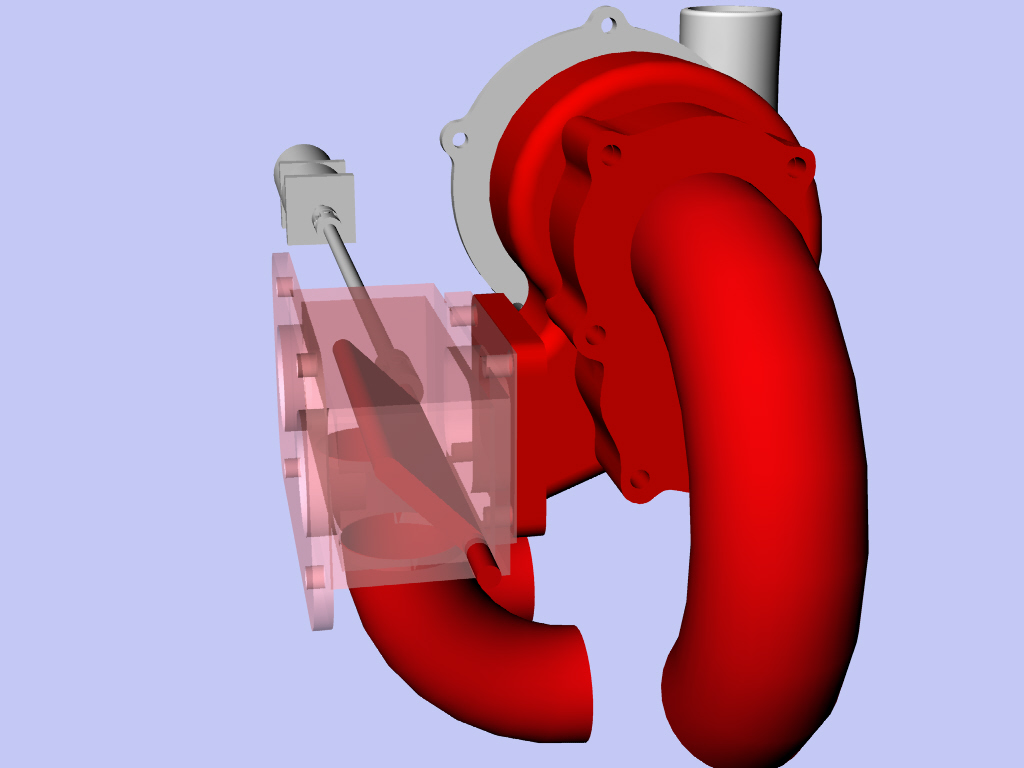
> >I believe this turbo, the Garrett GT-2860R with the 76 trim and optional
> >0.86 A/R housing might be just what we are looking for in our aviation
> >uses. I`m considering it as the turbine for the turbocompound test
> >engine use but perhaps it might be a good choice for Dave`s plane as
> >well.
> >The bigger A/R will slow the wheel down but provide more torque at
higher
> >rpms.
> >
> >The high content Ni body and Inconel turbine wheel will handle the heat
> >better than the standard IHI turbochargers from Mazda which are, lets
> >face it, 20 year old technology. The Garrett in addition has ball
> >bearings, is compact, has a built in waste gate and has both water and
> >oil cooled jackets. Whats not to love? Beside the price we will have
> >to drill the threads out of the holes. I don`t know if the lack of a
> >split turbine mouth will an issue I imagine it depends on the exhaust
> >manifold design.
> >
> >No info on weight unfortunately.
> >
>
>
http://www.turbobygarrett.com/turbobygarrett/catelog/Turbochargers/GT28/GT2860R_707160_5.htm
> >
> >Doug in Japan
>
> I'll study it Doug. And get back to everybody on it. .86 A/R is not
all that big.
> Could be bigger. I have seen them with over one. If it is a
automotive turbo
> there is excess HP built in to accelerate. We are going to need an
unusual
> combination. Might be OK for turbo compound as the engine will slow
the turbine.
>
-----------------------------------------------------------------------------
>
> A quick thought.
>
> Lets separate turbo compounding from turbo charger for the moment.
>
> For turbo charger the diverted valve manifold and turbo tach is the
way to go as
> you can use any turbo charger. You set a turbo RPM redline and the
diverter
> takes care of holding that. Manual or automatic. Boost is whatever
you get
> at that turbo RPM. If you are feeling rich you can up the turbo RPM
red line
> and risk a turbine failure.
>
> Apparently what we have gathered so far is there is so much kinetic
energy in the
> rotary exhaust it tends to ignore more or less built in waste gates.
>
> Got to run. Be back later today.
> --
> Paul Lamar ...No rotor no motor.
>
>
>
> Paul,
>
> Yes, in the GT 3482R series they come without a waste gate, and two
> options for the exhaust pipe mounting. Unfortunately they don`t mention
> a Inconel turbine as an option. This model is recommended for engine
> displacements from 2000 to 6000 cc. One option has an turbine A/R of
> 1.06. Turbine wheels are all 68.0mm dia. and 84 trim. I definitely
> agree with you that we need larger wastegates so that when flying we can
> isolate the turbine completely. Whether that mean enlarging the waste
> gate hole on the built-in models, making a complete prior by-pass system
> as you have shown or a combination of the two.
>
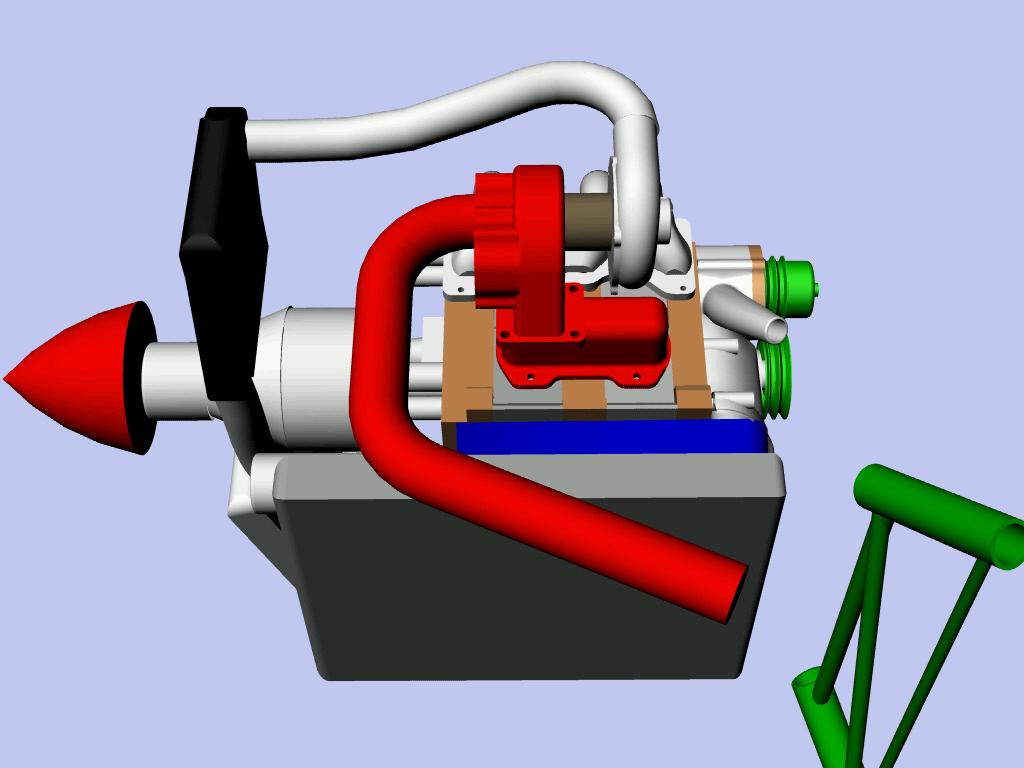
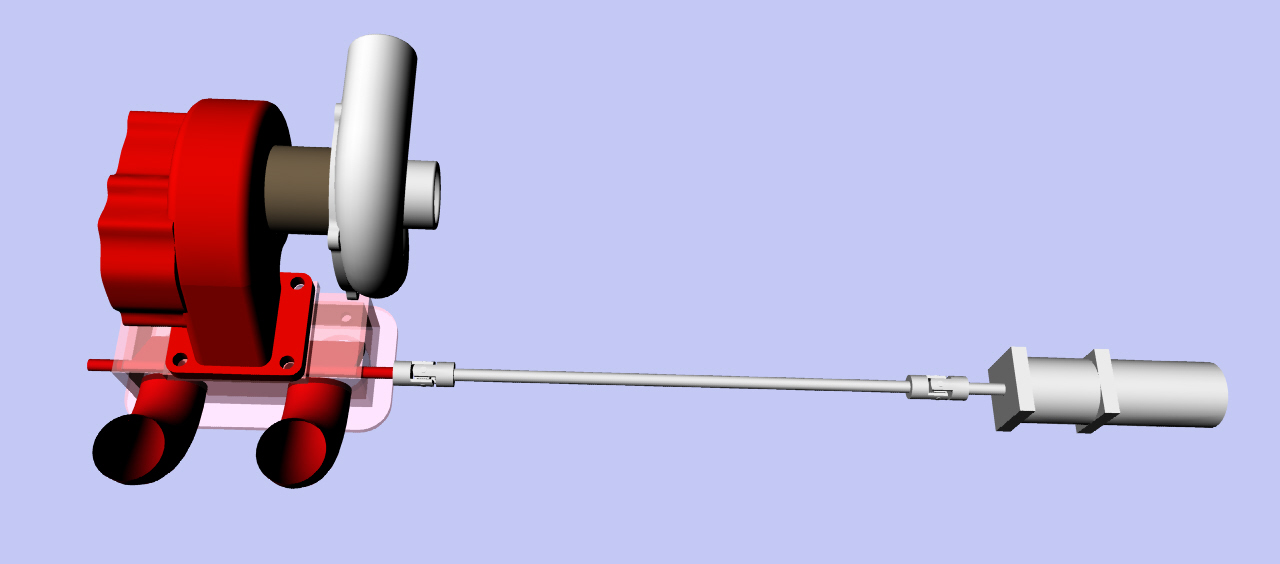
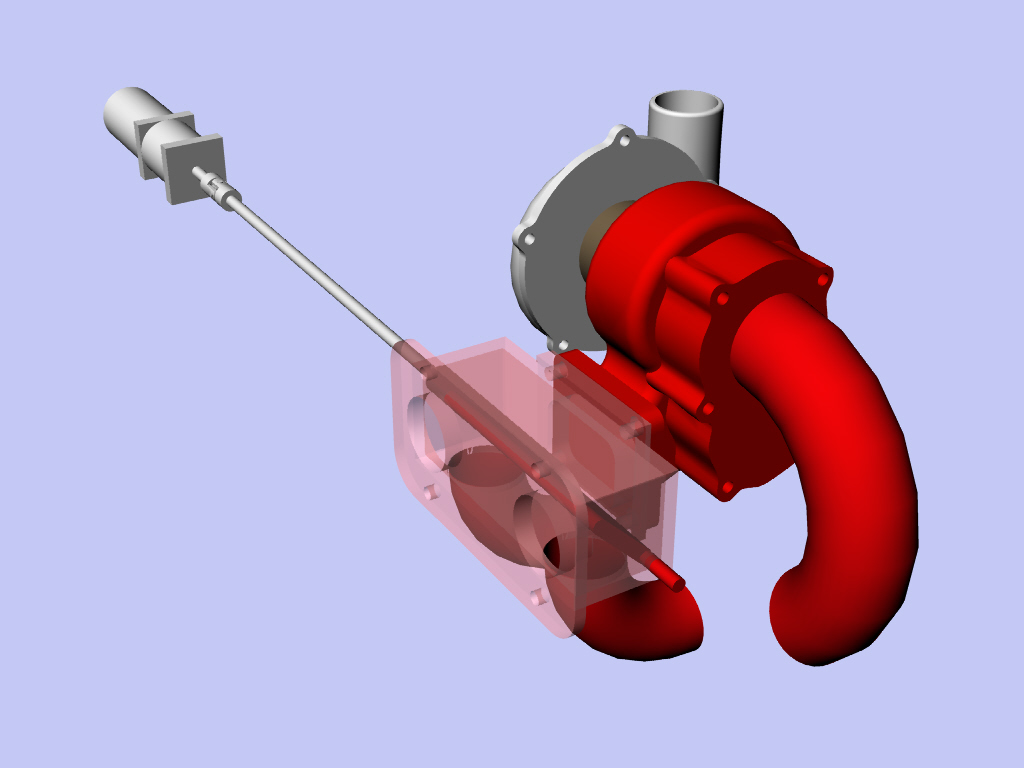
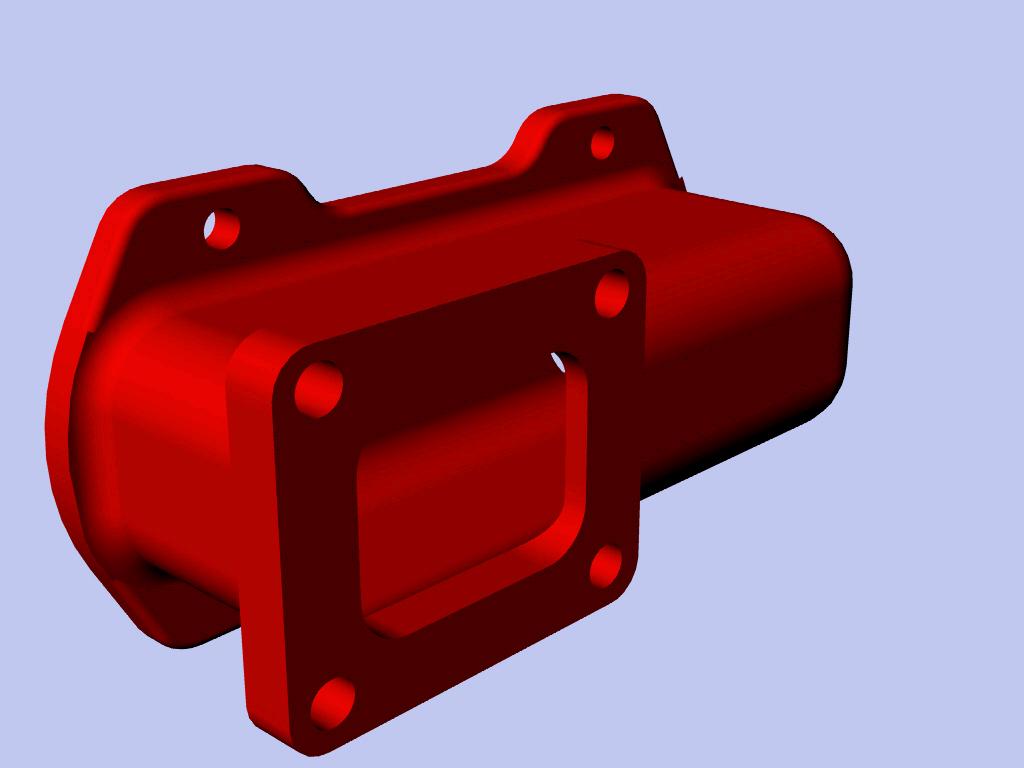
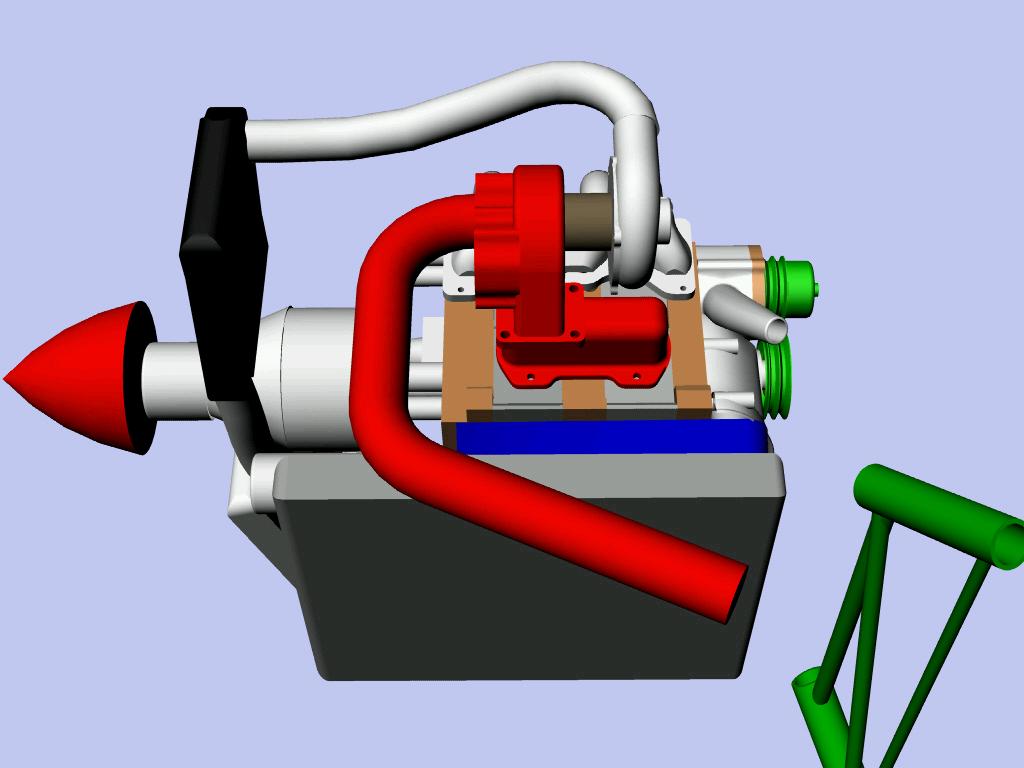
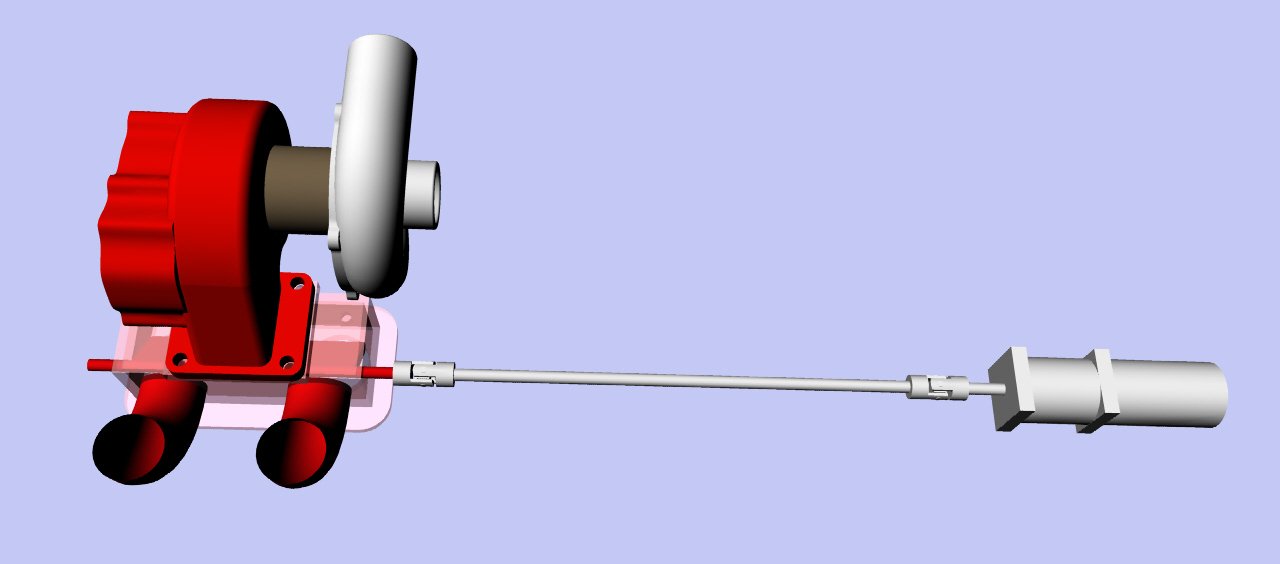
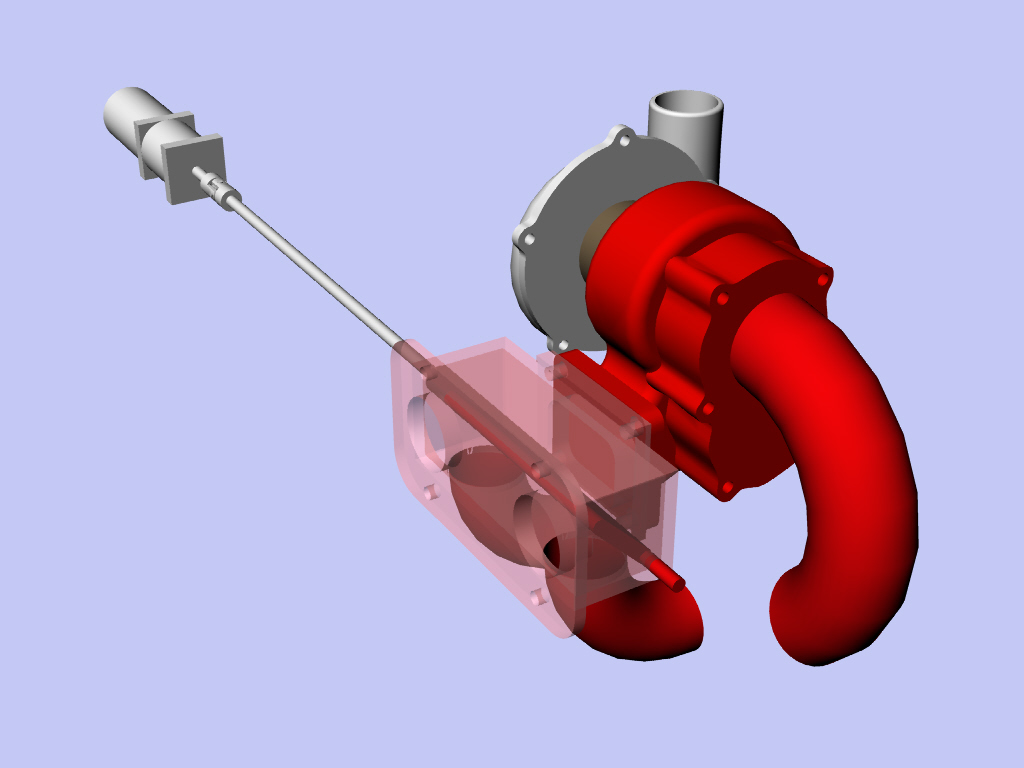
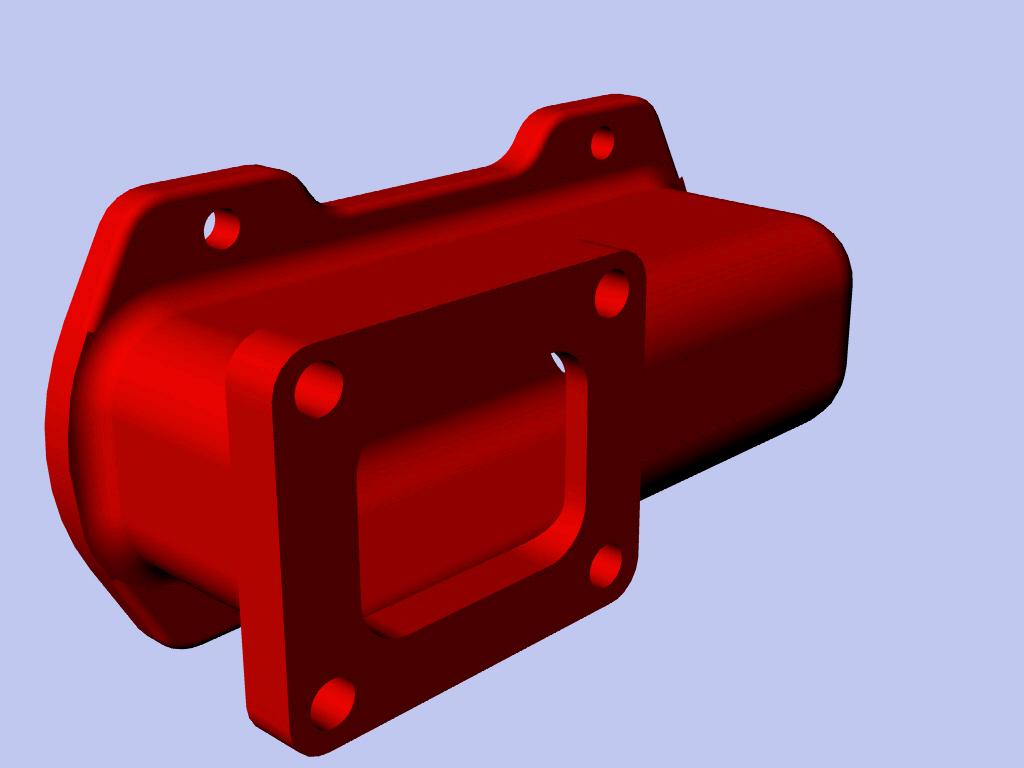
> BTW, I made a Rhino drawing of the spin muffler turbo mount system,
> saved it as JPEG file and now I can`t find it in the computer. Hmmmm?
>
> Doug in Japan
> Not a waste gate. A motor controlled diverter valve.
> Once you have that device you can experiment with turbo's until
> we find one that gives the most boost and still lives.
>
> Turbine 101.
> Peak turbine torque occurs at zero-RPM.
> Zero torque occurs at max no-load-RPM.
> Max HP occurs at .5 X max no-load-RPM.
> All RPM's are the turbine RPM. Not the engine RPM.
> Boost will be proportional to turbine HP.
>
> 1) Given a constant R or turbine diameter and a given
> exhaust gas flow volume.
>
> Larger A:
>
> Lower exhaust gas velocity.
>
> Lower peak torque.
>
> Lower max no-load-RPM.
>
> Lower max turbine HP.
>
> Lower back pressure on engine.
>
>
> 2) Given a constant A and variable turbine diameter and a given
> exhaust gas flow volume.
>
>
> Larger R:
>
> Same exhaust gas velocity.
>
> Higher peak torque due to longer moment arm.
>
> Lower max no-load-RPM due to longer moment arm and
> circumferential velocity being the same.
>
> The same max turbine HP ????. Higher torque lower RPM.
> (Better for our purposes?)
>
> Same back pressure on engine.
>
> The key to figuring out what is going on is turbine diameter
> >>>> AND <<<< A/R. These are the critical parameters as far as
> turbine HP is concerned.
>
> Next question? HP consumed (required) and boost as a function of
> compressor diameter and A/R.
>
> Paul Lamar ...No rotor no motor.
Doug in Japan wrote: "we need larger wastegates"
Paul Lamar wrote: ".86 A/R is not all that big. Could be bigger. I
have seen them with over one. If it is a automotive turbo
there is excess HP built in to accelerate" and "The key to figuring out
what is going on is turbine diameter
> >>>> AND <<<< A/R. These are the critical parameters as far as
turbine HP is concerned."
It sounds like both of you want to be able to vary the sizes of all the
components of the turboCHARGING (since this is the turbocharging
thread) system, to come up with the optimum combination for
turbocharging the engine.
We know that turbochargers are already built with variable
_vanes_, that
pass variable amounts of air to the turbine blades. Let's create what
Mr. Lamar suggests up in this thread: " . . . _variable turbine
diameter_ . . . " (Suggestion #2).
What do I mean?
I mean, why not make a turbocharger with varies
_everything_:
- the amount of exhaust that flows into the turbocharger
- the diameter of the turbine
- the size of the turbocharger
_housing_(if that is what you meant,
Paul, by "variable diameter")
- the size of the wastegate
so that all the variables can be tested together?
Now, if building this kind of turbocharger is too expensive, is there a
way we can do it digitally? Build in the computer a digital model of
the turbocharger, the turbines, the wastegate, and the airflows through
all of them, so that we can vary each component, or all of the
components together, until we arrive at an optimum solution?
Les Nordman :-)
The variable vane turbo chargers are ideal no doubt about it.
They are just not readable available. I could be wrong. I may be looking
in the wrong places.
If you are talking about a computer model I think that can be done with
a spreadsheet. Spread sheets have been done on turbo chargers but not integrated
with variable A/R and all the other parameters in the engine turbo charger system.
I just don't have time to work on it yet.
My immediate focus is talking Dave Leonard into a turbo tach so we have
some hard and fast data to work with.
Also into building a diverter valve/manifold so we don't lose another
turbocharger. Probably cheaper than an HKS manifold if it can be found
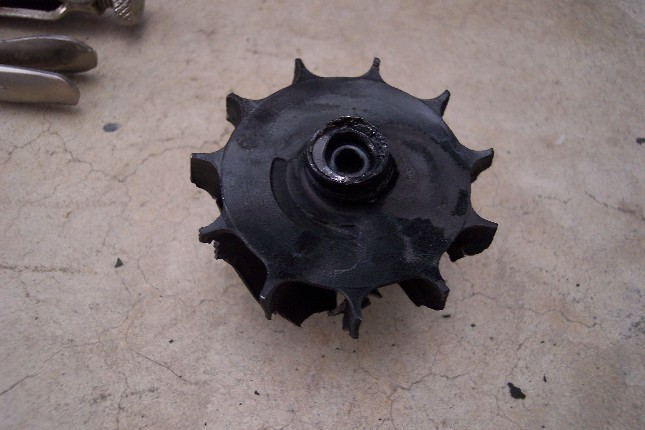
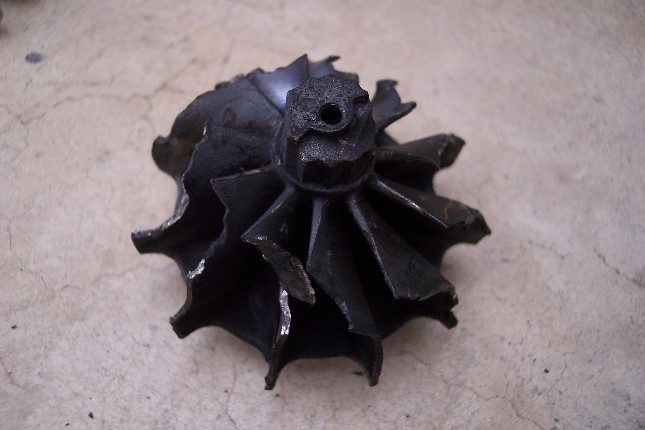
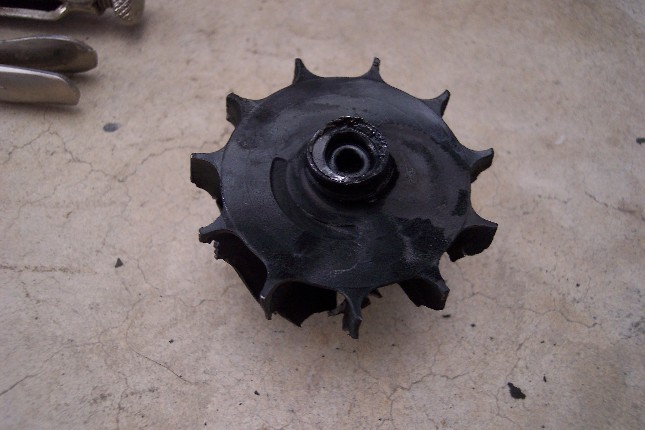
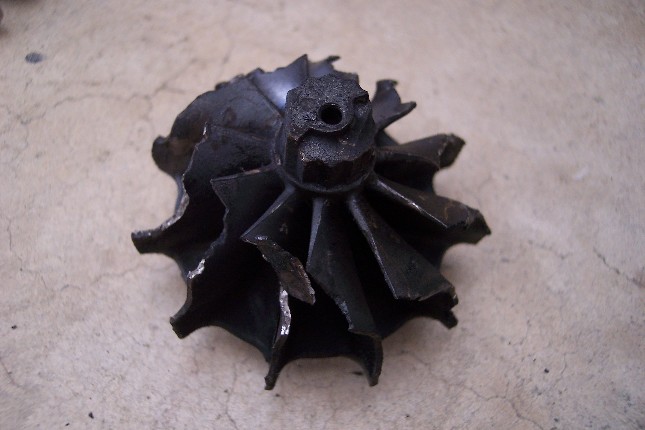
at all. I have a couple of turbo charger lying around I could loan
Dave if he had such a manifold and tach. One of which is a TO4 I bought
from Dave. I just don't want to destroy them for no purpose.
BTW I forgot to add a statement to Turbine 101.
Relative gas velocity to blade speed is zero at max no-load-
turbine-RPM. In other words the blade tangential speed and
the exhaust gas velocity are the same.
Paul Lamar
The Rotary Engine NewsLetter. Powered by Linux.
ACRE NL web site.
http://www.rotaryeng.net
Youtube key word UTUBPLEASE
Copyright 1998-2008 All world wide rights reserved.