Paul, the following statement was posted on the Tailwind discussion
group. Do you think it is true and how would you explain such
performance? Jerry
Just found this: lsecorp.com, then click on news on left side. Klaus
Savier flew the Vari-eze nonstop from Santa Paula, CA to Panama City,
FL, 1985 statute miles in 8 hrs 58 min on 25.8 gallons. Slightly under
80 miles per gallon.
Its true. Klaus had a strong tail wind. As I recall he also had oxygen :)
He leans his engine severely and advances the ignition. He also uses
a high energy multi-spark capacitor discharge ignition system to
fire the lean mixture. Another factor is the aircraft is highly
refined aerodynamically. Yet another factor is he uses solid state fuel
injection but it is not computer controlled. Cheap analog circuits (cost $1 each)
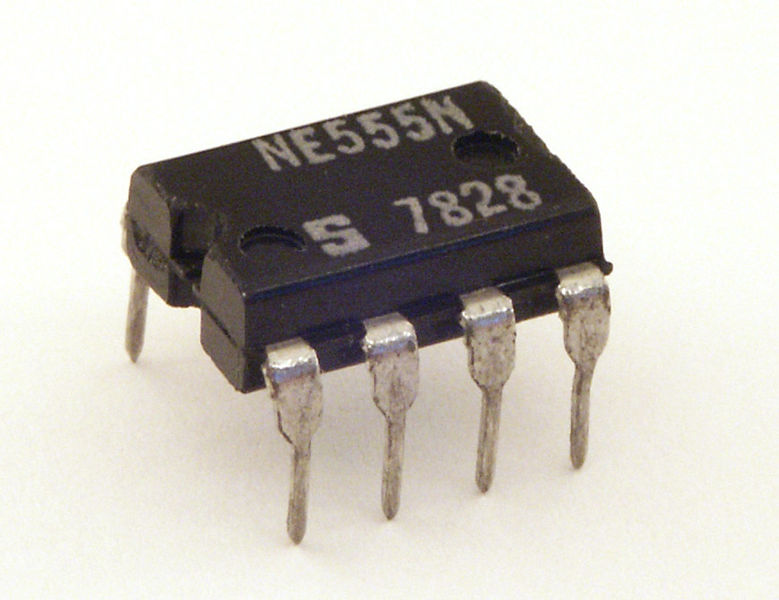
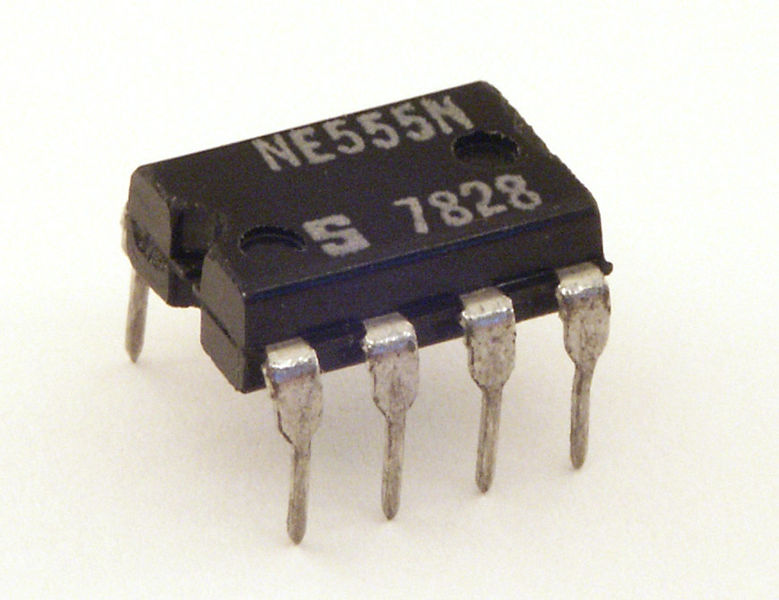
called 555's or something similar are used to change the pulse width
on the electric injectors. Each cylinder gets the same amount of fuel. He may be
able to adjust the fuel on each cylinder individually according to the EGT. You have
plenty of time up there to diddle around.
Paul Lamar ...No rotor no motor.
Paul,
How do the chips know how much fuel to deliver does it work on RPM or throttle position or something like that?
George ( down under)
I am not exactly sure about all the details but with a fixed pitch prop you could probably
get away with RPM alone. You only really have two RPM points where you need precise
mixtures, climb and cruise. You could manually adjust for those two conditions.
Paul Lipps probably designed the system. The attached schematic diagram for a rotary
uses a throttle pot. I have attached another 3D showing a way to make a throttle pot device.
Freescale manifold pressure sensors could also be used.
Paul Lamar ...No rotor no motor.
Paul,
You did it again! (I am referring to a correction sent about 6 months
ago.)
Check your 555 graphic in above email.
Don't put TWO tabs on your "timing wheel" - use just ONE. The ONE tab
needs to rotate around (at e-shaft speed) to trigger the two separate
injector circuits 180* apart.
As shown in your graphic, you will fire both injector sets
simultaneously (for rotor 1 and rotor 2) twice per revolution.
Normally I would just lurk, but the Wankel confuses enough people
already. (It shouldn't - it's simpler than a piston engine.)
FWIW.
-Vince Orton
True. Sorry. Is that your diagram or mine Vince?
Well I had it lying around so I used it. The subject only comes up once a
year or so. I probably never bothered to redraw the diagram.
How's this?
There is another mistake in that two injectors are fired for each rotor
while only one power transistor is used. I would use one power transistor for
each of four injectors instead.
----------------------------------------------------------------------
Here is some more info on the little jewels.
--
Paul Lamar ...No rotor no motor.
The Rotary Engine NewsLetter. Powered by Linux.
ACRE NL web site.
http://www.rotaryeng.net
Youtube key word UTUBPLEASE
Copyright 1998-2008 All world wide rights reserved.