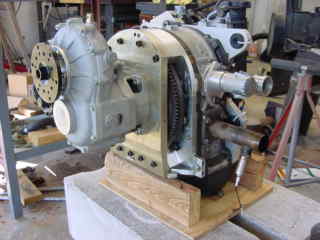
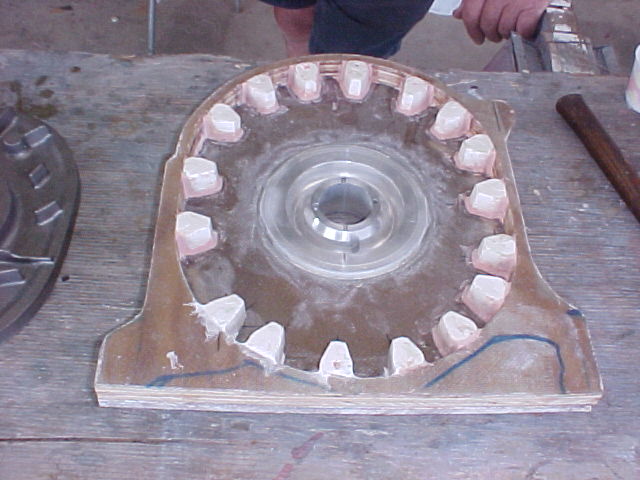
NASA_1994029725
NASA_1994029727
NASA_1996103430
NASA_19920010791
Rob Woods
Thanks Rob. That pdf file is a real good one :)
--
Paul Lamar ...No rotor no motor.
I am looking here,
http://ntrs.nasa.gov/search.jsp
The top three reports can't be found.
I think you are missing the final digit.
Erik Wahlstrom
The other two are larger than the 10M my email
supports. If someone has
an ftp site or would be willing for me to send it over IM I will. Also
another point of interest is this technical paper written by JHB. I know
Paul doesnt like them for a number of reasons the piece of info in there
paper that I find a shokcer/revelation that I didnt see before I read
this months ago was the "clearance" built into the equations. Do you
care to comment on these dimensional accuracies Paul? Oh and another
paper I found or maybe I downloaded it from an email.
Rob
How does he know what the clearance or tolerances are? How many rotor housings
has he measured? I have been in the Mazda engine factory and the rotor housing
and rotors are made on super high precision tooling.
The guy is blowing smoke. He cut and pasted out of various Mazda tech
papers to add false credibility to his nonsense. Mazda spent millions on
R&D.
Mazda rotaries are the way they are
for very good reasons. Mazda makes the
finest rotary engines in the world while many others have failed and that
includes the likes of GM and Mercedes. When I get back from OSH I have
a video I'll upload to youtube on real world rotary coating experience.
Paul Ross
worked on aluminum end housings and coatings for seven years. Some of his
descriptions on what happened when coatings failed are scary.
--
Paul Lamar ...No rotor no motor.
Paul,
I look forward to that video.I really would like to hear a solid answer
on this material with this process equals this result. Basically what
does/did Powersports, Mistral, and Rotomax do to produce their housing?
Steve Beckham's old post was very infomative and I would like to see if
he would advise us on some matters other than a history lesson. I wonder
if it is really as simple as cast/billet chunks of aluminum, of the
proper type, that just get sprayed and ground. I have been speaking
with a couple friends who own machine shops and their post operation
associates and I could do some real interesting stuff up to the coatings
for very little money at least on the prototypes with very high quality.
I would really like to see this video lead to the hard answers about how
we as tinkers, engineers, rednecks can get some of these good ideas put
to actual use.
Rob Woods
Nobody will tell us. Jim Mederer claims he does not know. He just sends
it out to a local aero space firm and lets them choose.
I don't know what Power Sport did. I am sure Steve Beckham on here knows.
Rotomax won't tell me. I suspect it is the same coating Moller used.
I have a paper done for NASA by Moller on coatings. I would not trust
Moller as far as I could throw him. BS are his middle initials. He did
no long term testing.
The only upfront and honest answers I got were from
Paul Ross and Alturdyne. Paul tried a bunch of things for seven years
and he told me not to bother with any of them except detonation gun applied
tungsten carbide and that is what Mazda used on the Lemans engine.
The particles embed themselves in the aluminum as they are shot from a gun at
the aluminum at supersonic velocities. The whole process is very costly
and time consuming.
The problems are not always with the coating. One of the problems is the low
modulus of elasticity of the aluminum. It does not matter how hard the
coating is if the surface is deflecting underneath it. That deflection
causes the bond between the aluminum and the coating to fail. That
is why Mazda inserts steel into the rotor housing and locks it in place
with the SIP method.
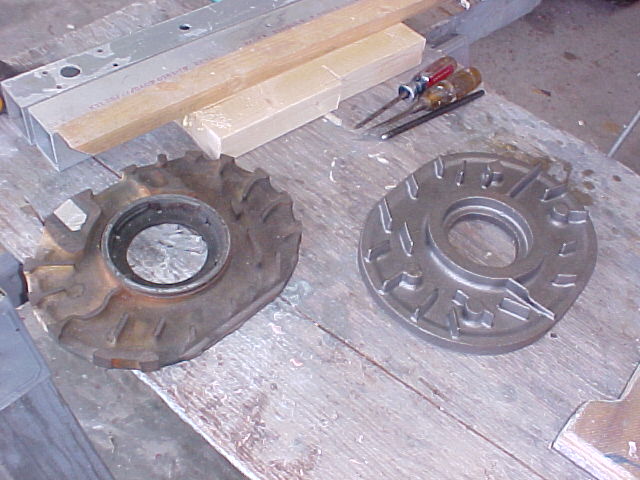
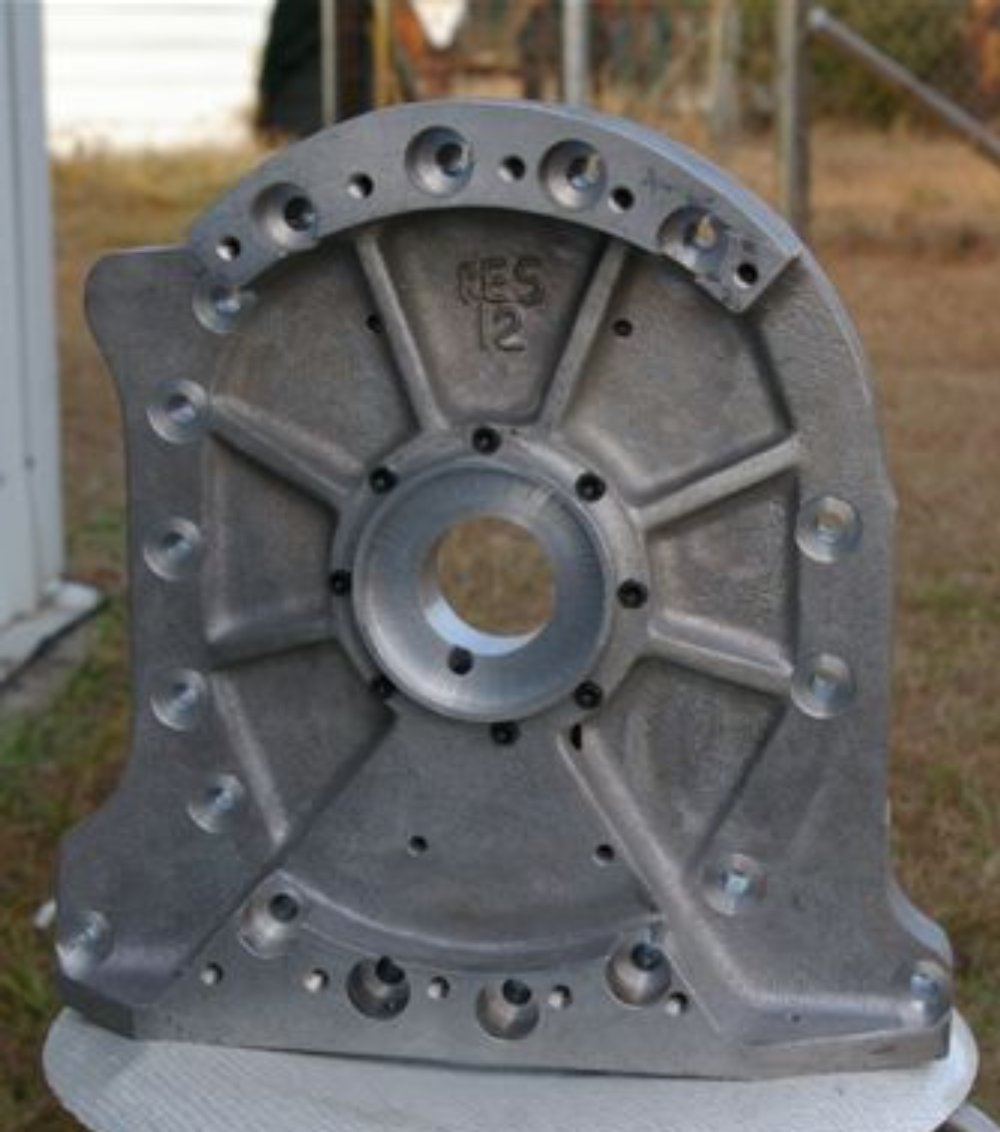
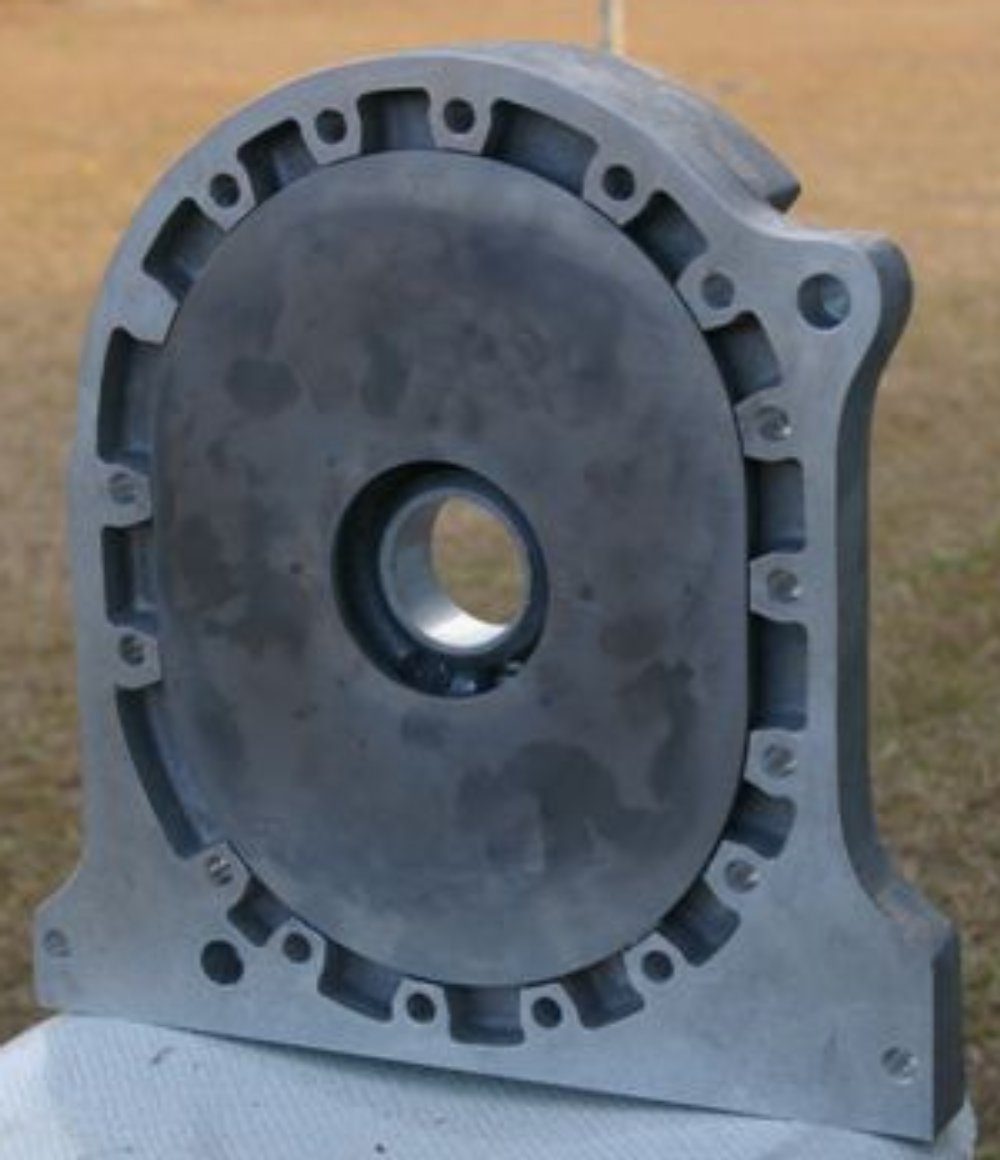
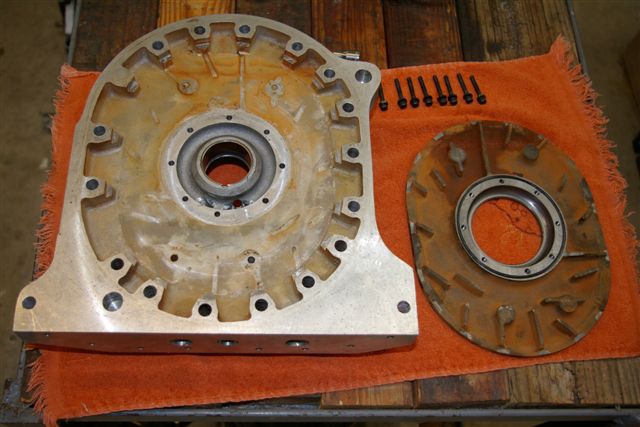
I would use a two piece housing much like Richard Sohn is doing.
It has a a steel or iron wear surface that can be lapped and/or hardened.
Or replaced if you wish. It could also be chrome plated like the rotor
housing using the same process. He uses a very clever method to seal
the wear surface from the water jacket.
You could also cast the steel in if the back side had hooks like
the Mazda liner in the rotor housings. I know of a foundry that does
that sort of thing all the time.
Paul Lamar ...No rotor no motor.
The Rotary Engine NewsLetter. Powered by Linux.
ACRE NL web site.
http://www.rotaryeng.net
Youtube key word UTUBPLEASE
Copyright 1998-2008 All world wide rights reserved.