Paul,
Please comment on Steve's usage of the term "creep." We need to
get the
terms and physical phenomenon straight..
Why do the rotor housings not seem to suffer from the same
deformation
(creep?) problems as the side housings? They should be under the
same
clamp-up pressure. Is the stackup being completely of Aluminum
instead
of fe-al-fe a source of trouble?
Very interesting info about the coatings.
Regards,
Matt-
I am not sure what Steve means by that. Creep usually means a
permanent
deflection of material over a long period of time. Very few aluminum
engines are affected by this in aircraft or car engines.
Perhaps there is a part in his end housings that were not adequately
cooled
and creep was occurring at elevated temperatures over 250 F.
Jim Mederer mentioned something about that near the main bearings and
he added material to counter it. I am not sure if it was creep or
just plain
yield or cracking.
What I am talking about in the context of coatings is local
deflection (not permanent)
to the aluminum under the coating as the seal passes over them.
Mazda devised a test rig
to check this mode of coating failure and it was described in the
Lemans SAE paper.
http://www.rotaryeng.net/4-rotor-1-5.pdf/
and
http://www.rotaryeng.net/4-rotor-6-11.pdf/
What may have been interpreted as creep in the past on rotor housing
is when then were permanently deflected due to over heating. That
was not
creep.
What was happening was the rotor housings were over expanding
against the steel
tension bolts and taking a permanent set. When the engine cooled off
you had a coolant leak into the combustion chamber. That pretty much
went
away about the late 80's when Mazda switched to a high silicon, low
thermal
expansion alloy. Also the tension bolts were necked down reducing
the tensile
spring rate.
I have only seen that happen lately when the engine was run
with out coolant at high power. Of course the steel liner was melted
as well.
-
Paul Lamar ...No rotor no motor.
I apologize Paul.. I didn't read Steve's post carefully enough. I
think I've got it now. The "creep" or distortion he's talking about is
strictly on the wear surface, right?
Due to high power operation.
I take that to mean that the wear surface might be getting too hot and
thus becomes weaker, and then the seals chew into it. Does that sound
right?
If it's heat weakening the base metal, I wonder what's primary factor
driving that. Combustion gas exposure or friction? Lack of cooling?
Under oiling? Mismatch between the side seal material and the surface
coating? A combination?
Regards,
Matt-
I have no idea. I am waiting to hear from Steve on what he means
when he says creep.
I suspect the base metal is merely deflecting and not weakening.
The term weakening is not in the lexicon of the mechanical engineering.
The terms are yield... a permanent deformation of the material.
and deflection.... a non permanent deformation.
The bottom line is to duplicate the Mazda test rigs.
Pay particular attention to the plating tester. Chrome on steel
was far and away superior to anything else Mazda tried.
Paul Lamar ...No rotor no motor.
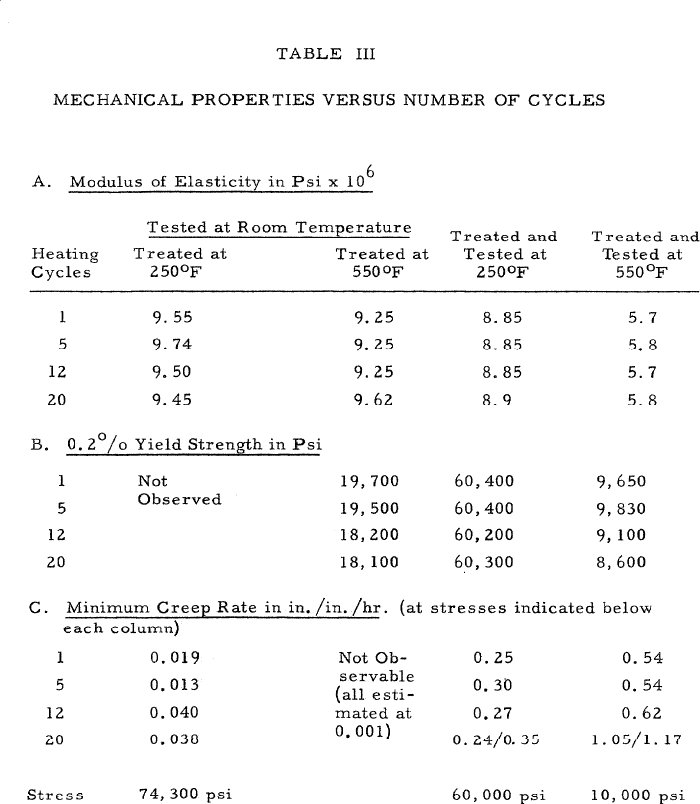
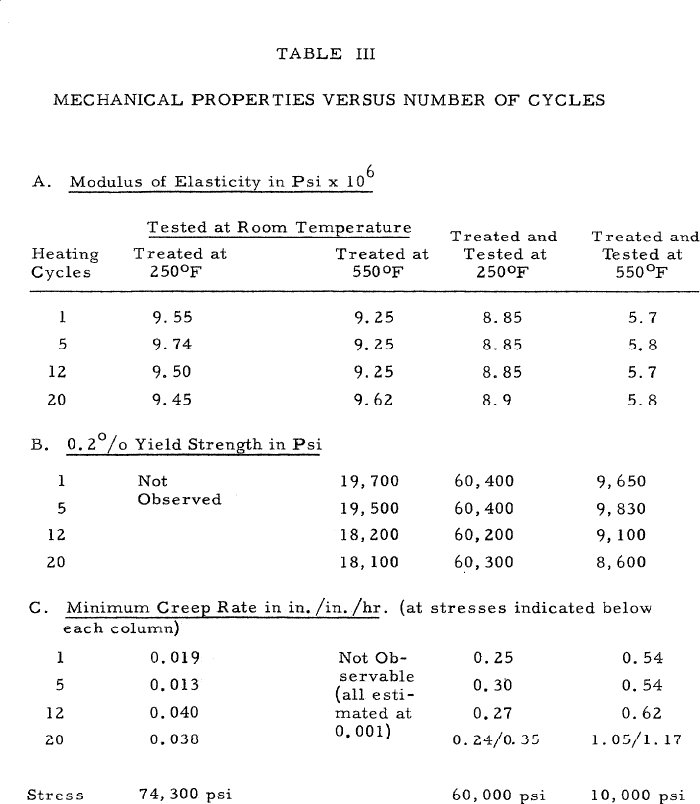
When I said weakening I meant lowered yield strength and hardness
(lowered modulus) due to high temperature.
We can duplicate the test rigs, but it pays to come up with a plausible
hypothesis before doing the experiments.
Matt-
OK Yes I think the modulus of elasticity goes down with temp on aluminum.
--
Paul Lamar ...No rotor no motor.
The Rotary Engine NewsLetter. Powered by Linux.
ACRE NL web site.
http://www.rotaryeng.net
Youtube key word UTUBPLEASE
Copyright 1998-2008 All world wide rights reserved.