Dear Paul:
Here you go!
Les Nordman :-)
Thanks Les
------------------------------------------------------------------------
> Date: Tue, 6 May 2008 08:24:10 -0700
> From:
rotaryeng@earthlink.net
> To:
rotaryeng@earthlink.net
> Subject: Oil Coolers
>
> > Oil Cooler/s for RX-8 engine
> >
> > What size oil cooler should I be looking at if we don't have the
> > standard one
> > and maybe some suggestions on which ones / brands might be the options
> >
> > Anyone got some suggestions?
> >
> > Thanks
> >
> > Regards David
> >
> > For a two hundred HP RX8 engine you will need something about 300
> > cubic inches.
> > Preferable about two inches thick or thinner. The best shape would
> > be square or
> > about 12 inches high by about 12 inches wide by about two inches
> > thick.
> > Make sure it will withstand 150 psi minimum. Internal finning in the
> > tubes
> > improves the heat transfer from the oil to the metal. Also lower
> > weight
> > oils cool the engine better for the same reason. Use 10W fully
> > synthetic or
> > lower in the engine while mixing two cycle oil with the fuel as it
> > burns better.
> >
> > Don't go on the manufactures engine HP recommendations as the rotary
> > rejects
> > three times the oil heat. Most piston engines reject only 10% to
> > cooling the oil while
> > the rotary rejects 30% or more. In other words as far as oil coolers
> > are concerned
> > a 200 HP rotary requires a 600 HP piston engine oil cooler.
> >
> > Setrab is a good international company.
> >
http://www.setrab.com/index.php?id=68
> > --
> > Paul Lamar ...No rotor no motor.
> >
> >
> > Paul,
> >
> > Nice discussion about oil. You mention the Setrab coolers. Since that
> > is what I use I thought I would share my experience. You outlined the
> > 11x18" cooler but I started out with the 11x15" and found that was
> > larger than I needed. I am now using the 11x10" cooler (PN 50-634).
> > Even then I have about 20 sq in of the face covered with duct tape
just
> > to get oil temps up to about 150. Worst case is a 100 deg day, heat
> > soaked engine (I was giving rides to multiple people) and 85 kt climb
> > out at 34" MAP [turbo] and I finally got the oil to climb above 200
(my
> > personal
> > red line). Flattening the climb to 100 kts without reducing power
quickly
> > brought the temps back down. WOT in level flight oil temps never
exceed
> > 150.
> >
> > Now, I should mention that my oil cooler is very well-fed with air
(the
> > entire right cowl inlet). If I were to use a larger face radiator and
> > smaller cowl opening I could probably achieve the same results with
less
> > cooling drag. Also, 34" MAP in a steep climb out for me, with my
> > over pitched prop and 2.17 gear box is significantly less than 200
h.p.
> >
> > One other thing I should mention about the Setrab. I have had a
> > recurring problem with a small leak in the same location on 3 coolers.
> > I kept thinking that I has some sort of mounting issue causing the
leak
> > until I dissected one of the coolers and found that there was faulty
> > brazing in the trouble spot. A dab of JB weld fixed the leak and has
> > held for the last 50+ hrs (it is a fairly small leak anyway). I called
> > the company and they just wanted to keep blaming over torque on
> > installation (but I used a torque wrench). It was clear that they have
> > had a big problem with customers "over torquing" the AN fittings when
> > installed. Best they could do was offer me a replacement cooler at a
> > discount - which I still have since the one with JB weld is working
fine.
> >
> > Will sell that one for $290+ shipping if anyone is interested, JB weld
> > not included :-)
> >
> > --
> > David Leonard
> >
> > Turbo Rotary RV-6 N4VY
> >
http://N4VY.RotaryRoster.net
> >
http://RotaryRoster.net
> >
> > ----------------------------------------------------
> >
> > We never did get pictures of your new installation Dave.
> > I would still like to see them. Here are some old ones
> > dating back to Dec. 2007. Nicely done, well sealed K&W oil
> > cooler duct on the right side.
> >
> > Do you have movable cowl flaps on it yet? :)
> > What are the oil and water temps flat out at top speed?
> > What is the top speed? When you are climbing out at 85 kts
> > what is the gross weight and rate of climb (FPM)? From that one
> > can calculate the climb HP being used.
> >
> > When you cut it open did you notice fins inside the tubes?
> >
> > BTW I suggest testing the cooler to 150 PSI with hot oil before
using them
>
> > as
> > the rotary is much much harder on coolers than a piston engine
> > that typically operates on only 40 psi. We see oil pressures
> > on the dyno when the rotary engine oil is still cold at well over
100 psi.
> >
> > A hydraulic hand pump from a cheap Chinese jack will work along
> > with a pressure gage. Boil the low viscosity oil so it gets above
250 F or
>
> > so
> > before you pour it into the cooler. Oil cooler failures are serous
> > as we have had at least two in flight oil fires and one fatality due
> > to failed oil coolers in the last ten years. Mistral has also had
> > an oil cooler expand due to over pressure.
> >
> > The stock 2nd gen oil coolers work fine but they are getting scarce.
> > I think they were custom built by Modine for Mazda.
> >
> > I am surprised about the Setrab leak. Perhaps we need to find another
> > supplier.
> >
> > Paul Lamar ...No rotor no motor.
>
>
>
> Paul--we found your recommended oil cooler sizes for good plate/fin heat
> exchangers a good guide. Used the 13 1/2" tall x 11 5/8" wide Setrab and
> Serck-Mocal for the RV-3 and RV-4. Worked well overall but was a little
> marginal for very high output missions including x/c races when the RV-3
> ridden hard. There it ran up to 225 degrees oil @ 7,000 rpm; 235/239
mph in
> two-way test GPS runs; 65 degrees OAT; 1650 and 1700 EGTs...ditto on hot
> days when doing very steep, extended climbs. Didn't have any problems
with
> it when we ran the same modified 13B with nitrous @ 350 hp in short
climb
> competition). Common cowl flap for oil/water heat exchangers.
>
> Dave Leonard--kudos for the work on your RV-6 installation. Have you
> weighed firewall fwd excluding mount/gear or calculated estimation vs.
> equivalent h.p. Lycoming RV-6? Also, what size fittings for oil lines?
>
> Steve Beckham
>
> No beating a good cross country air race to test your cooling system :)
> Top speed equals the cube root of Horsepower :)
>
> A lot depends on the feed duct or diffuser and how well the
> air can find its way out of the back side of the cooler.
> If the back side of the cooler is restricted the pressure build
> up behind the cooler can affect the air flow through the cooler.
>
> I discuss all that in my book "How to Cool Your Wankel".
>
> --
> Paul Lamar ...No rotor no motor.
>
>
> Paul,
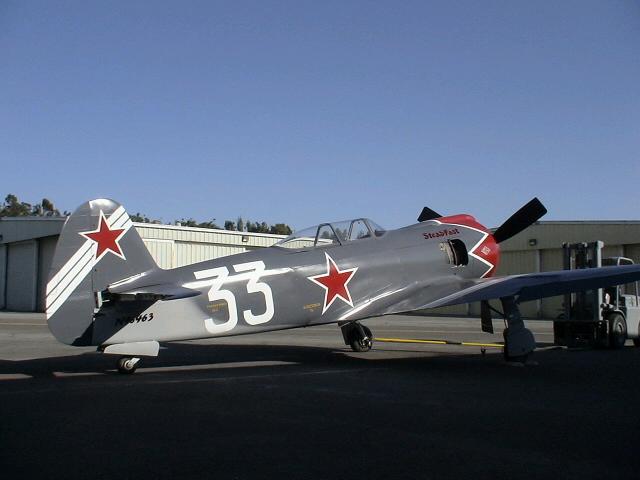
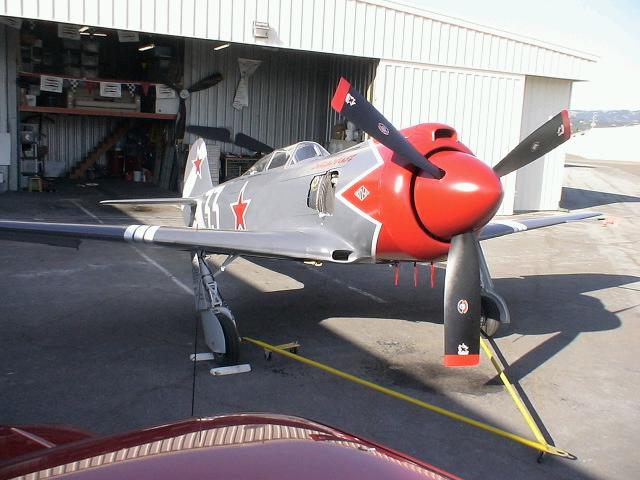
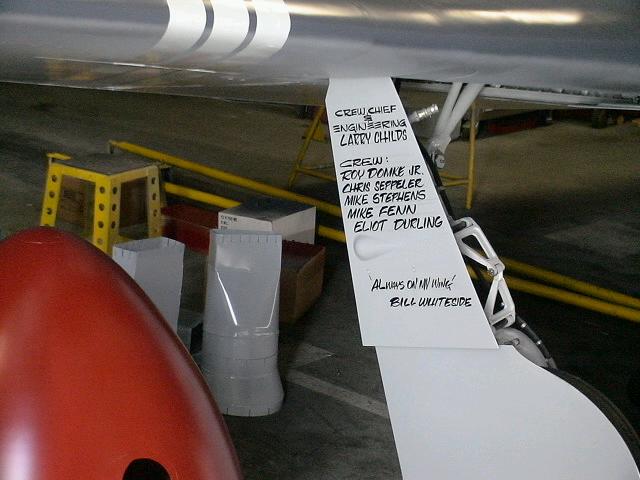
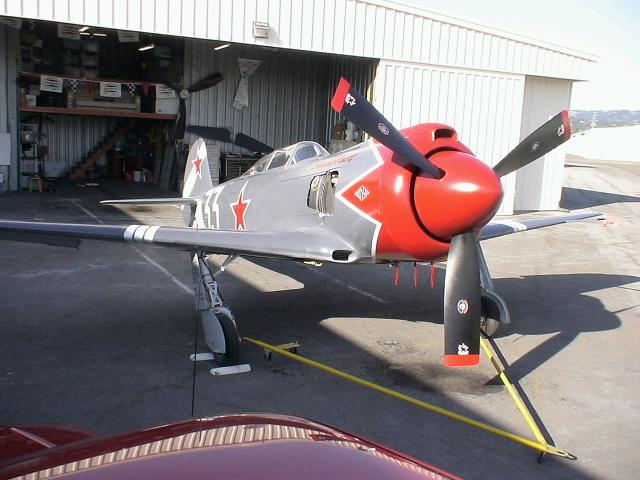
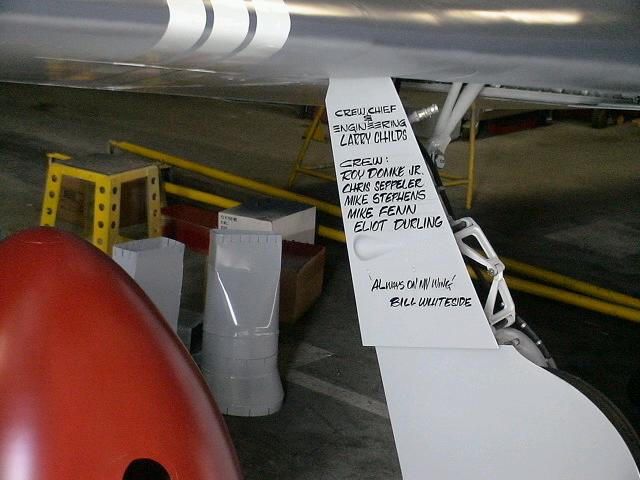
> On our side, air racing speed is defined as "cubic dollars"......
> Pics of our fresh paint job attached. No decals, all hand painted
graphics.
> Larry Childs
>
>
> Looks great Larry.
> --
> Paul Lamar ...No rotor no motor.
--
The Rotary Engine NewsLetter. Powered by Linux.
ACRE NL web site.
http://www.rotaryeng.net
Youtube key word UTUBPLEASE
Copyright 1998-2008 All world wide rights reserved.