I just had a brilliant idea.
with the flip of a switch you fire the injectors every other
rev instead of once per rev. In effect this doubles the dynamic
range of the injectors. You set them up to put out plenty of fuel
at max RPM max HP one pulse per rev. If too rich on the low end you flip
the
switch and halve the fuel delivery by firing the injectors every other
rev.
Then you readjust the leaning knob for just the right amount of fuel. This
is real simple and easy to do with a single chip counter or flip flop. It
could be done automatically at say some mid range RPM.
BTW this analog EFI system I am working on has a built in
limp home mode. If one of the injectors on one of
the rotors goes down you richen the other one up as we have too
injectors per rotor with two leaning knobs. This is mainly done to
compensate for a difference in VE on each rotor. The feedback to you
comes from the EGT.
Each one of four injectors has its own PC board about 1.4 inches wide by
2.4
inches long. Each PC board injector controller has its own power supply. A
normal EFI system has but one supply so if that supply goes down the whole
system goes down. Not so with this new simple analog system. Each injector
system is stand alone with lots of redundancy.
Paul Lamar
Are you talking about pairing two injectors in the same port and
alternating which one fires per rev to reduce the effect of injector
"dead time"?
-Chris
No. I am firing either every rev or every other rev.
the rotary really does not care when you fire the injectors as one of the
three rotor faces is open to the intake port at all times.
Paul Lamar
Paul,
I would think that should cause enough cycle-to-cycle variation that
you might get significant AFR swings per combustion event. Probably
not anything you could pick up with a wideband O2 sensor and certainly
not a EGT thermocouple, so the only indication of differences you
might see is pinging and a blown apex seal.
Seems like the best way to do it would be to run 3 smaller injectors
120 rotor degrees out of phase (360 crank deg), which would give us
the same injection timing as a batch fire reciprocating engine (2x as
many injection events per cycle as a sequential fire engine). One
injector having 3x the firing frequency as a batch injection recip
engine is probably not a good thing at high RPM -- injector dead-time
is a large percentage of the total open time, and the pintle goes
static at low duty cycle.
-Chris Wood
A normally aspirated rotary never pings or blows the apex seal. You can lean it
until it quits at any power level. A turbo is another matter.
Three smaller injectors sequenced would certainly work but that is hard to do
with a simple and cheap 555 system. The RX8 uses three staged injectors per
rotor. The timing however is fixed and not out of phase. One injector is used at
low power, two at medium power and all three at high power. Tracy uses two
staged injectors. One at low to medium power and both at high power. However we
are trading off computerized complex fuel systems for low cost, no programming
and simplicity. The aircraft engine does not need to run well at all power
settings and all RPM's unlike a car. The prop is a big flywheel. It just needs
to keep running until the pilot leans it out at cruise RPM and cruise power
settings. Computerized EFI is overkill for an aircraft engine. Well whatever I
will try it on the dyno and see what happens.
On the other for turbo use a computer is a good idea for many reasons IMHO.
------------------------------------------------------------------------------
I just figured out an even better way to drastically increase the dynamic range
of the simple 555 fuel system. We will describe this in terms of a one rotor engine.
Dynamic ranges is a measure of the ratio of the smallest amount of fuel injected
to the maximum amount of fuel injected. The four cycle rotary is a strange beast
in that it fires once per rev just like a two cycle one cylinder piston engine.
This puts a severe time limit requirement on the fuel injectors as at 6000 RPM
there is only 10 milliseconds to feed the fuel. Injectors only work down to one
millisecond and up to 9 milliseconds under these circumstances. In effect this
is a very limited dynamic range. That is one reason Mazda uses three sequenced
fuel injectors on the RX8 motor. They have better control over the precise
amount of fuel needed.
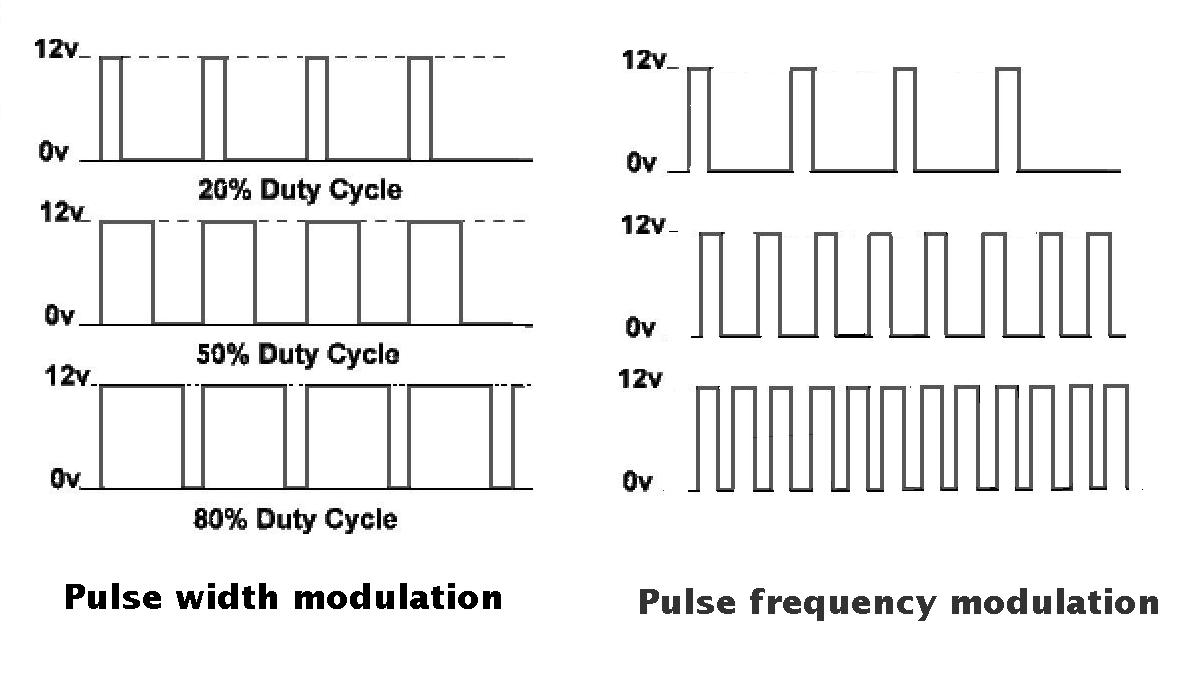
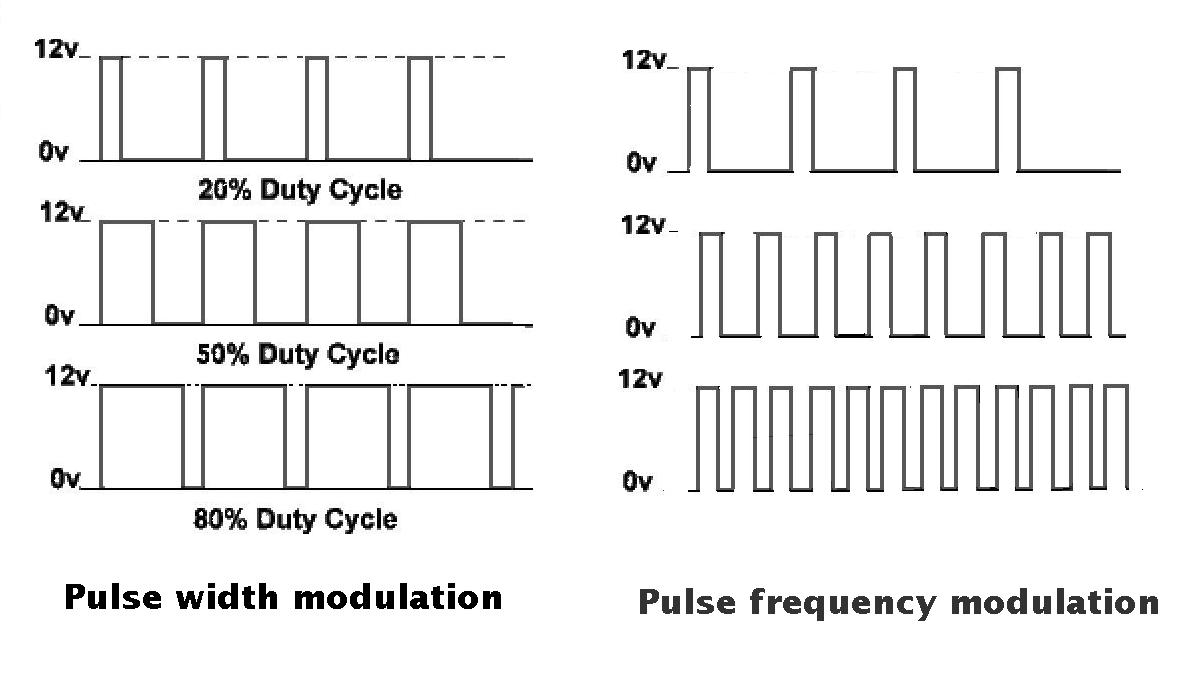
The trick is to pulse frequency, as opposed to pulse width, modulate the fuel
pump. In other words feed a fixed width pulse to the fuel pump as a function of
RPM. Extremely simple to accomplish as all you need do is pulse the fuel pump
once per rev from the ignition pulse or say twice per rev. In this case the
pressure and flow the fuel pump would put out is directly proportional to RPM.
This is additive to the injector pulse width modulation. Very cheap to implement
and a costly $200 or more fuel pressure regulator is eliminated. Not to mention
return flow fuel plumbing is drastically simplified. As a tuning trick the pulse
width fed to the fuel pump can be adjusted over a limited range with a pot.
This fuel strategy can be used with a computer based EFI as well.
However for automotive use there is a drawback in that the fuel is
not atomized as well at low pressure, low power, low RPM as it would
be at constant 50 psi or above.
Paul Lamar
--
The Rotary Engine NewsLetter. Powered by Linux.
ACRE NL web site.
http://www.rotaryeng.net
Youtube key word UTUBPLEASE
Copyright 1998-2008 All world wide rights reserved.