> > Steve, thanks for your interest. Yes I have used that layout for
> > holddowns on semiconductor heaters in the past. We saw nil trouble at
> > 400°C. That's about only 750°f though. You might need a material that
> > will tolerate the temperature. X700 or inconel would hold up better
and
> > the flat plate would be easy to cut using water jet or laser. It
would
> > be interesting to know what the actual temp of the plate. The gas
stream
> > can easily see 1700°F at WOT in the center of the pipe but the flange
> > should be considerably less.
> > Bill Jepson
>
>
>
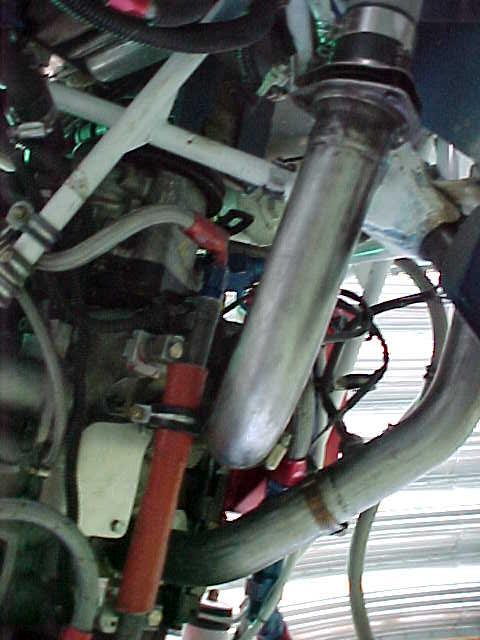
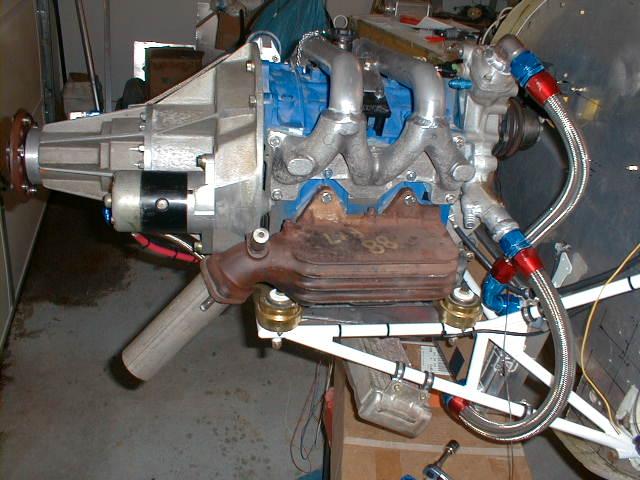
> Thanks for the background Bill. Regarding your question about actual
> component temperatures, we never did measure the heat of the exhaust
flange
> and pipes accurately at different stations. But in the evenings with it
> getting dark, visually you could get a good picture of the highest heat
> sections during long dyno runs especially when the mixture was leaned
up for
> best power and EGT's would increase and stabilize @ 1700F. Because we
were
> spacing off the capture plate with AN washers to set preload on the
> balljoint, this had an obvious effect on reducing heat there but the
female
> portion of the ball joint was a portion at the most inboard assembly
closest
> to the fire and as you would expect, the ball joint portions at the
port,
> portion of the flange and exhaust pipe for some distance would become
> translucent. Don't know if its is on their web site, but there is a
photo
> which shows exhaust temperature in the Burns Stainless catalogue (p27)
> showing the BMW F1 engine at full tilt on the dyno and that system is
all
> Inconel and looks the same far further downstream than
expected...past the
> collector. The slip joints and sensor bosses welded in the pipe are
> instructive as well. But we never got around to getting good numbers
of max
> temps of all pieces at different stations.
>
> Steve Beckham
Dear Mr. Beckham:
Thanks for the report on solving high temperatures, a report which comes
from the trenches of "Development Hell." This may not sound like a
compliment, but it is: I love it, and find it extremely valuable, to
learn more about the rotary Wankel engine through your story of
developing an Aircraft Rotary Engine. You are not a lemon, to be
squezed dry, but I personally welcome every "war story" you can write
about your development efforts. You've been there, done that, and have
seen the elephant. Your stories are most instructive, most valuable. :-)
Suggestion. You wrote:
"in the evenings with it (was) getting dark, visually you could get a
good picture of the highest heat sections during long dyno runs,
especially when the mixture was leaned up for best power and EGT's would
increase and stabilize @ 1700º F."
Now, with today's higher-resolution photo-mainpulation tools and more
advanced software, could we take those photographs of exhaust system
during those revealing evening runs and map out which sections of the
exhaust system were hottest, which sections were not so hot, etc.?
Why? So that we could build exhaust systems such that each heat region
has the properly engineered materials and geometry so that each section
could handle the heat and vibration most effectively.
Les Nordman :-)
Thanks Les. Will do per your request when the engine is on the dyno.
First we gotta complete the present airframe integration
details--electrical, fuel, cooling, complete exhaust including a muffer
designed for this specific oddball configuration. Not much room in that
little airplane and trying out some new twists of the stuff we did
previously with the RV-4 and RV-3. Phillip Groelz and I are working with
Don Rivera at AirFlow Performance on location, plumbing and design of
various pieces in the fuel system. But still a lot of other stuff to do
before we start making noise with the dyno including including arranging
some sort of test cell in Phillip's large hangar.
Please advise of any technical direction in terms of what you will need
r.e.the photo. Have looked at various instruments being sold (point and
shoot stuff basically) but none of the ones we've looked at go to high
enough temps and don't want to invest that much in equipment that will not
be used frequently.
Paul what about old school, low tech approach such as the temp strips we
used to record brake caliper and component temps or race cars, or other?
Any of that (or other) go high enough? Sources? If you or any of the
other folks in the group know of any reasonably inexpensive such approaches
that would go high enough for use on the hottest pipe and flange sections,
that would be great. . Was thinking this work would also tell us where in
the system we could transition to SS321 or even lower number stainless that
is much more affordable and readily available than the 600 and 700 series
(Inconel, etc.). Any ideas on inexpensive approaches to document these
temps on exhaust welcomed.
Steve Beckham
Haven't looked at that stuff in years. But should not be a problem with Google.
Also get a catalog from Omega.com. They have tons of temperature and other
instrumentation. The trick is go up one or two gages on the wall thickness of
321 SS.
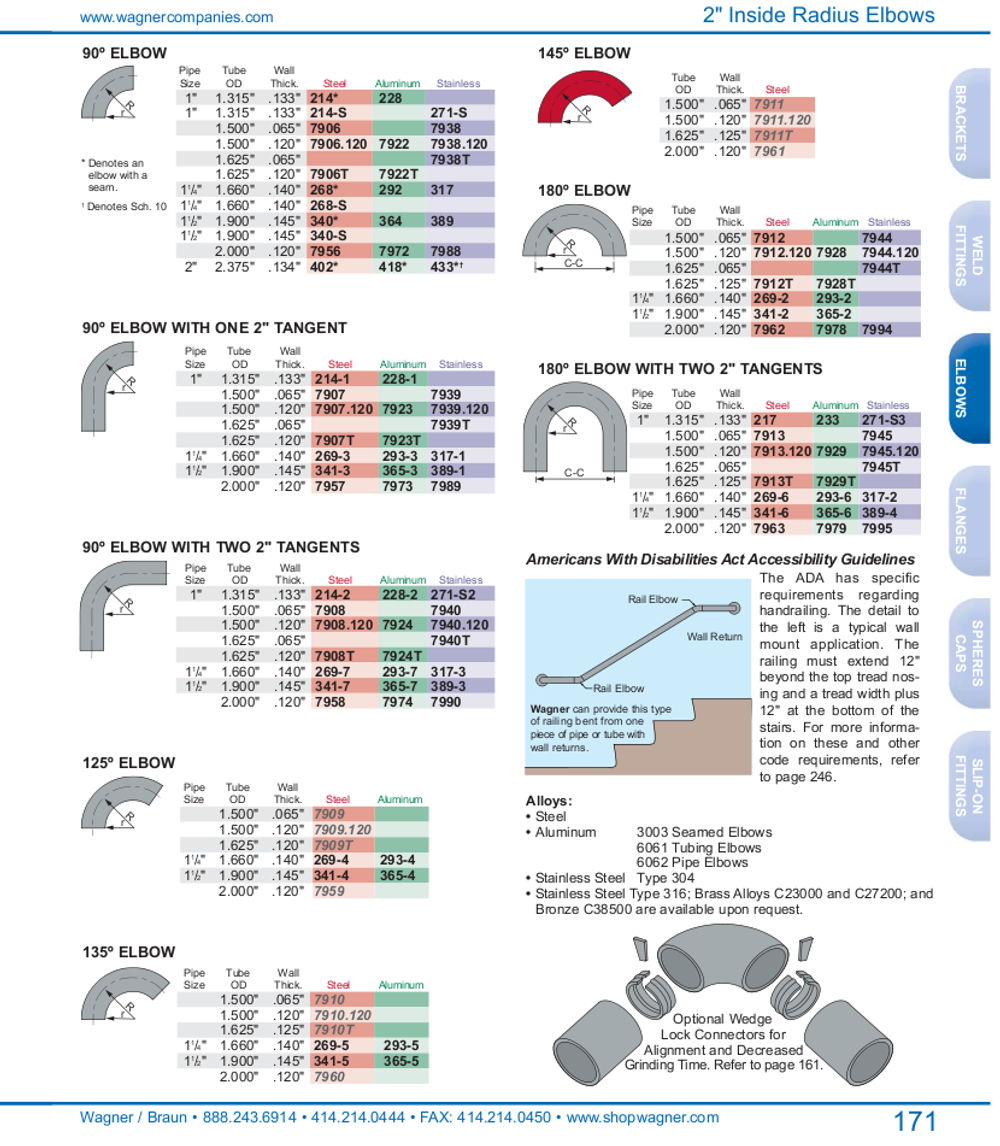
I know a rotary guy that uses cheap .120 thick wall 304 SS hand railing pipe.
His exhaust does not even discolor and you can cantilever mount the engine off
the exhaust pipes :)
All you need is a foot or two and then you can go down on the thickness in
steps. It weighs about 3 pounds a foot for .120 wall... 1 1/2 inch pipe 1.90
inch OD. Not only that you can get it in tighter radius bends. It is cheaper
than 321 tubing bends. The 90 degree elbows are .145 thick. Just what you need
where you need it. Coming right out of the engine.
http://www.rbwagner.com
http://www.wagnercompanies.com/View_or_Download.aspx
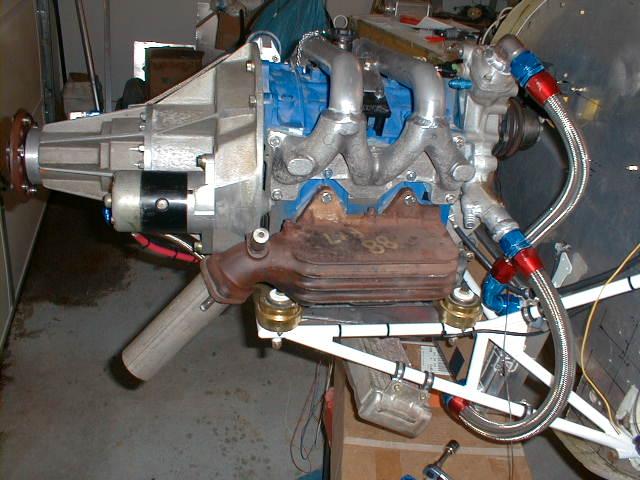
Perry Mick has been flying for years with nothing more than a stock 13B cast
iron manifold. No muffler.
A bigger hammer always works :)
Paul Lamar
--
The Rotary Engine NewsLetter. Powered by Linux.
ACRE NL web site.
http://www.rotaryeng.net
Youtube key word UTUBPLEASE
Copyright 1998-2008 All world wide rights reserved.