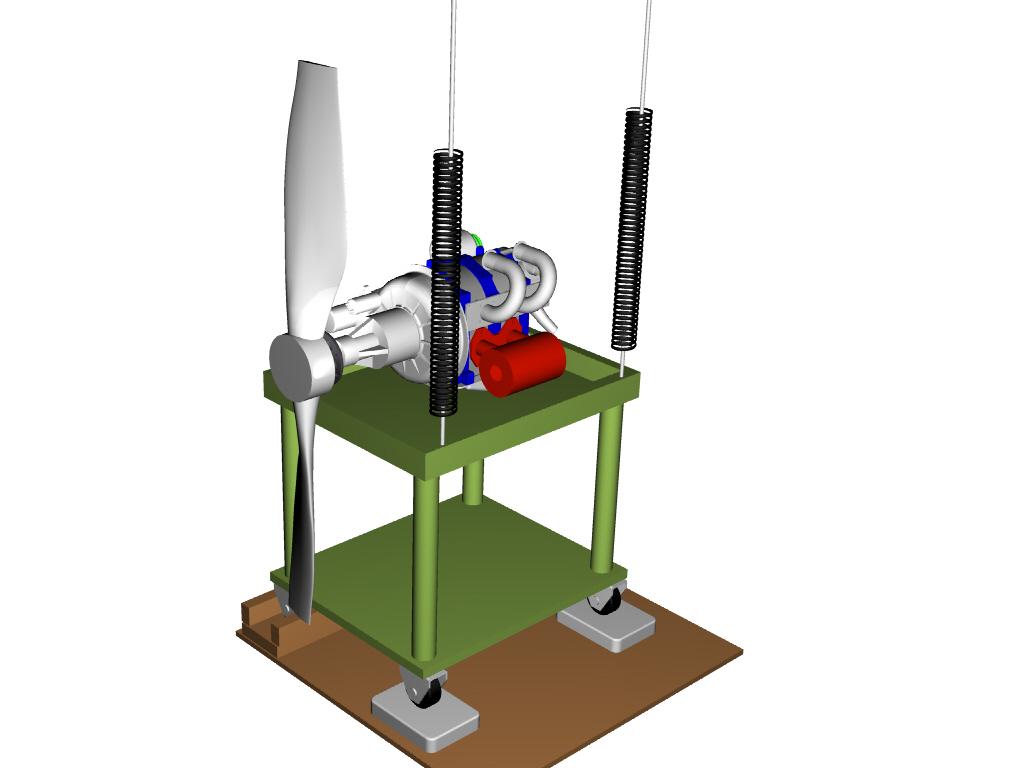
Hello All/Paul
long time lurker,first time poster here........I've
been reading and
stewing about how to build a dyno for a sachs km48 engine
for possible
use in a cri cri aircraft? still not sure it is going to
work out but
that's what experimenting is all about
"a"....anyway i was wondering if
anyone had any thoughts for building a small dyno, say 20hp
max. i seen
on Utube a guy had used electric motors as the energy
absorption method,
basically a generator. I could get an old generator off
craigslist
easily and cheaply enough but I'm not sure if its a
good way to go or
not? also as an fyi type thing i seen on ebay there are
quite a few
shipping/postal scales available some even have a removable
digital
readout that would make for a nice install on the test rig,
just
something i seen,maybe a little more scientific than the
bathroom scale?
anyway if anyone has ideas on my small scale dyno comments
would be
greatly appreciated.
thanks,John Durant
A generator large enough to absorb 20 HP would certainly
work.
My guess is it would have to be able to put out about 10 to
12 KilliWatts.
The load could be ten 1.2 KW room heaters or one hundread
100 watt light bulbs.
You could then measure the torque and RPM necessary to
drive the generator.
Paul Lamar
Dear All,
My name is Jose Choy, I recently joined the rotary engine newsletter. I did a
PhD at Birmingham University using the ex-Norton rotary engine now build by UAV
engines for target drones and UAV aircraft. During my stay at university I build
a dyno using a Froede dynamometer which uses water for braking, the dyno had a
weight and spring which I changed to a shear cell to have a digital reading
instead. They are considered scrap in most unis in the UK.
Anyway, we also used an electric generator which needed a load, we used a
'heater' and a connection to the grid which is big enough to take the load. The
'heater' was to change the torque and then plot the torque-RPM chart. The main
problem with this is how to calibrate the torque. In the froede dyno it was
easy, I just adapted an arm and hanged calibrated weights and compared with the
readings of the shear cell (I accounted for the mass of the arm also in case you
are thinking using this).
To calibrate the electric dyno we used another froede dyno. Most people say that
the electrical power obtained is proportional to the power delivered by the
engine. Electric dynos (and generators) have also an efficiency as any machine
and this is not usually known so you need calibration or you could end
underestimating the power of your engine. Alternatively, if you do not want to
use the electric power as a measure of your mechanical power (easy to include in
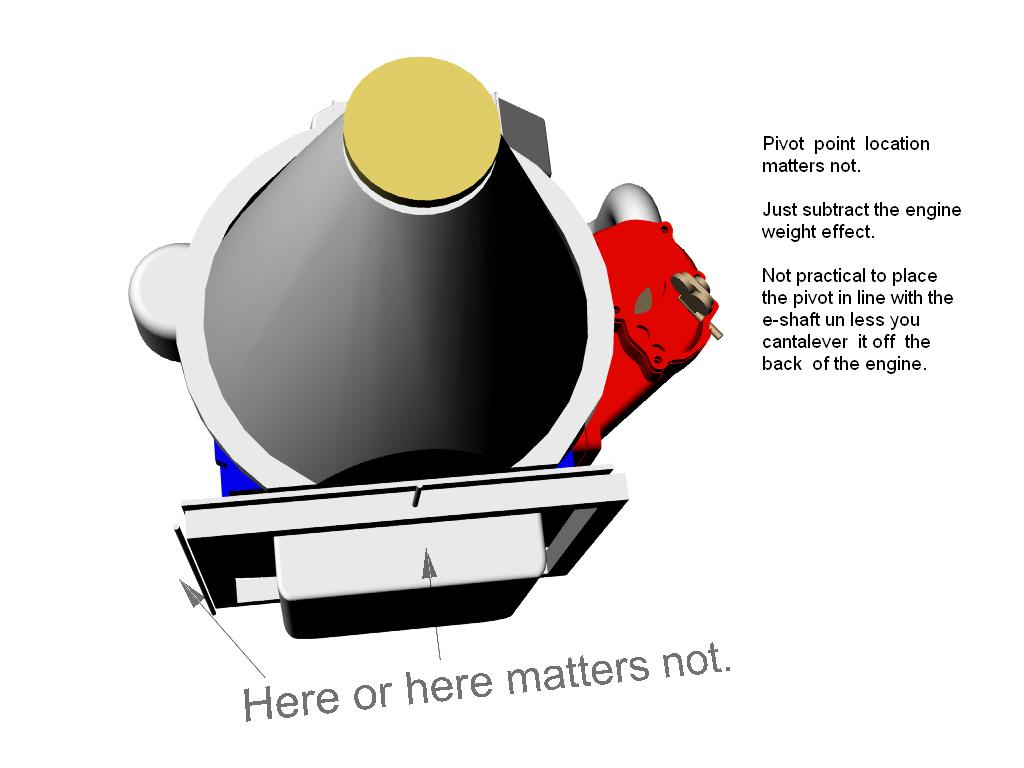
a data logging system) you still can install the electric dyno in two bearings
and attach an arm to it; the weight needed to keep the arm in a predetermined
position would be proportional to the torque (and hence the power).
I've seen some norton enthusiasts using a water pump to brake the engine
installing a 'plug' valve at the discharge to increase or degrease the power by
increasing-decreasing the flow/pressure. The pump is installed similar to a
froede dyno with an arm and weights (or a shear cell or load cell depending in
your configuration). The pump should be selected properly so you have a power
span good enough to brake the engine.
As a load cell I have used a digital weight, I asked an electronic engineer
friend of mine to modify the circuit and have the reading in a computer with a
National Instruments data logging system...It was 6 years ago and I cannot
remember the model right now...but this could be expensive.
Well apologies for the long discussion, it has been a while since I do not write
anything about rotaries due to my work back in the oil industry....
Jose Choy
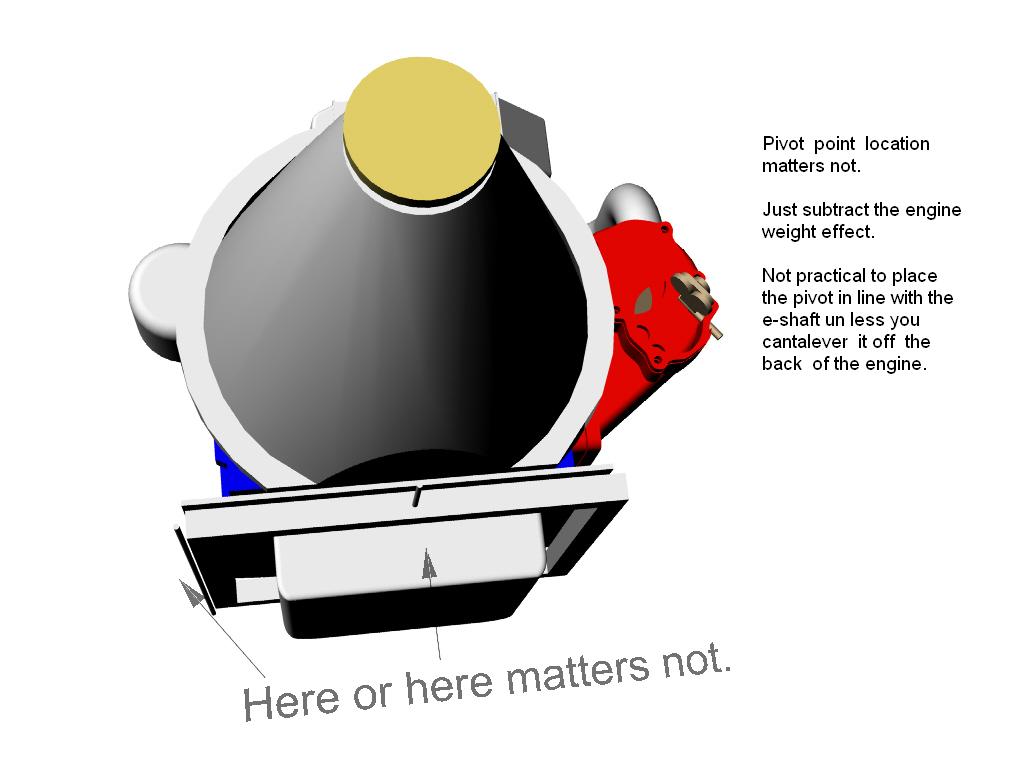
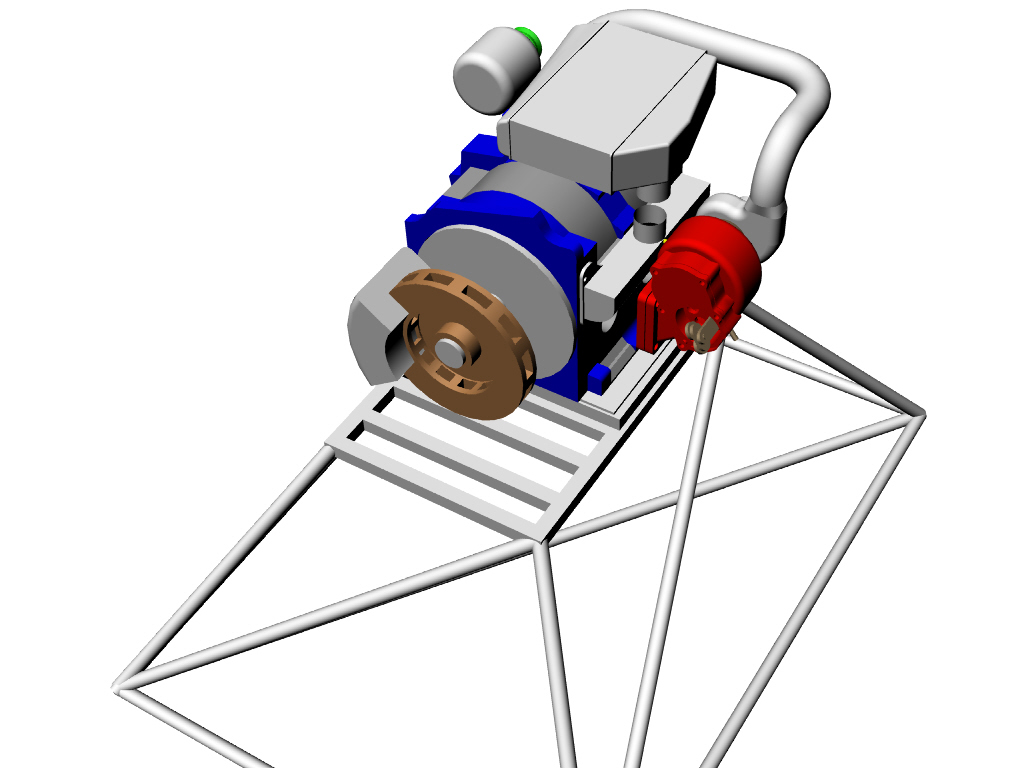
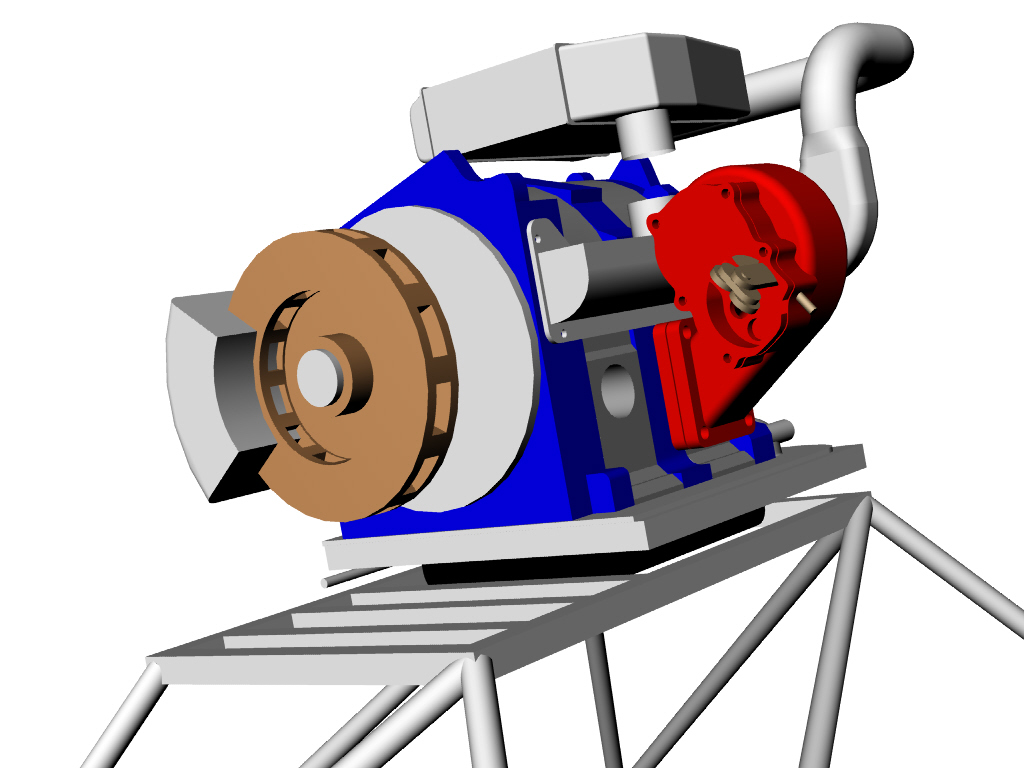
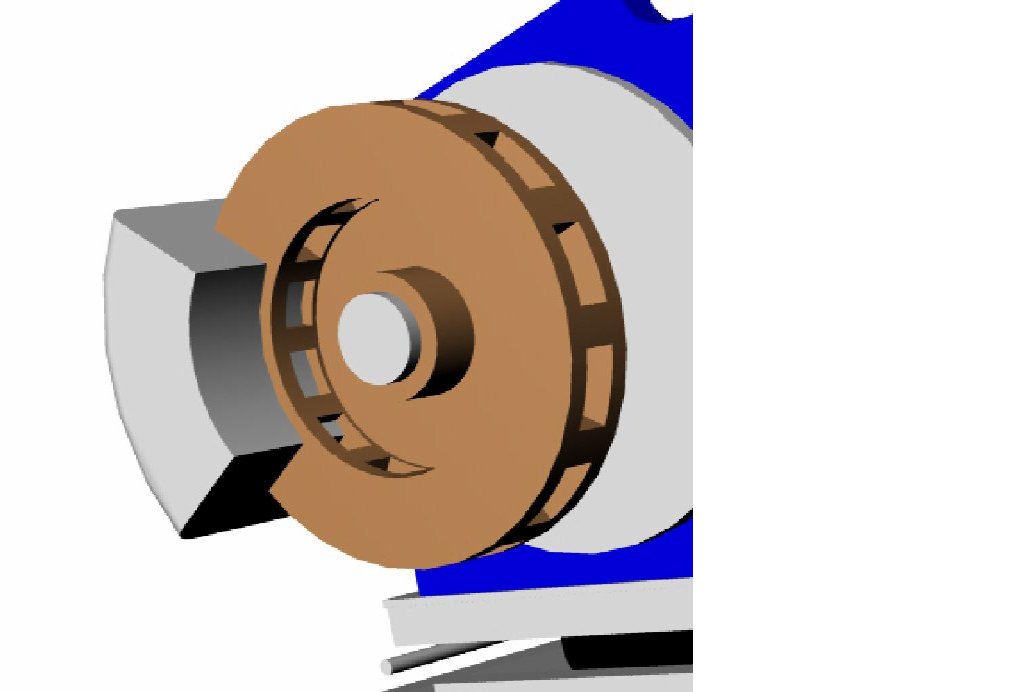
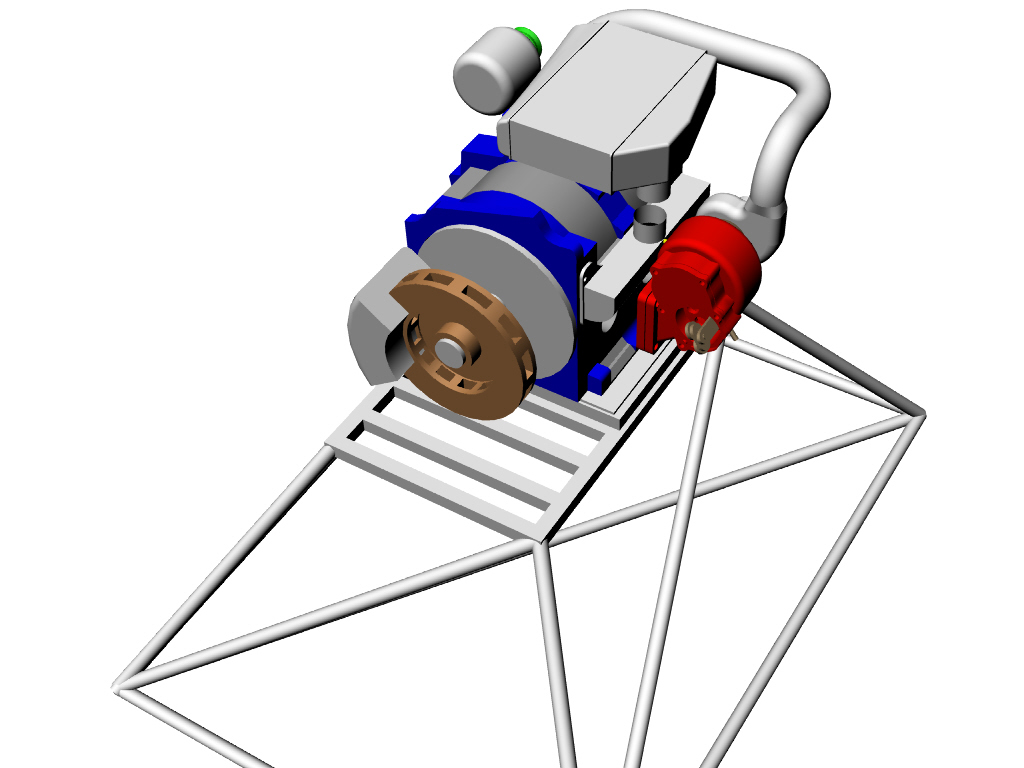
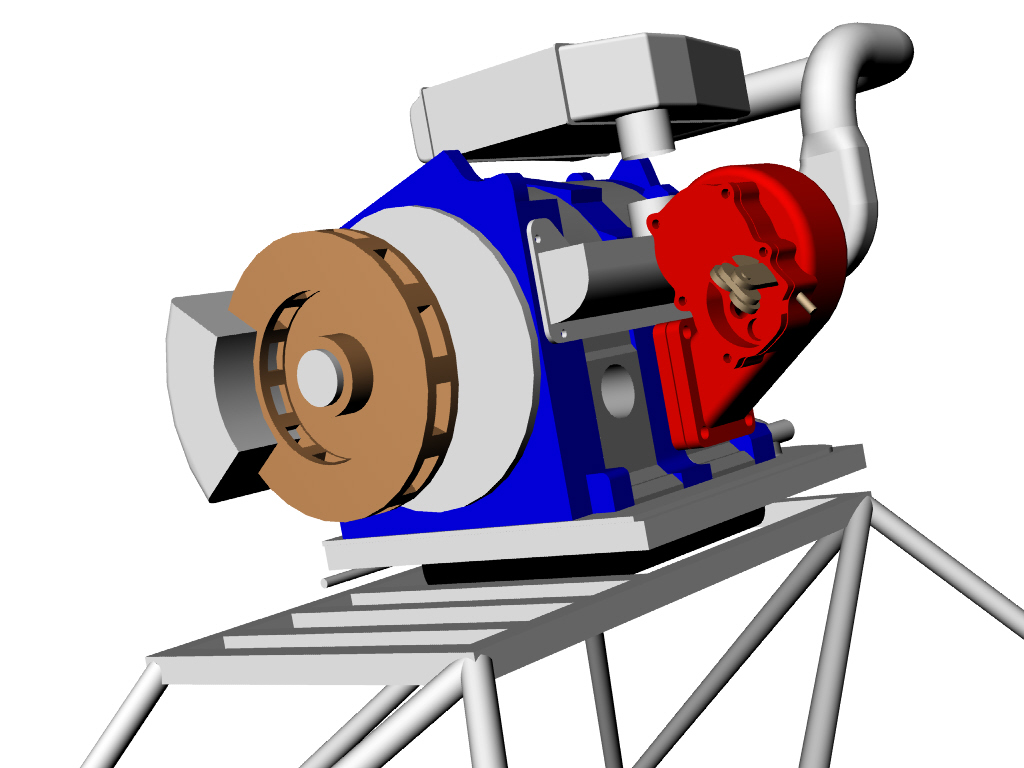
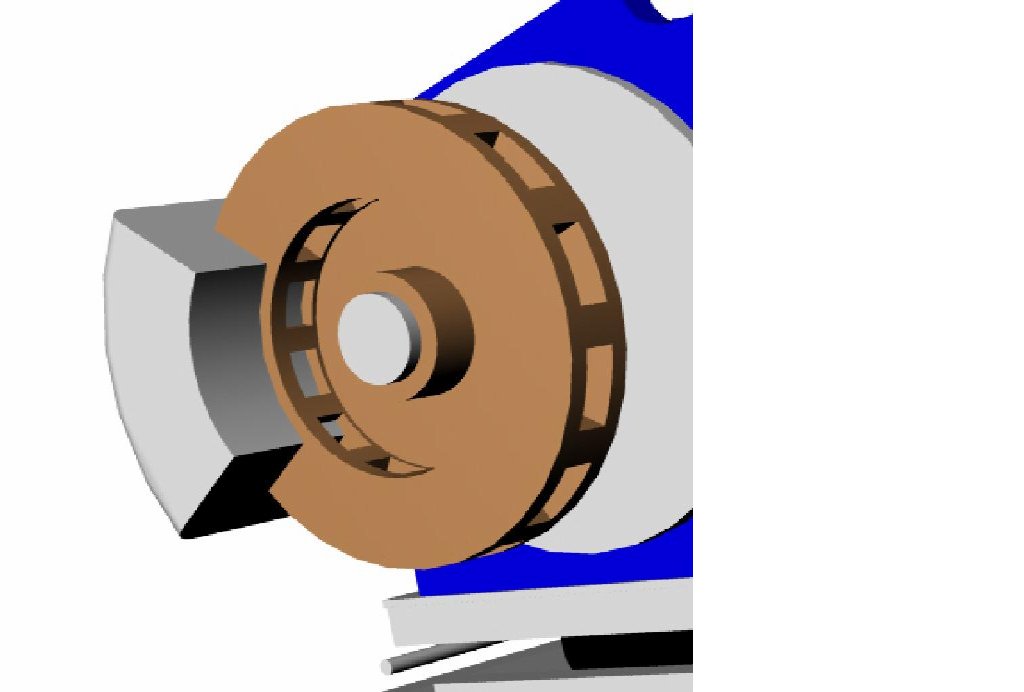
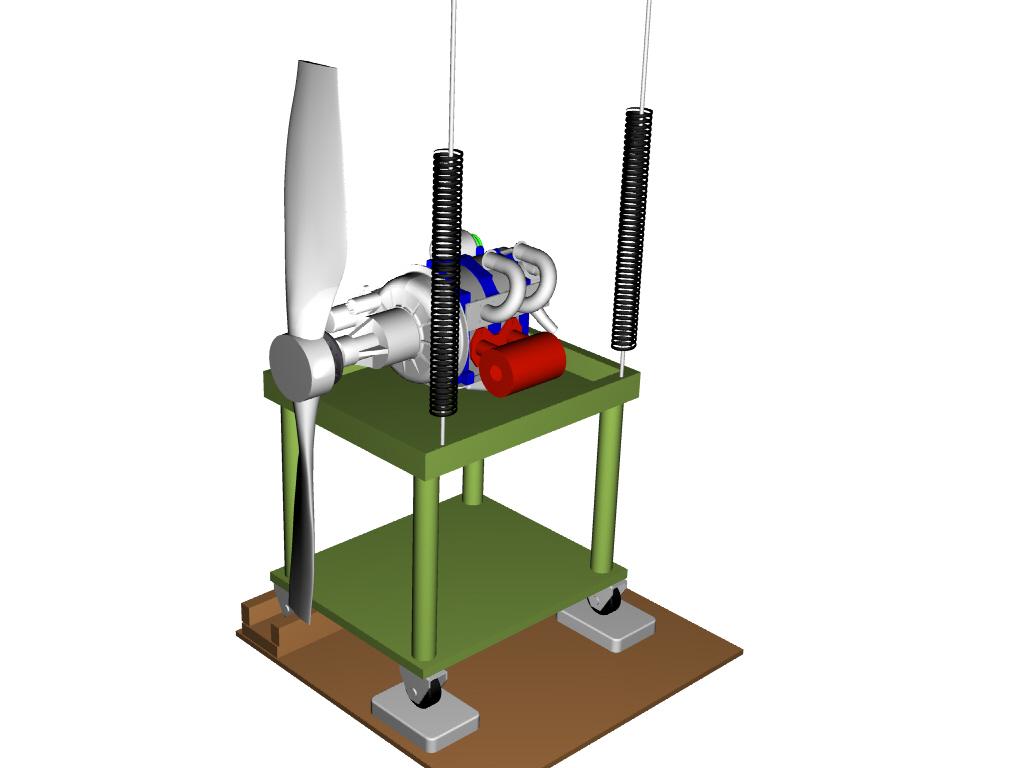
Here is another way to do it for a 20 HP engine. You should use a 3:1 gear box
between the engine and the automotive brake disk as RPM is much MUCH more
detrimental to a red hot spinning disk than heat alone. In other words there is
always the possibility of the disk exploding with catastrophic results. You
don't want to be around when that happens.
BTW just because a Mazda is shown in the 3D's DON'T USE THIS DIRECT DRIVE WITH
A MAZDA. IT WILL BLOW UP FOR SURE!!!!! There is far FAR too much energy going
into the disk with a 150 to 250 HP Mazda engine at 7500 RPM.
Paul Lamar
--
The Rotary Engine NewsLetter. Powered by Linux.
ACRE NL web site.
http://www.rotaryeng.net
Youtube key word UTUBPLEASE
Copyright 1998-2008 All world wide rights reserved.