Paul,
Maybe this is old news, maybe not. I was reading about the new GM Volt
and there was an interesting link where they state that Mazda is hard at
work on an extended-range electric vehicle called the E-REV. Here is
what they said that caught my attention.
"Mazda engineers are hard at work trying to develop a rival to the
Chevrolet Volt." Inside sources claim that prototype trials are already
underway using MPV bodyshells *that use a rotary engine to charge the
battery.*
The link is
http://gm-volt.com/2008/08/28/volt-competition-mazdas-secret-e-rev-program-toyota-forwards-plug-in-fleet-to-2009/
Maybe that is where the 16B is destined. Might turn out to be a good
source of engines for years to come.
Mark S.
The Volt is far from a foregone conclusion. Using a engine to charge a battery
and then using the battery to run a motor to move the car is not a good idea.
eff.1 X eff.2 X eff.3 X eff.4 equals low efficiency (eff.) overall.
The only thing in favor of this heavy approach is if you recover the braking
energy. The current hybrids are marginally cost effective for highway use in all
climates. Here in LA most people spend most of the time on the freeway at 80 MPH
or above. Hybrids are hauling around useless extra weight in that mode of
driving. The hybrid's piston engine is doing all the work. Flat city use of
current hybrids is cost effective in moderate climates due to the recovery of
the braking energy.
A friend of mine has a hybrid and he lives on the top of a hill. Going up the
hill his car gets bad MPG because he is hauling the extra weight of motors,
generators and batteries. The only way he can mitigate that is to coast down the
hill.
Another factor is Toyota hybrids are very carefully stream lined. The typical
drag factor (C sub d) for a non hybrid car is .3 or above. A Prius is .26. Why
doesn't Toyota design all their cars with a .26 drag factor?
A third factor is light weight. The Prius uses extensive use of expensive
aluminum and light composite body parts. Why doesn't Toyota build all their cars
out of aluminum and light composite body parts?
A fourth factor is the use low rolling resistance, hard rubber tires pumped up
to high pressure on the Prius.
Same question. The answer is people won't buy them. They will buy low cost,
style and a good ride. Style and good aerodynamics are mutually incompatible.
Take a look at some of the box cars being bought.
The truth is the Prius is a phony car designed as a PR exercise.
Part of the extra cost of building the Prius is chalked up to advertising
and improving the green image of Toyota. As far as I can tell the Volt is in
the same category. IMHO it is a mistake for Mazda to fall into that trap.
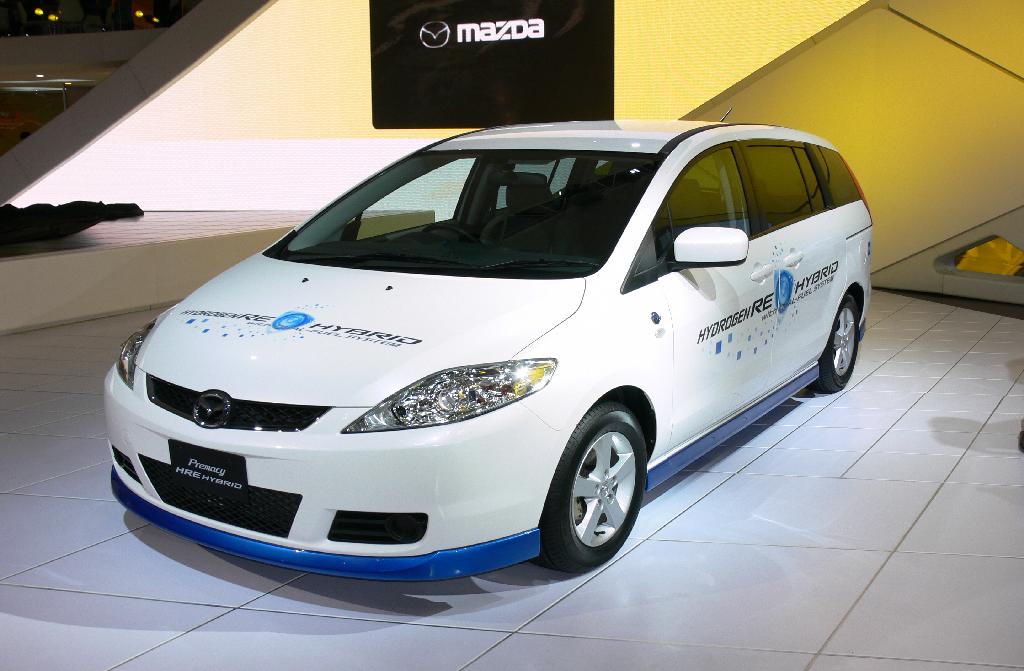
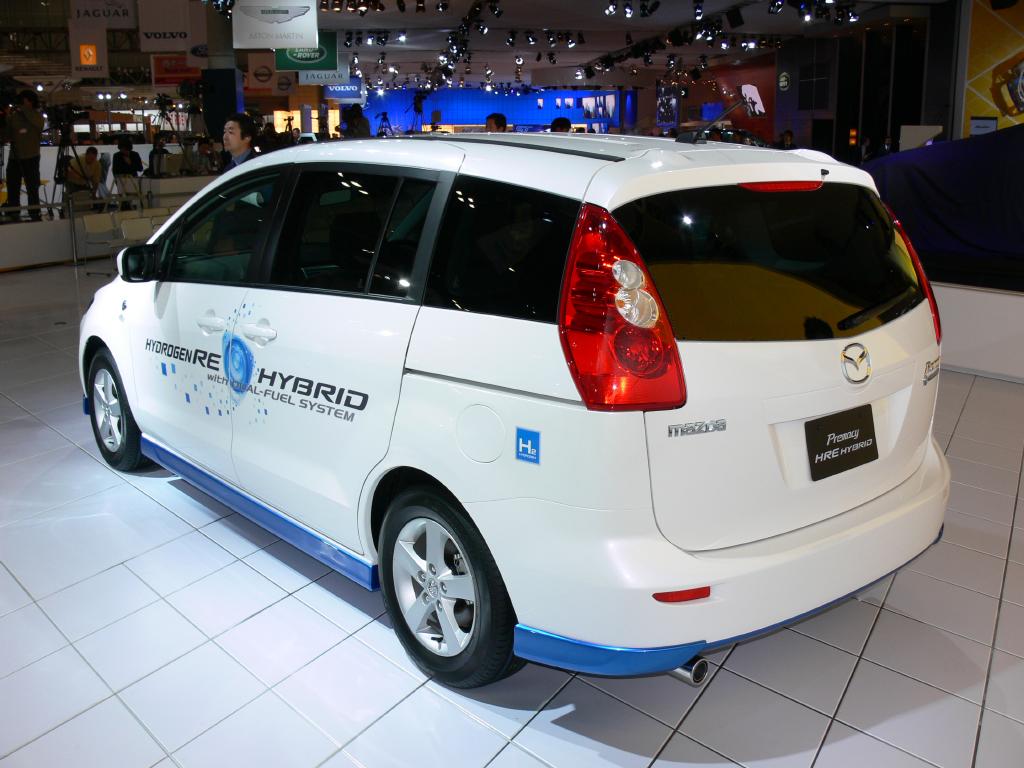
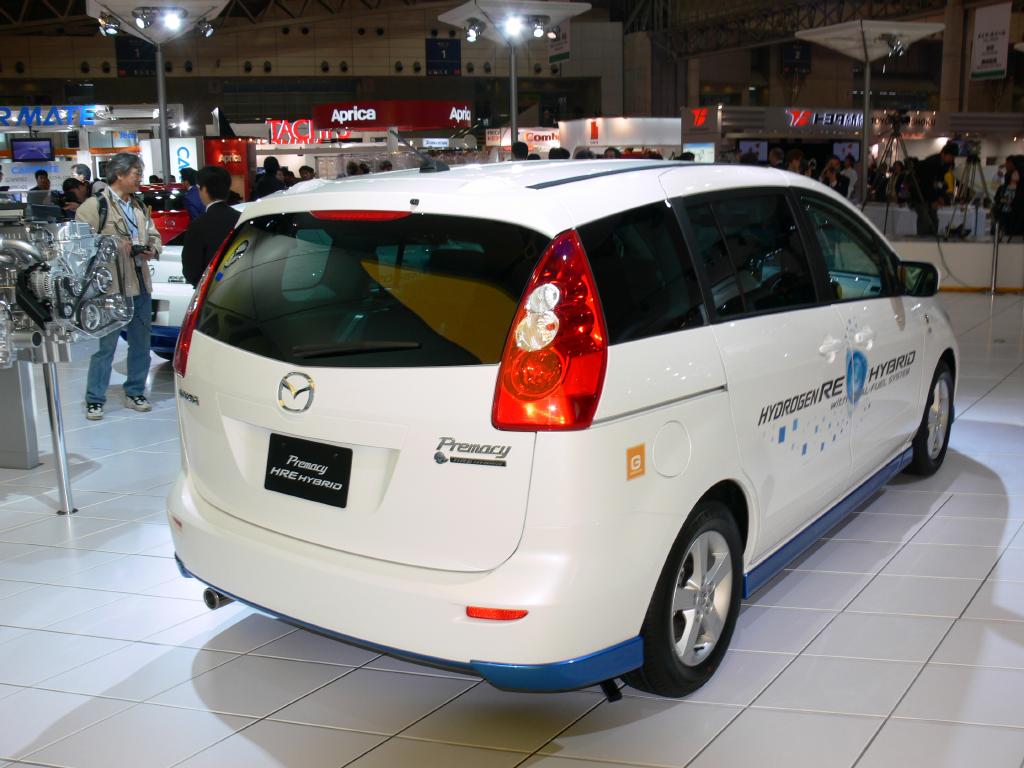
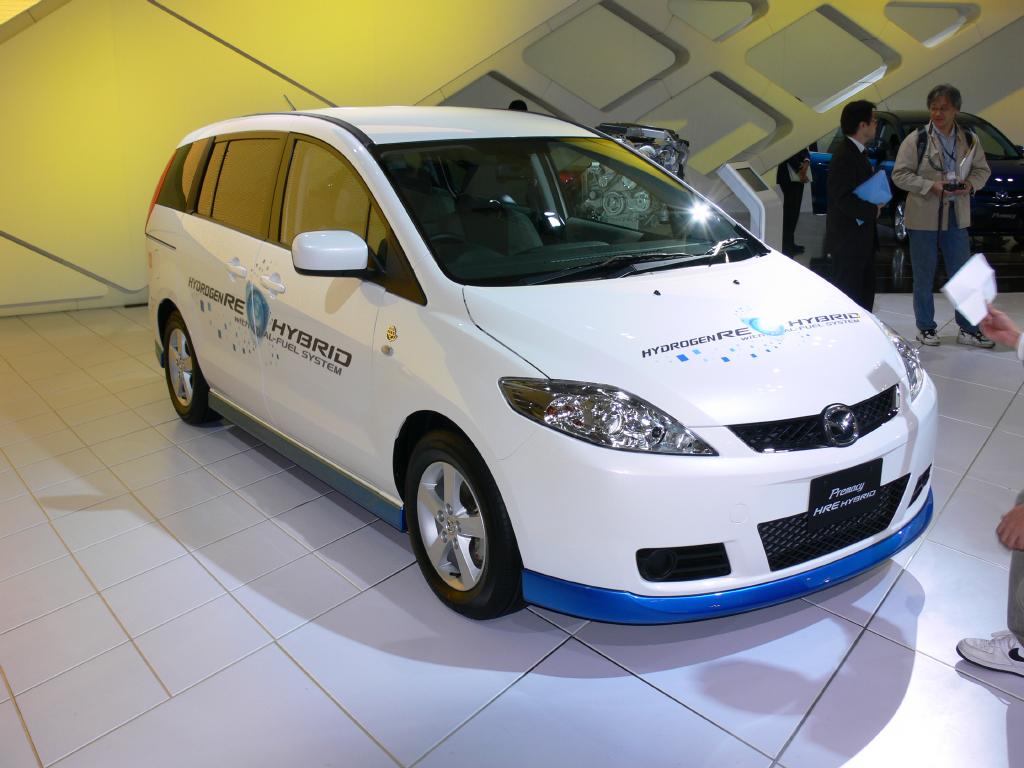
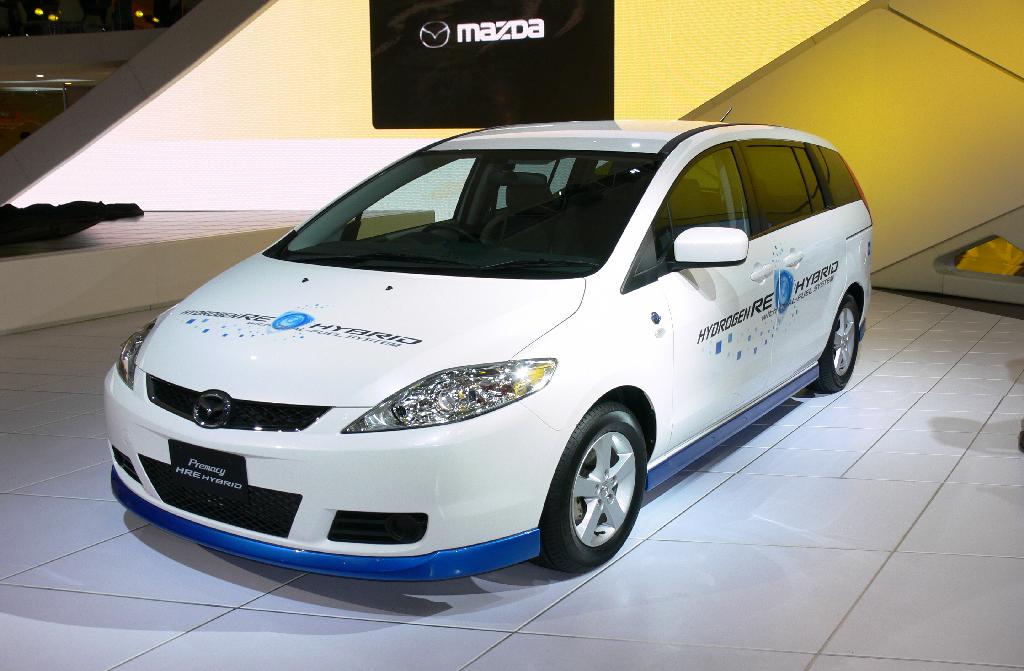
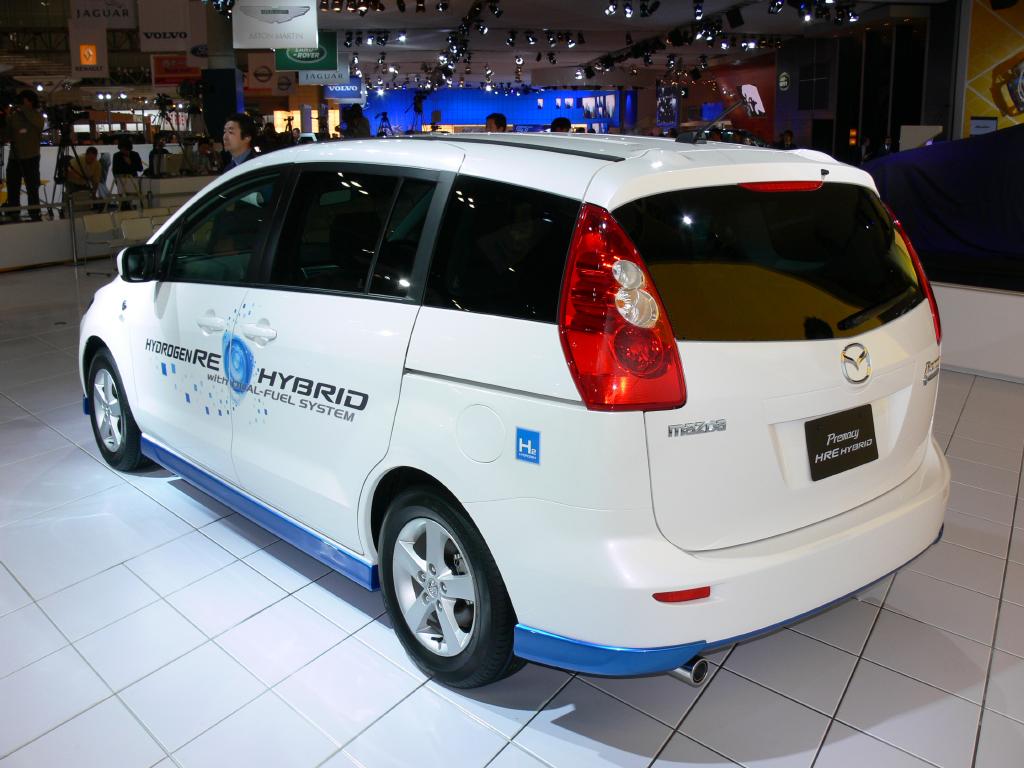
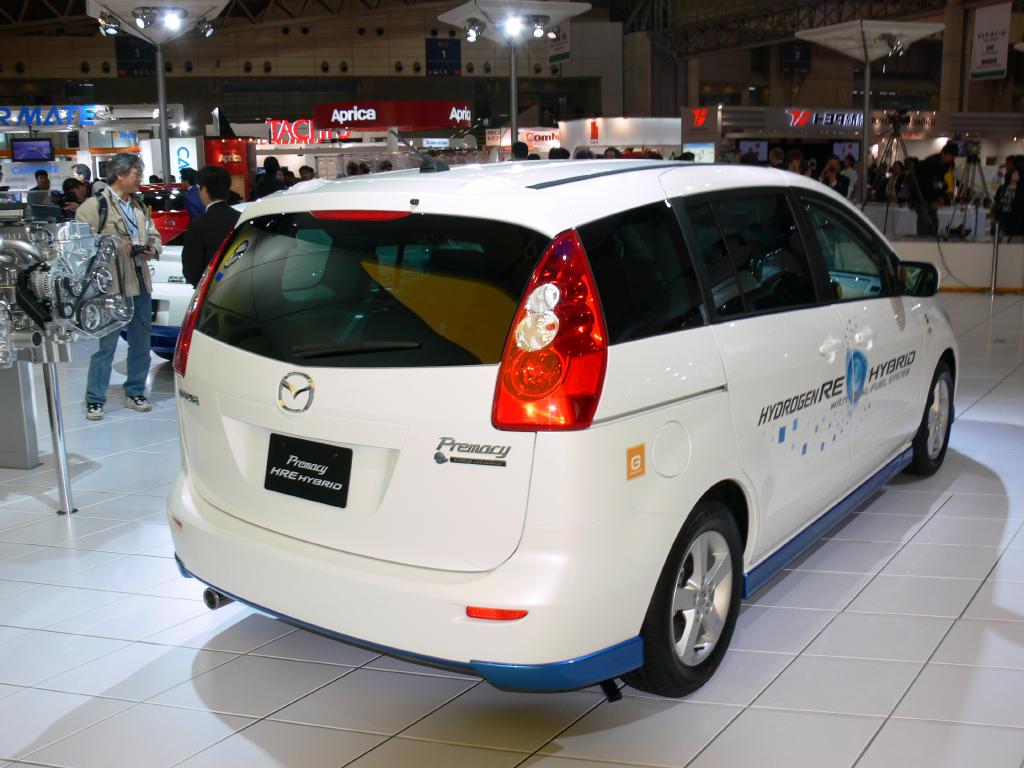
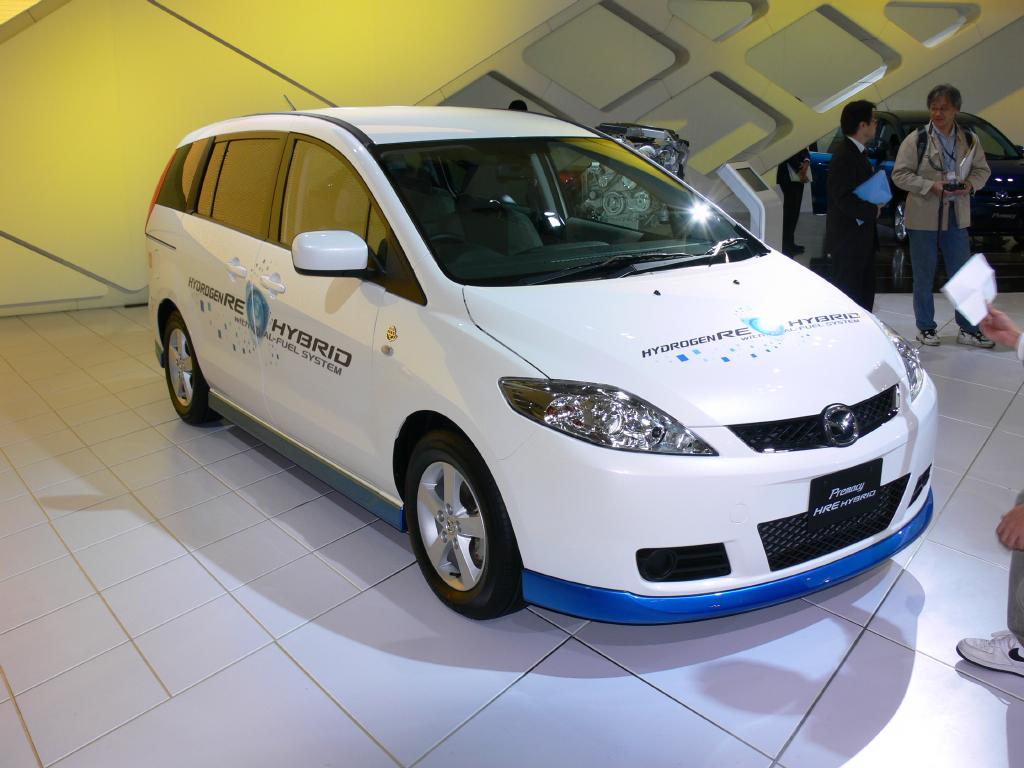
It is also not much of a secret as here is a picture of the Mazda device at the
2005 Tokyo Motor Show.
I am not saying that recovering the braking energy is a bad idea.
What I am saying is using an electric solution to recover braking energy IS a
bad idea.
The new KERS (Kinetic Energy Recovery System) used in next years Formula 1 cars
is probably a much more efficient way of doing it as it is not going to add
that much weight. It will use a high speed small flywheel rotating in a vacuum.
This is far better from an energy storage per pound of weight point of view than
any battery/generator system. If you want to convert mechanical energy from one
form to another there is no beating a set of gears. That is why manual gear box
cars get better MPG than traditional torque converter auto transmission cars.
The new automatic shift manual transmissions is an exception and is the wave of
the future.
The most effective thing to do is focus on improving the basic conversion of
fuel to mechanical energy in the first place. Combined cycle gas turbine power
plants are showing the way with efficiency's over 50%. These units are purely
rotational with nothing reciprocating. A gas turbine followed by a steam turbine
using the waste heat from the gas turbine is how it is done. Rotating internal
combustion engines, like the turbine and the rotary engine, are intrinsically
light weight devices. Engine weight and overall empty weight is everything when
it comes to efficiently moving a vehicle. Less empty weight generally means (but
not always) there was less energy used to manufacture the materials. The
solution is marry the rotary to the turbine to recovery some of the waste heat
and use KERS to recover some of the braking energy. Once the local overall
vehicle efficiency approaches a remote electric power plant there is no point to
an electric car or hybrid.
That is of course unless we convert to nuclear power like the rest of civilized
world.
Paul Lamar
--
The Rotary Engine NewsLetter. Powered by Linux.
ACRE NL web site.
http://www.rotaryeng.net
Youtube key word UTUBPLEASE
Copyright 1998-2008 All world wide rights reserved.