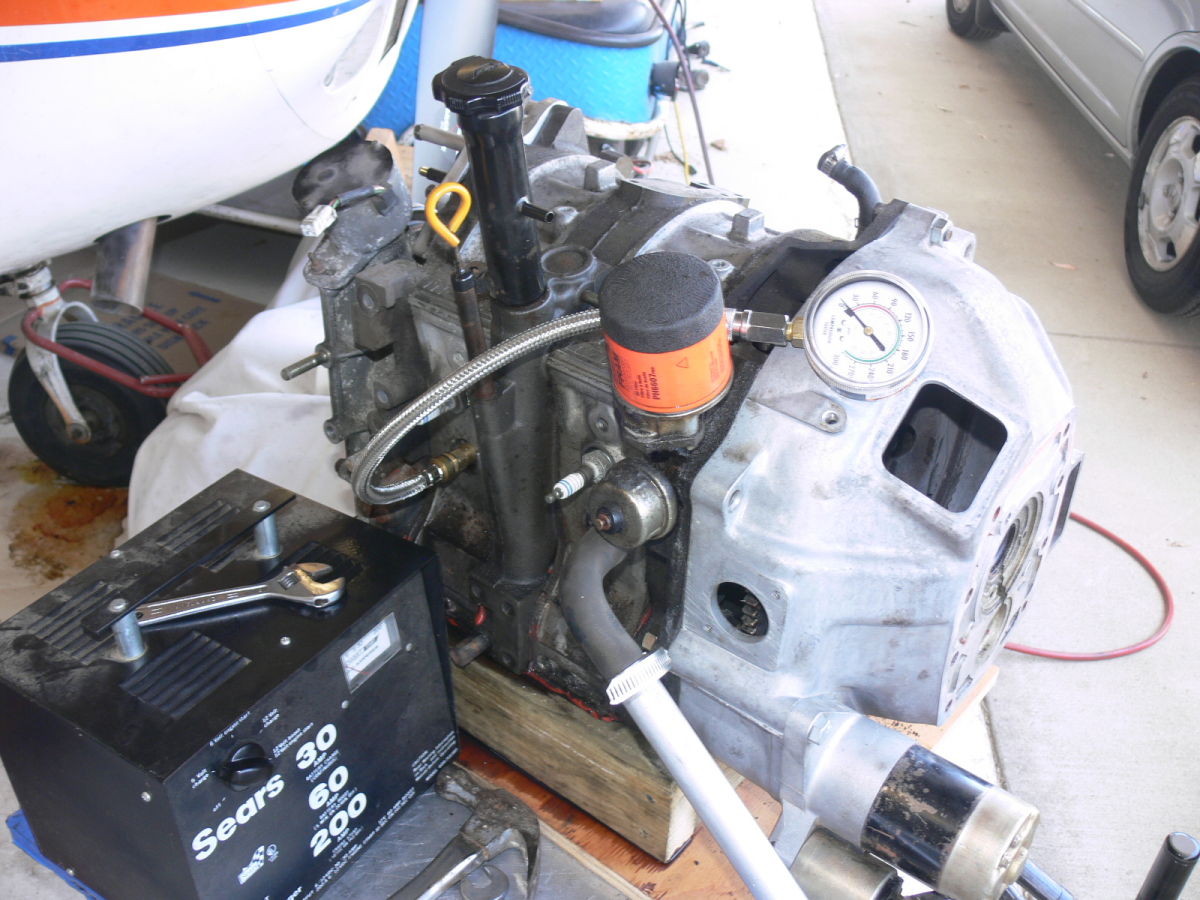
For the new guys.
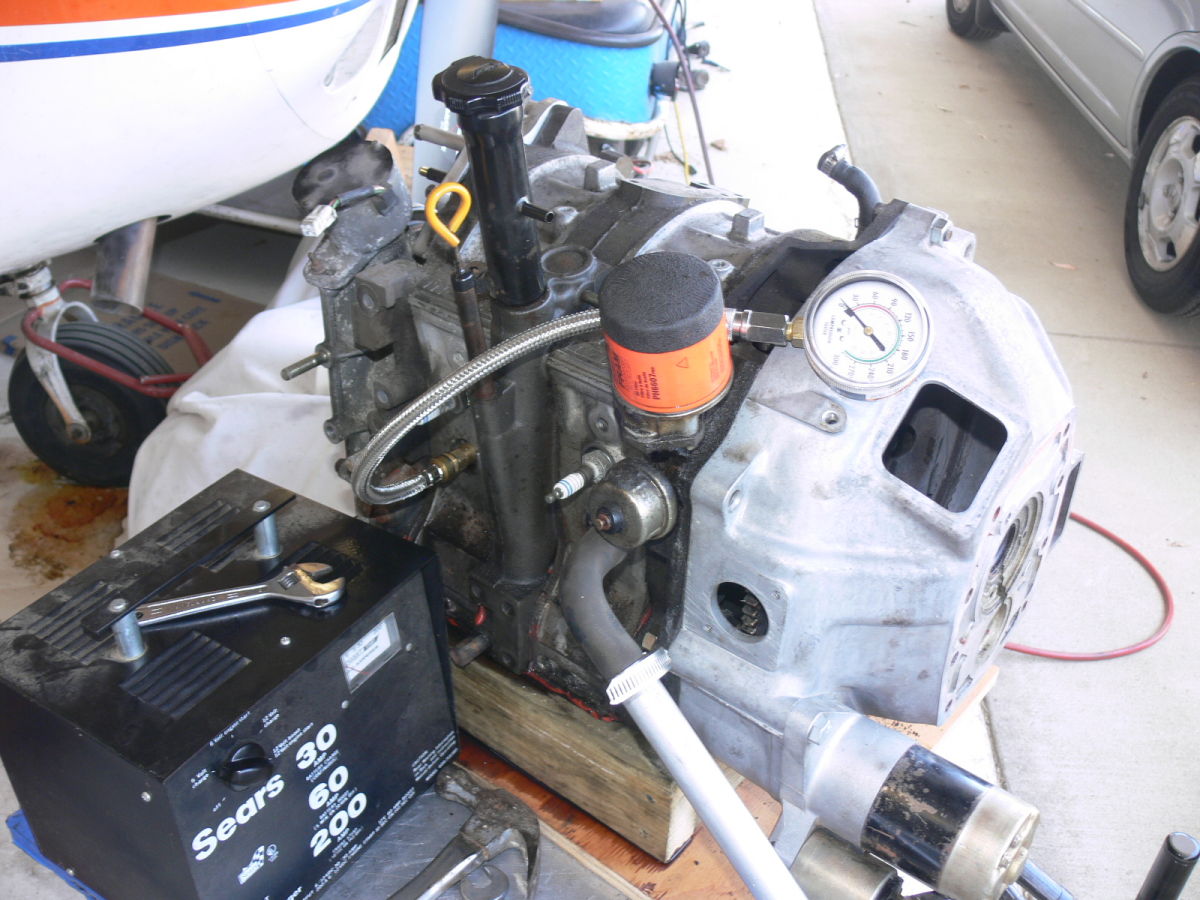
Harbor Freight has a 3/4 inch impact wrench for $70 bucks.
A real bargain. It had this nut off in 15 seconds.
A 1/2 inch will work with time but why fool around.
It is well worth having the right tool.
Next you smack it with a 10 pound sledge. No wimpy claw hammer will
work.
Paul Lamar
If you have struck the flywheel or counter weight in order to break the
taper fit. Or you have pried on the flywheel or counter weight, or the
engine has been stored by sitting it on the flywheel. Or you did not
install the new thrust assembly yourself or know for a fact that a new
assembly has been installed. You must proceed as though the thrust
assembly has been destroyed, and replace all of the pieces that touch
the thrust bearings, and the thrust bearings. All of the resistance you
feel when you pry on the flywheel, and all of the resistance to you
pounding on the flywheel or counter weight, is generated by the thrust
assembly, and the very tiny needle bearings.
Remove the big nut with an impact gun. Screw the nut back onto the
shaft, but leave a 1/8" gap to the flywheel or counter weight. Place the
factory puller, or the Racing Beat puller, or a home made puller on the
crank and tighten the bolts. If the wheel does not pop off, heat one
spot on the flywheel near the crank very hot. The wheel will pop loose.
If you have not reinstalled the big nut, the flywheel will come off with
the puller attached and make a really ugly mark on the floor, or your foot.
If you have no equipment to remove the nut. Drill through the nut in a
flat, in line with the crank with a 1/8" bit. Make 3 or 4 holes, close
together (touching). Walk the nut off with a punch and light hammer.
Keep the nut for removing the flywheel, and later to mount your big
degree wheel. Buy a new nut or use a nut in good condition.
Buy a new flat washer for the back of the front counter weight. A new
thrust plate. A new washer for the front of the crank (thick) and two
new bearings. Braze the old thrust plate to the bottom of your oil can
to keep it from tipping over. Discard all or the other parts, so they
can never find their way into another engine. The spacer sleeve can be
used again.
A failed bearing produces shards that will slip right through the bug
screen on the oil pickup tube and lock up the oil pump. A common cause
of death in rebuilt street engines.
Lynn E. Hanover
Not all true Lynn. The flywheel and e-shaft combo has lots of inertia so
striking it with a large hammer does not transfer much force to the needle
thrust bearings. It excites the flywheel in its natural resonant vibratory mode
which releases it from the e-shaft. I agree with everything else.
Those needle thrust bearings are a lot tougher than they appear. Tracy ran his
engine for 650 hours with the engine thrust bearing taking about 500 pounds of
axial force from the Ford helical sun gear. Indentations where formed in the
e-shaft pilot bearing area by the spline on the PSRU input shaft. At that time
there was no separate sun gear thrust bearing in the Ross PSRU he was using. Yes
it destroyed the engine needle thrust bearing but it took a long time. The
engine did not stop running.
Perry Mick flew his direct drive ducted fan rotary for many hours with the
engine needle thrust bearing taking about 500 pounds of prop thrust. Yes it
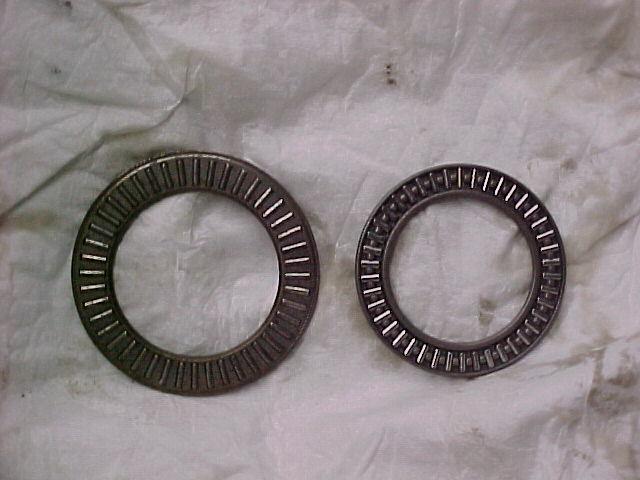
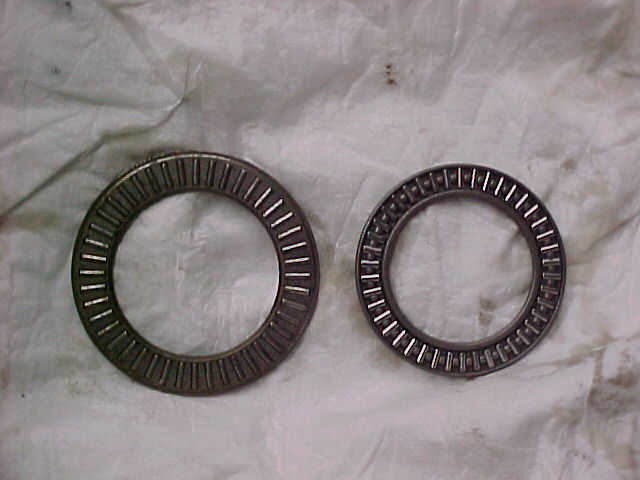
destroyed the bearing but it took a long time. Bad 2nd gen bearing on the right
with the new larger 3rd gen bearing on the left. Again the engine did not stop
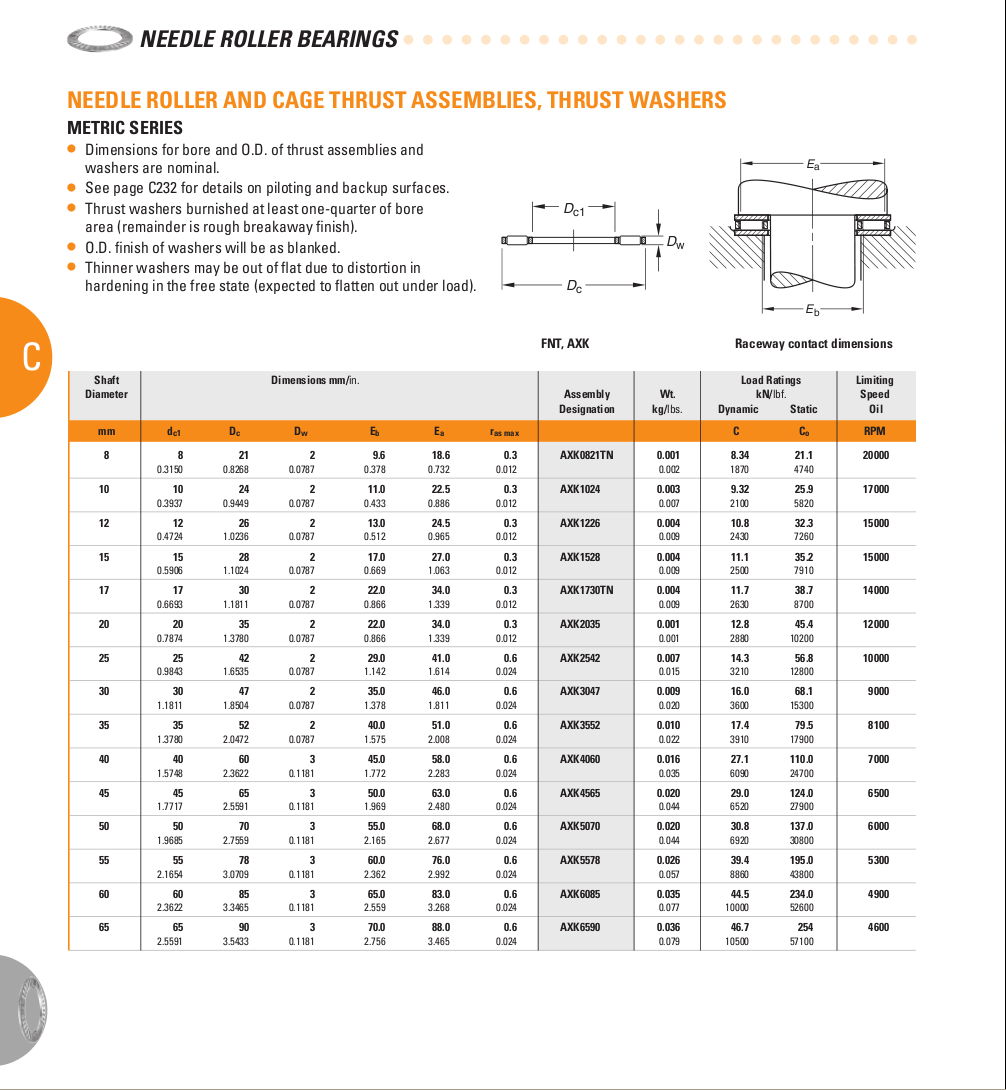
running. Those bearings have static ratings in the 10,000 to 20,000 pound
category. See the attached page.
I am not saying they are up to a lot of continuous thrust while running at high
RPM unless they are properly sized. It helps to use two or more back to back as
that reduces the RPM of any one bearing. Tracy now uses three back to back to
take the thrust from the helical sun gear in his new PSRUs. It is high RPM they
don't like. They are very strong however in the static mode. I doubt seriously
you can hurt them by one or two strikes on the flywheel. In most cases they are
replaced anyway when a competent person does an overall as they are quite cheap.
It appears this engine is going to need an over haul anyway as there was no
compression in the front rotor.
Paul Lamar
--
The Rotary Engine NewsLetter. Powered by Linux.
ACRE NL web site.
http://www.rotaryeng.net
Youtube key word UTUBPLEASE
Copyright 1998-2008 All world wide rights reserved.