Hi,, Paul:
My interrest is in a rotary engine replacement for the Garrett
TPE-331-10 (1,000 shp). Reading your website, I see that Racing Beat in
Aneheim built and tested a 900 hp, 3 rotor turbo aircraft engine. Do
you know if they are still developing this engine? I wonder what a 4
rotor version would produce?
The engine would be installed in the (still under development) CompAir
CA11, single engine pressurized experimental aircraft. Depending on
engine selection, cruise speeds will be anywhere from 260-360 ktas at
altitude. The engine of choice for the CA11 is the TPE-331-14 with a
fuel burn of 71 gph (ouch). Purchase of the engine is around $300k (0
time rebuilt) and overhaul is close to that price, as well. TBO is at
least a respectible 5000 hrs. A rotary engine would be less than all of
that, I'm sure, and I look forward to the day that hydrogen is available
as a fuel source.
Thanks in advance and looking forward to your newsletter.
Greg Fleming
London, Ontario, Canada
The 71 gallons an hour for the turbo prop would be roughly
at the 680 HP cruise level.
Sounds like a perfect application for a turbo four rotor.
Fuel burn at 680 HP level would be about 50 gallons an hour.
The engine can be built up from two rotor parts.
I would contact Jim Mederer at Racing Beat directly.
Jim Mederer <
jimmederer@yahoo.com <mailto:jimmederer@yahoo.com>>
Jim has a lot of experience building rotary engines for aircraft.
Here is one example. He built his first couple of 12A turbo's in 1973.
Also contact Francois at Mistral. They may be interested in building a turbo
four rotor. François Badoux <
f.badoux@mistral-engines.com
<mailto:f.badoux@mistral-engines.com>>
They have a constant speed prop gear box that might be adapted to a four
rotor.
Paul Lamar
I'm absolutely stunned. Every day I'm learning more and more. The
Wankel rotary engine continues to drop my jaw (I have to make sure it
doesn't keep hitting the space bar on my laptop). No wonder you are
fascinated with this design and the promise for an improved aircraft
powerplant.
Here's my questions / observations so far. I hope you can answer or
comment:
* According to Jim at Racing Beat, they had a lot of problems with
the 3 rotor 900 hp aircraft engine from 1999. Too much heat
warped the housing shape which led to apex seal spring failures.
They didn't dowl the housing back then which might be a cure, but
with using a 13G, 3 rotor model they would still run into
durability problems. I asked him if he could go with a 4 rotor
engine, he said it's not available to the public but 4 rotors
would certainly make things more do-able. With aluminum side
housings and a few other tricks, the weight would not be a big
factor. He also said the BSFC was 0.6. Ouch!! I was hoping for
less than 0.4. I have since asked him about going with 2 blocks
of 2 rotor to make up a 4 rotor engine, but will have to wait till
Monday for an answer.
* What do you know about the Mazda Renesis II engines? Are they
available to the public in the 2 block so I could put 2 together
to make a 4 rotor?? I see that Guru Racer makes a 4 lobe e-shaft,
but who is selling 4 rotor engines? I'm confused. Can engine
shops mix and match to use the best parts available, or is there
some proprietary thing going on where Mazda only lets the public
use certain components?
* I sent an e-mail to Mistral asking about developing a 900 hp 4
rotor turbo engine. No answer back yet from Francois. I like
their PSRU on the website for a couple of reasons. Constant speed
hydraulic prop (as you had mentioned) and a better, slimmer cowl
shape. Does Mistral manufacture their own parts/design or are
they using Mazda technology? They seem to have a nice package in
the 360 turbo version, but I can't tell if they're using the
Renesis design or their own.
* I also enjoy your discussions on turbo-compound. How would you
set it up on a rotary engine?? I'm thinking the exhaust would
first pass thru the turbocharger for induction air, then the
exhaust would travel a bit further back and thru another
turbocharger housing mounted on one of the back accessory pads,
with appropriate gear reduction to optimize the turbo speed
efficiency, and augment the mechanical power output. From a 900
hp engine, would there be an extra 50+ hp added to the driveshaft??
* Does ceramic coating peak you interest or do you think the
potential gain in efficiency is too little?
* The Mazda gas/hydrogen hybrid is interesting. My ultimate goal is
a hydrogen airplane but, with today's technology, there would be
no range due to limited storage. However, with a hybrid at the
"flick of a switch" (according to Mazda), you could take-off and
climb on gas, then once in cruise, you could switch to H2. Mazda
claims that the power drops by about 50% when using H2, but that
would work for long range cruise setting. Sounds too simple but
maybe there's room for development. I have a few contacts working
on H2 on demand in development.
* After reading the discussions on engine cooling/radiator
placement, I couldn't find any info on how to get the P-51
efficiencies from the radiator. You know, the hot air exiting
with a force equal to the incoming cool air?? Zero net drag??
* So, how does all this fit together for a guy like me trying to buy
a kit plane that calls for a turboprop, and I want to replace it
with a monster rotary engine? I will have no problems buying the
plane, but I will need to get everything developed, built, tested
and in place within 5 years to have the engine ready to mount.
Where do I start?
* I would trust Mistral to build the 4 rotor engine, with the PSRU,
the ECUs, the turbos, etc. but would need someone like Jim at
Racing Beat to modify, enhance, lighten, add the turbo-compound,
etc. Then I would need a company up to the task of developing the
firewall forward installation with all the hoses, lines, ducting,
wires, mounts, controls. Wow!! Maybe 5 years in not enough time.
Thanks for your thoughts
Greg
I know this is going to come as somewhat a shock but Jim is somewhat behind the
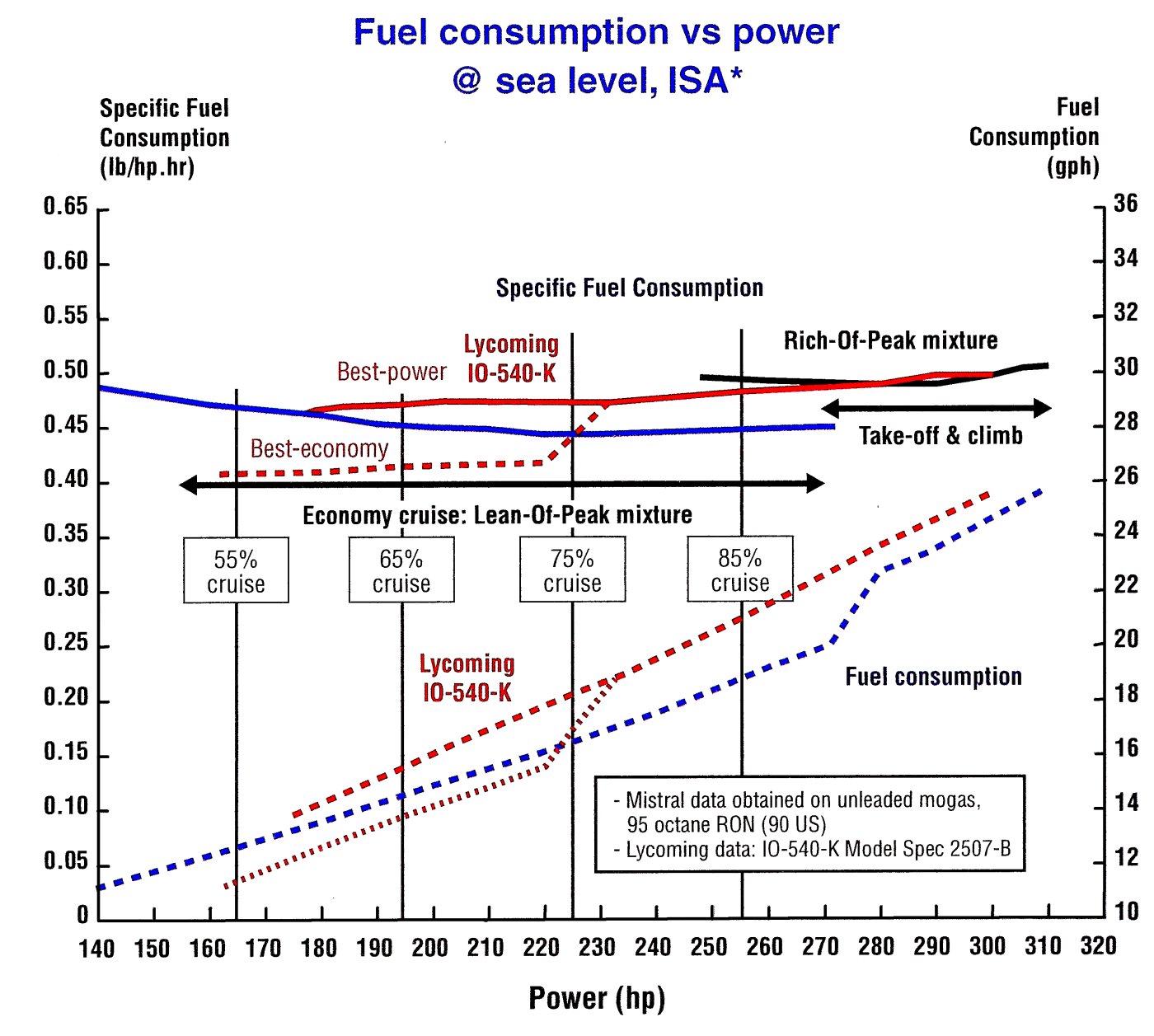
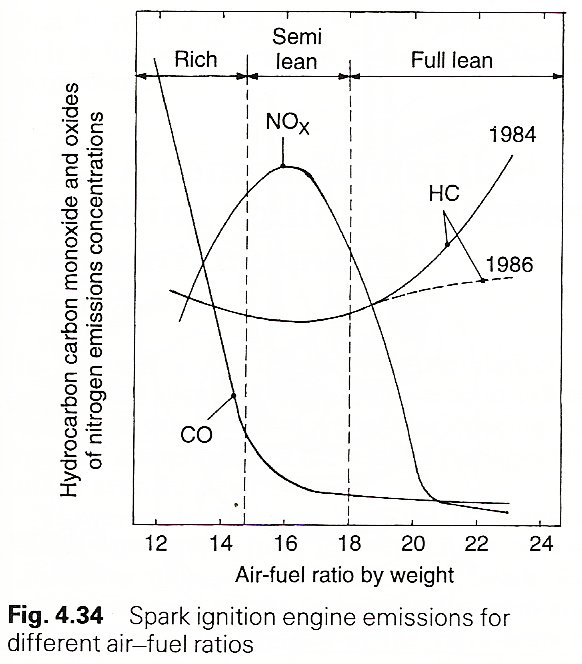
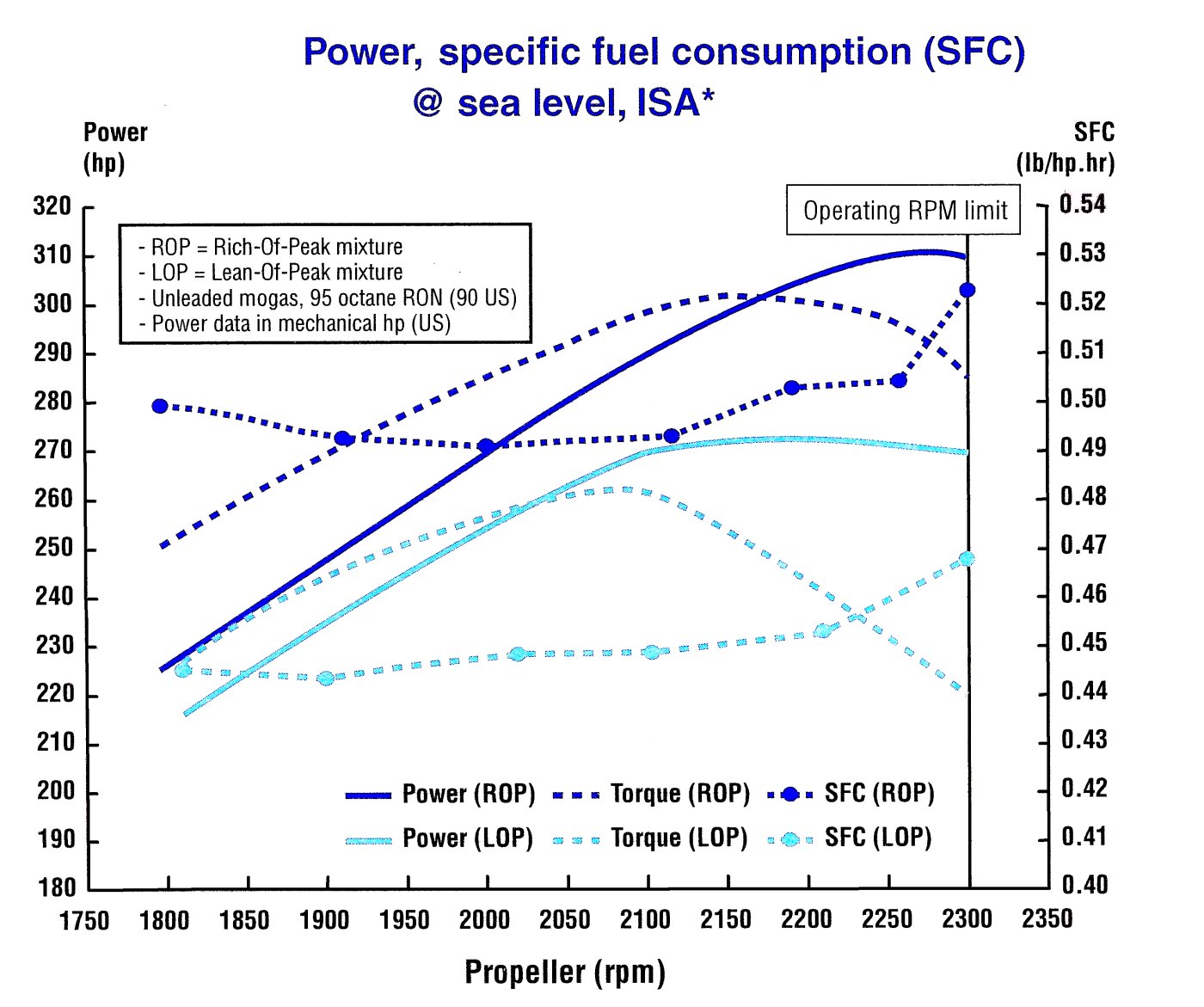
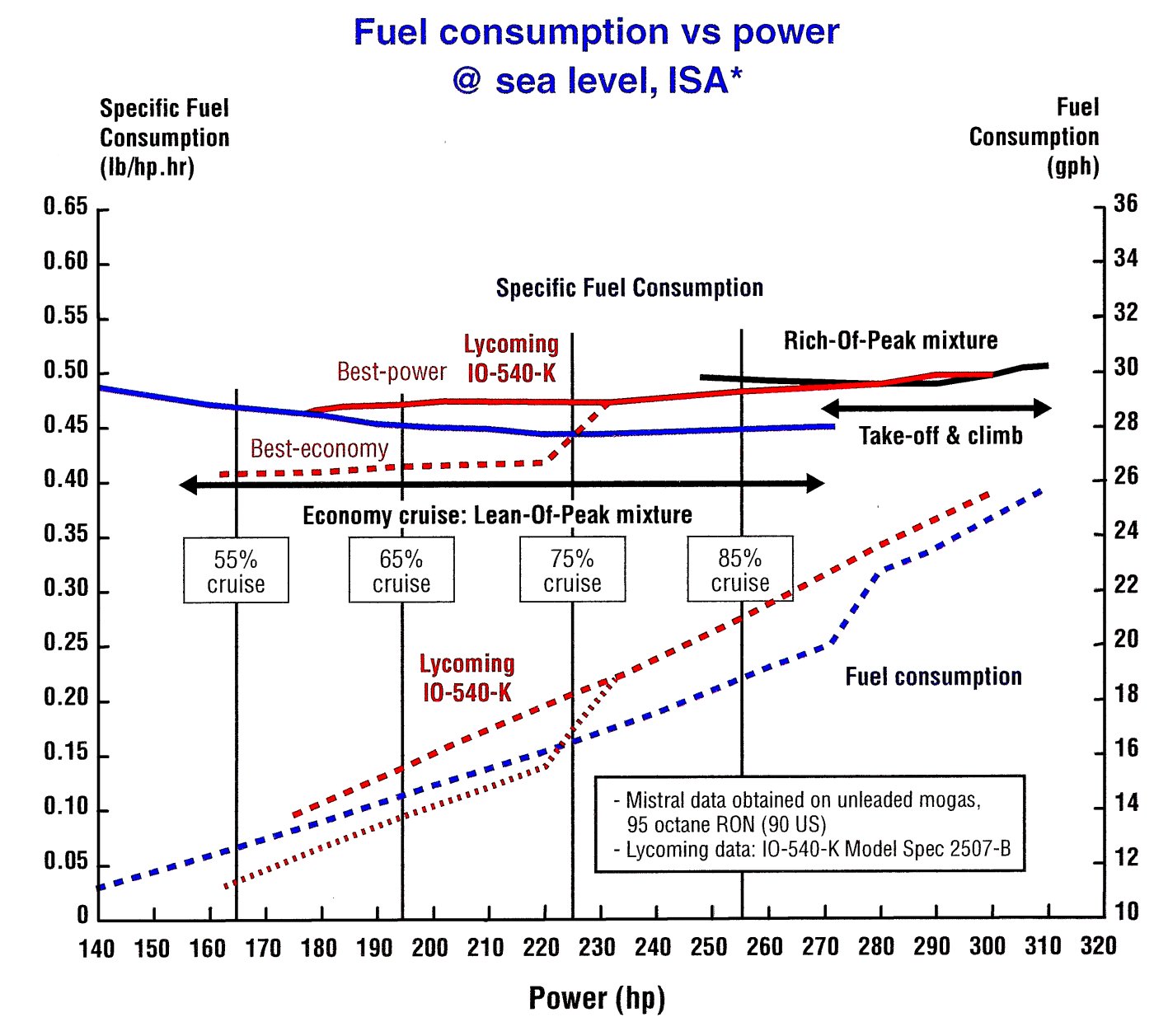
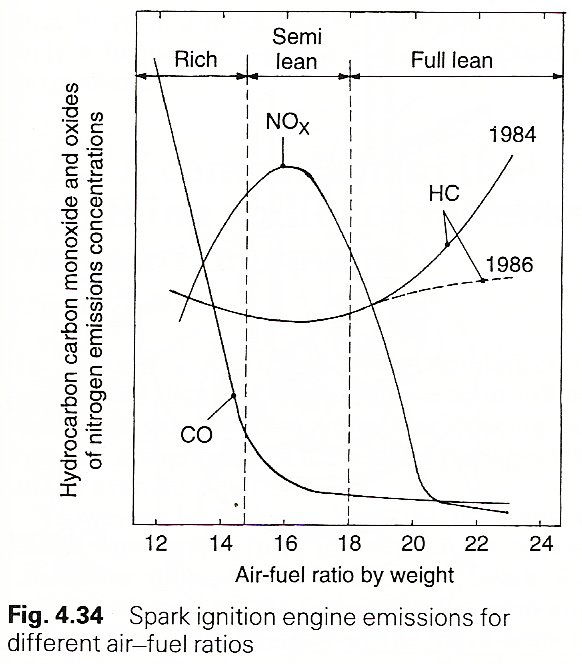
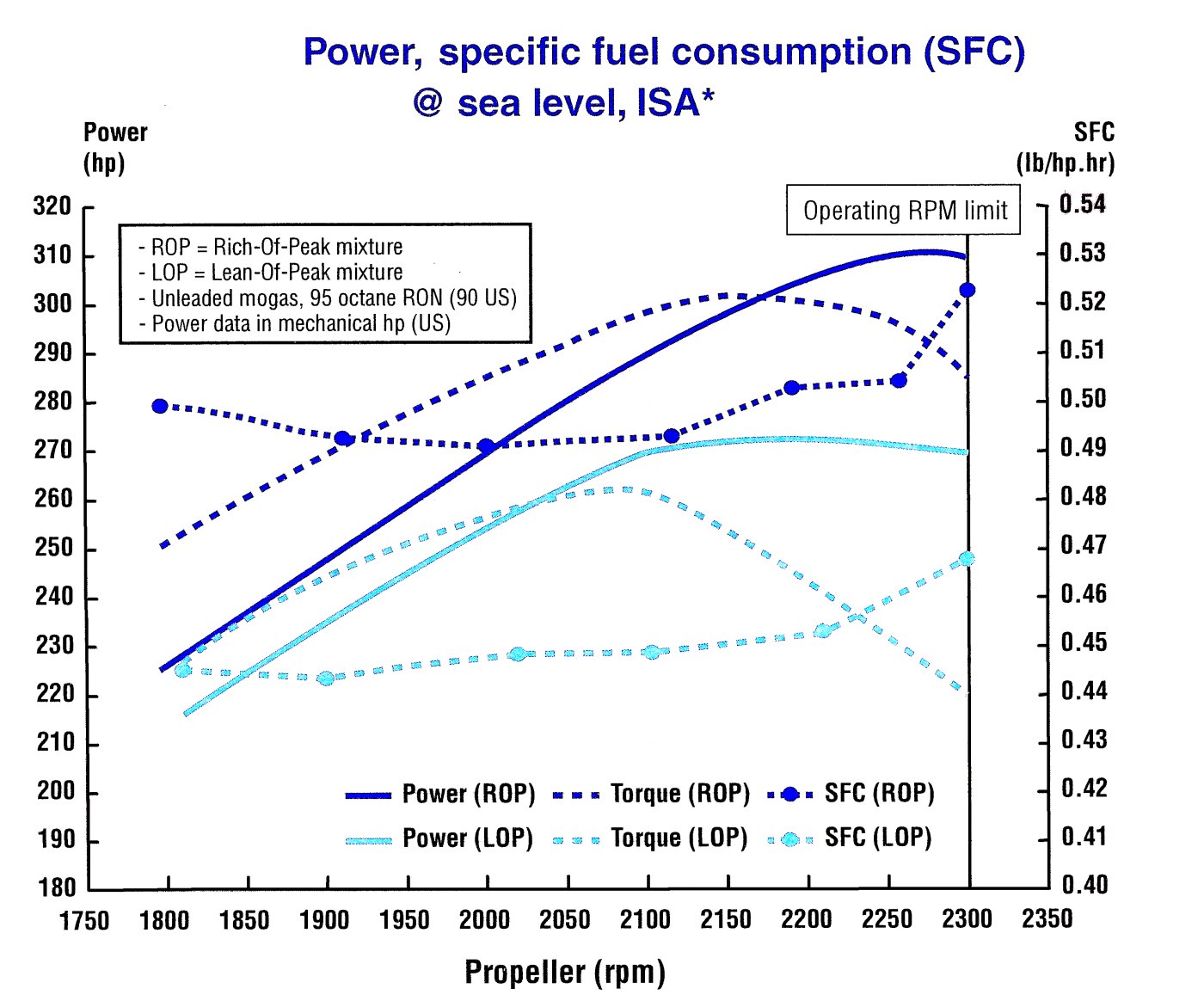
the times on this. Both Tracy Crook, Mistral, Mazda and others have seen .47
BSFC by judicious leaning at cruise HP numbers over the past five years or so.
Jim is perhaps being a bit conservative by suggesting .6 BSFC as he is worried
about detonation fracturing the apex seals. I 'll discuss this with him at Seven
Stock around the 27th of Septemper if I can find him. The only way anybody is
going to see less than .4 BSFC in an aircraft engine will be by turbo compounding.
Yes engine shops can mix and match parts all the way from 1974 or 1975 13B
engines right up to 2008 RX8 engines. At this point in time it is hard to say
what is the best exact mix. 1993 to 2004 3rd gen parts appear to be the best
choice right at the moment IMHO.
Mistral can build and have built non certified engines out of Mazda parts.
Generally and currently they are making all their own parts to meet the required
FAA certification paper trail.
The P51 style cooling system requires a custom designed aircraft as it is not a
good idea to cut larger holes in the fuselage unless one knows exactly what one
is doing.
So far we have had bad results with ceramic coatings. Too risky for aircraft
engines at this point in time IMHO.
You are quite right. This project is a challenge and nobody has taken on such a
project so far. I remain optimistic that someday somebody will. The cost and
fuel burn of small turbo prop engines makes it not that far out of sight. I will
help as much as I can. If you are located in a reasonable accessible place I
could visit if necessary at crucial times.
There is no doubt the potential is there.
Paul Lamar
--
The Rotary Engine NewsLetter. Powered by Linux.
ACRE NL web site.
http://www.rotaryeng.net
Youtube key word UTUBPLEASE
Copyright 1998-2008 All world wide rights reserved.