Dear rotary engine subscribers,
On an aircraft that uses delta wings, if the ailerons and elevators are
fused into elevions; would it be possible for the aircraft to perform a
roll and pitch maneuver at the same time. On the rotaryeng website, the
article about the proposed VTOL uses delta wings.
http://www.rotaryeng.net/VTOL.html
On a standard bank
angle roll, there is a tendency for the aircraft to pitch down. In such
a situation would it be possible to still maintain the roll and pitch up
at the same time or are they mutually exclusive... as in not being able
to use one while the other is in operation.
One other thing. What are the advantages of using delta wings as opposed
to normal wings. A few googled sources point out that delta wings are
efficient only at high speeds and that it consumes more fuel at cruise
velocity to maintain level stable flight while using them. Mr. Lamar,
could you please tell me the reasons as to why you thought delta wings
would be better for your proposed VTOL? Thank you
AJ
A very good question.
Yes it is possible but the chances are if you were in full roll mode
the pitch authority would be reduced. Also vice versa. It depends on the
area
and maximum deflection of the elevons. As Jarrett's message applies to
this situation as well:
"The Delta is going to help a lot with the ability to transition. Delta's
can carry up to ~30 AOA prior to loss of lift."
The cruise efficiency depends on a lot of things. Yes that statement
above may be true with equal wing area. However once you have enough low
speed thrust to take off vertically there is no need for the same or a
lot of wing area. You only need just enough wing area to maintain
altitude at cruise. At high speeds the angle of attack approaches zero
and so too the lift coefficient. Wing wetted area and a shorter span
becomes more important.
The single heaviest part of the structure is the wing spar. If the span
can be reduced the weight of the spar will also be drastically reduced.
Also we need internal volume for fuel and the cooling system and the
delta wing provides
that volume with a given airfoil thickness percentage.
Paul Lamar
Geeezz... Here I am again...trying to convice others that if they'll only
put a miniscule amount of mental energy into this "other" plan, it'll
completely outshine these other suicidal thoughts.
VTOL... already has had an EXTREMELY successful vehicle constructed in the
50's.... yep... I'm STILL talking about the ROTODYNE by Fairey in the UK.
How about using a miniscule amount of brain power to resurrect a
politically
unwelcome ship that has already proven it's safety and functional concepts
in REALITY!!!
I'll vote for safety any day... the rotodyne is PROVEN safer than the VTOL
aspirations this group has embraced. (especially in engine out
environments)... I've witnessed two of my friends die because of unsafe
flying designs...enough for one lifetime. IF the VTOL delta wing can
be
made safe in engine out situations, I'll be more than happy to spend
mental
time looking at it... but I'm not seeing it at this time.
Help resurrect the rotodyne and you'll have a REALLY safe/ fast ship that
will function in VTOL situations, as well as out pace, and outlift the
helecopter genres. A safe VTOL answer for the masses.
Enough talk about this stuff... back to safety in design... gotta FIRST be
able to safely land engine out... IF it passes the first test, then let's
talk about maximizing it's other traits.
I keep shaking my head in disbelief at some people's suicidal desires.
Too
many deaths... they too were only seeking flying enjoyment.
Gary Buster
Tyler, Texas
Gary you are missing a few developments since the 1950s Rotodyne.
VTOLs fly faster than anything with a rotor as there is no advancing
retreating blade scenario at high speeds. It does not matter if the
rotor is unloaded or stopped. One or more of the rotor blades will
be facing in the wrong direction.
The Airframe Parachute System is another option. As are airbags
at low level escape for the pilot and pax.
"AIR BAGS SAFETY DEVICES"
"No vertical takeoff design would be responsible without some
consideration of saving the pilot and passengers in the event of a
mechanical failure during the landing and takeoff modes. If you used two
air bags shaped like this mounted on a person's shoulders and it was 24
feet in diameter the frontal area would be 452 square feet. Given a drag
factor of approximately one and a person weight of 250 pounds the free
fall speed would be drag = V^2 x 452 x .0026 = 250 = man's weight."
"Probably 24 feet diameter is over kill. Inflation is near instantaneous,
unlike a parachute, with two explosive charges such as blank shotgun
shells. One needs about 500 feet to make a parachute work. Many Hollywood
stunt men have repeatably jumped off ten story buildings and landed on air
bags."
"Some of the Mars probes used them for the final descent phase."
-
You need to read the whole thing. http://www.rotaryeng.net/VTOL.html
Paul Lamar
Paul...
Actually, I DO get it. And I'm extrememly focused on rotary wing progress.
I still haven't seen the engine out procedures for the Osprey... I'll bet
they can't just fill 'er up and take off after an engine out landing.
This is EXACTLY what I am describing.... you didn't even mention the fact
that we've (Larry Neal specificially) has already BROKEN the Mu barrier.
*Carter Copter* But I'm not noting that anyone has dreamed dreams of taking
this technology further. The Rotodyne had a 200 MPH capability... but that
was in the 50's... imagine the speed and loading capability it would be
capable of if our minds would spend a miniscule amount to enhance it.
Here's another way of looking at what I'm describing... Let me know when
your VTOL will be practicing engine out procedures. just a single engine
out, touch and go will suffice.
Gary Buster
Tyler Texas
I am not banning gyro copters. They have a place.
You can maybe break the Mu barrier but you can not go much faster.
It is a simple law of physics. The retreating blade airflow cannot be any
faster than the forward motion minus the aft motion. It is not like breaking the
sonic barrier. Airplanes have gone over Mach 3.
VTOL technology still has a ways to go. One of the big advances Boeing is
working on is variable twist blades. Perhaps variable twist blades will allow
auto rotation. Low twist for helicopter mode and high twist for cruise mode.
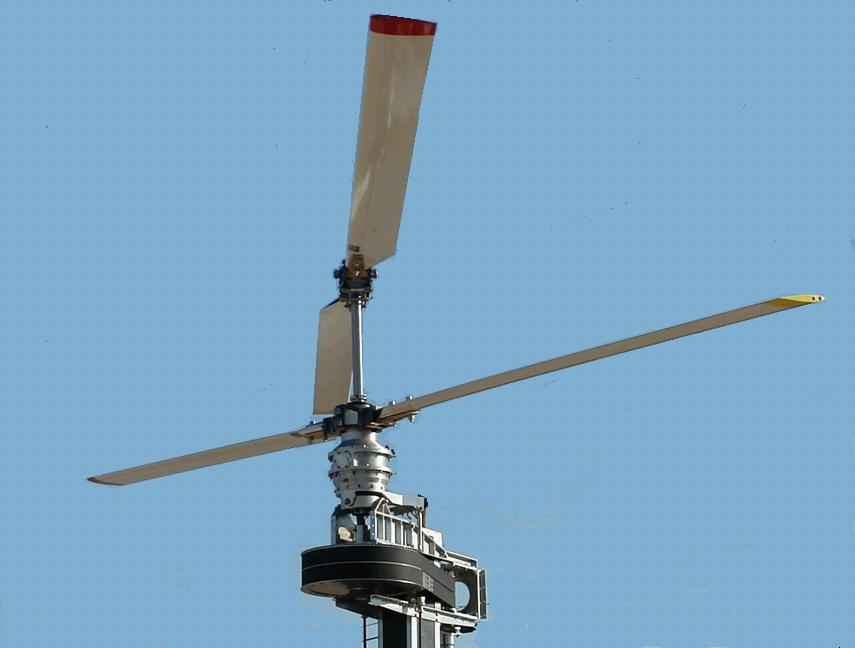
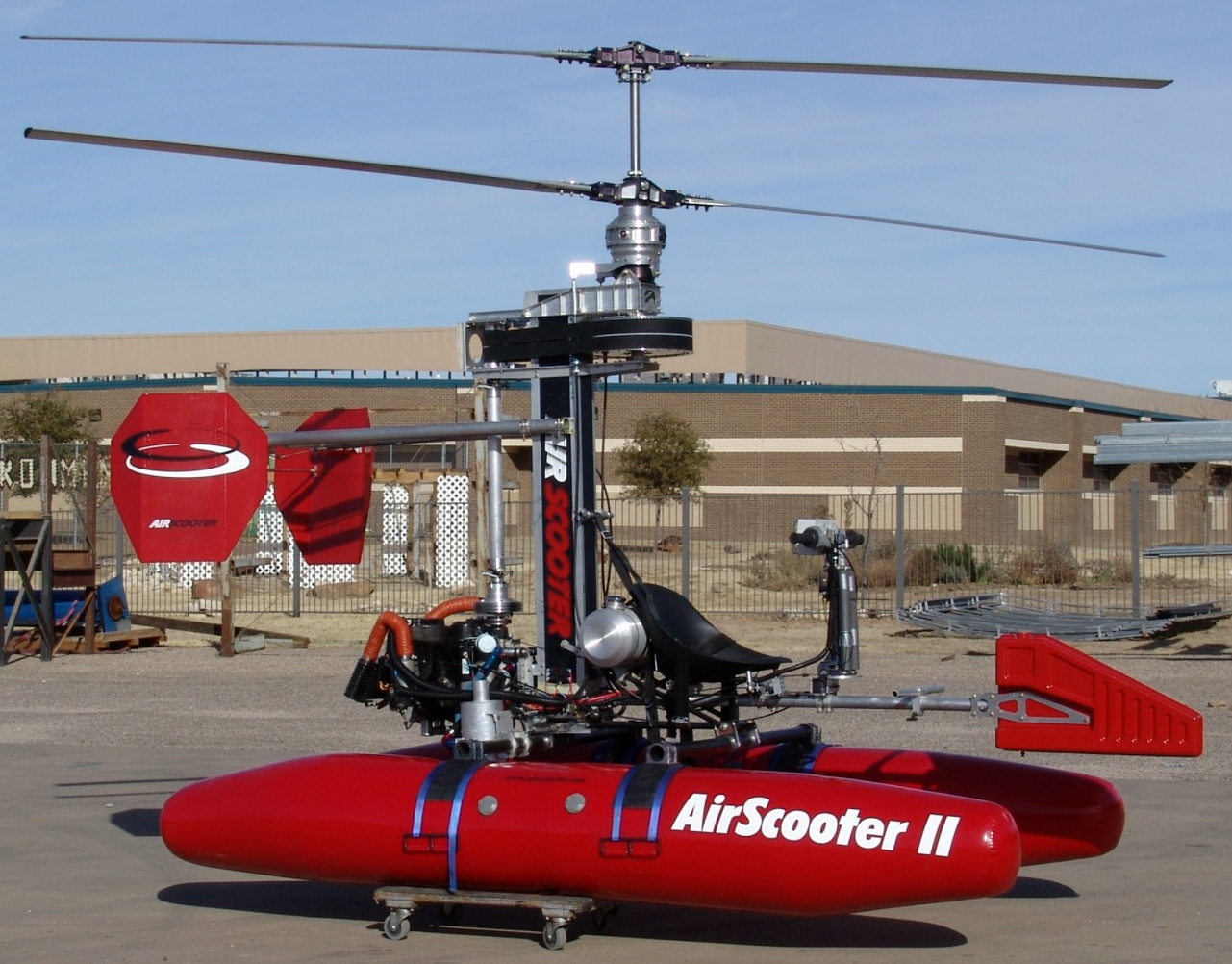
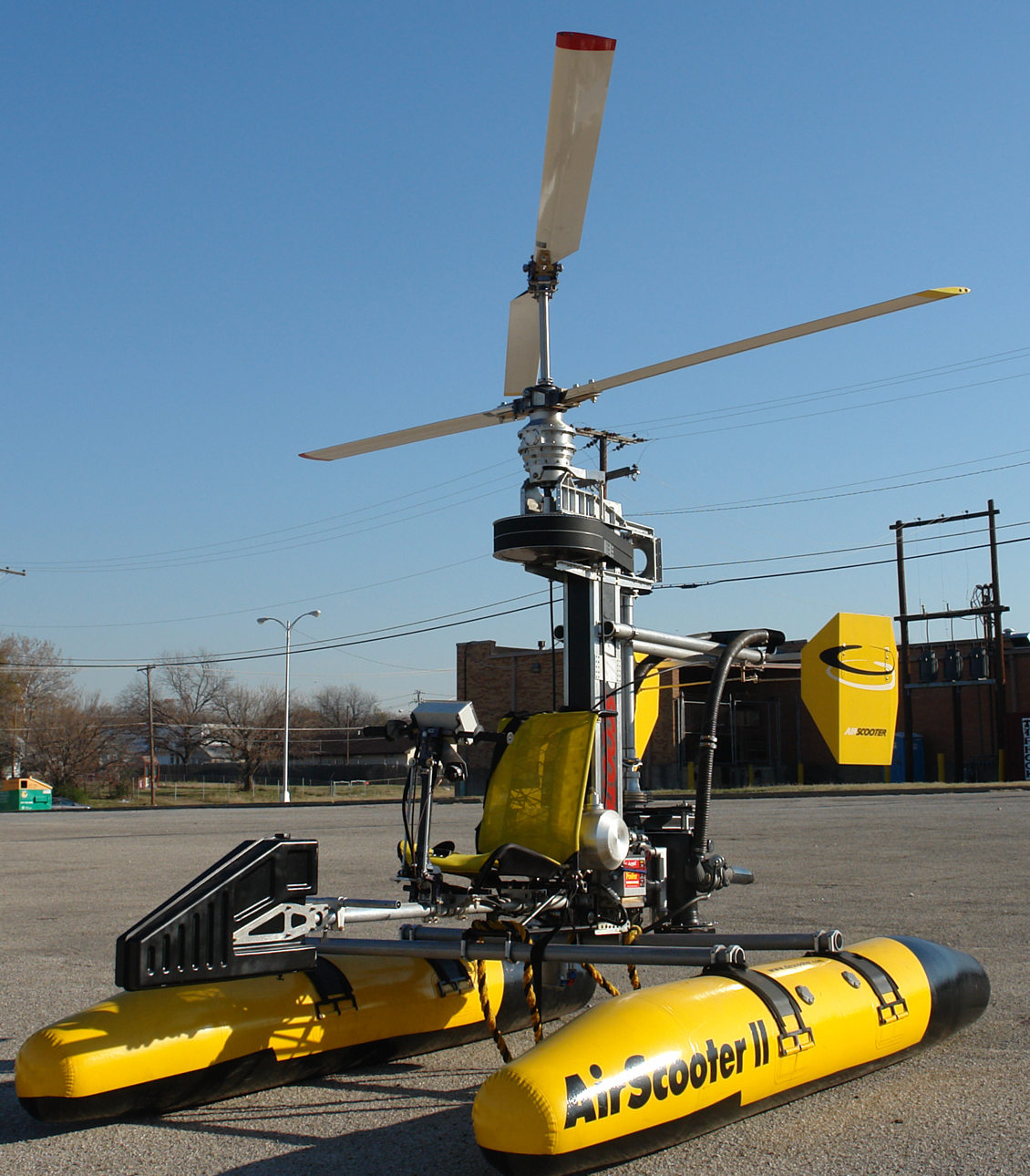
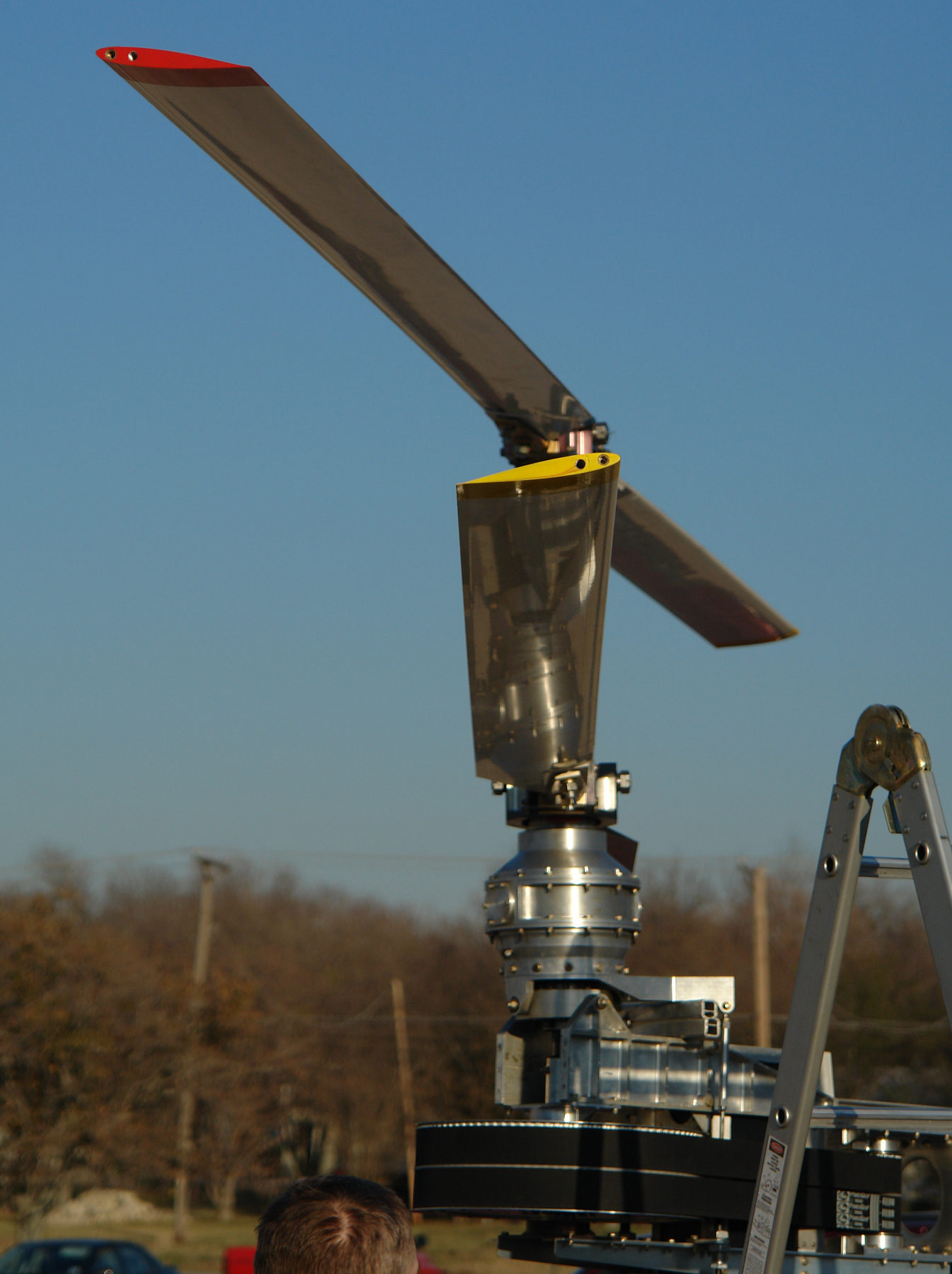
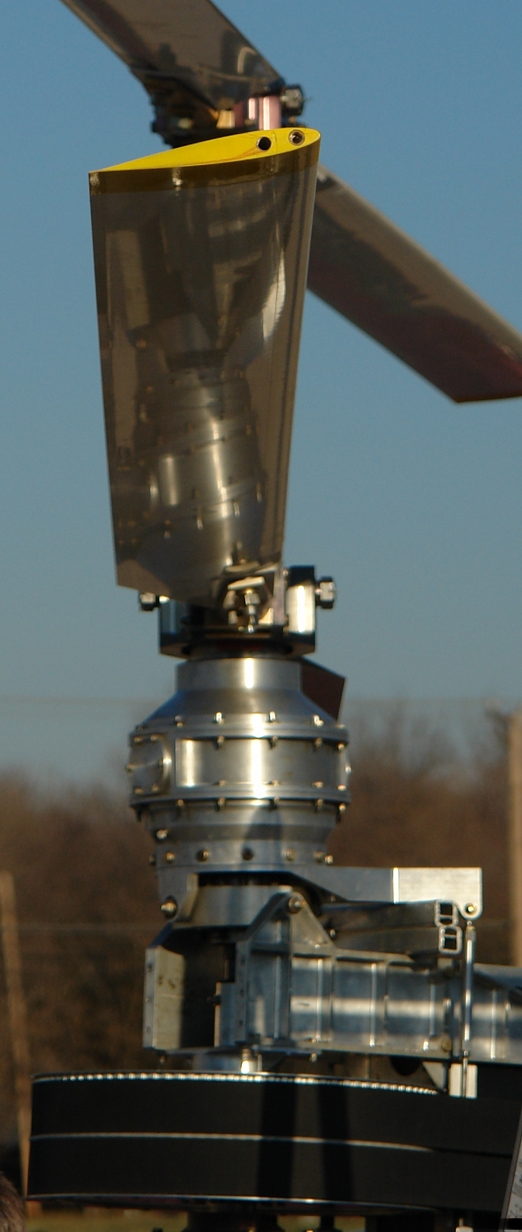
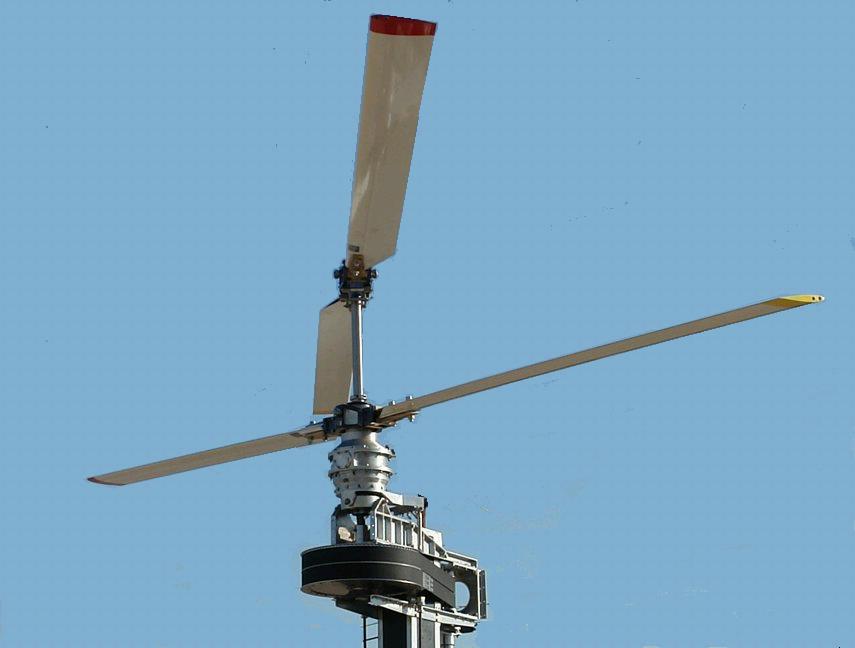
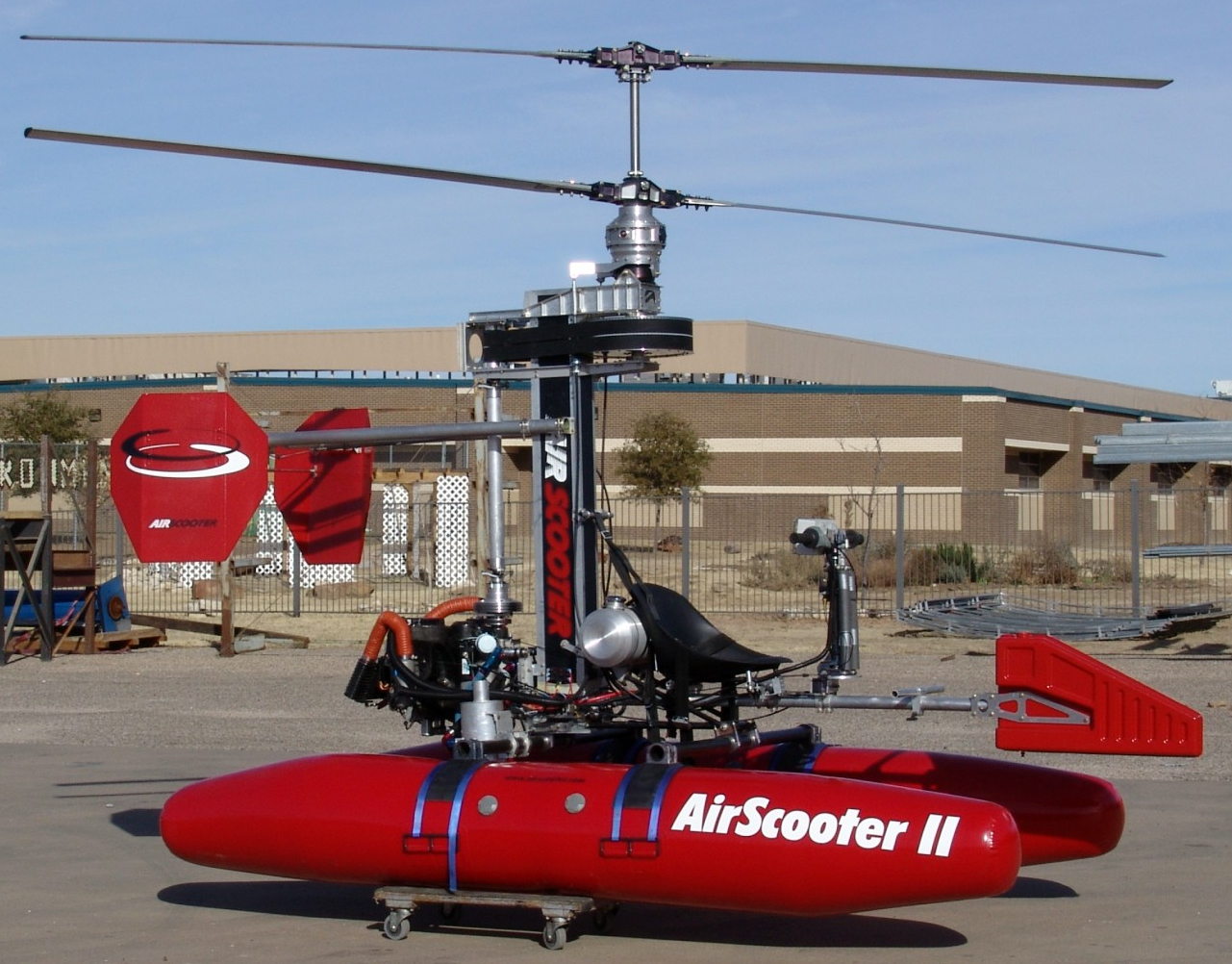
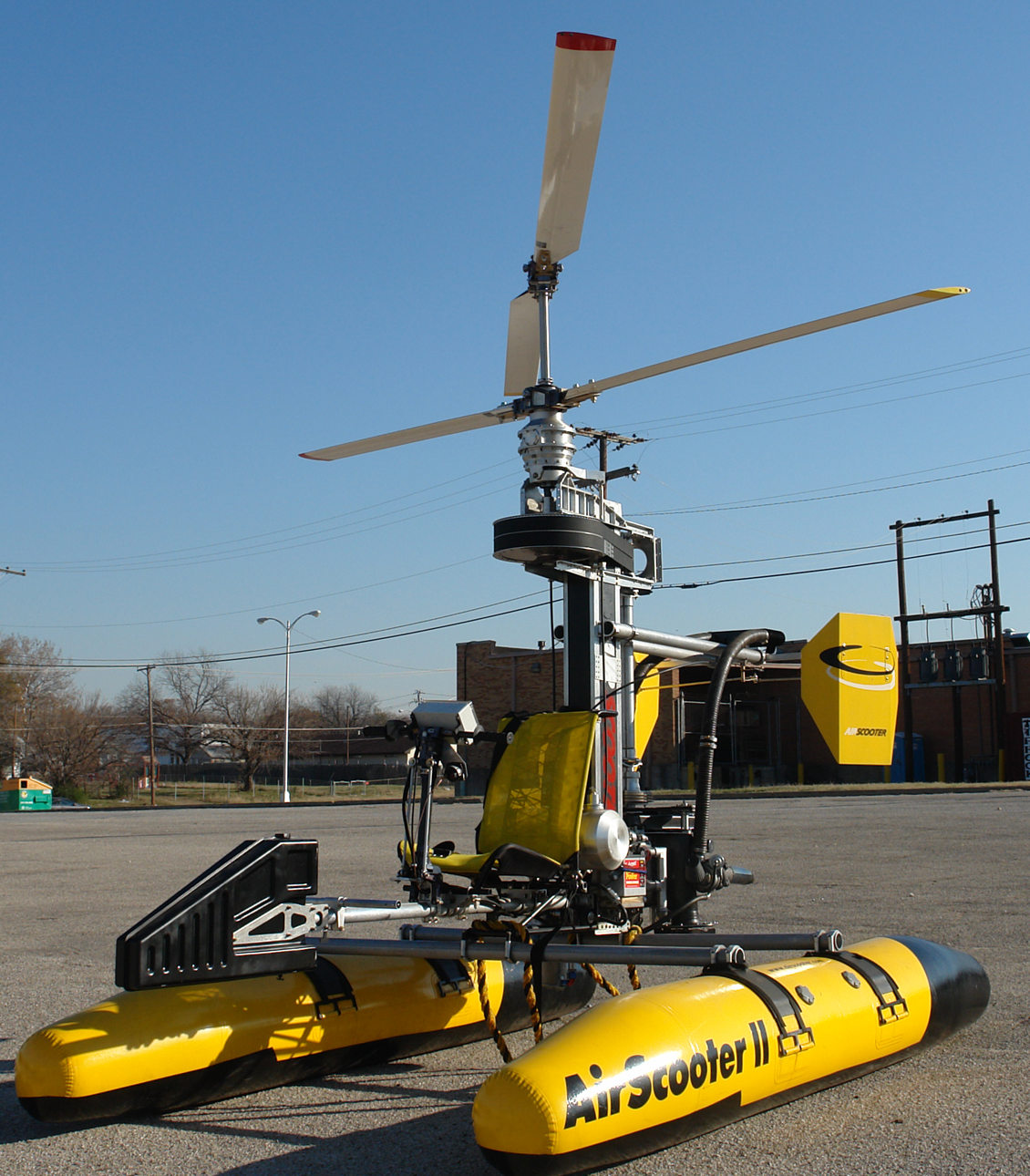
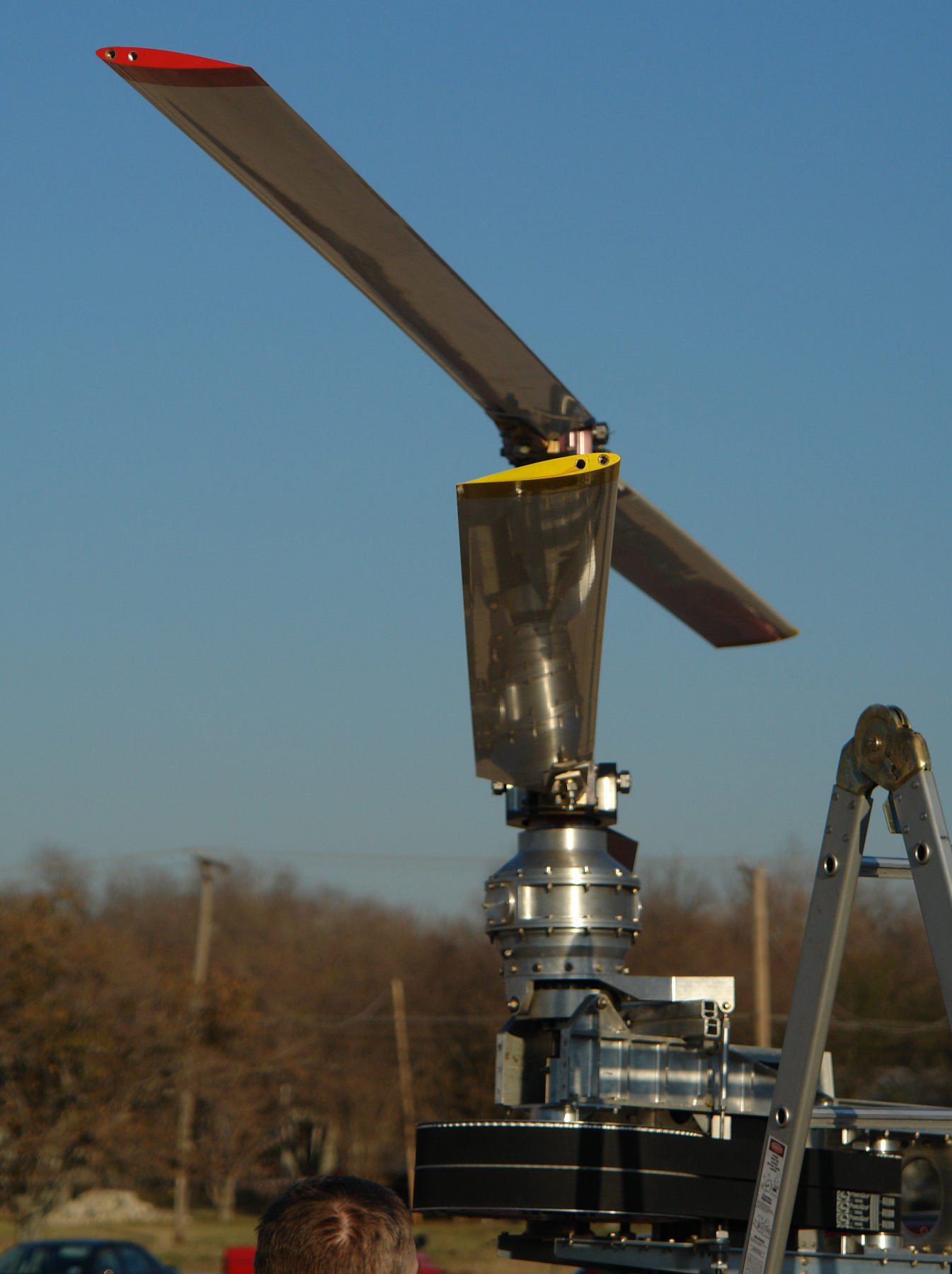
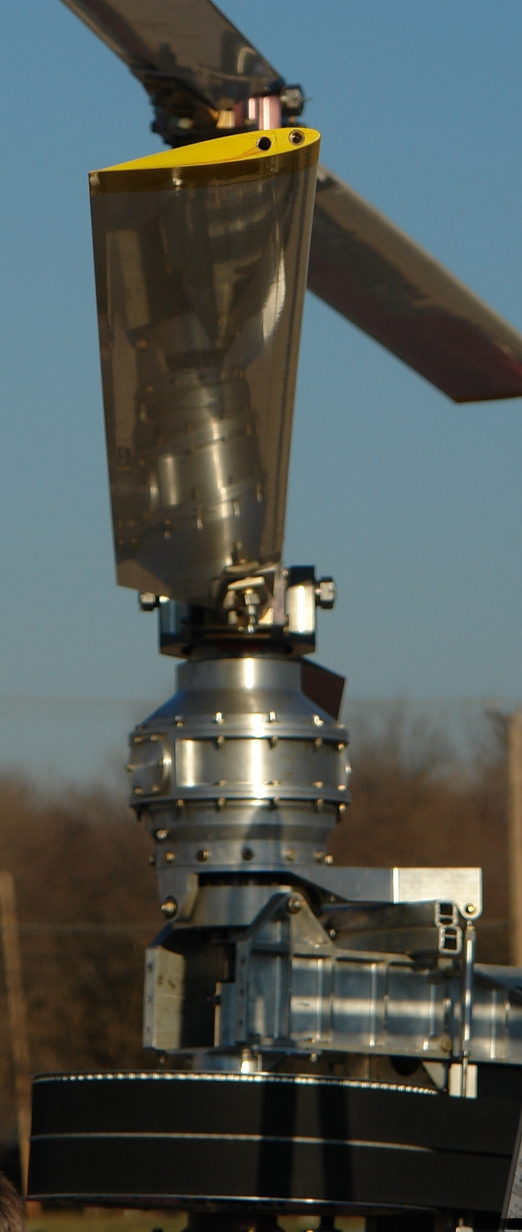
My VTOL in helicopter mode is no different than an Airscooter. Same technology.
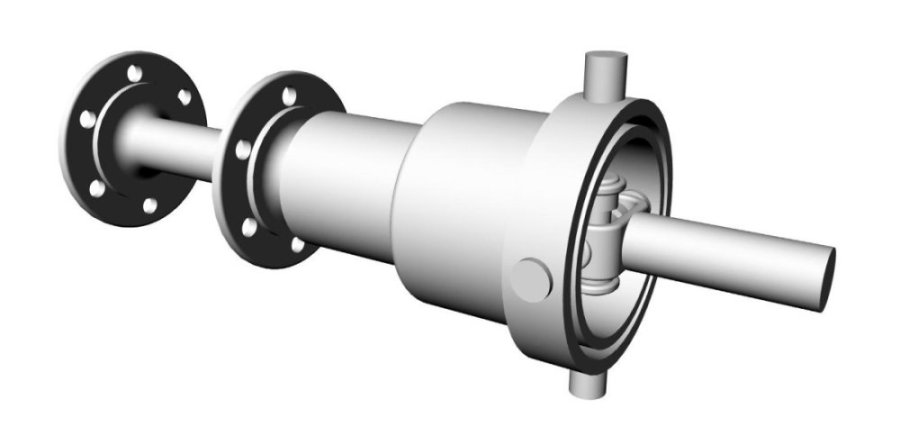
It is easier than a V22 because there is only one rotor shaft with counter
rotating rotors.
Anyway I advocate punching out if your are too close to the ground. If you have
a engine failure or run out of fuel at high altitude you use the ballistic chute.
I don't recommend trying to land it dead stick. You have to give up something
for VTOL and 300 MPH cruise.
Paul Lamar
--
The Rotary Engine NewsLetter. Powered by Linux.
ACRE NL web site.
http://www.rotaryeng.net
Youtube key word UTUBPLEASE
Copyright 1998-2008 All world wide rights reserved.