Paul et al,
For what it's worth, a classic formula for cooling air inlet area in
low-to-moderate performance aircraft is .35 sq. in. per climb
horsepower. This is usually applied to air-cooled engines, but I
suppose
the heat rejection per horsepower is not that different for a
liquid-cooled one. There is much dispute about outlet area; one
suggestion is 10% greater than inlet.
For air-cooled engines the cooling air requirement is a function of
delta-p, that is, the pressure drop across the engine. I have never
worked with a liquid-cooled installation, but I assume there is some
such factor for a radiator as well. Delta-p is in turn a function of
forward speed; if the dynamic pressure is below the required delta-p,
the expected cooling performance will not be obtained.
What strikes me about the photos is that if the central radiator
is the
coolant radiator, there seem to be surprisingly large alternate
routes
for the incoming air. The wind bloweth where it listeth, as the
prophet
quite correctly pointed out. If the cowling provides an alternate
route
with lower impedance than that of the main radiator, the air will
follow
it and avoid the main radiator.
Peter Garrison
Yes I agree. Sealing around the rad is extremely important.
Thanks Peter.
Paul Lamar
Thanks Peter,
According to the formula I have more than enough inlet area, about
136 sq.
in.
The 3 air inlets are completely separate. One side is for the oil
cooler -- about 38 sq. in.
Two inlets are for two separate water rads., one up front and one down
inside the pylon, this rad. has a Spal 10" fan pulling.
I suspect that the two side opening cause more restriction than the
center
opening because the side openings feed the air to inside the
pylon. The air
ducts are complete and sealed to each rad.
It seems there is enough inlet and outlet area. I should have
enough rad.
volume.
I will do some air flow measurements!
Rino
Pito tubes Rino.
Paul Lamar
--
Paul and group:
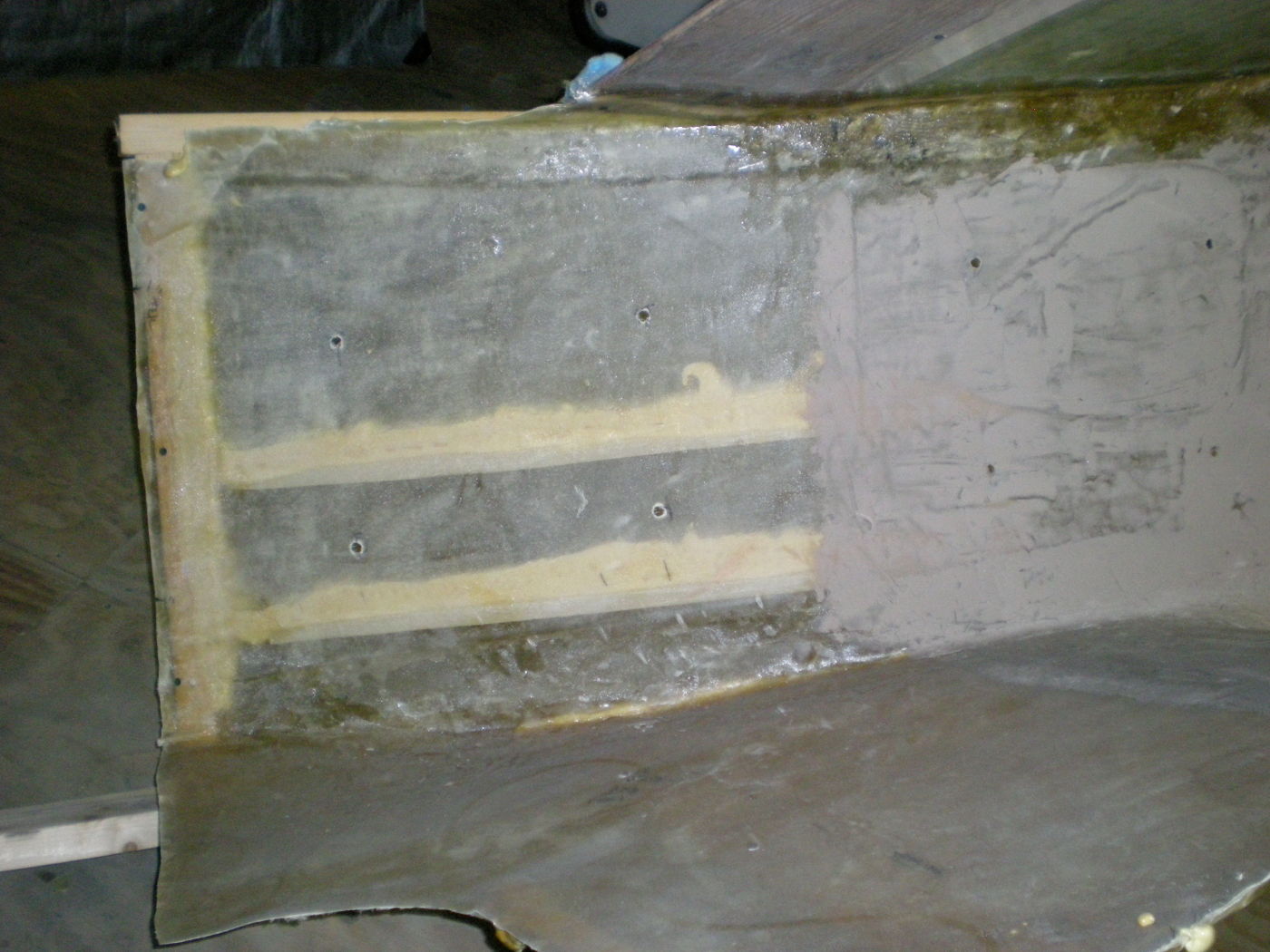
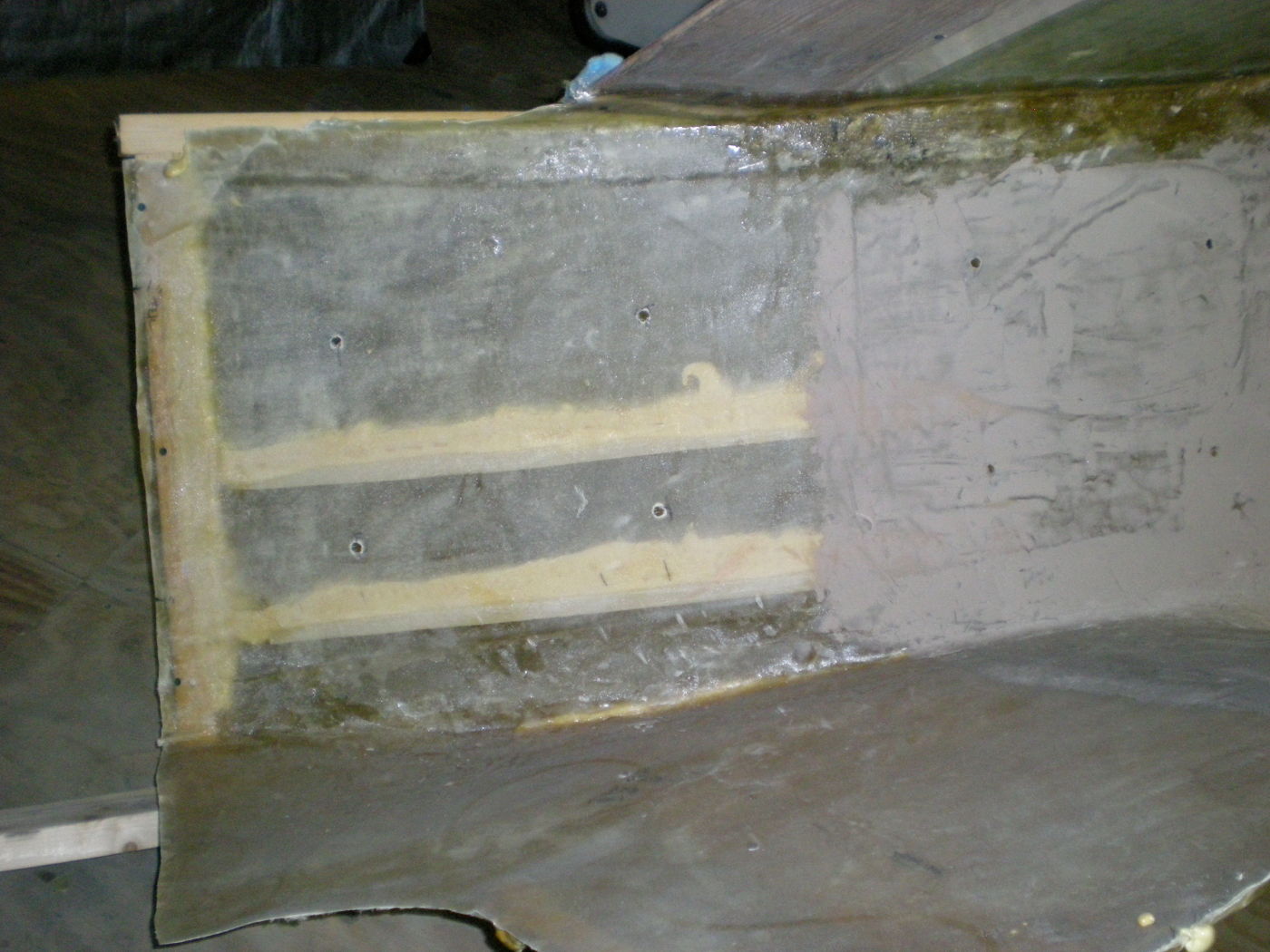
Here are some pix of my (very ugly) mockup of the side fuselage and
wing stubs to study airflow around the pylon area. I actually worked
on it some today! Many readers won't realize what this is: it is
the side of the fuselage/pylon in between the upper wings of a Glass
Goose. The mockup was cast off the real plane so it could be used in
an "auto" wind tunnel. In the first pic, you are looking at the aft/
side of the pylon.
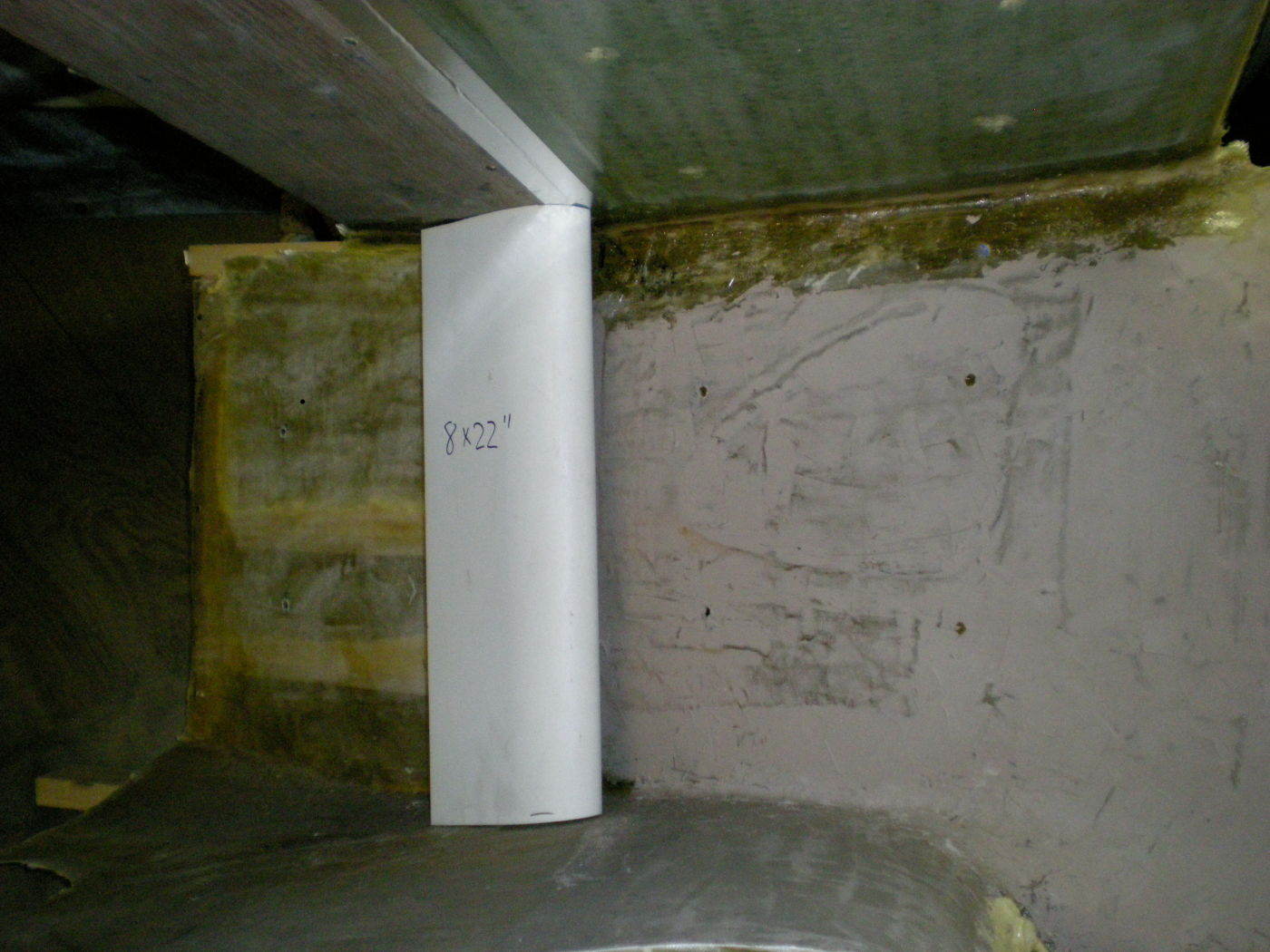
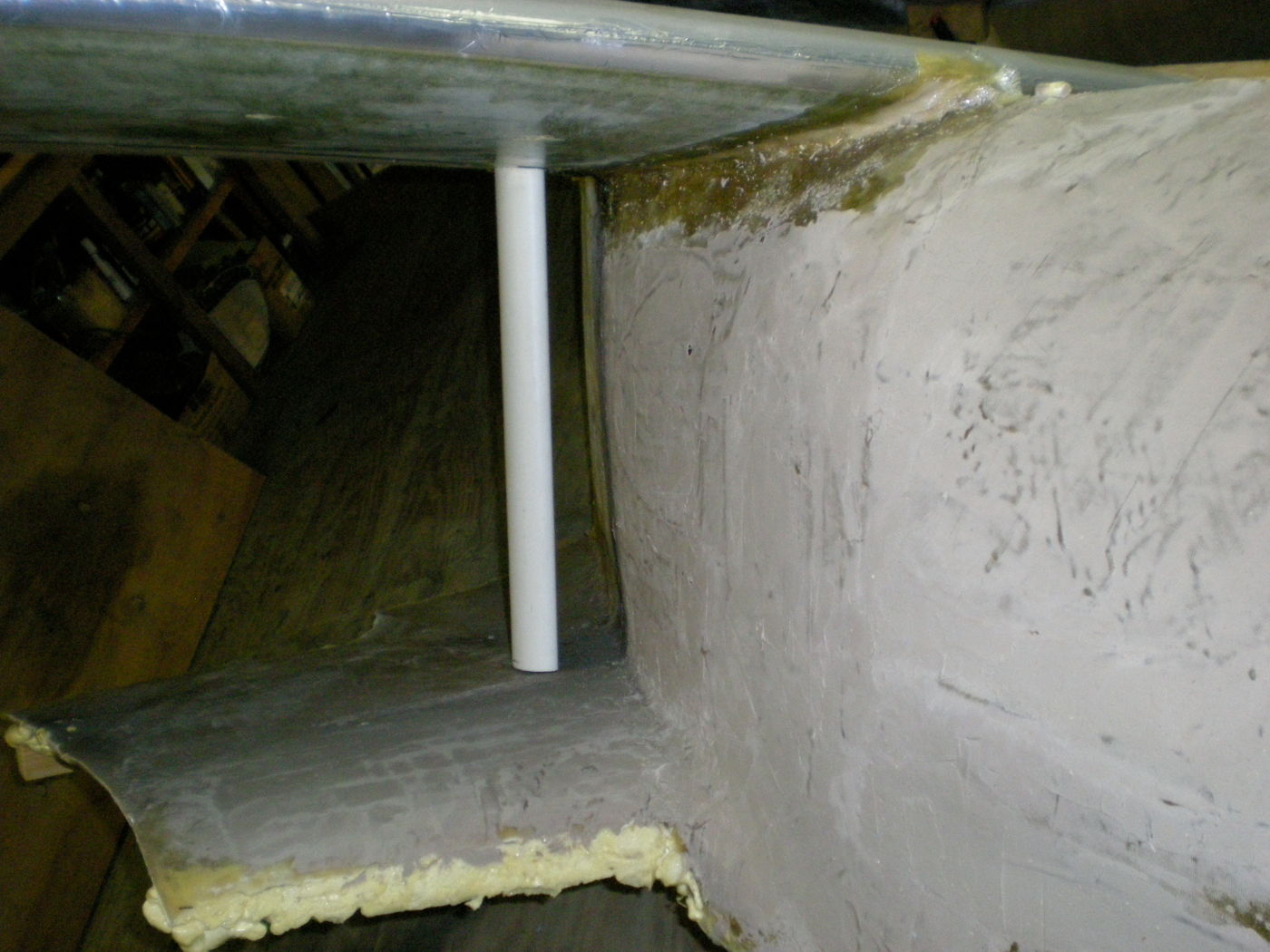
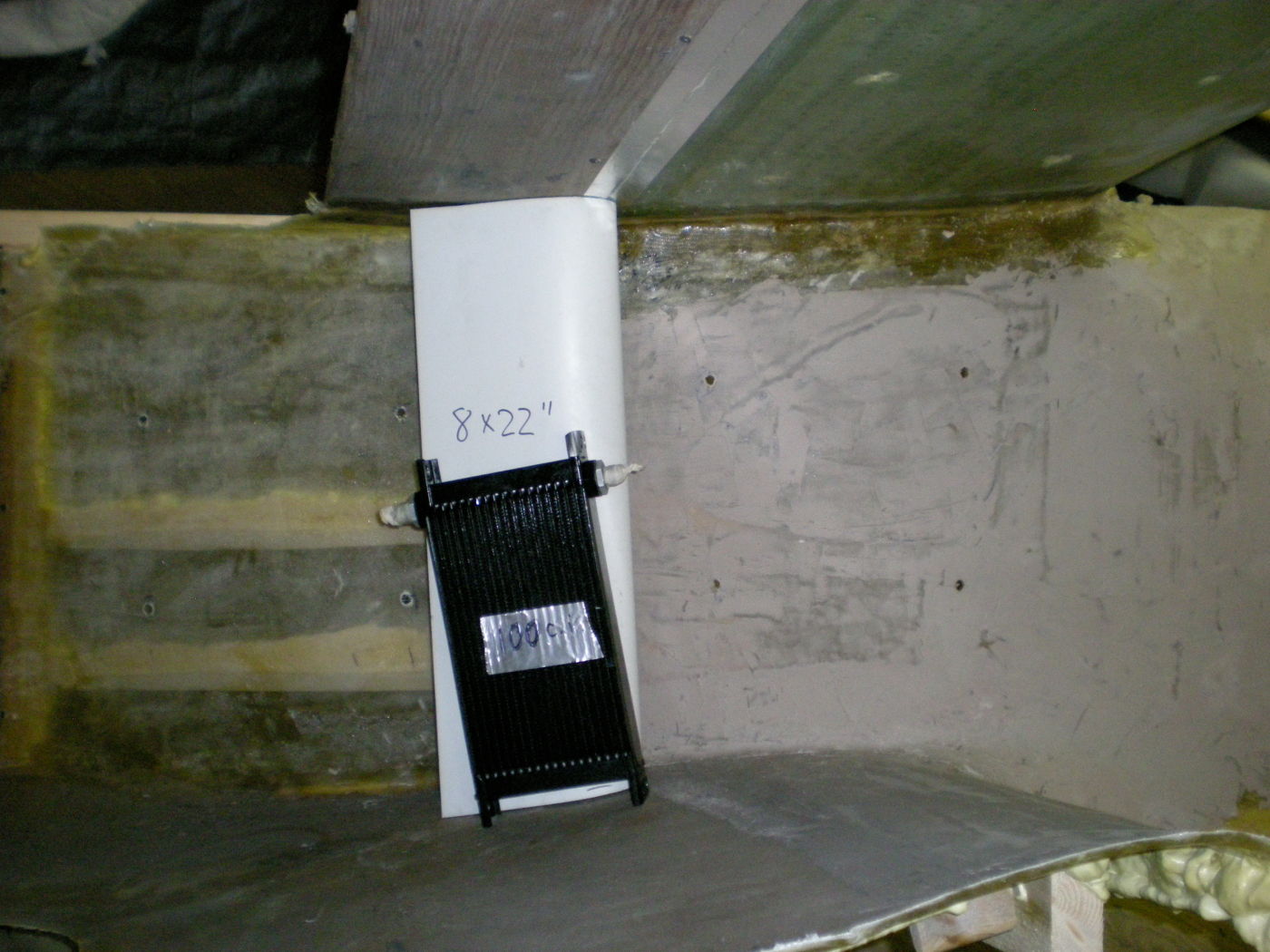
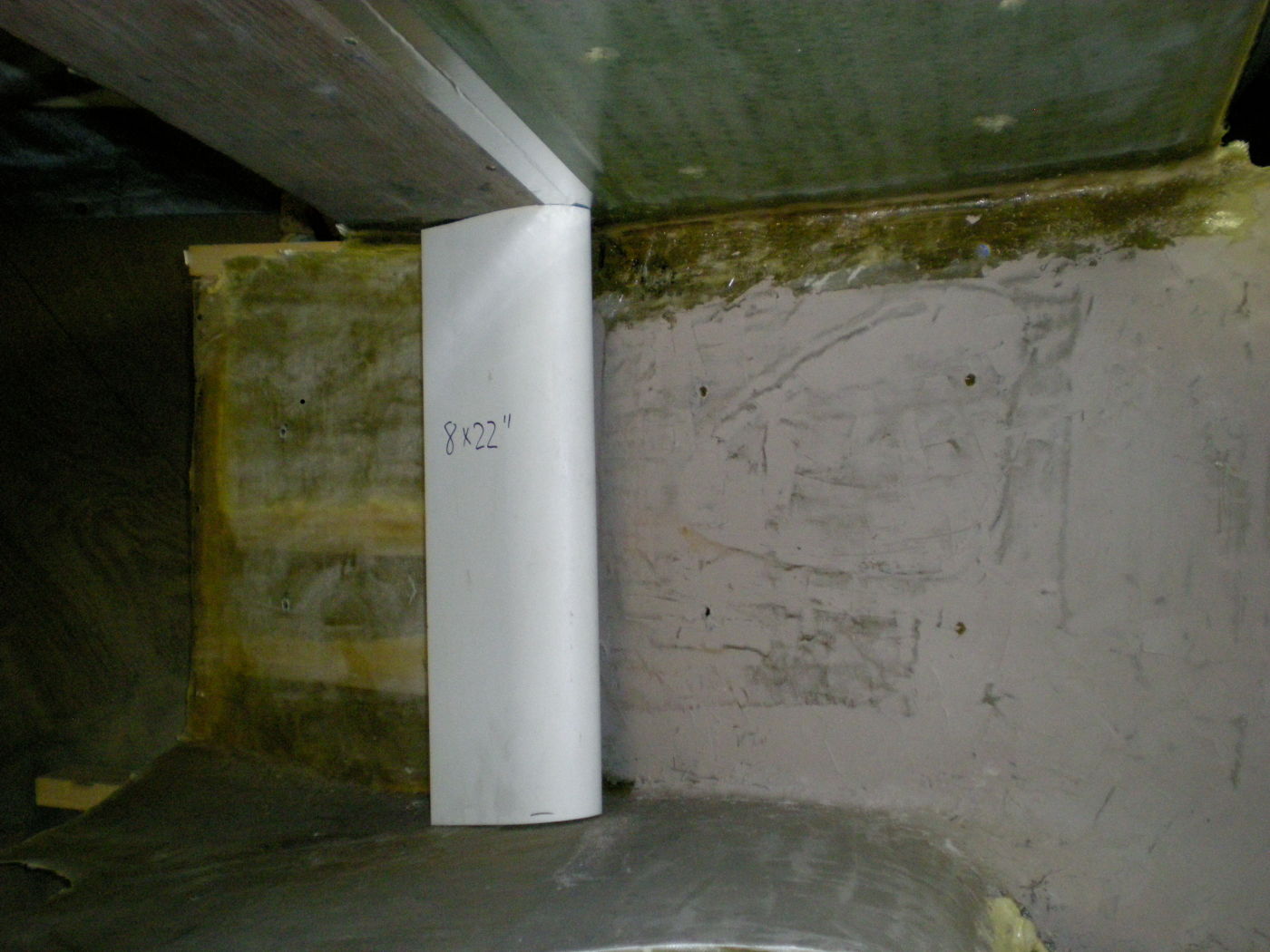
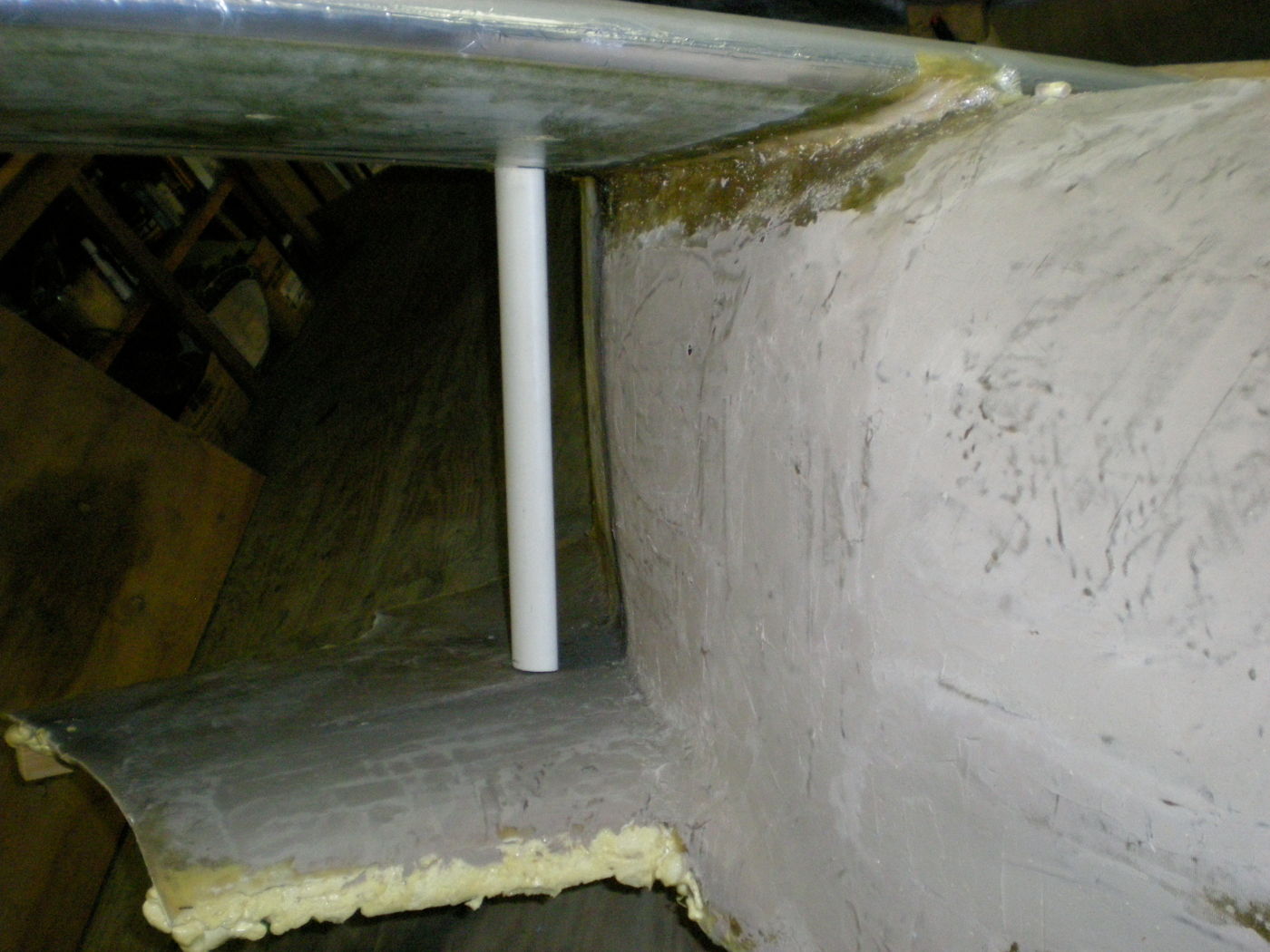
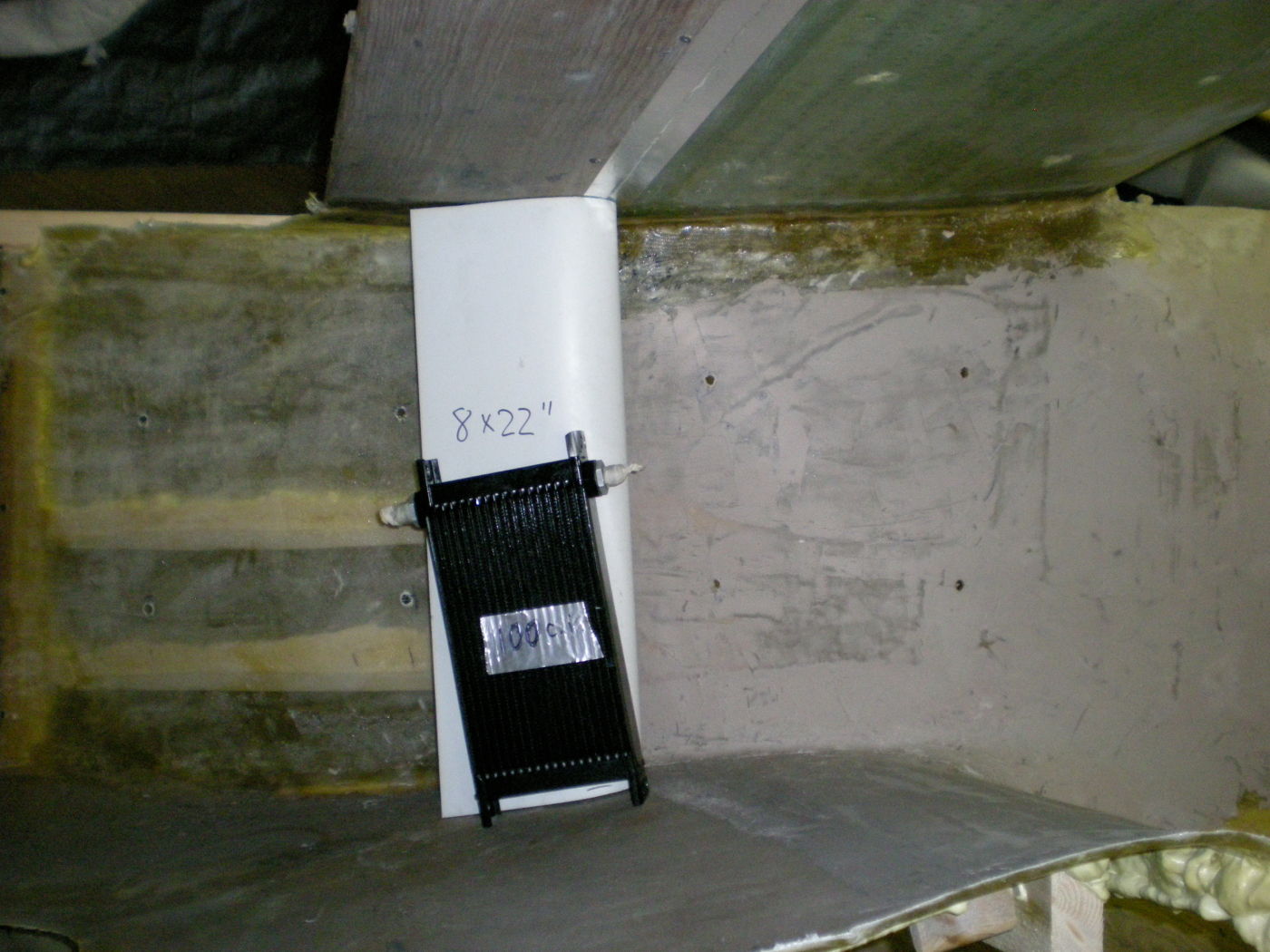
For reference purposes, I stuck a flaperon segment (8x22") in the
general area used for a turning vane, and compared a 100 c.i. oil
cooler with this shape. It appears that a somewhat larger turning
vane with an embedded cooler (or radiator) would easily fit in this
area. This is consistent with Paul's recommendations on my project
some time ago, but a little different than the most recent rec's.
I still plan on obtaining pressure measurements in the 70mph range
along the sides of the pylon (you can see the pressure sensor holes),
with and without the turning vanes in various locations and angles,
as well as a larger vane with an embedded radiator (cooler). I'll
also obtain pressure measurements on the vane itself. This will
require a lot of data, but will allow some idea of the effects of a
turning vane, cooling elements, etc. in various locations.
Paul, the pylon side drops back as steeply as 30 degrees. Do you
have any suggestions for the range of distances fore/aft and away
from the pylon wall that the vane should be placed to obtain
measurements?
I have one other option that has arisen that I'll post in a separate
email.
Scott Gettings
My guess is two inches. It would be nice if we could make it adjustable
as well as the angle it meets the air stream. I am really excited about
this program. If it works it will be a huge benefit to the liquid cooled
Goose. Rino would probably be the first to fly it I suspect. We could
also try a section of an actual radiator in the turning vane.
Good work Scott. We will learn a lot.
Paul Lamar
--
The Rotary Engine NewsLetter. Powered by Linux.
ACRE NL web site.
http://www.rotaryeng.net
Youtube key word UTUBPLEASE
Copyright 1998-2008 All world wide rights reserved.