Hello fellow rotary lovers :)
Let me breathily introduce myself. My name is Ted Miron, I'm Russian (now you
know why my English is so hard to fallow). Used to race and now working in race
car engineering, design, team tech. management etc.
I have to tell that I love this little engine - three and four rotors are so
slick and low, while tremendous amount of power could be available. I've heard a
joke - engineers are not boring people. They just get exited about boring
things. So when I say love it is true - I feel it :)
Italians would use word passion. I also feel passion for fast and beautiful
cars. I feel passion driving such cars on the very limit. One who tried both can
say that feelings are very similar - flying and seating behind the wheel of the
car sliding around sweeping corner. It slides ever so slightly - 3-4 deg. So
it's not visible from the outside but you feel it - a tiny bit faster and it
falls off the racing line. Maximum possible grip and a great feeling.
I'm designing a super car. I want it to have an ultimate engine. I want this
engine to be extremely compact, low CG, light and very powerful. So it's got to
be a rotary. General public just do not realize, how great this engines are.
Because there are no cars around to show it off. RX7 and 8 are great but
practicality and economical feasibility don't let them be something to admire.
There is great LeMans wining 787 and gorgeous 792 but people around do not know
about them. There's stunning Furai but it is completely impractical in terms
that it's an LMP2 Courage chassis (or was it Lola?) covered with bodywork.
People know about Ferrari Enzo, Lamborghini, Pagani and they admire their
piston v12's. There got to be something that could be street driven just like
those, yet even faster than those on the race track. It has to be rotary.
There's one thing that makes this project a little different than excellent
cars that I mentioned. Being absolutely street worthy, it has built in race
setup. Anybody knows that if race prepared than above mentioned supercars would
become much faster on the track. Simplifying things we can tell that in general
it comes down to reducing ride height, increasing roll/ride stiffness, camber
etc. This car will be slightly softer and higher than typical supercar to make
it a bit more practical on the public roads yet in about 15 minutes it could be
converted into all out racing machine, providing significant downforce and
adequate chassis to support it. It has to set records all over the place -
Nordschleife, TopGear test track, anywhere it goes. Wide public has to discover
that there's something also beside piston engines that's worth their attention :)
Now let's forget about feasibility and practicality - in terms of cost and
availability. Let's dream up an ultimate automotive rotary. Absolutely minimum
possible weight, maximum power, maximum structural integrity and rigidity (can
we make it so it could be used as chassis structural member?) yet reliable. I
admire things like Powersport development unit but we need to go further.
Aluminum end and side plates? - great. Saves us lots of weight. But thermally
not stable (loosing strength rapidly). How about titanium? Could it be used to
substitute iron?
Also to increase power we need more revs -> lighter rotors. Some talk about alu
rotors but Paul says that it will melt - no questions here. Ti would not. How Ti
could be used in a rotary engine? Also in turbine? It's widely used in aircraft
turbine blades etc. Here in Russia we have technologies to cast, form, weld and
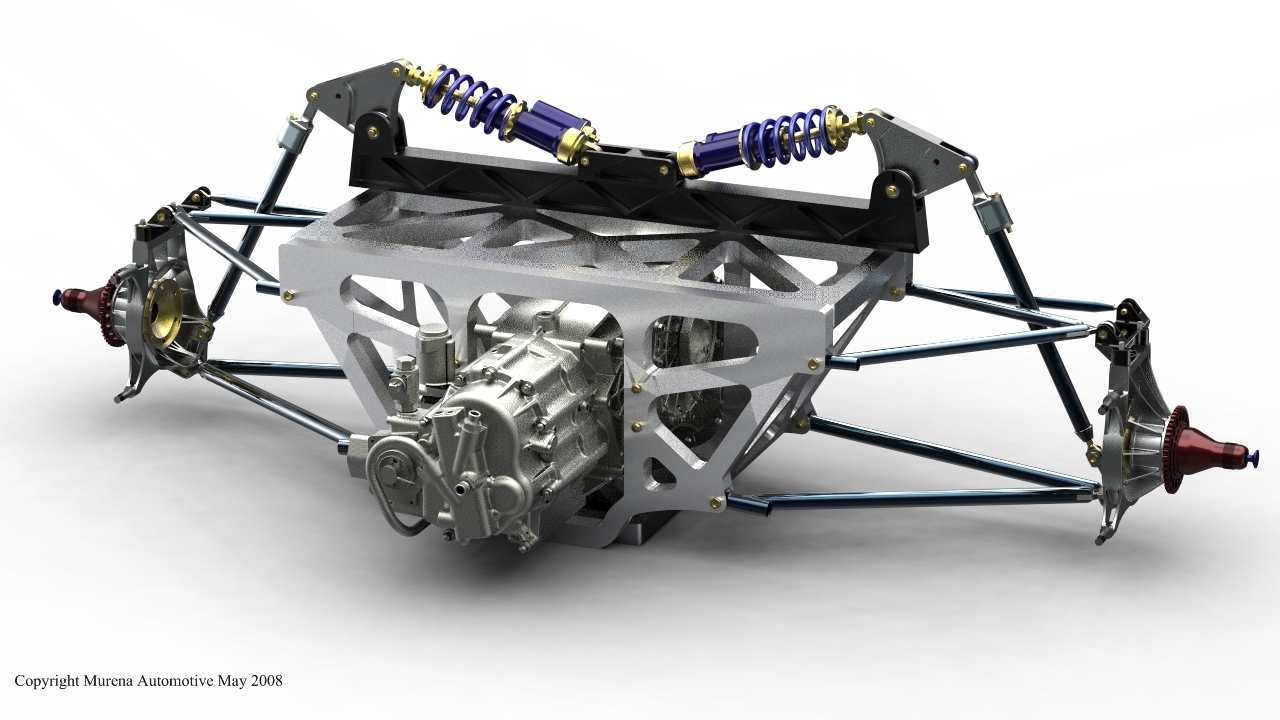
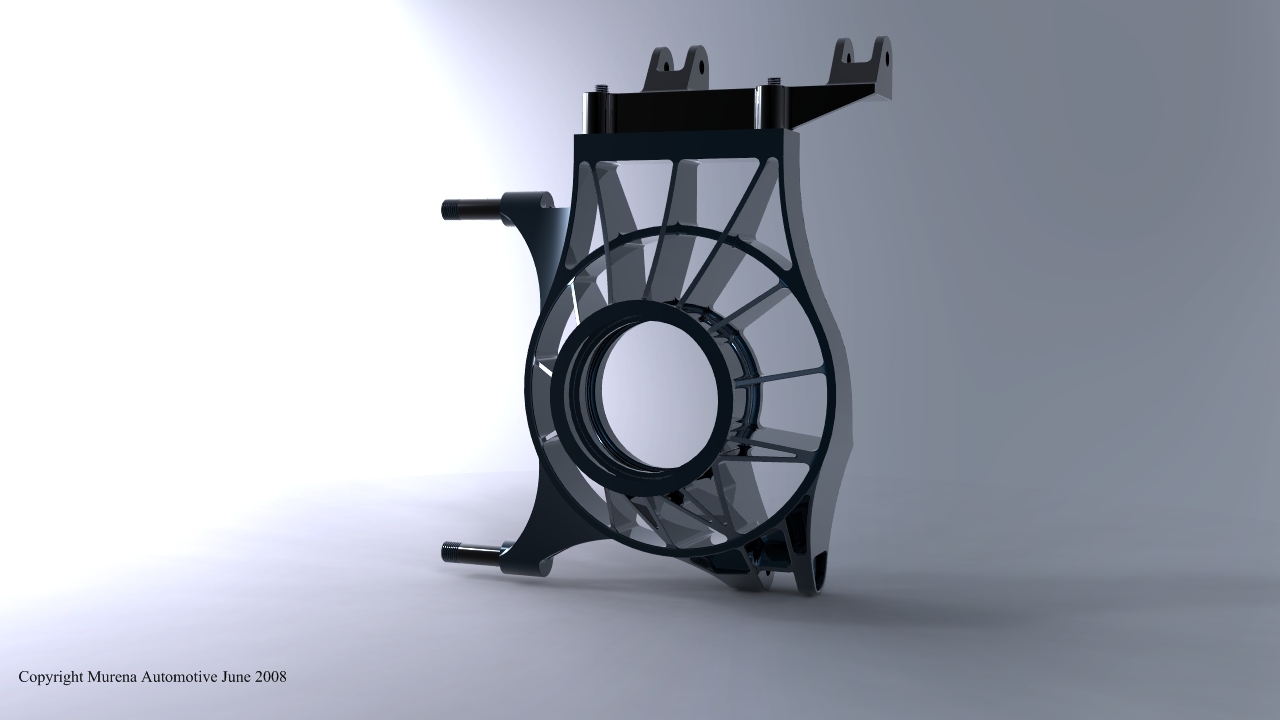
machine it. In this project we use it in chassis - wishbones, uprights,
integrated roll cage, rear/front subframe made of hollow thin wall titanium
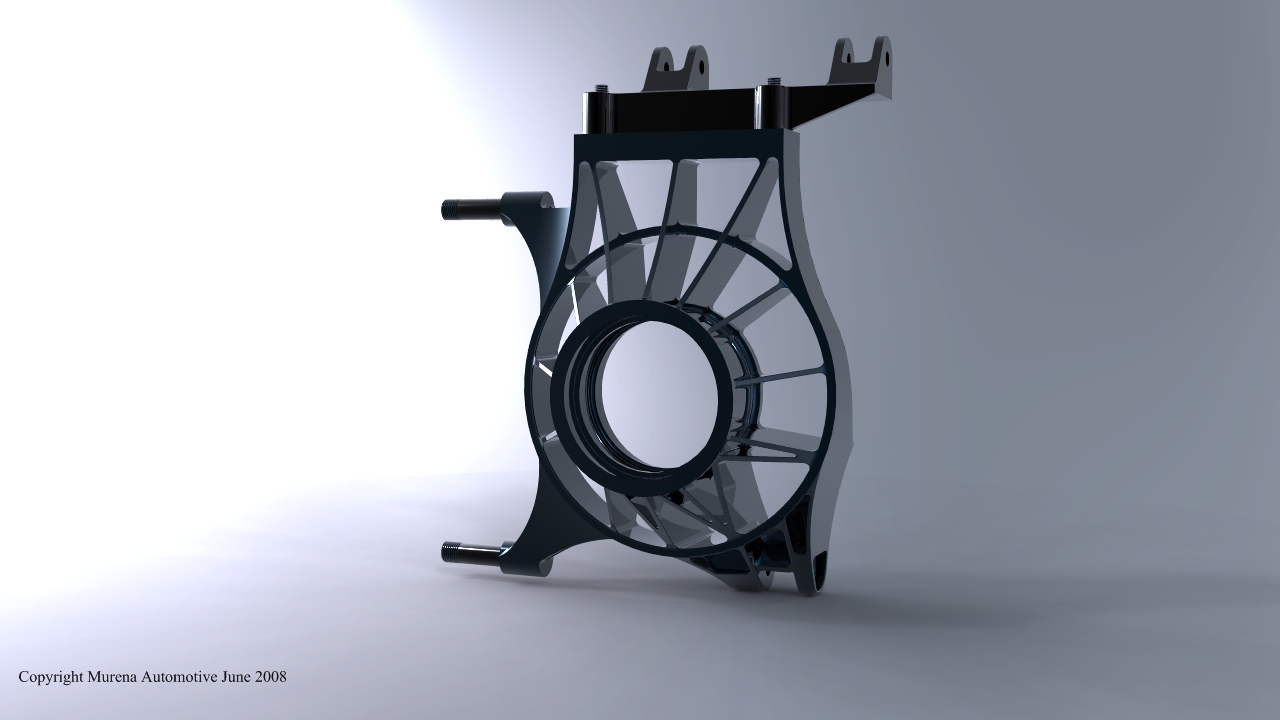
panels making extremely light and stiff structure. Upright is capable to
withstand worst case loads while weighting 6lb. Fallowing R version will use
titanium gearbox similar to F1's. So why don't we use it in engine?
Also ceramics - if the piece is pf relatively simple geometry than it could
work in high temp/low friction applications. We use it in our wheel bearings and
it's been used in top racing engines with great success.
I'm not an engine guy by any means that's why I ask. What ever comes to mind -
any material, technology, anything that can make this engine lighter, more
powerful and reliable? Let's play with it. Imagine we're kids and let our
thoughts fly.
Save your time posting things like (thought you can freely do it if you like
to) - who are you to make such a car/engine? People involved in this little
project been there and done that. Things including all time great McLaren F1
road car as well as GP, LM and Indy wining race cars.
When it will come to engine build I would come up to someone with great
experience and track record. He would be supplied with parts for test and
development. I've talked to some builders and would love to hear your opinion
who's the best in the business. I liked talking with Carlos Lopes - he has great
experience. Most recently being involved with Mazda ALMS effort (tech.
regulations didn't allow engine to shine.) alongside Rick Engman and Dr.
Francesco Iannetti. But I'd like to have my own concept and requirements. .
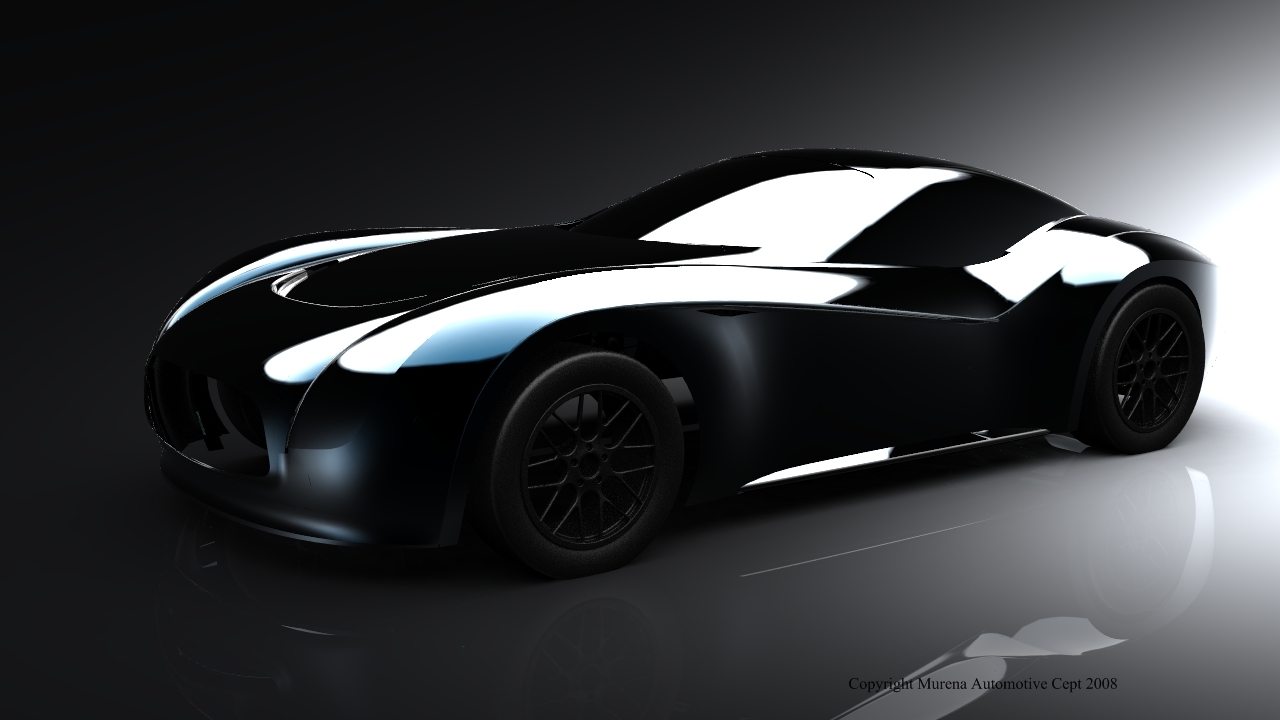
Here's a couple of pic's of Murena.
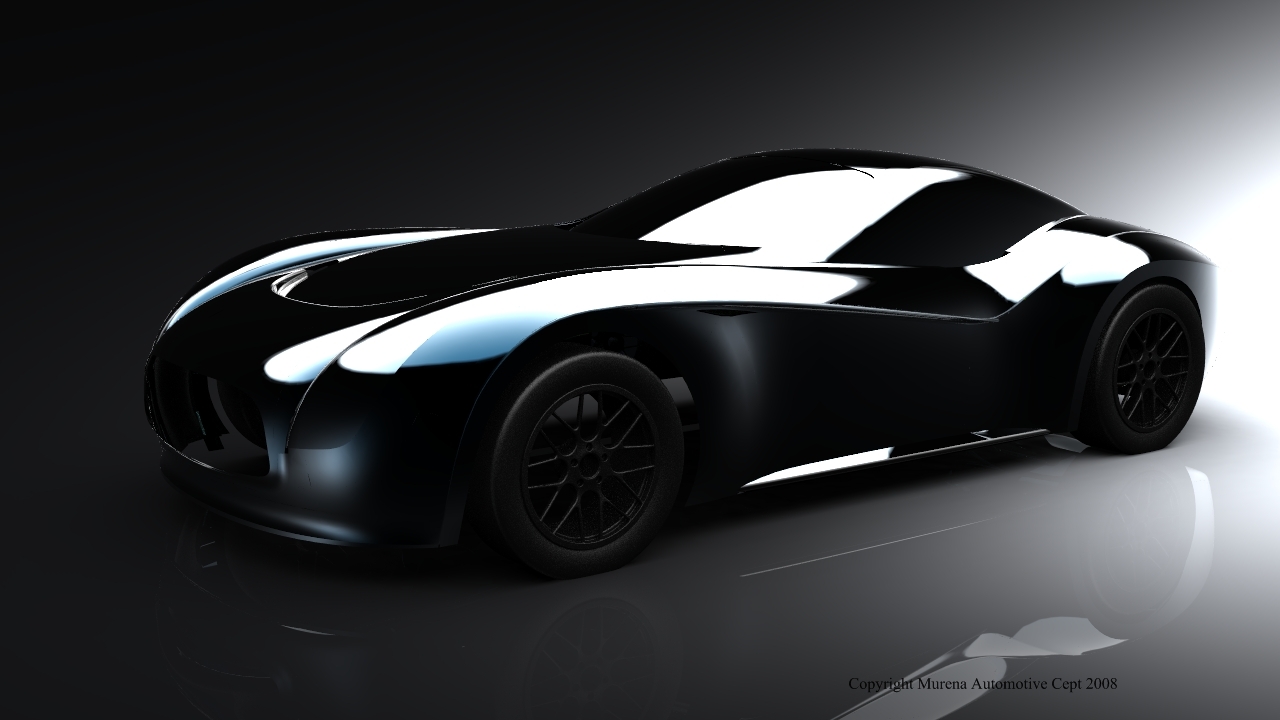
Exterior image - undergoing heavy redesign after extensive CFD study. So don't
be too crude :) It's a WIP.
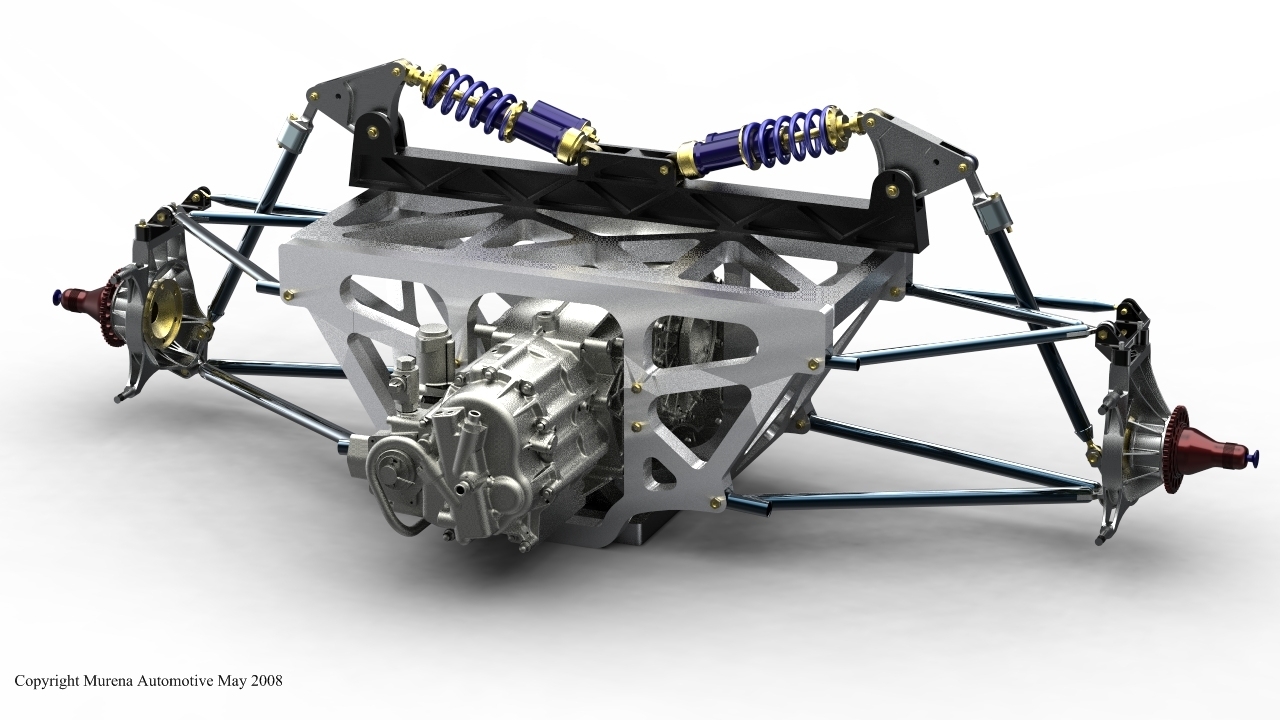
Rear subframe with suspension - all titanium except gearbox.
Rear titanium upright.
That's about it.
Thank You
Ted
The Rotary Engine NewsLetter. Powered by Linux.
ACRE NL web site.
http://www.rotaryeng.net
Youtube key word UTUBPLEASE
Copyright 1998-2008 All world wide rights reserved.