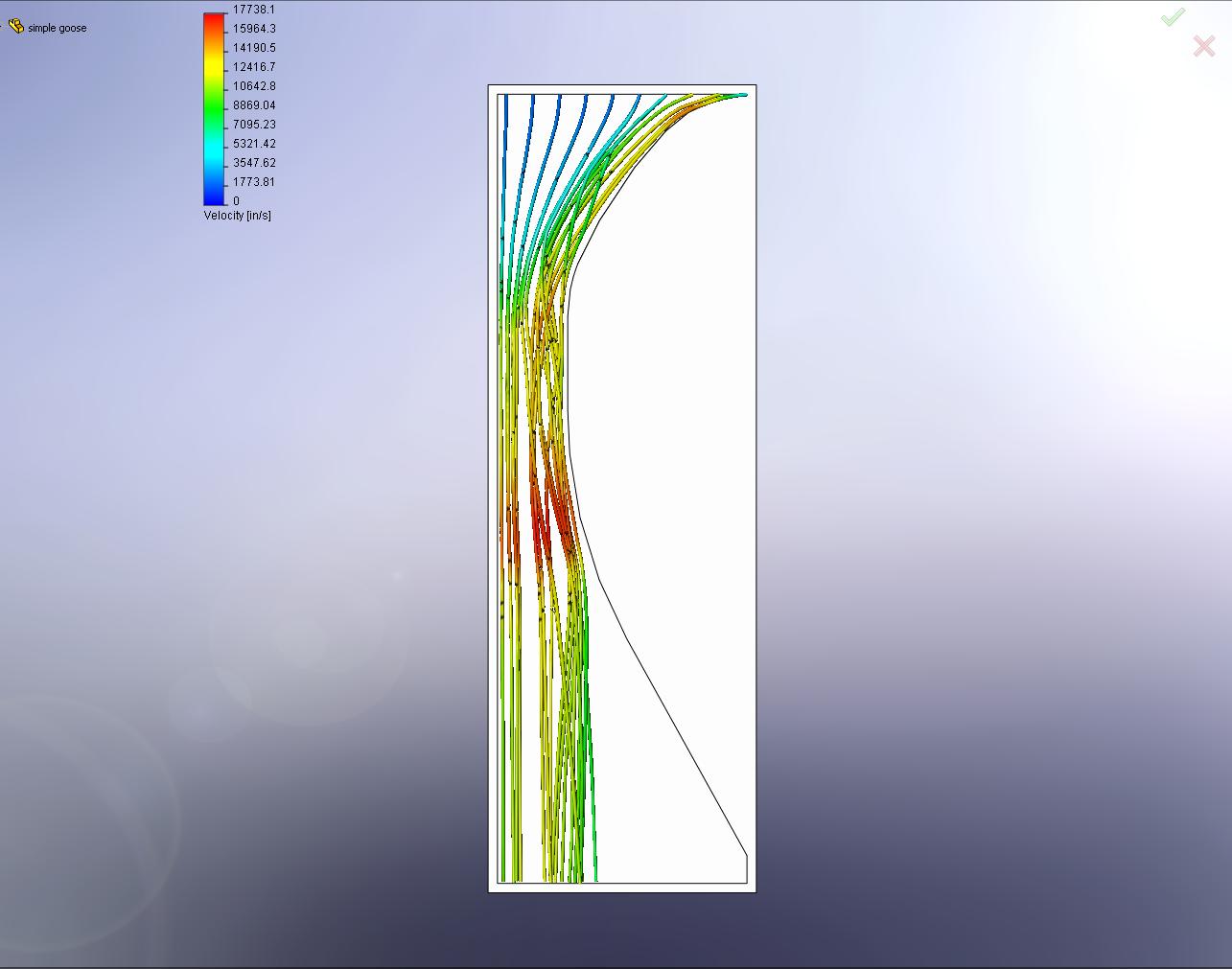
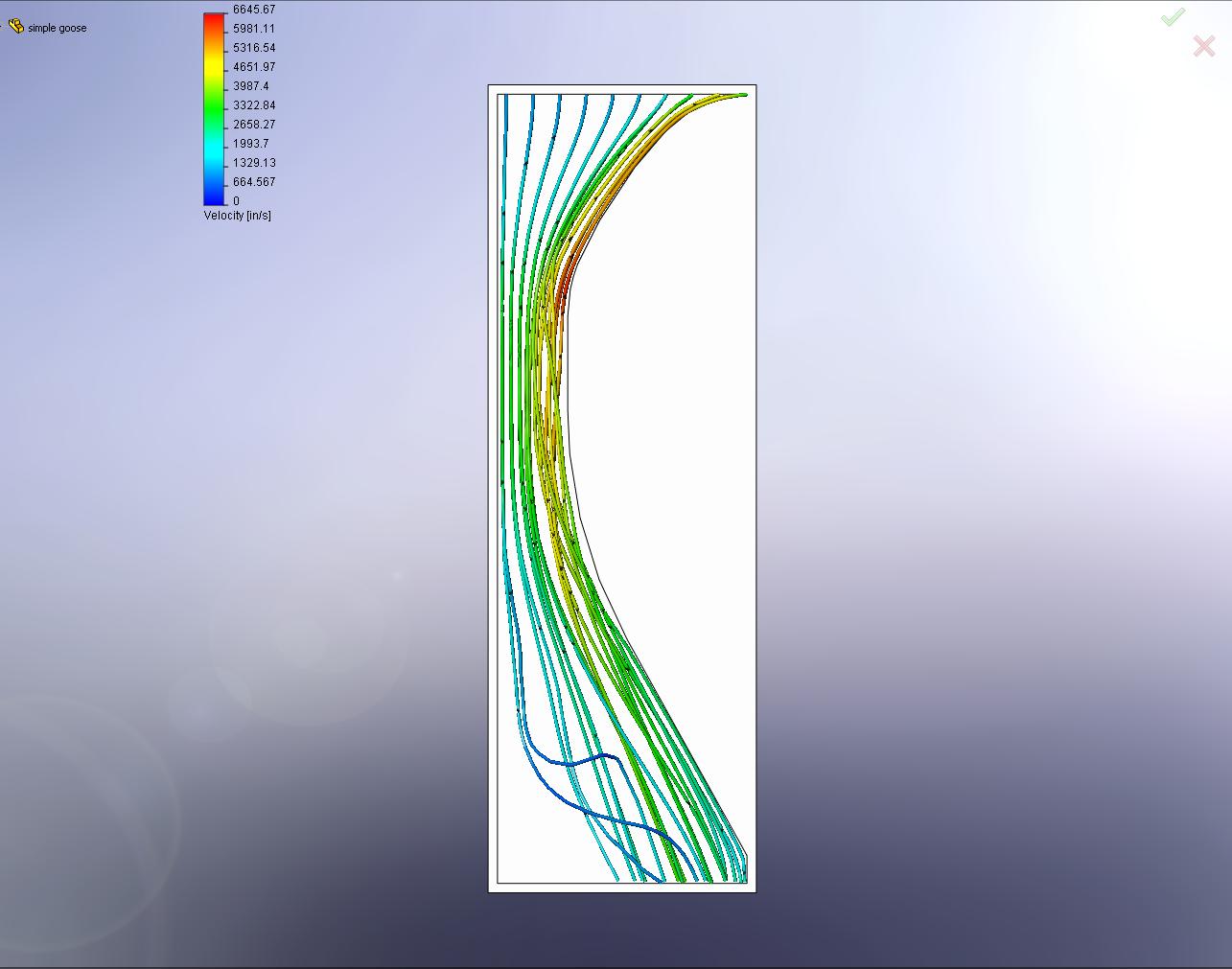
Wow! Great Jarrett. Shows the rad is working as a turning vane.
The negative
pressure can be enhanced with an increase in rad angle. Thanks a
bunch. This is
encouraging indeed. This may actually improve the flow into the prop.
If you get time please try it with out the rad. I also think a one
inchthick rad of larger dimensions will work great.
Paul Lamar
More to digest... the pic names call out there perameters..
I think we're getting some 'wall effect' w/ this model but... it's a start anyway.
Btw, on the lower speed ones w/ no rad.. the bottom left corner is developing
into a vortex.. it has ~1/3 of a turn in the model.. some place between that
60mph and the 120 is the sweet spot.. at 120 it's totally turbulant back against
the body after the max camber point..
HTH
Jarrett
Classic separation. Just as I thought. The Goose fuselage is way too stubby.
No wonder they have all those problems with the pusher prop. The pusher prop is
operating in a nightmare aerodynamic environment.
The rads will kill two birds with one stone. Turning vanes and cooling.
Yes I did notice the wall effect. It could be moved out a bit.
the last thing to try is a one inch thick rad instead of the current 2 inches thick.
Thanks for doing this Jarrett. Half a dozen Goose builder should also thank you.
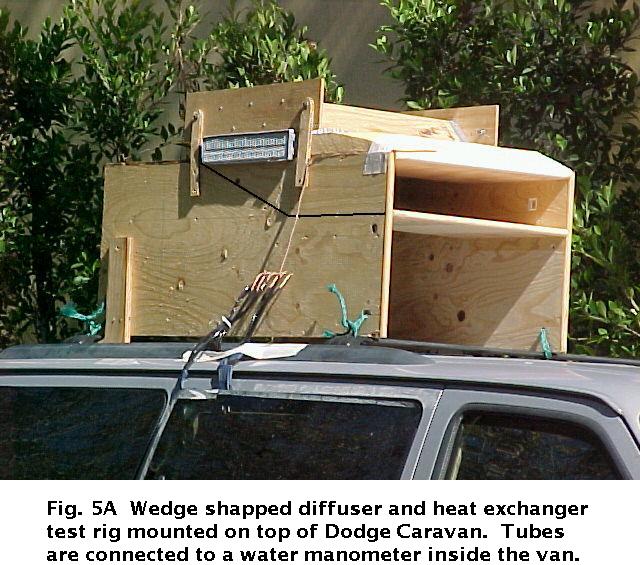
Final adjustments in the real world can be made by moving the rad in and out
and changing the angle. Scott Getting's full scale pickup truck wind tunnel will
tell the final tale.
Paul Lamar
--
The Rotary Engine NewsLetter. Powered by Linux.
ACRE NL web site.
http://www.rotaryeng.net
Youtube key word UTUBPLEASE
Copyright 1998-2008 All world wide rights reserved.