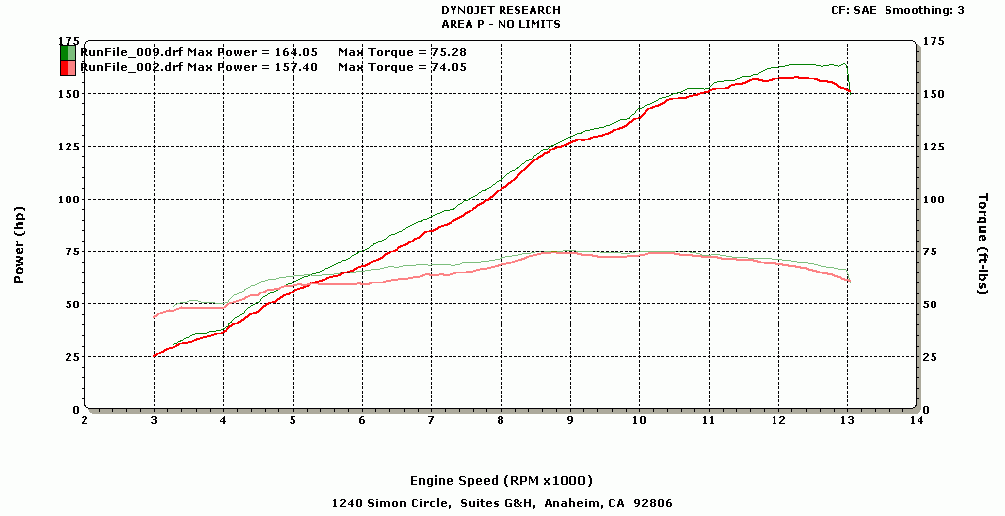
Has anyone heard of an experimental aircraft using a japanese
4-cylinder motorcycle engine? The advantages seem obvious when
compared to other non-rotary auto conversion choices. Modern 1000cc
engines make 180hp, are liquid-cooled, lightweight, and inexpensive.
If such an engine was de-tuned to 100-120hp by lowering the redline
(say from 13k to 9-10k), it might give close to a 1:1 power:weight
ratio with high reliability.
I can't be the first person to think of this. If it hasn't been done
before, why?
-Chris Wood
Probably a cooling issue. Motor cycle engines, like car engines, are
light duty. Several people have tried air cooled BMW engines for the
past twenty
years but they never caught on.
http://www.kawasaki.com/Products/product-specifications.aspx?id=345
Engine Type Four-stroke, liquid-cooled, DOHC, four valve per cylinder,
inline-four with VVT
Displacement 1,352 cc
Maximum Torque 100.3 LbFt @ 6,200 rpm
Compression Ratio 10.7:1
Curb Weight 670.3 lbs. 679.1 lbs. (ABS model)
------------------------------------------------------
No mention is made of the red line or the HP surprisingly.
At 670 pounds for the whole bike the engine block could easily
weigh 200 pounds or more.
100 ft pounds of torque at 6200 RPM is 119 HP. About the same power
to weight
ratio as a Continental O-200 direct drive aircraft engine. Of course
you will
still need a 20 to 30 pound gear box. Motor cycles are designed for
side ways
mounting... chain drive so it is no easy matter to design a gear box
that will
take the power out inline or turn the drive 90 degrees for a propeller.
That is also half the displacement of a Mazda 13B rotary engine with
about the
same block weight but the rotary will easily put out 200 HP in side
port form
and 250 HP in p-port form.
These engines in new shape are also not cheap.
Paul Lamar
I've heard of one. They are running a Yamaha R-series liquid cooled
engine rated at 150 hp. It uses a reduction gear and a drive shaft
to a ducted fan. So far, I've only seen graphics on the test rig.
This is a multi-year development program by a University, so things
tend to progress in short spurts. Haven't heard any feed back.
This engine is also used in the Yamaha 4-stroke PWC's. From one
graphic it's clear they are giving a lot of thought to the cooling
system with a separate plenum pumped by the discharge from the fan.
This program has been funded by the Light Aircraft Industry
organization of the country via the government. You suspect in
small yearly grants. The monitors for the program are pretty well
known engineering types.
George W
Well George as you well know a ducted fan and drive shaft is not the
greatest for a 200 MPH airplane :) Perhaps they have been taken in by Mark
Moore.
http://www.rotaryeng.net/PAV.html
What country and what University?
Paul Lamar
Paul, agreed about matters of fatigue in recip vs. rotary. There's
little doubt about the rotary being ideal in so many ways, but I want
to know why those who don't think so (probably people not on this
list) might not be trying motorcycle engines. Supersport motorcycles
are designed for much harder service lives than the GM LS-6/7 you cite
in that link. Any supersport motorcycle is as close to a race-ready
vehicle as the consumer market has; they are regularly raced
competitively in essentially stock form. Although it's anyone's guess
as to the number of WOT hours they spend, I'd be surprised if they
didn't have better longevity under hard use than your typical auto
engine conversion (esp with far-reduced redline from factory
intended).
The Kawasaki cited above with (1352cc engine) is a sport/touring bike.
The higher displacement makes it desirable, but it is not going to be
as stripped-down low-weight as in serious "supersport" category
motorcycles, which weigh about 300# less total. A Hayabusa
engine/trans is 160lb, and that's in a similar heavier category of
bike.
I bet the engine itself (less the gearbox bits) on an R1, CBR1000, or
ZX-10 is close to 100#. From dyno charts I have seen, these engines
are making about 125hp at the rear wheel at 9k. That's with losses in
the gearbox and tire friction on the dyno. The factory redline for
these engines is 12,500-13,750
Glenn, thanks for pointing out the gearbox non-removal issue. There
are kit car manufacturers that manage a solution in order to use the
Hayabusa 1.3L powerplant, but I don't know what they have to cut off
or weld on to do so. That 1500cc rotax sounds ideal in many ways.
Besides weight, there should be lots in common between marine and
aircraft powerplants. Both must output >75% power for long periods of
time continuously and reliably. A small boat would be a great place to
test an aircraft-converted rotary for longevity without getting off
the ground.
-Chris
Super sport motor cycles sound similar to Formula 1 engines. Formula 1 engines
rev to 19,000 RPM and are good for just two races. The price of a Formula one
engine is well over $100,000 and maybe two or three times that amount.
I don't know what the rules are but how often are you allowed to change the
engine out in a super sport bike race? What do the bikes cost?
Another difference is the length of the straightaways. As I understand it super
sport motor cycles are not run on Formula 1 tracks. I could be wrong. Most of
the races I have watched have been on shorter track where you are not running
the engine at max HP max RPM for more than a second or so.
The aircraft industry and the American auto industry figured out a long time ago
that displacement is better than RPM when it comes to power to weight ratio in a
piston engine. With the rotary we have no choice. In racing they kind of
stupidly limit the displacement while that does not necessarily lead to the best
power to weight ratio. We found out years ago in the Can Am that a big all
aluminum V8 was cheaper and better than a tiny double over head cam engine with
four valves per cylinder. However this argument has been going on for a 100
years. We smashed road racing records, won races all over Europe and Ford won Le
Mans before the Europeans out lawed big displacement engines.
Aircraft duty is generally harder on an engine than racing as in road racing you
are on and off the gas or modulating the throttle through high speed corners.
Same for motor boat racing.
However this is a free country. Keep us informed on how it works.
We can always use more data.
BTW I just updated
http://www.rotaryeng.net/Rotar-v-Piston.html
Paul Lamar
--
The Rotary Engine NewsLetter. Powered by Linux.
ACRE NL web site.
http://www.rotaryeng.net
Youtube key word UTUBPLEASE
Copyright 1998-2008 All world wide rights reserved.