Paul,
I wanted to bring up this thought I had some time back about a possibly
simpler way to turbo compounding. This wouldn't be as good as your use of
the traction drive to improve the drive ratio to optimum, but it could
work. We all agree that some kind of exhaust energy recovery is a great
idea. My thought was to use just the turbine from a regular turbocharger
and couple it directly to the crankshaft of the aircraft using a belt,
(v or poly-v) to allow some give but still recovering considerable
energy in the correct RPM range. The system might require a small
gearbox as well but I think you could improve the BSFC in cruise quite a
bit.
The reason I thought about this is that many of the guys were
having such trouble with mufflers that they were thinking of using a
turbo without the compressor even hooked up as just a muffler. OK that
would be a rather expensive and heavy way to provide muffling alone ,
but what if you could do a cheap test version of the turbo compound? Use
a single reduction ratio with a belt final drive and no compressor
section. This is using a standard radial inlet turbocharger turbine
section. At low RPMs the turbine wouldn't do any large amount of work,
but let it be wasted it is just doing a muffling job down there. As the
RPM increased to cruise or takeoff RPM the turbine would be in it's
"proper" range and start to drive the crank providing actual work.
For starting you could de-tension the belt using a movable idler if that was
even needed. With a direct connection the turbine would be prevented
from overspeeding, the problem in some of the stock turbo supercharging
systems. This system would suck on a car, but as Paul has often said,
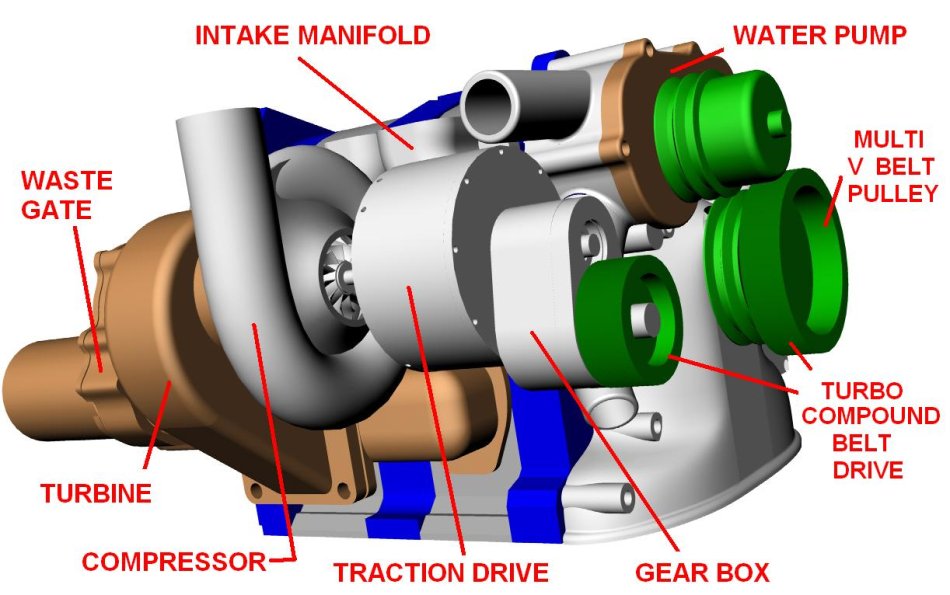
"We fly within a narrow rev range." I am attaching a crude sketch of
what I'm talking about.
Bill Jepson
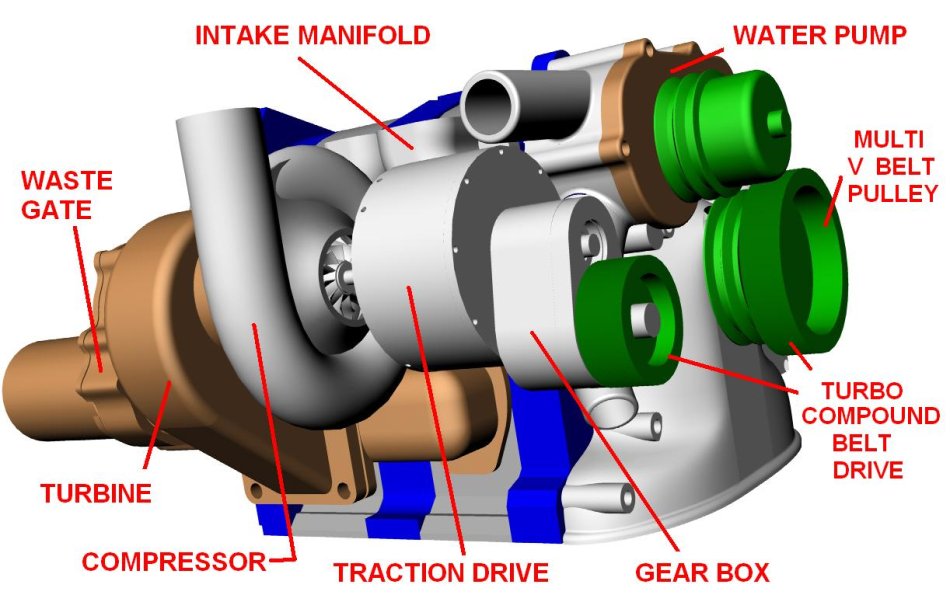
Bill, can you render that Solid Works "crude sketch" :) file and send us the render?
We almost have this idea on the web site but it includes the compressor.
http://www.rotaryeng.net/18-complete-reduction--engine-3D.jpg
The hard and expensive part is building the gear box as the turbine RPM is in
the 100,000 RPM category. Even 50,000 RPM is a significant problem.
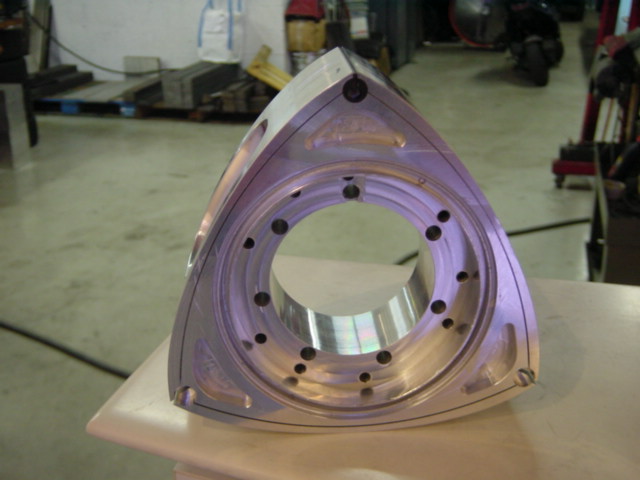
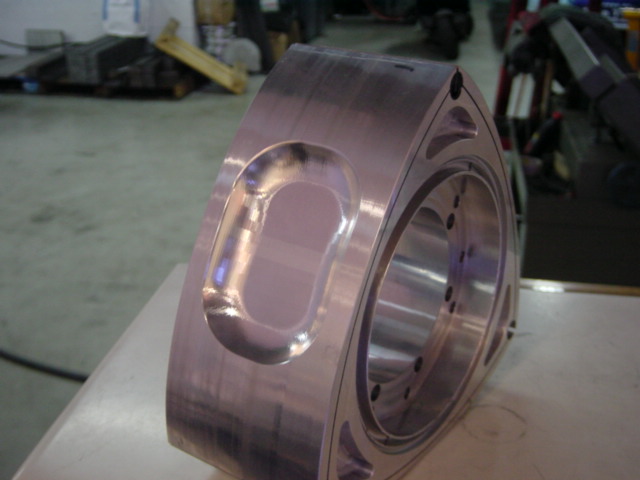
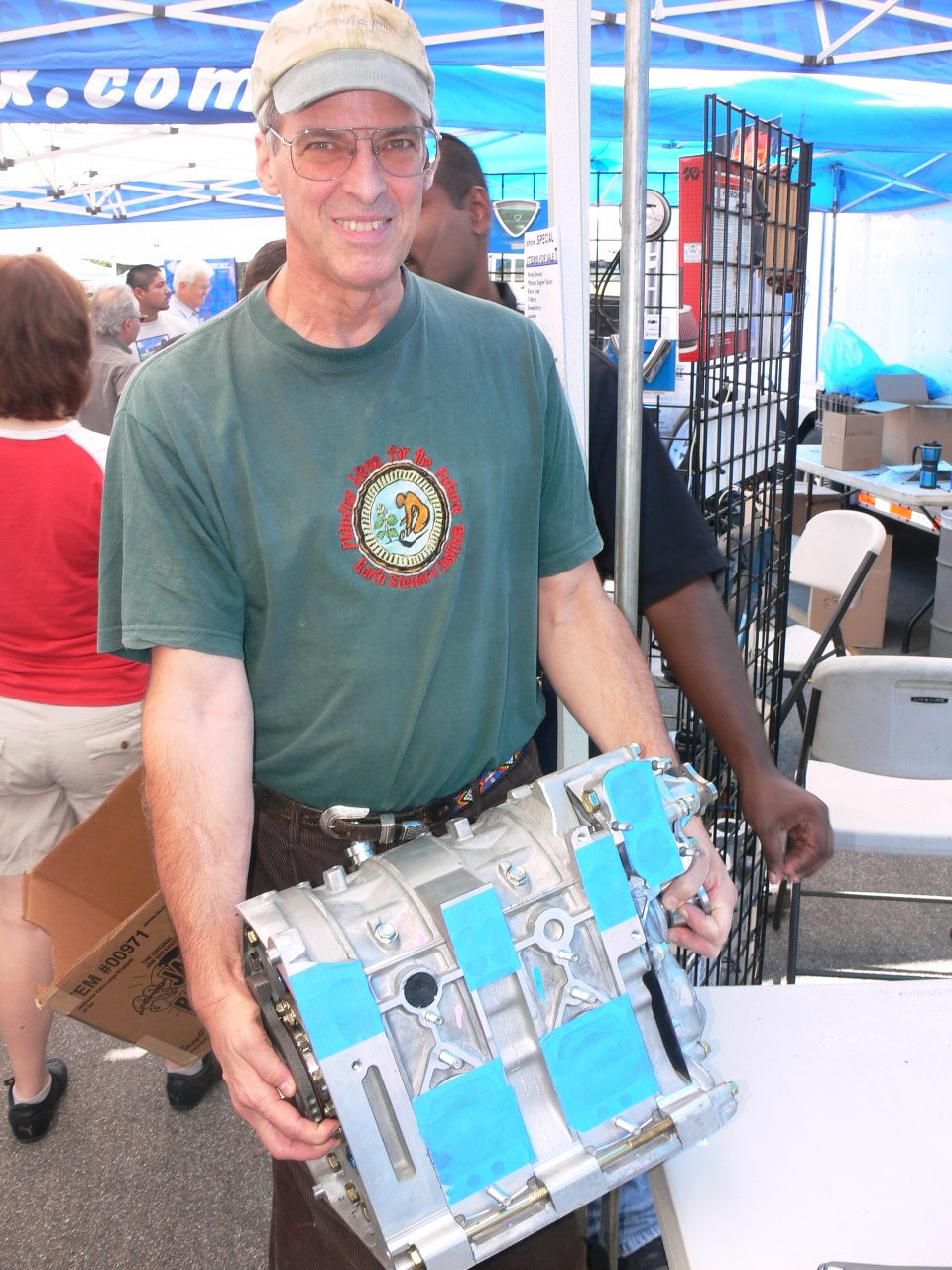
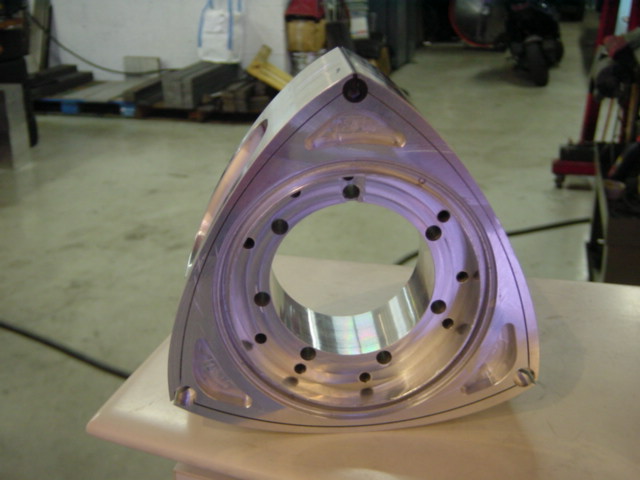
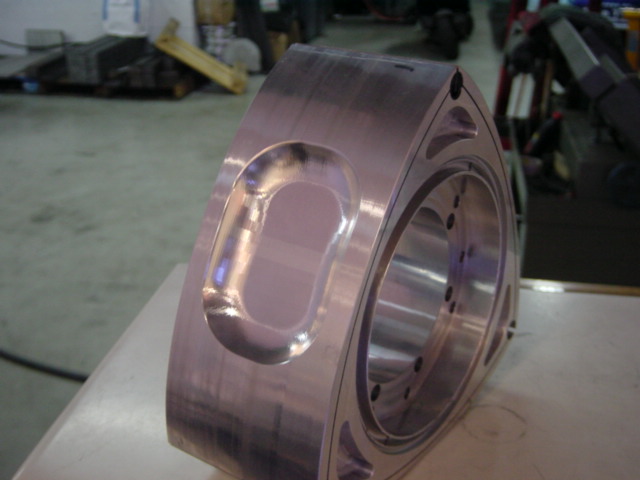
Less of a problem with our new beryllium aluminum alloy rotors with the
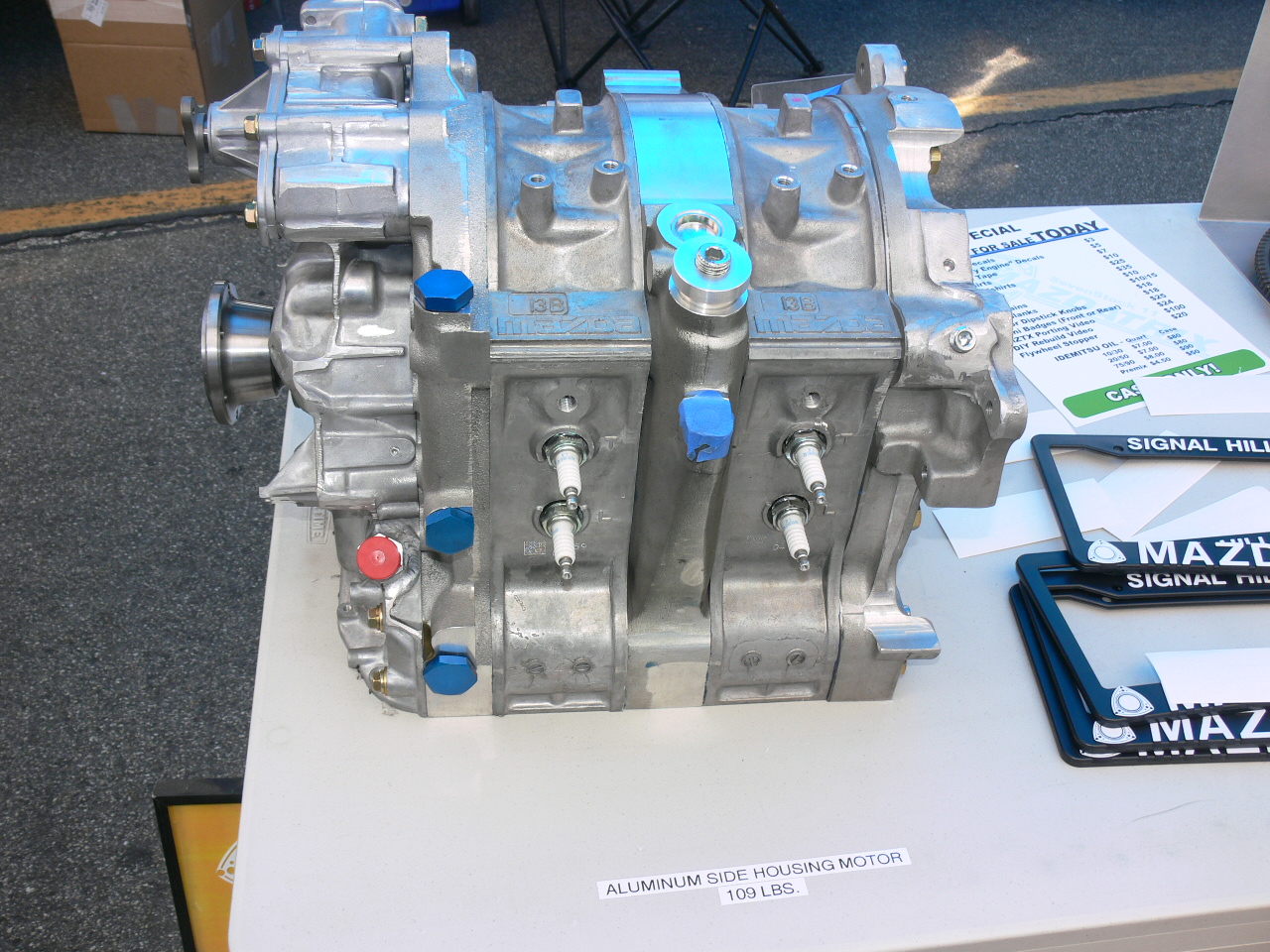
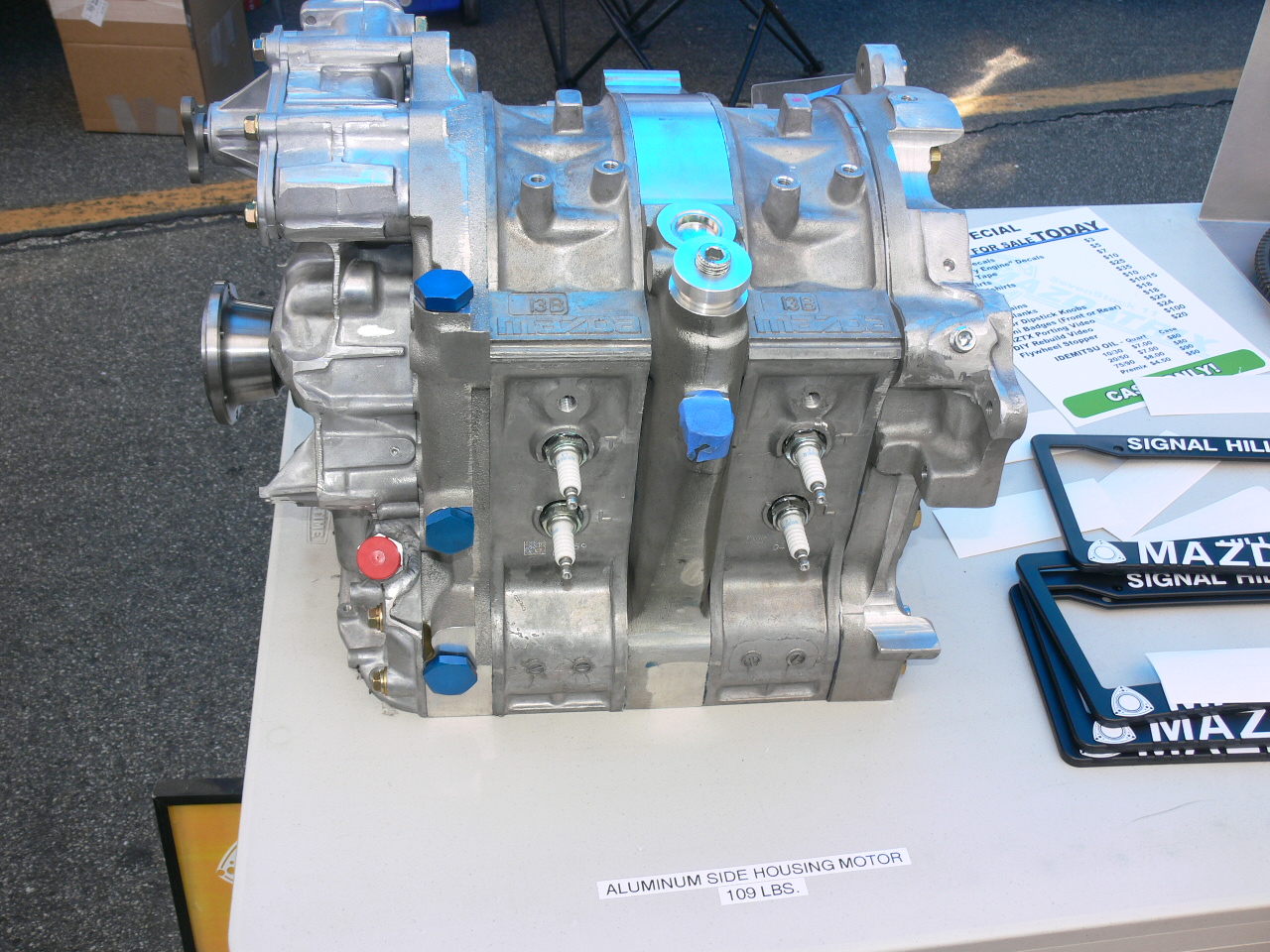
110 pound engine (less turbine) turning at 23,000 RPM. The rotors shown are
solid aluminum alloy rotors with out internal oil cooling or weight savings.
The turbo charged engine is only 855 HP at 11,000 RPM without the turbo
compound. I don't think the FIA would like it running at 23,000 RPM :) Come to
think of it Ferrari, Mercedes, BMW, Toyota and Honda would not like it either.
Paul Lamar
The Rotary Engine NewsLetter. Powered by Linux.
ACRE NL web site.
http://www.rotaryeng.net
Youtube key word UTUBPLEASE
Copyright 1998-2008 All world wide rights reserved.