Hi Paul,
Do you know if anyone has converted the Rotary for running on LPG /
Propane or Compressed natural gas?
If you push the efficiency to the limit with the turbocompound and
perhaps even more with heat2power what would the BSFC then become?
BTW what units do you use when you talk about BSFC would drop from .47
to .357?
How does that translate in g/kWh?
Regards
Randolph
Hi Paul
Thank you for the images bet ehhhh...
Do you have 21st century efficiency curves as well.
I think 286 g/kWh is not very promising to start with if you want to
turbo compound to get an efficient engine...
Are there lots of unburnt hydrocarbons in the flue gas?
How much does the temperature go up in the catalyst? ;-)
With the turbo compounding you think you would get .357 which is 217
g/kWh and that is good however!
But with good WHR you should be able to get below 200 g/kWh
Randolph in Paris
------------------------------------------------------------------
The unburned HC has been taken care of by the latest side exhaust port engines.
http://www.rotaryeng.net/New-rotary-eng.pdf
There is a lot of heat in the exhaust but that I think is partially due
to the lack of exhaust valves. It may be the exhaust valve opens too
soon. I don't have any number on the cat temp.
No doubt about it .47 BSFC is not all that great. Many have tried to
improve this but all have failed so far. There is some doubt about
why this is the case. Is it heat lost to the cooling system? If so an
adiabatic engine built with ceramics might help.
http://www.ceramicrotaryengines.com/
NASA did some studies with ceramic coated engine parts but in our experience
it does not stick. Perhaps some advancements will be made in the future
on ceramic "barrier" coatings. You can download this fiction from here.
http://www.rotaryeng.net/Adiabatic-rotary.pdf
Is it the shape of the combustion chamber? Nothing will help. I feel the
structural advantages and high power to weight and the fact it is the only four
stroke engine with "piston" porting in mass production outweighs that
disadvantage when it comes to turbo compounding. Turbo compounding piston
engines will prove to be very hard on exhaust poppet valves.
Gas mileage or MPG is not only a function of how efficient the engine is but how
efficient the over all vehicle is. There are structural advantages to a light
weight and very small engine. The RX8 is a good example. 25 mpg highway is not
bad for a 250 HP real four place vehicle capable of zero to 60 in 5 seconds.
The engine red line is 8500 RPM which is rather high. That makes loading
down the engine at highway speeds difficult.
Installing a seven ratio, high speed, paddle shifting Formula 1 style manual
transmission would improve the highway MPG as you could load down the engine
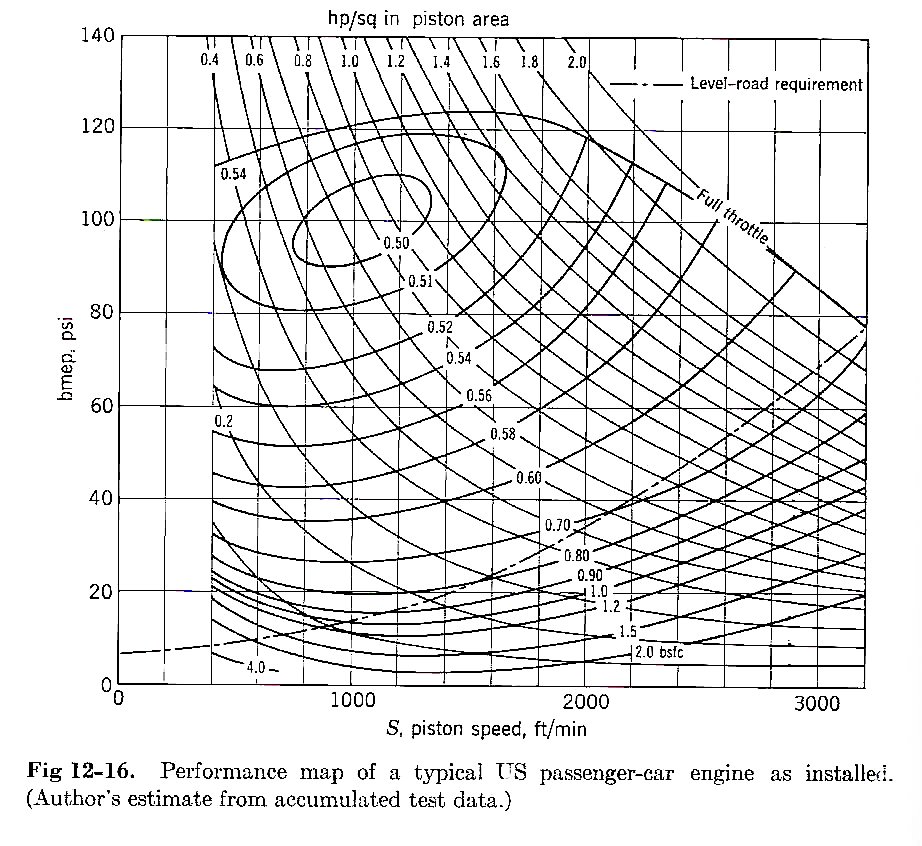
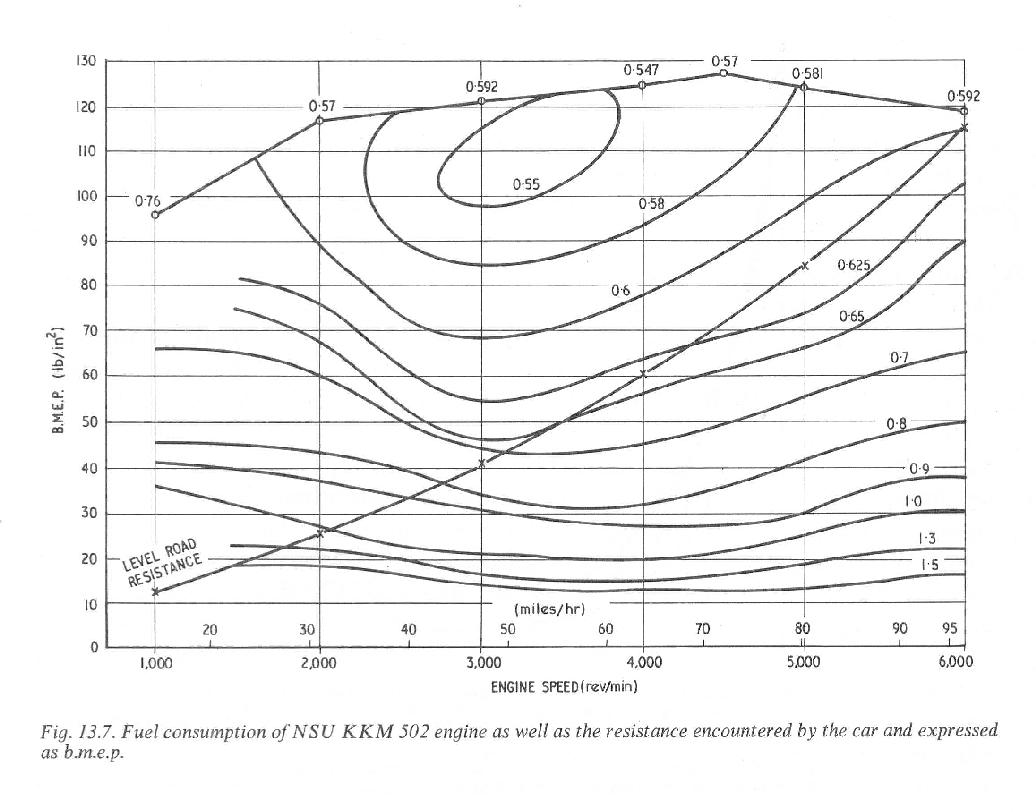
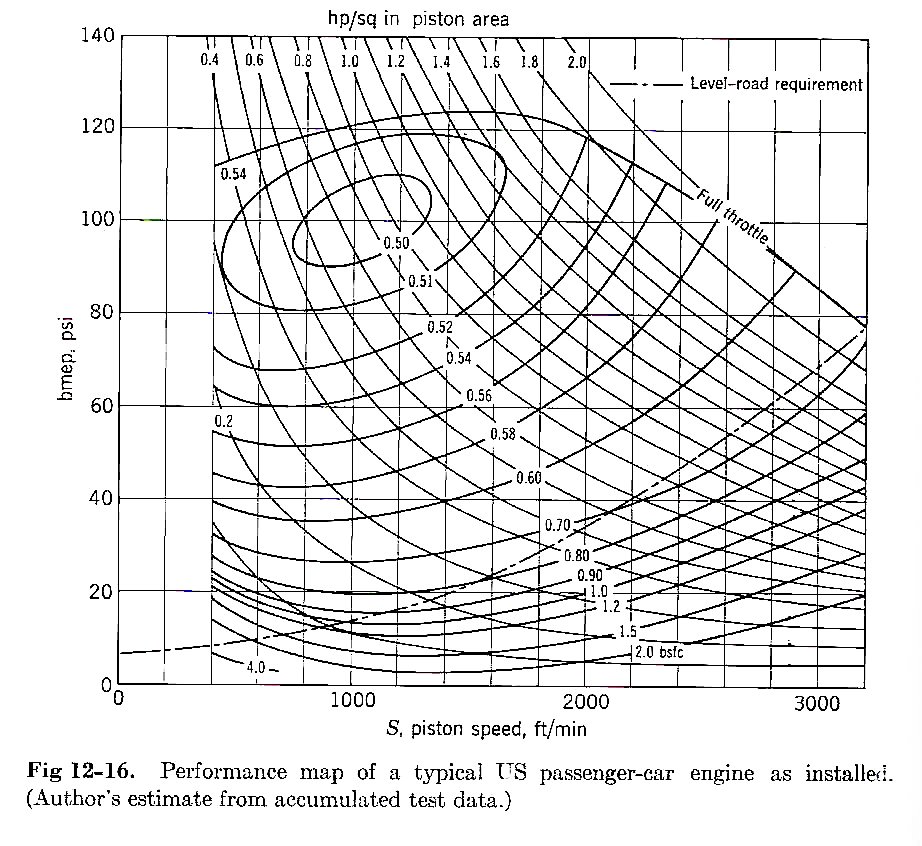
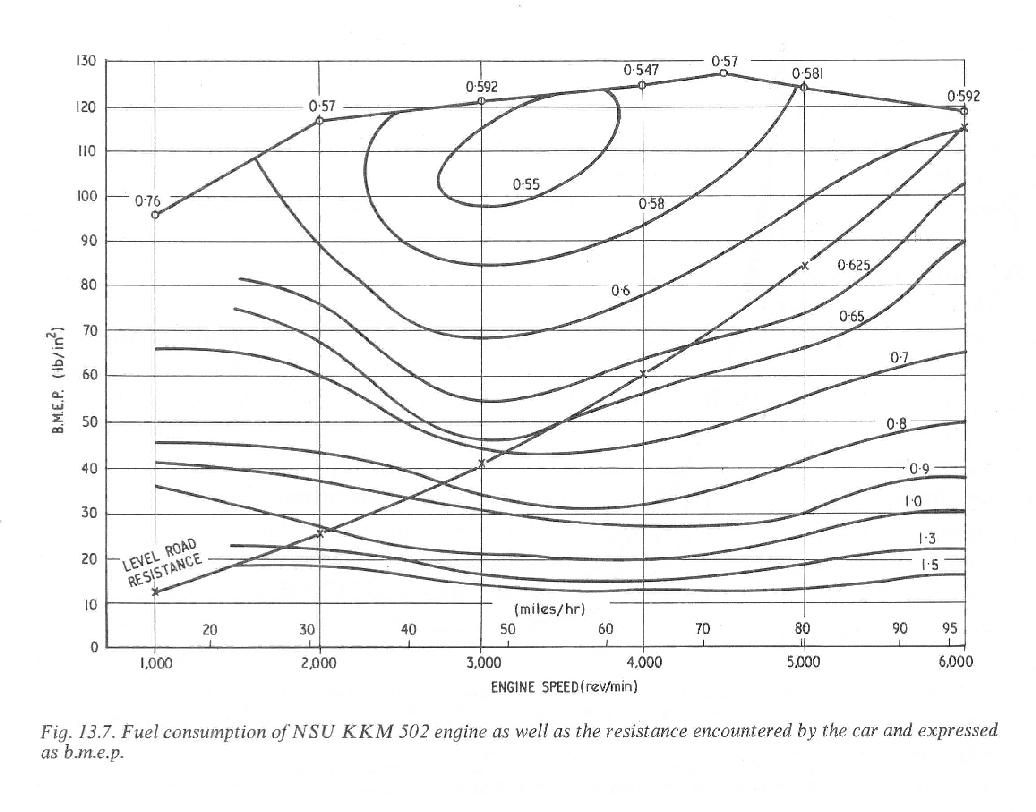
more in high gear. Matching the BSFC island to the road load is the most
important thing one can do. See the attached charts.
We shall see.
Paul Lamar
--
The Rotary Engine NewsLetter. Powered by Linux.
ACRE NL web site.
http://www.rotaryeng.net
Youtube key word UTUBPLEASE
Copyright 1998-2008 All world wide rights reserved.