Harder rubber couplings are not the way to go. Any rubber used as a
torsional
damper is going to heat up when it is operated in the resonant RPM range.
There
are all metal torsional dampers that don't heat up significantly and they
are
used on aircraft engine crankshafts and on this rotary engine built be
Everett
Hatch and Steve Beckham. A very clever thing to do as you need the counter
weights anyway. They are called pendulum dampers and they are expensive to
make.
Rubber type torsional dampers will work if high temperature 500 F Silicone
rubber is used instead of the more common 200 F neoprene rubber. Also a
blast
tube on the torsional damper will keep them cool. Rubber torsional dampers
are
found on almost all auto engines except rotaries. Rotaries don't need them
unless they are driving a prop and then the problem is more the PSRU than
it is the e-shaft.
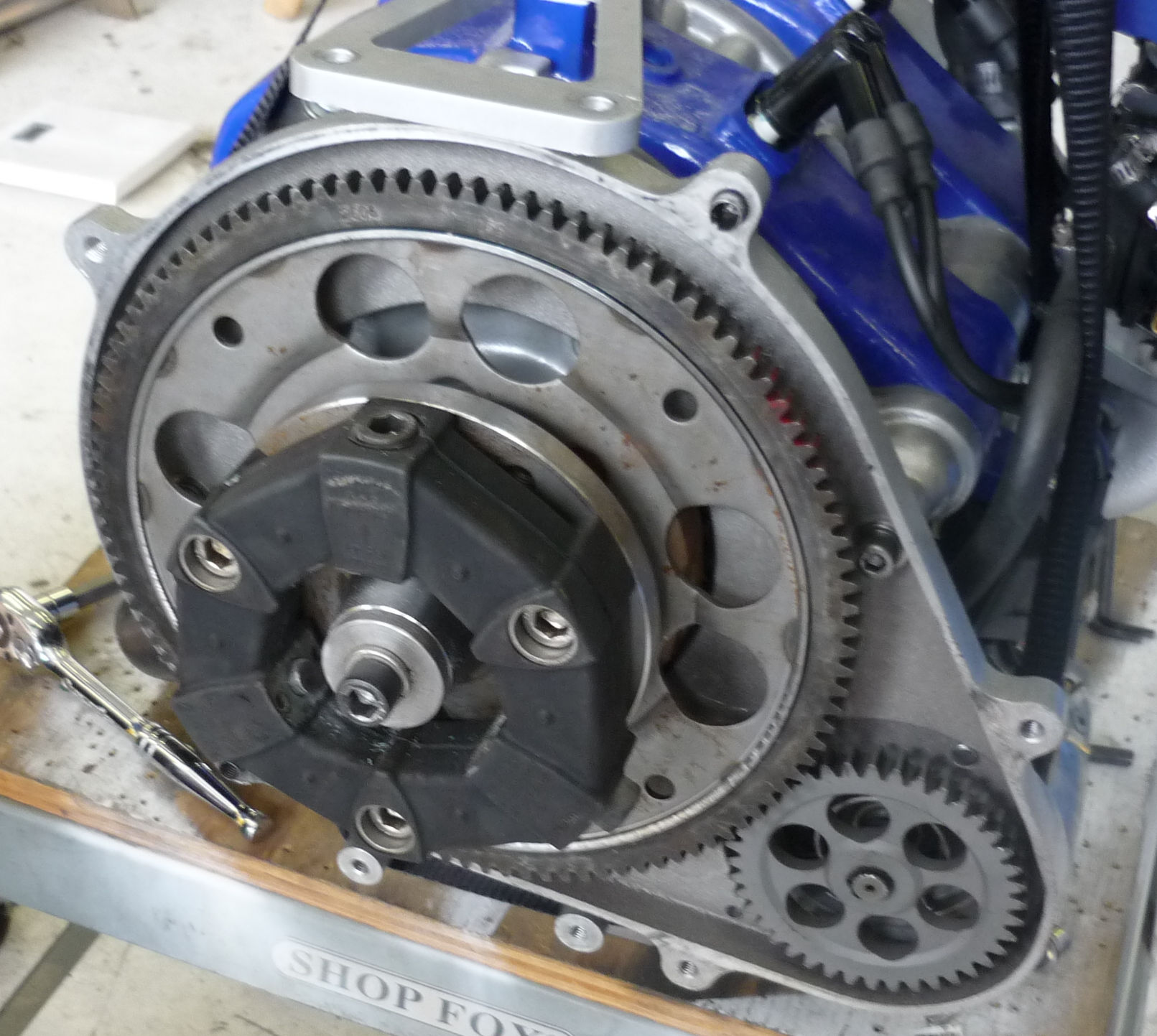
The Diamond engine uses a rubber coupling similar to those found on BMW
drive
shafts as does Richard Sohn on his one rotor engine. They are so large and
so
over kill the heat does not bother them as there is plenty of surface area
to
dissipate the heat. The problem is finding them soft enough to use on a
one rotor.
Tracy uses four, much smaller, rubber bushing and I can see how they could
over
heat and fail under certain circumstances. They are made from neoprene and
substituting Silcone would go a long way towards reducing failures.
Paul Lamar
Paul,
Quite obviously I don't know what is best, but I'm always willing to learn
from the experts. I've seen the BMW dampers and I tried to find one that was
on a Diesel 4 cylinder. I figured there wouldn't be anything with more
Torsional Vibrations than a 4 cylinder diesel, but haven't found one yet.
The size of the one large damper was what I was referring to, their big but
smaller in diameter than, the widely spread diameter of Tracy Crook's unit.
The BMW type however gives only 3 connecting points each side of the
power-in side and the power-out side. I was hoping to make something with 6
connections ( in and out) - like Tracy's.
I guess we won't know for sure without a definitive test, over a period of
time. However if the Diamond engines are running them, my guess that they
would be good. Now if we could identify the exact one they were using!?
George (down under)
--------------------------------------------------------------------
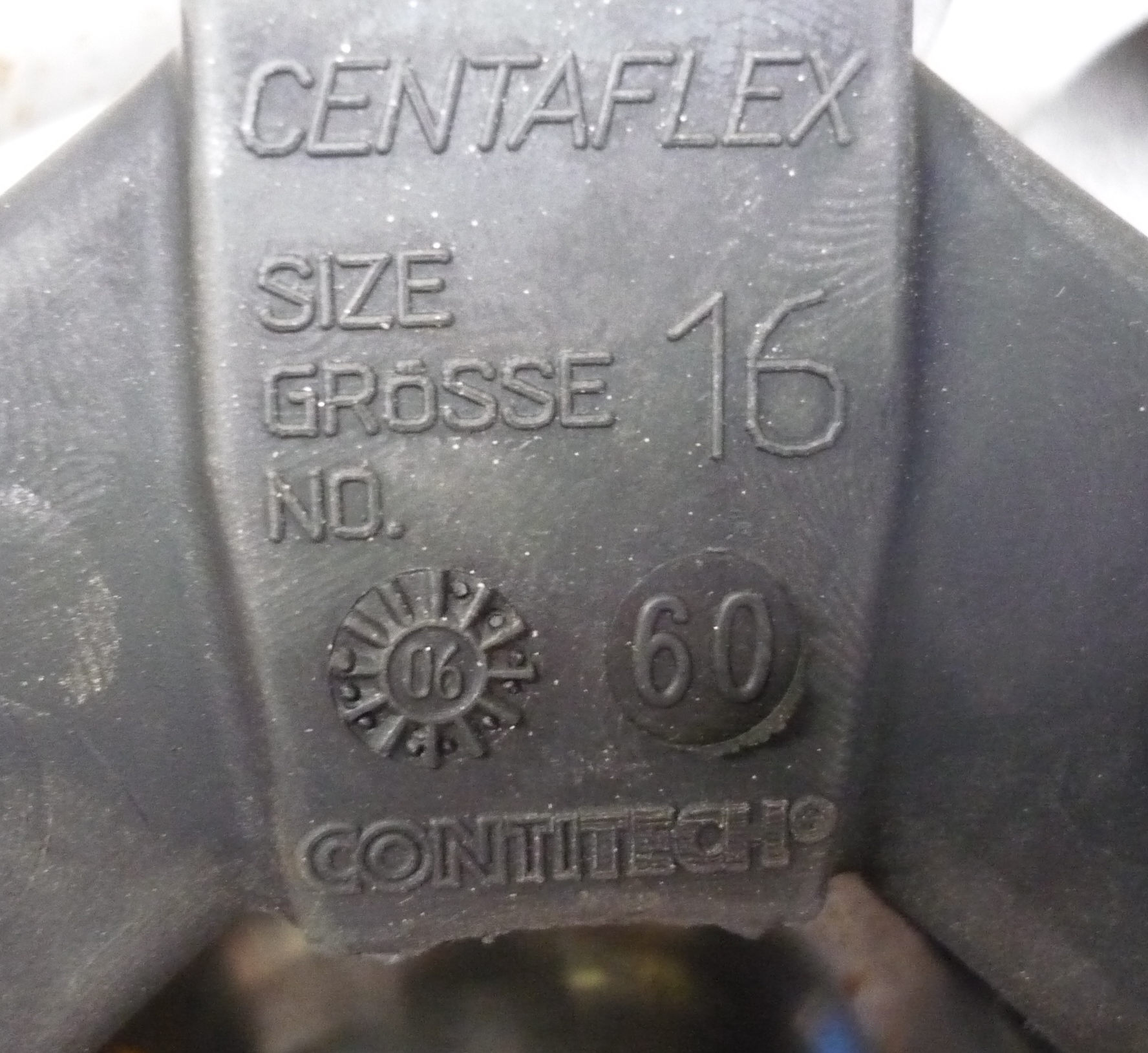
Here is a company that makes something similar in a range of sizes.
This is the one used on the Rotamax 2 rotor engine. The unit Rotamax
chose was 60 durometer and the resonant frequency was about 2000 RPM.
We ordered a 50 durometer version and that lowered the resonant RPM
to about 1800. Next step would be to drill some holes in it to lower
the idle RPM lower still. Or one could try the next smaller size.
Paul Lamar
--
The Rotary Engine NewsLetter. Powered by Linux.
ACRE NL web site.
http://www.rotaryeng.net
Youtube key word UTUBPLEASE
Copyright 1998-2008 All world wide rights reserved.