Just to keep the TCP discussion alive, I recently got this about some sort
of variant on the R3350. What versions had PRT vs TC vs none at all? Who
made them, both CW and P/W, and ? Marc Wiese
Subject: R-3350-93
Marc, I flew the 3350-93 for 2000 hours on Lockheed 1049 and 1649 Connies in
the AF. That engine was a mechanical monster. At the time the air lines
majored the engine at 1000 hours but budget limited us to life of the engine
until failure. We never had an engine live past 1000 hours. I had 33 engine
losses in 36 months, all of them far,far out over the North Atlantic and
over the ice cap. Less than 3 good strong engines was a ditch condition! I
was once down to 2.5 engines that did not end pretty on Cape Cod. Our wing
had several aircraft with engine fires over the water and the Connie had a
magnesium main spar that burned readily! We lost four aircraft into the N.
Atlantic with high losses. Not a happy time!
Chuck
Chuck who? Was he a flight engineer?
You hear different stories from different people. Some say they never had
problems. Curtiss Wright claimed the TBO was 3000 hours. I think a lot
depended on the skill of the flight engineer. Some say they lost an engine but
they still made it to their destination. Curtiss Wright claimed 9000 engine
were built with over 7.5 million accumulated flight hours. Don't forget that
technology was 60 years ago. I think Hurant below was a flight engineer.
Paul Lamar
-------- Original Message --------
Subject: R3350
Date: Sun, 7 Dec 2008 10:26:32 -0600
From: h karibian
To:
<rotaryeng@earthlink.net>
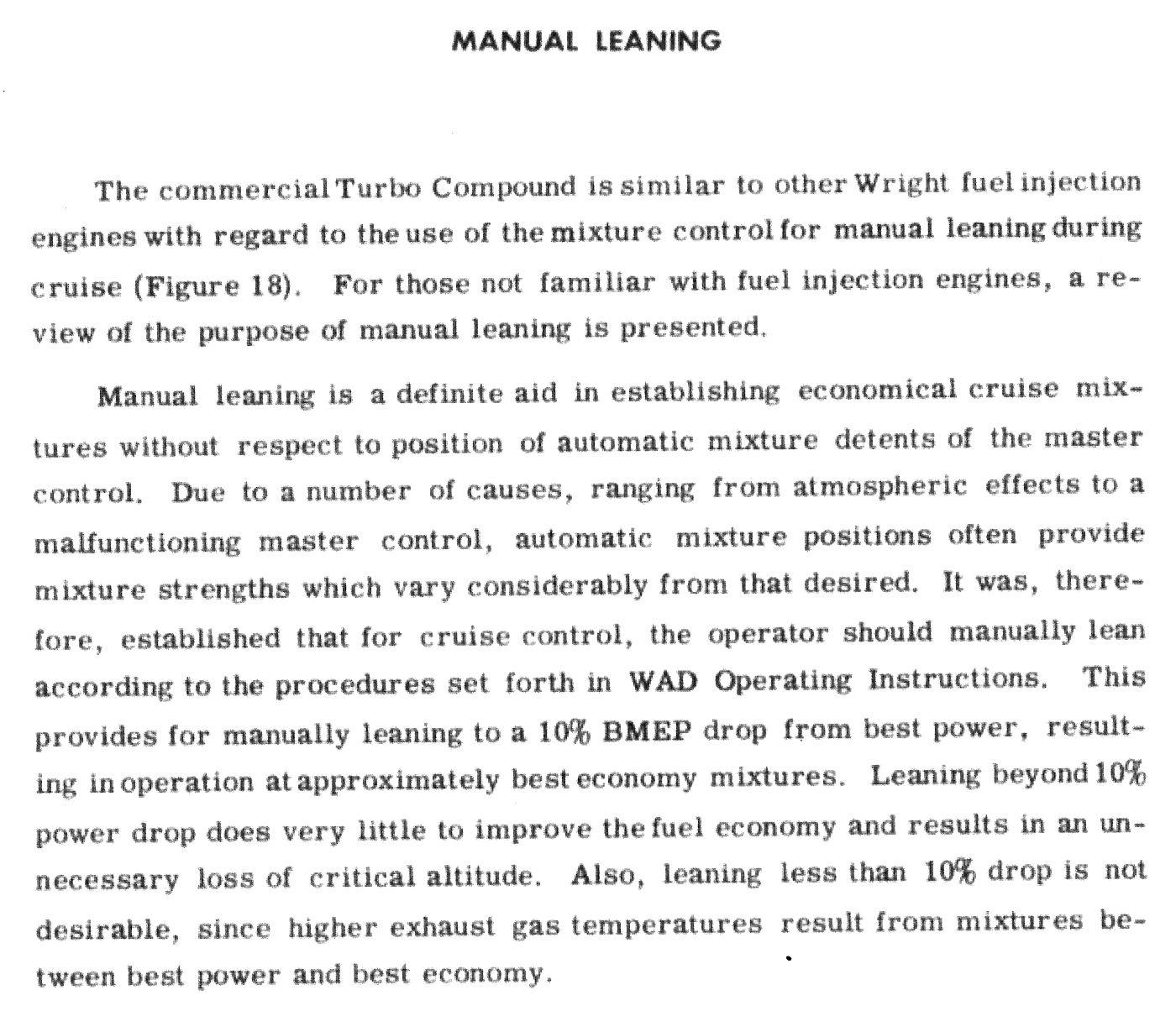
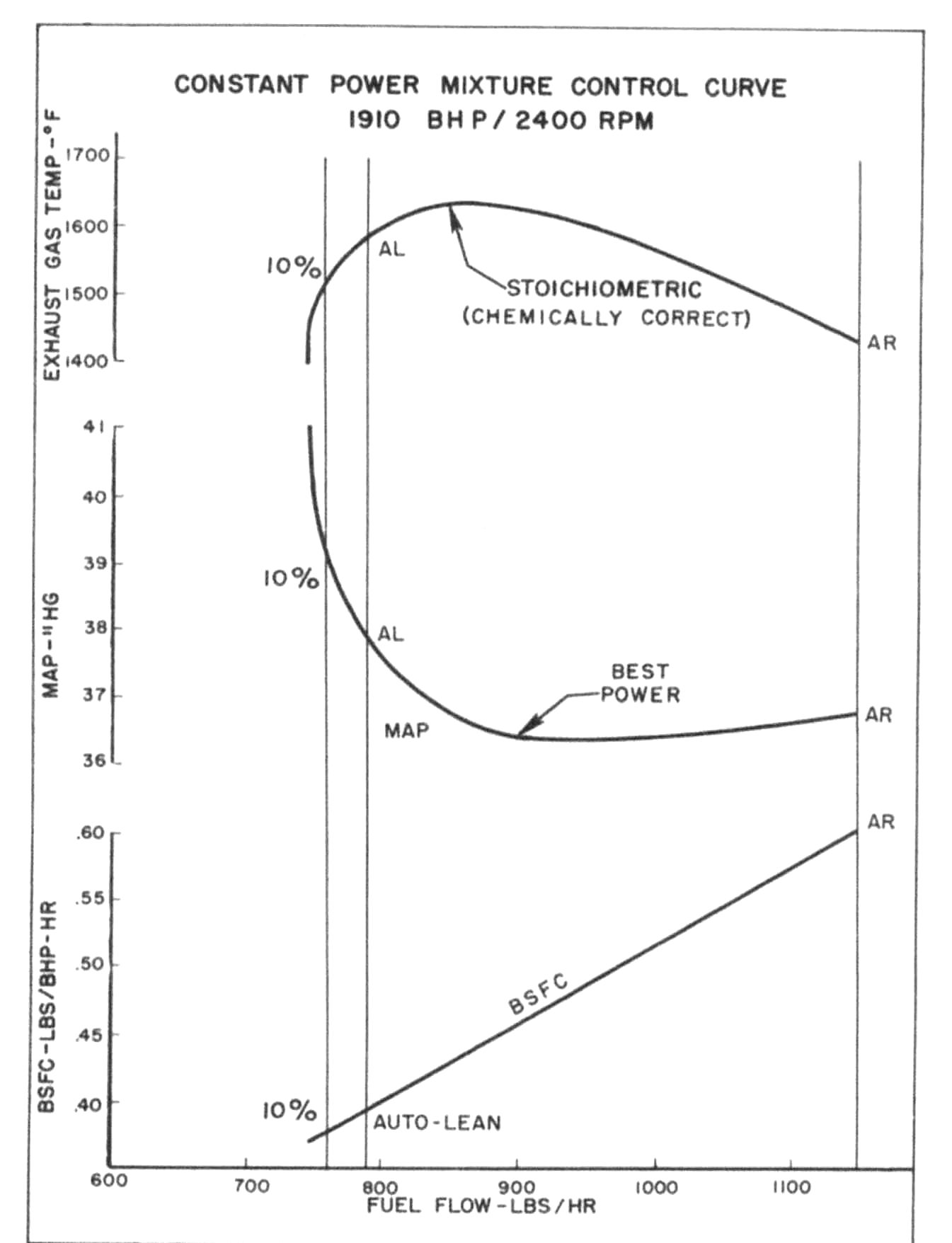
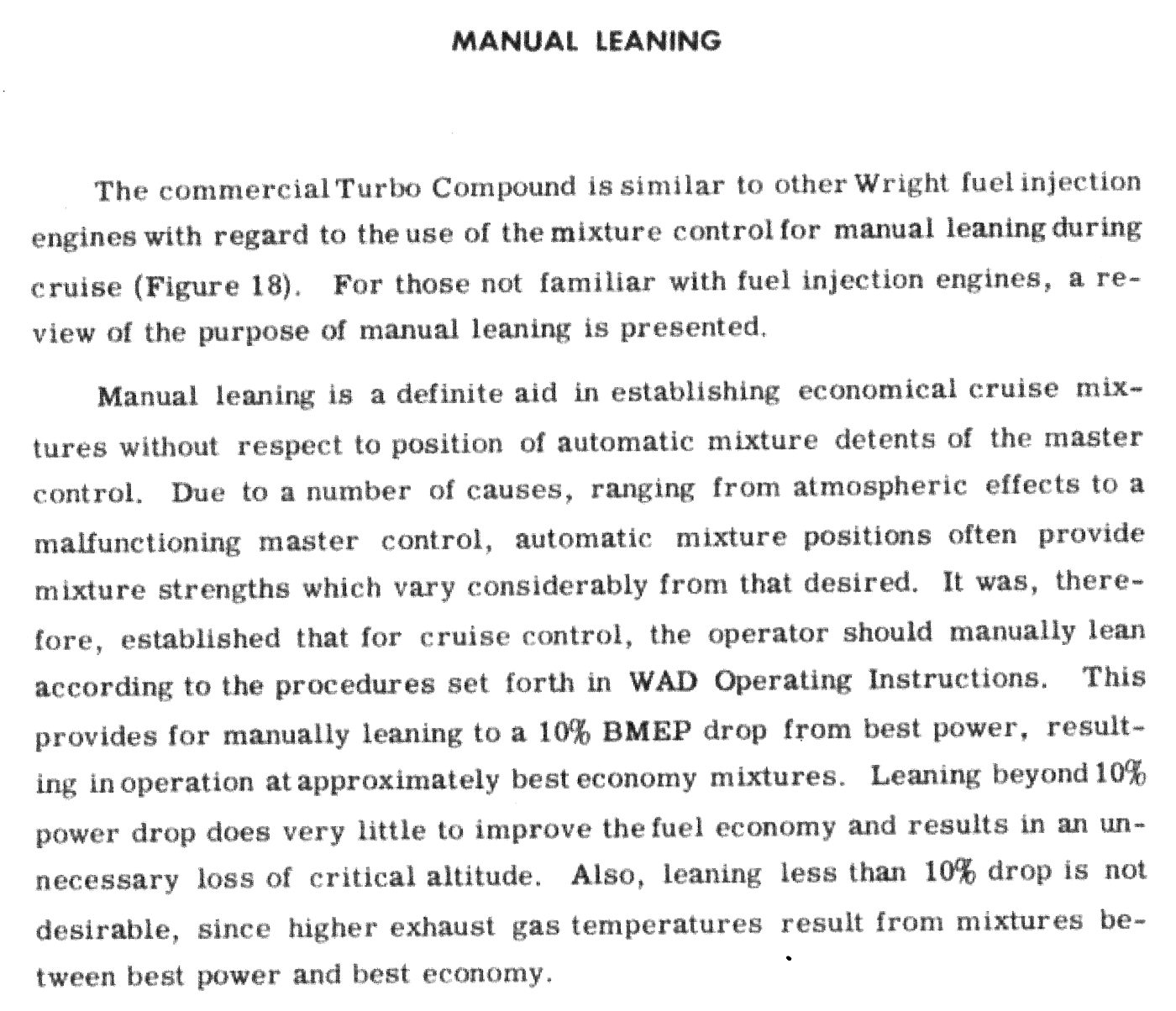
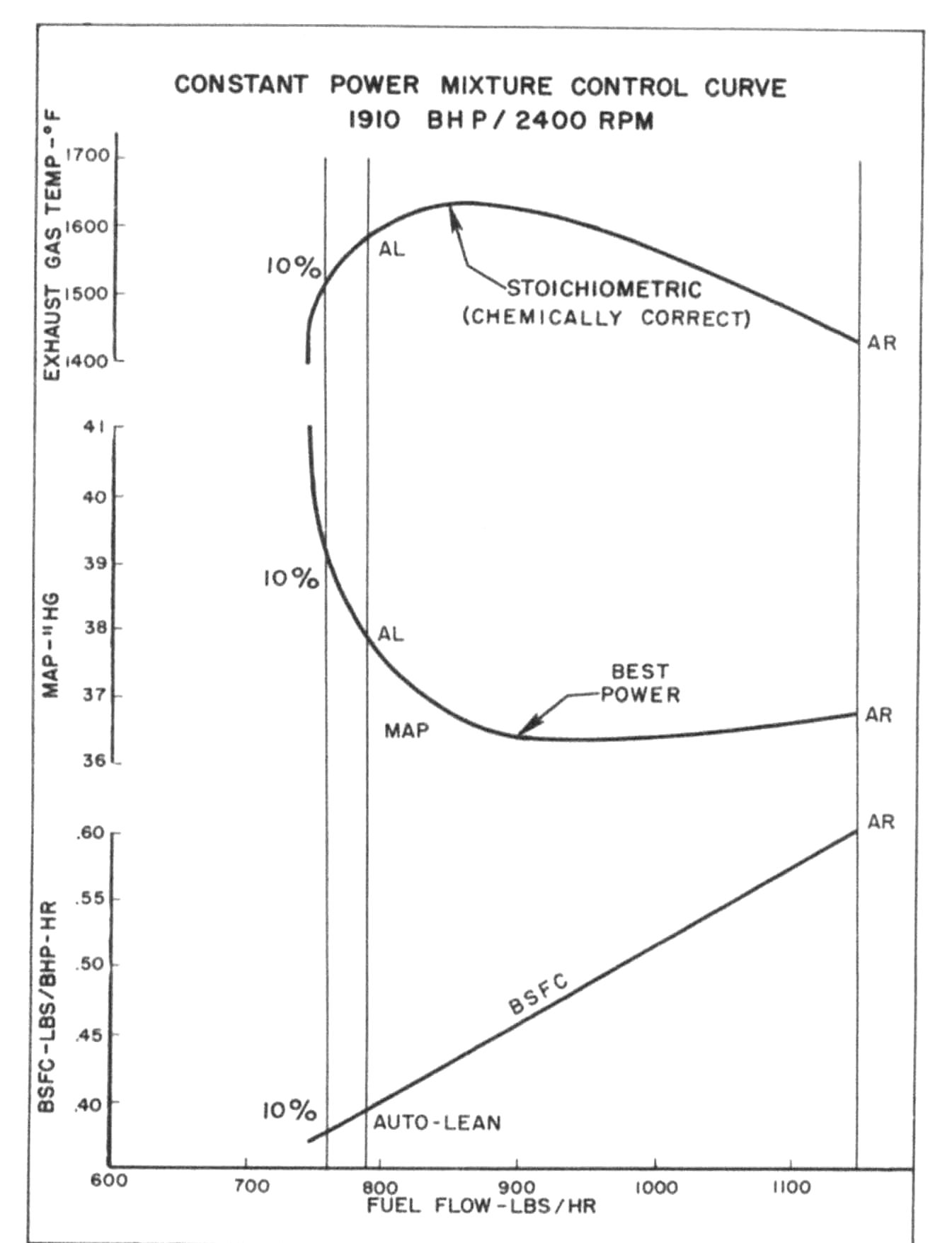
The 3350 was leaned to 10% BMEP under a certain threshold of power (I don't
remember what it was) because of the power enrichment valve in the
carburetor. Above that power setting, but below METO (maximum continuous
power setting below takeoff power) and climb power, you used "Auto Lean".
The two injection pumps, initially, were connected with a synchronizer bar
that would change with temperature and vibrations but were later replaced
with flow dividers that equalized the fuel to each cylinder. The engines
were BMEP or manifold pressure limited on takeoff, whichever limit was
reached first, and you shifted to high blower when you ran out of throttle
at low blower in climb. Karibian
Bob Buck (wrote Weather Flying and an interesting autobiography) was a
captain and chief pilot for TWA and flew Connies (among lots of other
types). My recollection of his comments were that the engine
reliability was crummy when running in the high ratio blower setting,
but was excellent when running in low blower. I don't believe the
problem was in the TC, but more likely in thermal management. He said
that TWA's operation just lived with the reduced performance (slower
cruise speed) at high altitude - running low blower. He flew some of
the longest Connie missions - from the west coast of the US to London.
Regards,
Matt-
Curtss Wright had a lot of problems with the exhaust valves. Most of the TC
development money was spent making them live. If an exhaust valve broke
up parts of it would go out through the exhaust pipe and take out a turbine.
The flight engineer was instructed to shut down the engine to prevent
further damage. The Air Force Connies had large radomes that increased
the drag so performance on 3 engines was more marginal.
Need I mention the rotary has no exhaust valves :)
Here is a another good book on the subject.
"Lockheed Constellation" by Stringfellow & Bowers Motorbooks ISBN 0-87938-379-8.
Therein the descriptions of the TWA nineteen hour non-stop flights from San
Francisco to London and twenty three hours, nineteen minute flights London to
San Francisco are described.
-----------------------------------------------------------------------
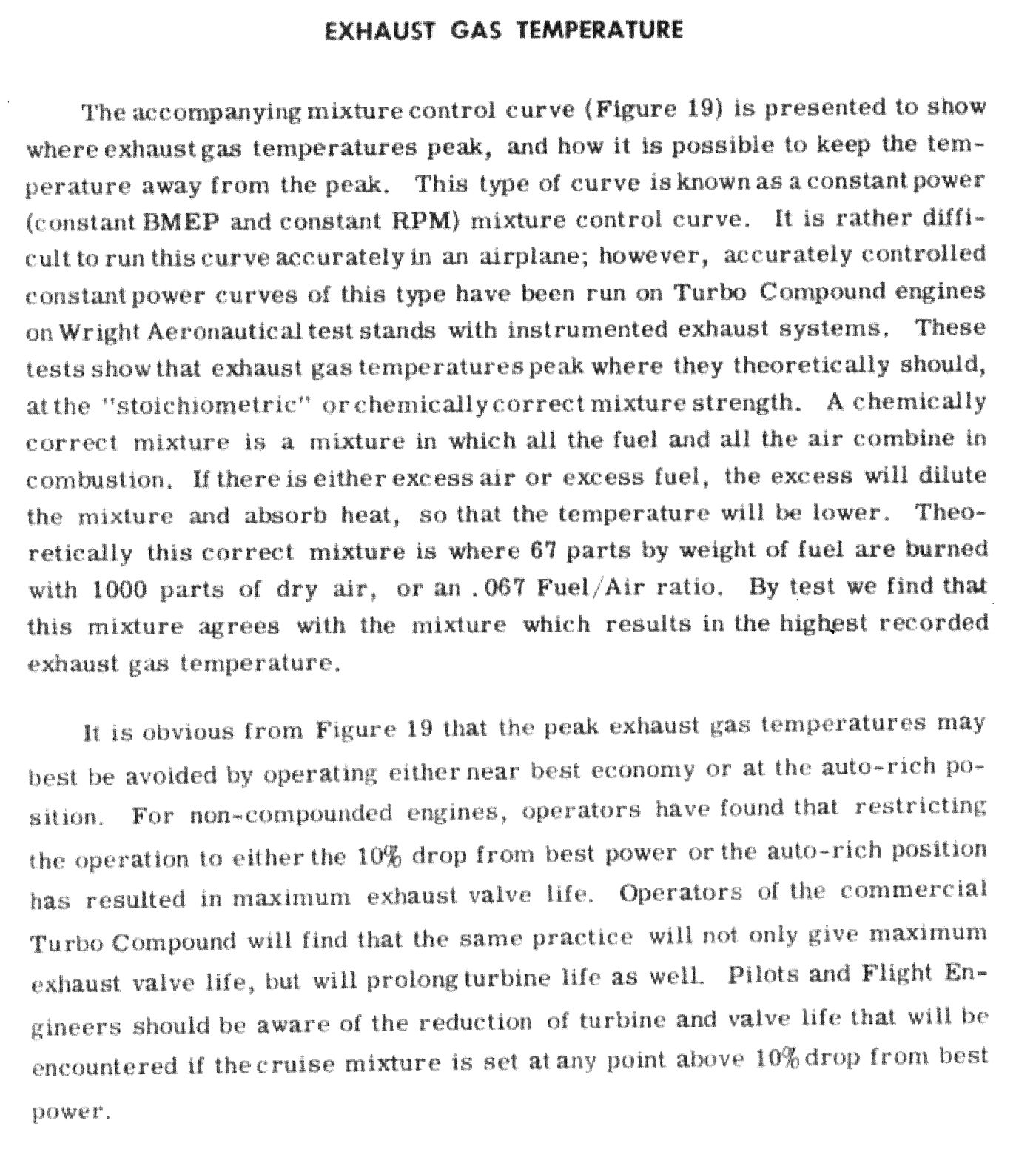
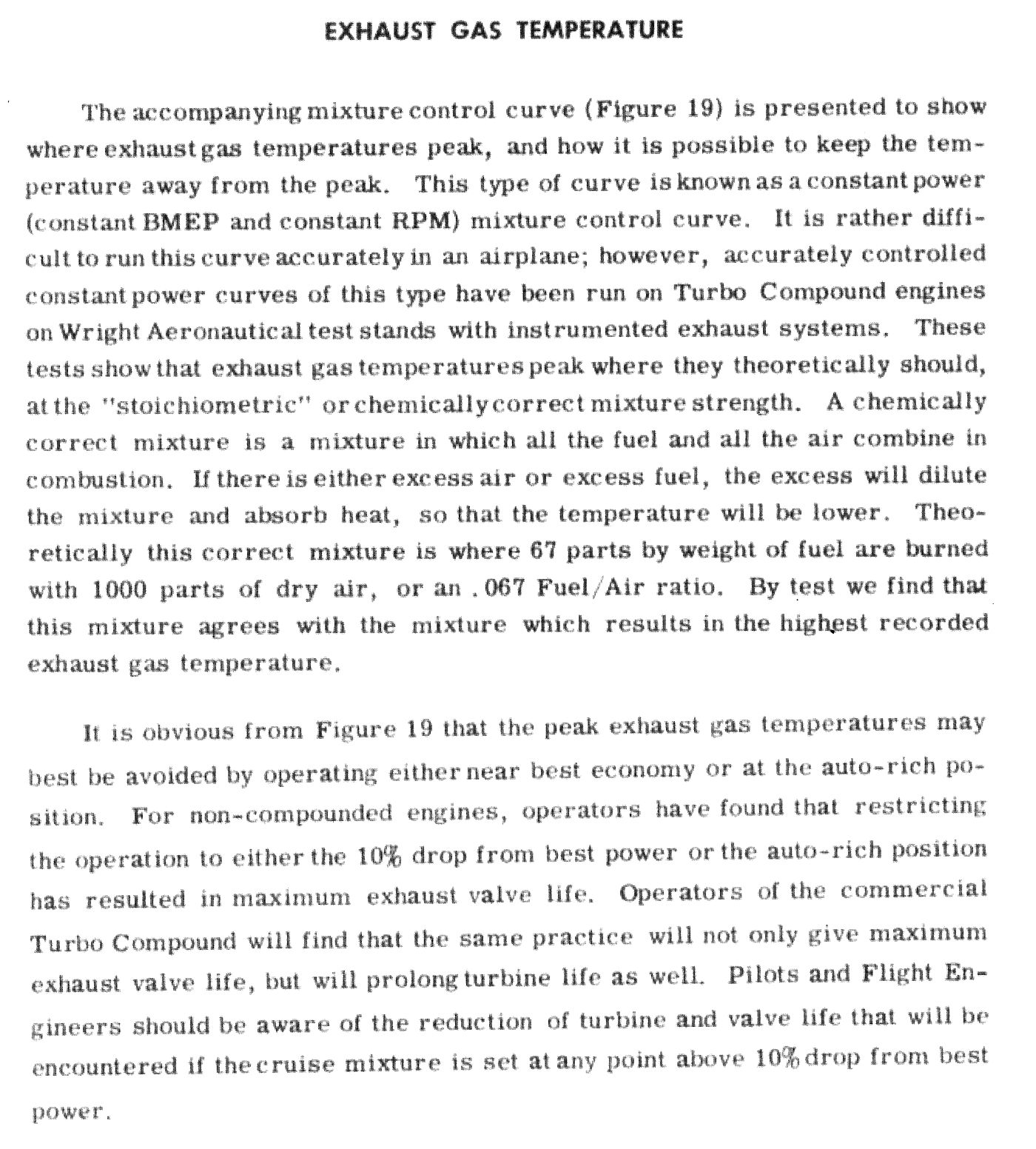
A couple of things. As I recall the Air Force engines used carbs which were much
harder to insure equal mixture in each cylinder. Proper mixture was critical to
the life of the exhaust valves and turbine as it is today. Commercial RS3350TC
engines used fuel injection with an auto lean option. Here are a few jpgs on the
subject. Modern aircraft engine's exhaust valves would last longer with EFI auto
leaning. Mistral has auto leaning on their rotary engines.
Paul Lamar
Paul,
Chuck is a pilot friend of mine who owns/flys a plane like mine. I don't
know what his flight crew status was (I'll ask) but it appears from his
messages that he was in the AF flying Connies with an engine variant that
you shifted from low to high blower at about 7500 feet.
Marc
--
The Rotary Engine NewsLetter. Powered by Linux.
ACRE NL web site.
http://www.rotaryeng.net
Youtube key word UTUBPLEASE
Copyright 1998-2008 All world wide rights reserved.