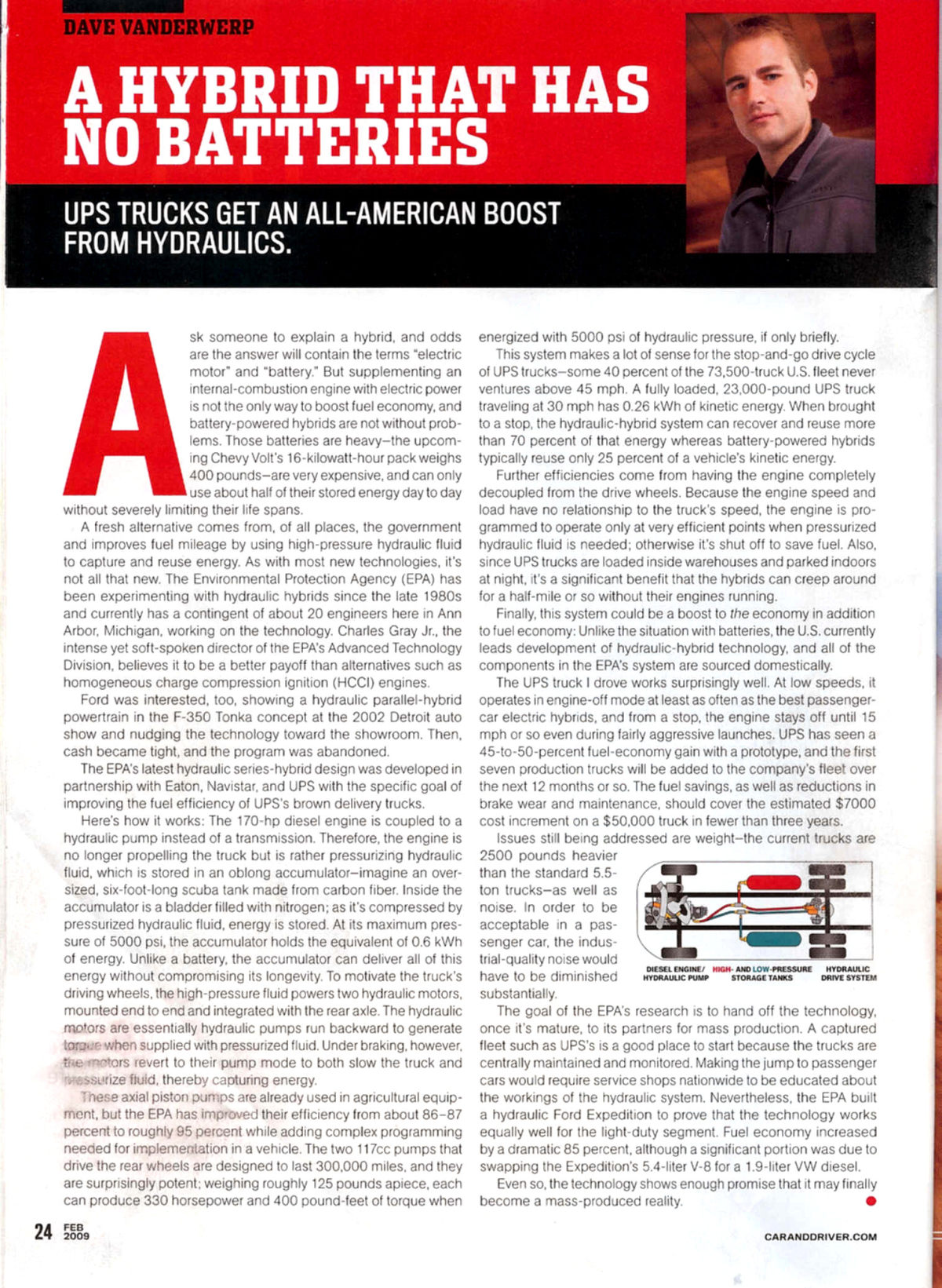
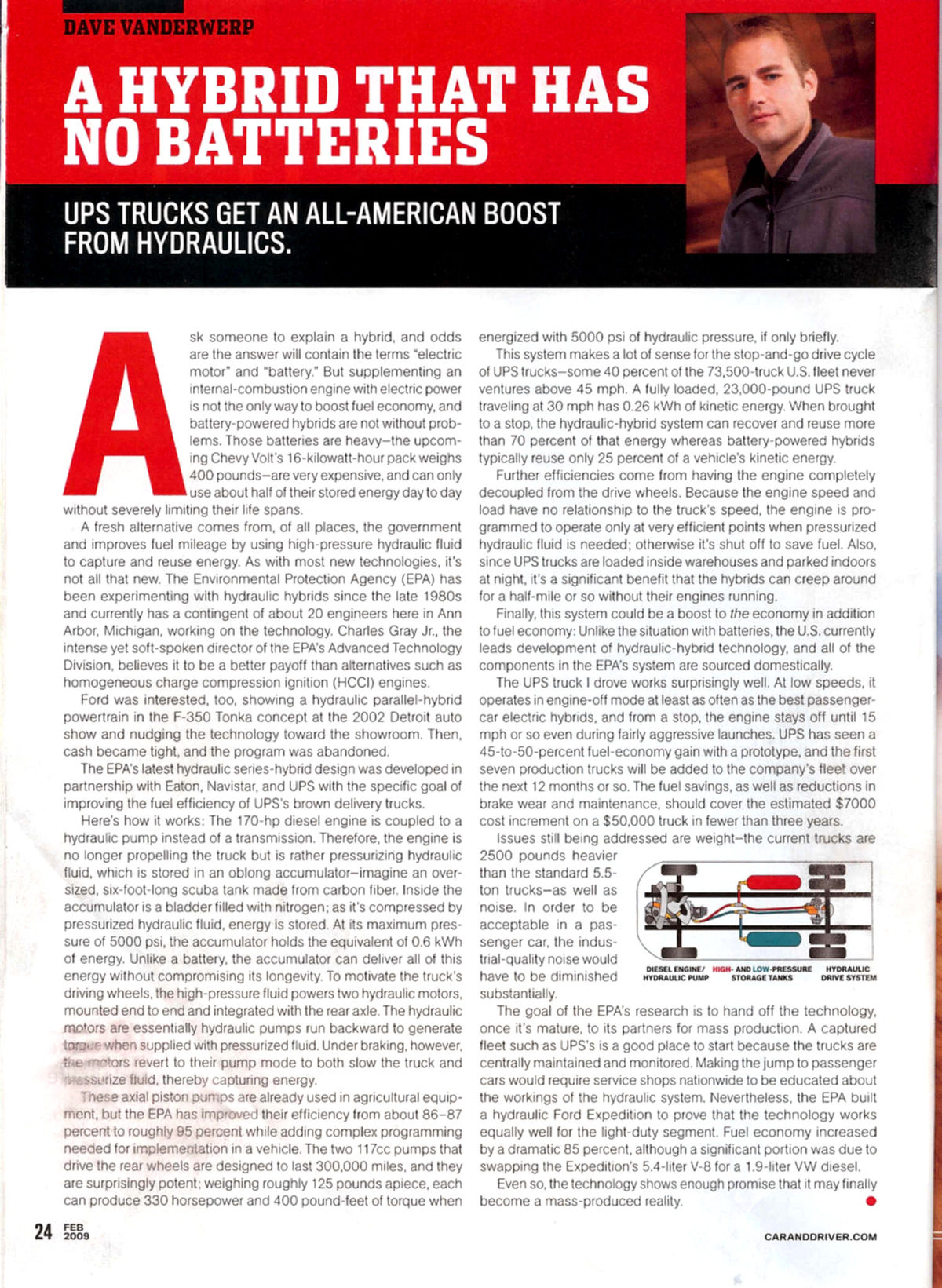
>> According to this article in Car & Driver UPS is building some hydraulic hybrid trucks.
>> Package delivery trucks are ideal applications for KERS. (AKA hybrid) Stop start stop start all day long.
>> Just like a Formula 1 car :)
>>
>> A hybrid does nothing for you on the freeway except increase your car payments :)
>>
>> Notice however it beats a battery electric hybrid by being able to use all
>> the stored energy. No life limit on the storage medium.
>>
>> The other amazing thing is they claim 95% efficiency for the swash plate hydraulic pump/motor.
>>
>> Good work EPA, UPS and Car & Driver.
>>
>> Paul Lamar
As I see it, it is nothing else but a compressed air system with all its
heat losses when the air (80% N2), or in this case nitrogen (100% N2), it
heated by compression. The hydraulics are just the "connecting rod" so
to speak.
Rolf
That is interesting observation on the heat of compression.
Maybe you get that back when it expands to drive the motors.
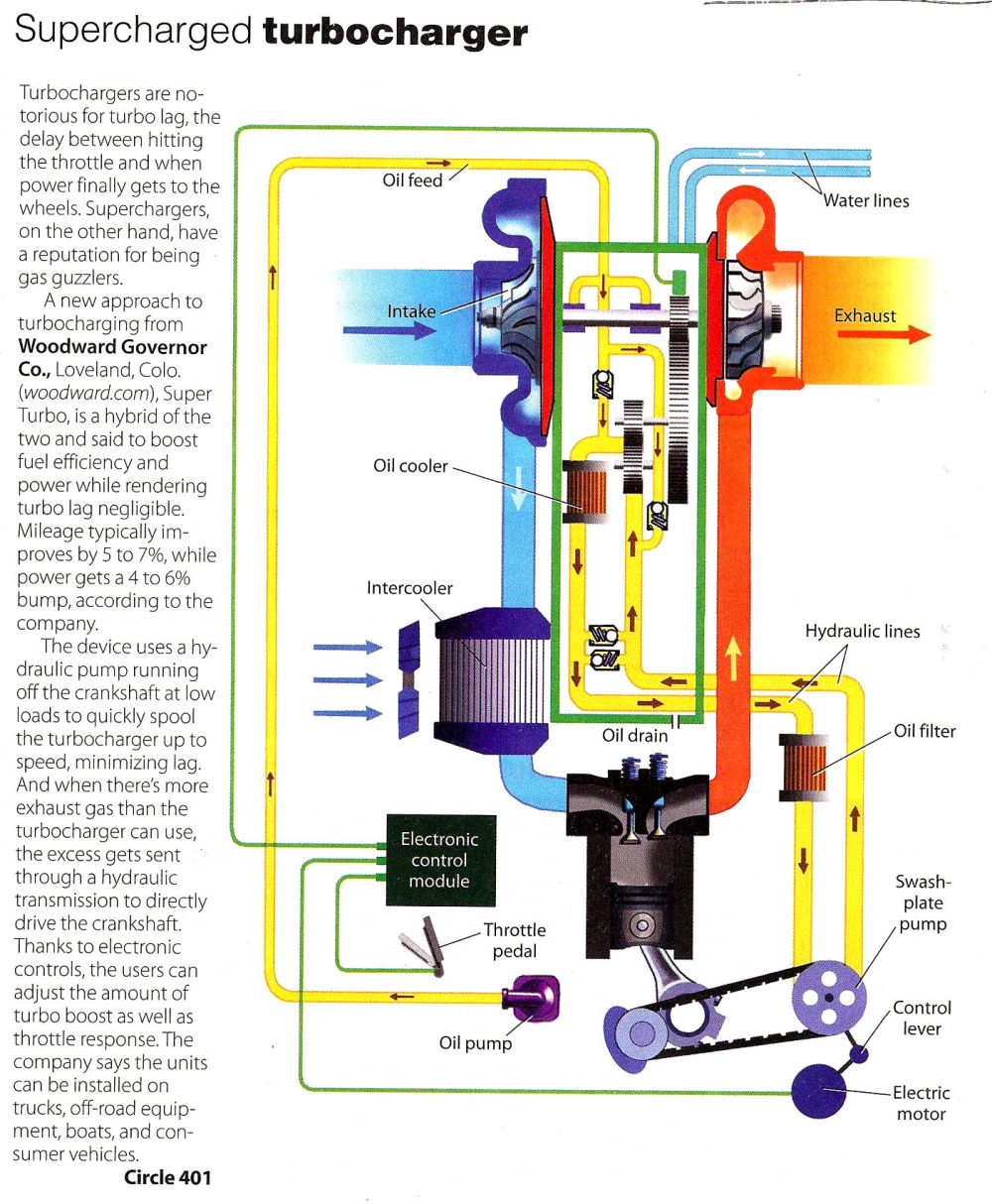
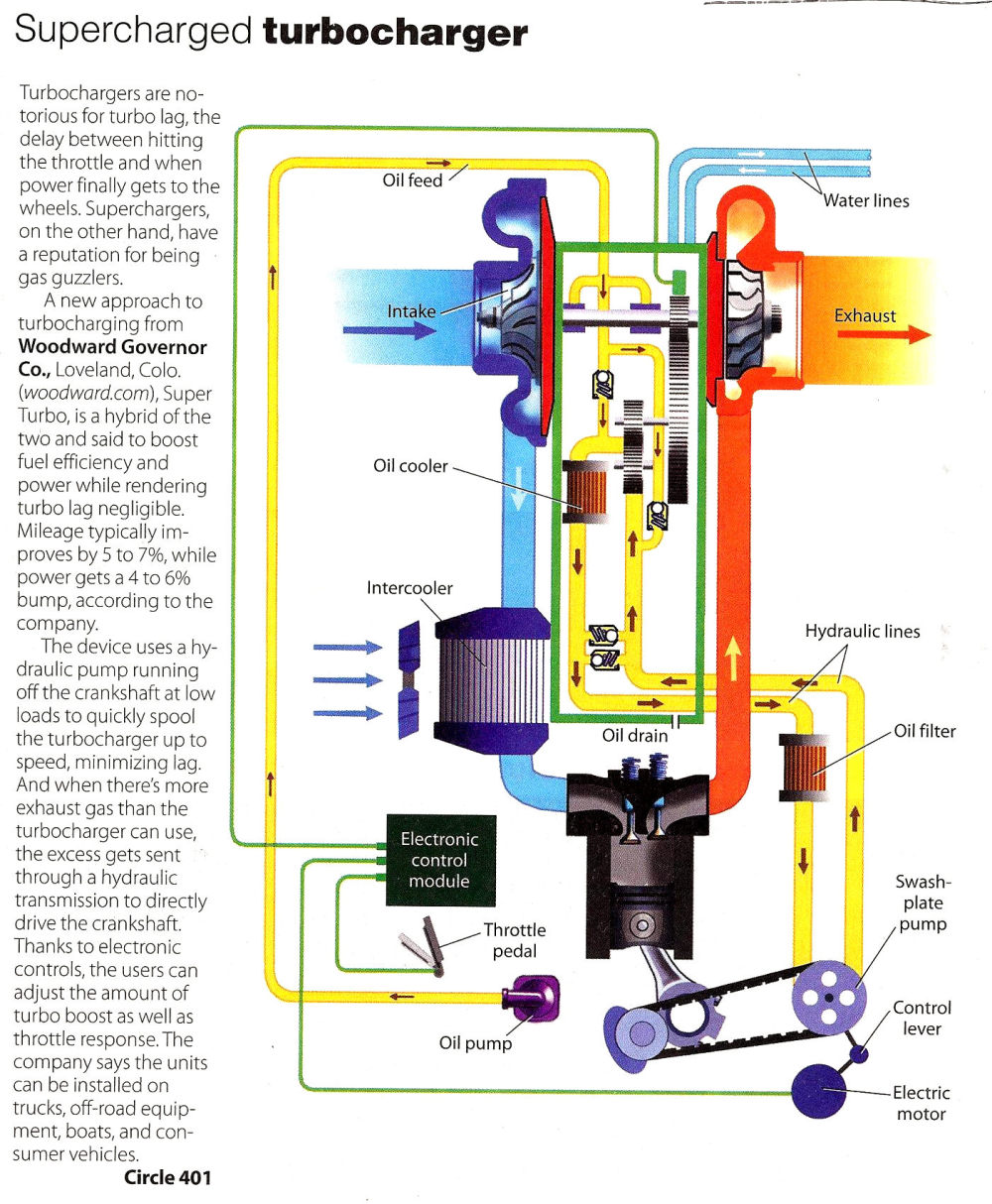
Now if they can combine this idea with the Woodward hydraulic turbo compound
they may have something real big for stop/go AND the highway.
Paul Lamar
Paul,
I like the idea of a hydraulic hybrid. Check out these websites:
http://www.hybra-drive.com/index.htm
http://www.newtechspy.com/articles06/hydraulichybrid.html
This as FAR better that dealing with all those batteries!
Steve Brazil
I just had another idea. You could pre-charge the system at night off the
power grid with an electric motor powered hydraulic pump in your garage. That
would get you a few miles at real low cost.
Paul Lamar
-------------------------------------------------------
Paul,
That's exactly the thinking behind the plug-in electric hybrid. This system
favors a bigger vehicle because of the size of the accumulators.
Steve Brazil
------------------------------------------------------------------------
What is bothering me is most of these ideas were had in 2006. What is
holding it up? Is there a show stopper in there someplace?
Paul Lamar
-----------------------------------------------------------------------
I believe some of you are overlooking or just ignoring an important fact.
The UPS system was specifically designed for large vehicles which make
frequent stops between close destinations, not for ones which drive long
distances between stops. The UPS truck accumulators hold approximately 2000
hp-seconds of energy which is really not that much. For example, with it,
one can obtain 200hp for 10 seconds, 20hp for 100 seconds, etc. Another
vehicle which other articles points to as being well suited for this type of
system is a garbage truck because it is constantly stopping after only
driving a very short distance.
One of the driving goals of the design was to create a regenerative braking
system which did not rely on batteries; hence, one relatively free of the
life-limits of batteries and all the other problems and costs associated
with them. Others were to keep it relatively simple and easy to inspect.
As for the thermodynamic losses due to the heat of compression, I suspect
good insulation helps limited that so that the system behaves more like an
adiabatic system. Clearly, no real-world system that does work is truly
isotropic so some losses occur no matter how careful you are.
George at Santa Paula Airport
--------------------------------------------------------------
True George and I want to combine it with this hydraulic turbo compound
system to give the best of both worlds. BTW 200 HP for 10 seconds is enough
as the engine is only 170 HP. I am sure the truck can reach 35 MPH in 10
seconds with 370 total HP available.
BTW these numbers are the same for any type of hybrid system as it is the
kinetic energy of the truck moving at 35 MPH. What you are saying, in
effect, is no KERS alone is worth much in the automotive world. I agree :)
The hydraulic system at 70% recovery is claimed to be more efficient than
the Prius which only recovers 25% of the KE. A purely mechanical flywheel
system would recover more.
Paul Lamar
---------------------------------------------------------------
Yep Paul, a super flywheel would store lots of energy.....up until the
moment it disintegrates with lots of teeny tiny, high energy pieces flying
this way and that!!! Or, more interesting, it would be fun watching the
vehicle roll over due to gyroscopic precession as it starts to suddenly
going up a steep incline.
George at Santa Paula Airport
--------------------------------------------------
I think you are exaggerating a bit George :)
Counter rotating gyros kill the effect.
John Harrison, the inventor of the chronograph
knew that in 1716 :)
Paul Lamar
------------------------------------------------------------
Hybrids definitely offer efficiency advantages over conventional
power trains on the highway. With low-speed power available from the
electric motor, the gas engine can be retuned for utmost CRUISING
efficiency with Atkinson cycle and other tricks.
Don Sherman
------------------------------------------------------
Don Brings up an interesting point.
The Atkinson cycle is a four stroke piston engine in
which the intake valve is held open longer than normal to allow a
reverse flow of intake air back out into the intake manifold. Compression
force is reduced (for a time the air is escaping the cylinder freely
rather than being compressed) but the expansion process is unchanged.
This means the compression is smaller than the expansion.
For any given portion of air, the greater expansion to compression ratio
allows more energy to be converted from heat to useful mechanical
energy meaning the engine is more efficient at the lower power levels
required for cars and engines used in hybrid cars.
The disadvantage of the four-stroke Atkinson-cycle engine versus
the more common Otto-cycle engine is reduced power density.
Because a smaller portion of the intake stroke is devoted to
compressing the intake air, an Atkinson-cycle engine does not
take in as much air as would a similarly designed and sized
Otto-cycle engine.
Four stroke engines of this type with this same type of intake
valve motion but with forced induction (supercharging) are known
as Miller cycle engines.
Mazda built and sold a Miller cycle V6 engine for a few years
and it improved the millage over the non miller cycle engine
by two or three MPG. The car did not sell well due to increased cost
and Mazda abandoned the principle.
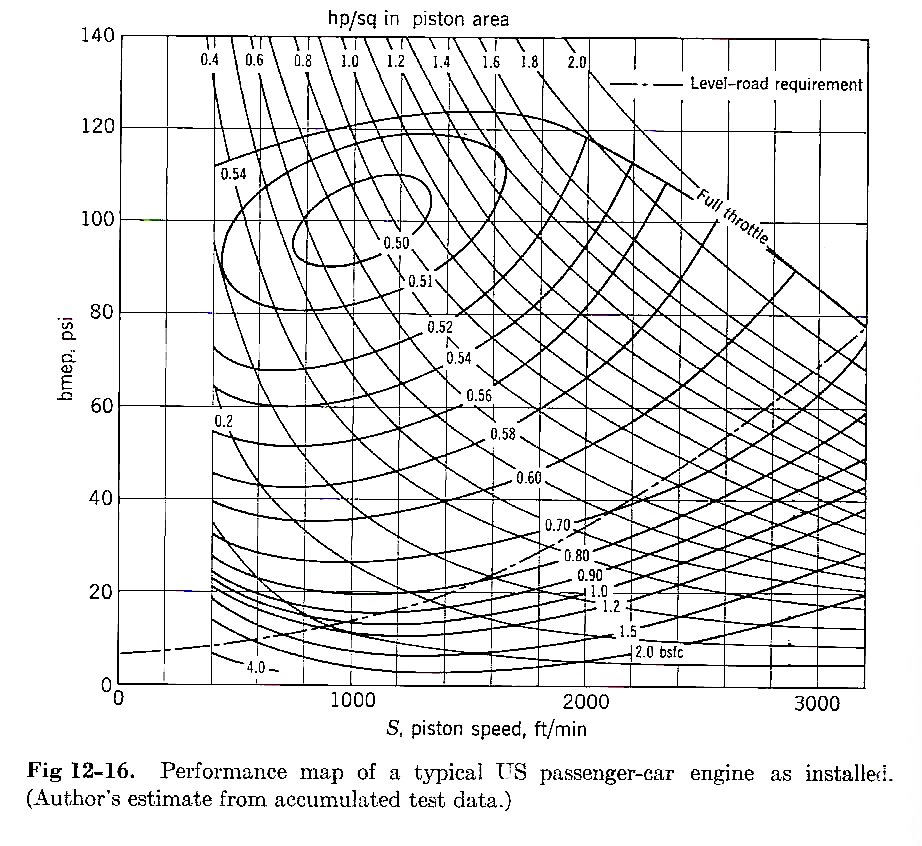
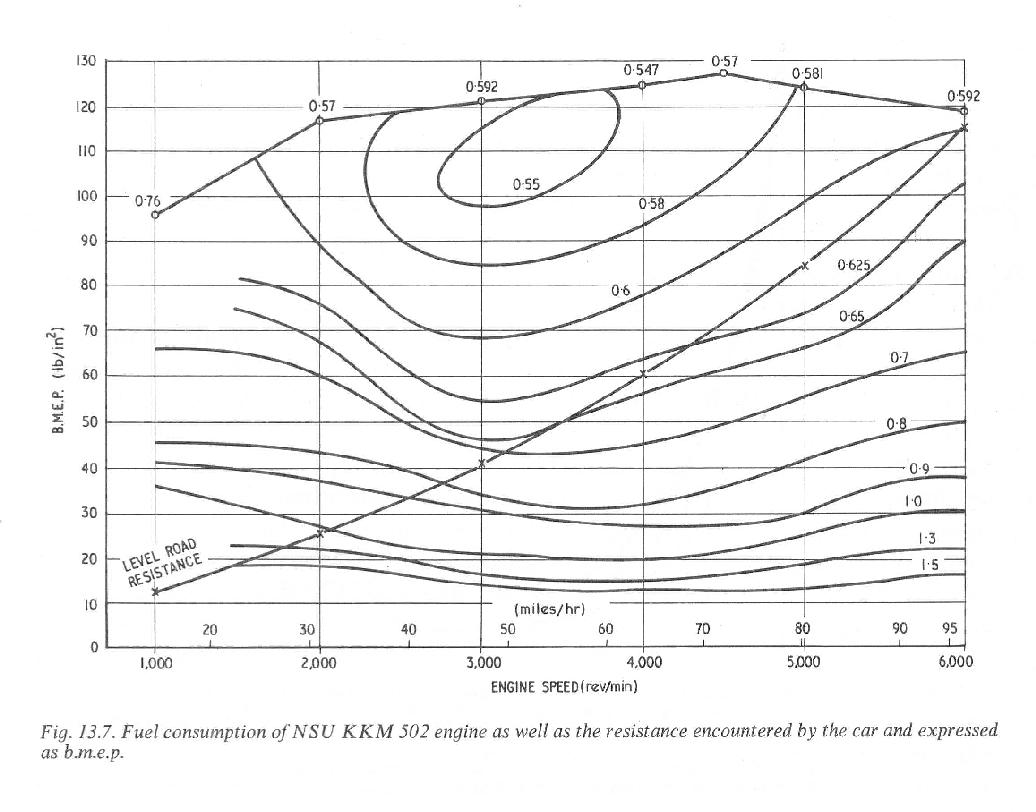
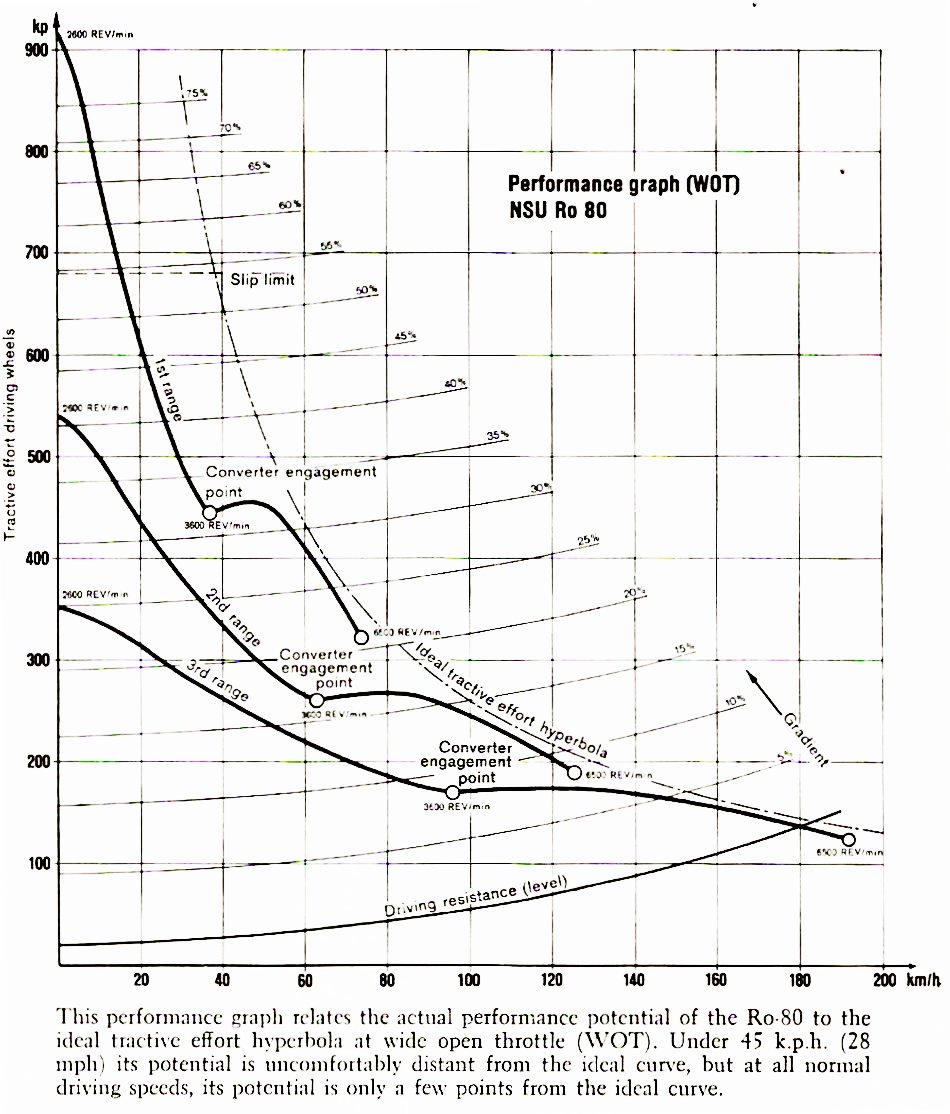
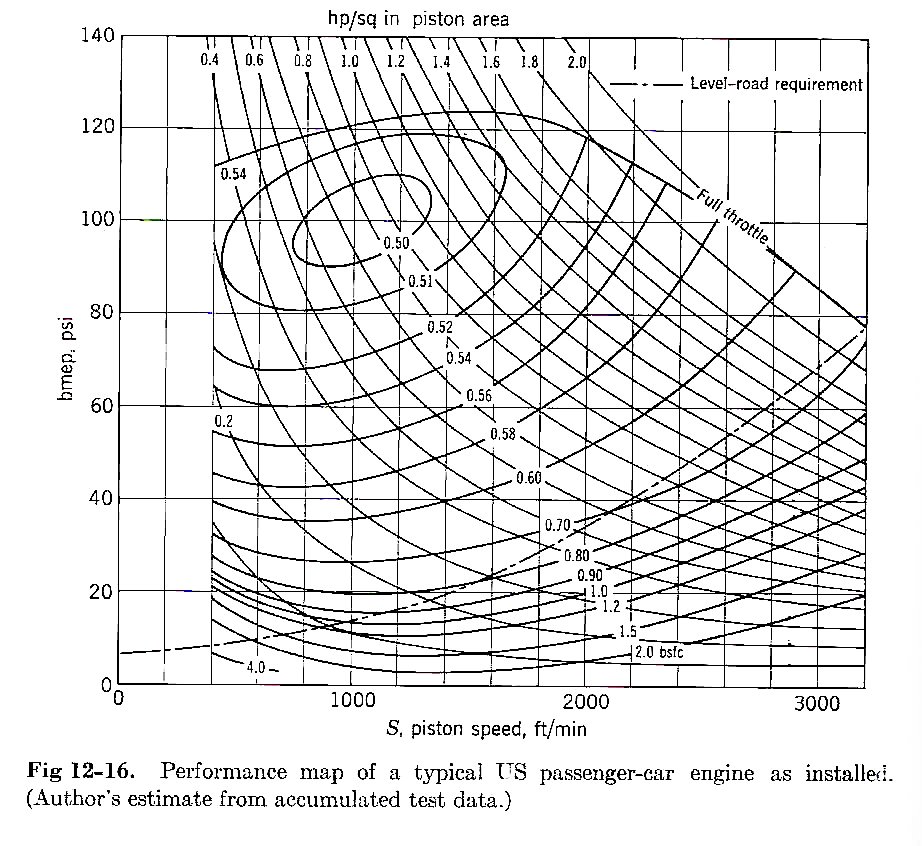
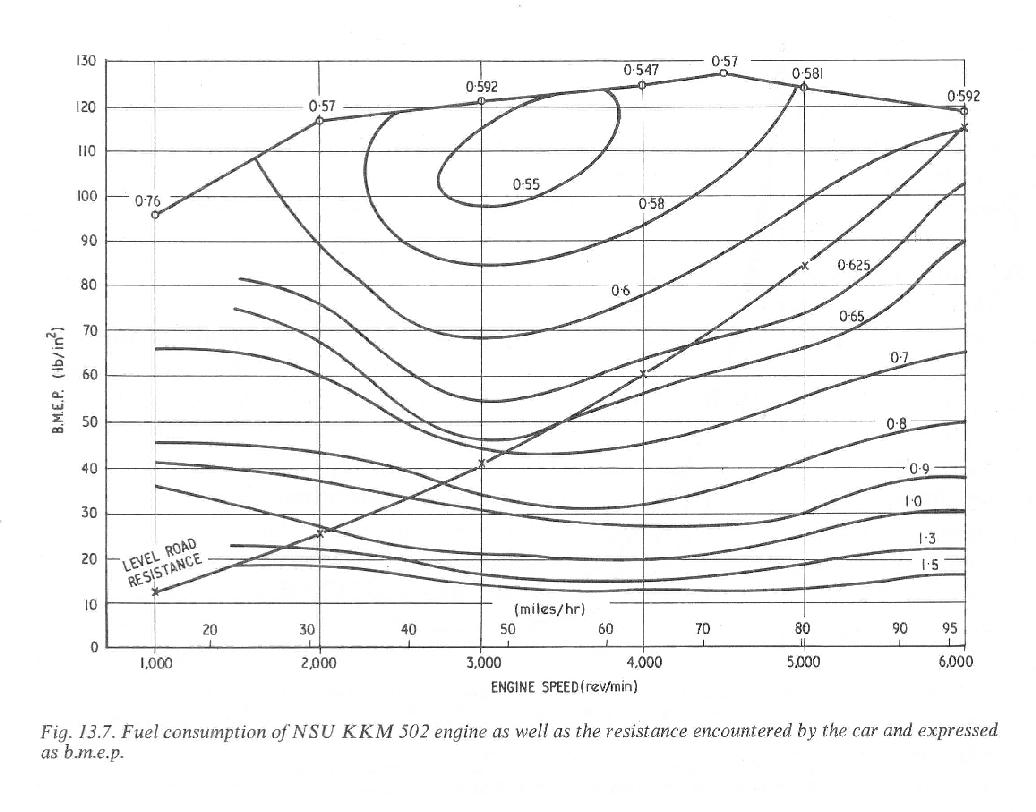
By far a much larger effect for the highway is to reduce the size
and HP of the engine moving the load point to a more favorable point on the
BSFC map. See the jpgs. This is one of the tricks done on the Prius and
some other hybrids. This is one of the most effective things to do
for highway MPG.
Unfortunately this drastically reduces the top speed of the car. The
implication of this is the acceleration of the car in the higher freeway
speed ranges is drastically reduced. It takes sustained excess HP over and
above the steady state road load to accelerate. The energy stored in the
hybrid can make up for this once or twice until it is expended. This can
be a serious safety issue when driving on crowded two lane roads. One pass
two passes three passes and the car and you are dead. This fact is rarely
brought up by the proponents of the hybrid car.
Another little known fact about the hybrid Prius is the aerodynamic drag factor
is the lowest in the industry at .26. All sedans should look exactly like the
Prius for the lowest drag factor and better MPG on the highway. Kind
of like NASCAR cars with painted on make differences :)
A third factor not talked about is the low rolling resistance of the
tires used on the Prius. These are hard, narrow more expensive and they
affect the ride. Hard narrow tires will improve the MPG of any car.
A downside is they reduce the cornering ability of the car.
A fourth factor is the expensive light weight high strength to weight
ratio materials used in the Prius such as aluminum and perhaps composites
that reduce the fundamental weight of the car, less all the electricity stuff.
This too will improve the MPG of any car. A full carbon fiber car would
get very good gas millage.
If Toyota were sincere about it they would take the electric motors
and batteries out of the Prius to save weight/cost and sell the car without them
as an honest economy car. The highway MPG would increase due to the lower
weight and the sustained high speed acceleration would improve for the
same reason. People would then know better not to attempt a pass on a crowded
two lane road with a low HP to weight/drag ratio car.
Turbo compound is the real answer. You can have your cake and eat it too.
Paul Lamar
The Rotary Engine NewsLetter. Powered by Linux.
ACRE NL web site.
http://www.rotaryeng.net
Youtube key word UTUBPLEASE
Copyright 1998-2008 All world wide rights reserved.