Ron,
I had warned Rotamax about surface coating and substrate issues.
I wouldn't be surprised in any way if this caused their problems.
Pity it's a great rotary engine also, copied from the NSU/Norton engine.
Aixro is a generation ahead of the Norton engine, due primarily to the
NSU/rotor/combustion shape.
George
Not copied from the NSU or the Norton. It is an almost direct copy
of the OMC engine. Good thing you warned them George. I can now sleep
better :)
Paul Lamar
--
Paul,
You are quite right: The RotaMax engine is sure not a copy of the Norton
engine, which again is completely different to the NSU engine! Actually
the AIXRO engine is very much based on the original Norton design,
further developed by MWE/Diamond Engines. Just look at the swept volumes
of 294cc! AIXRO, Sachs (KC24 and KC 27), Norton, and MWE rotors and
seals are interchangeable when being re-balanced - as long as you don't
account for leading or trailing cut-outs! MWE rotor housings can be
fitted to AIXRO engines just as easily as water cooled Norton housings.
Actually the first lot of AIXRO engines had MWE twin plug housings...
The combustion chamber of the AIXRO rotor for instance is an exact 1:1
copy of the early Norton motorcycle engines, whereas the later Norton
engines and MWE engines had an additional cut-out in the trailing edge
of the rotor flank in order to prevent pinking at high continuous
speeds.
George,
I would be very much interested in the surface coating issues mentioned
as I am currently in the process of trying to establish a salvage scheme
for worn-out rotors, housings, and endplates for Sachs and Norton
motorcycle Rotaries, as Norton Motors Ltd shall be going out of business
before the end of next month!
Having gathered intimate knowledge of the Norton and MWE engines I
unfortunately have not yet seen a RotaMax engine for a direct comparison
myself - in particular as RotaMax have a picture copied from AIXRO on
their homepage nowadays!
Regards,
Martin.
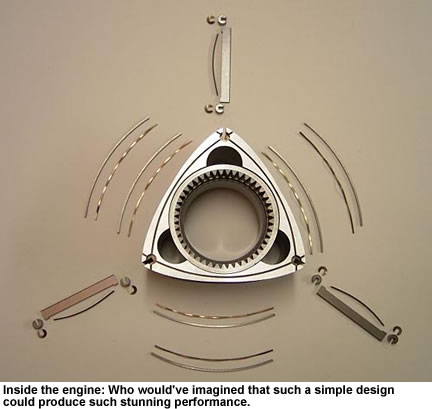
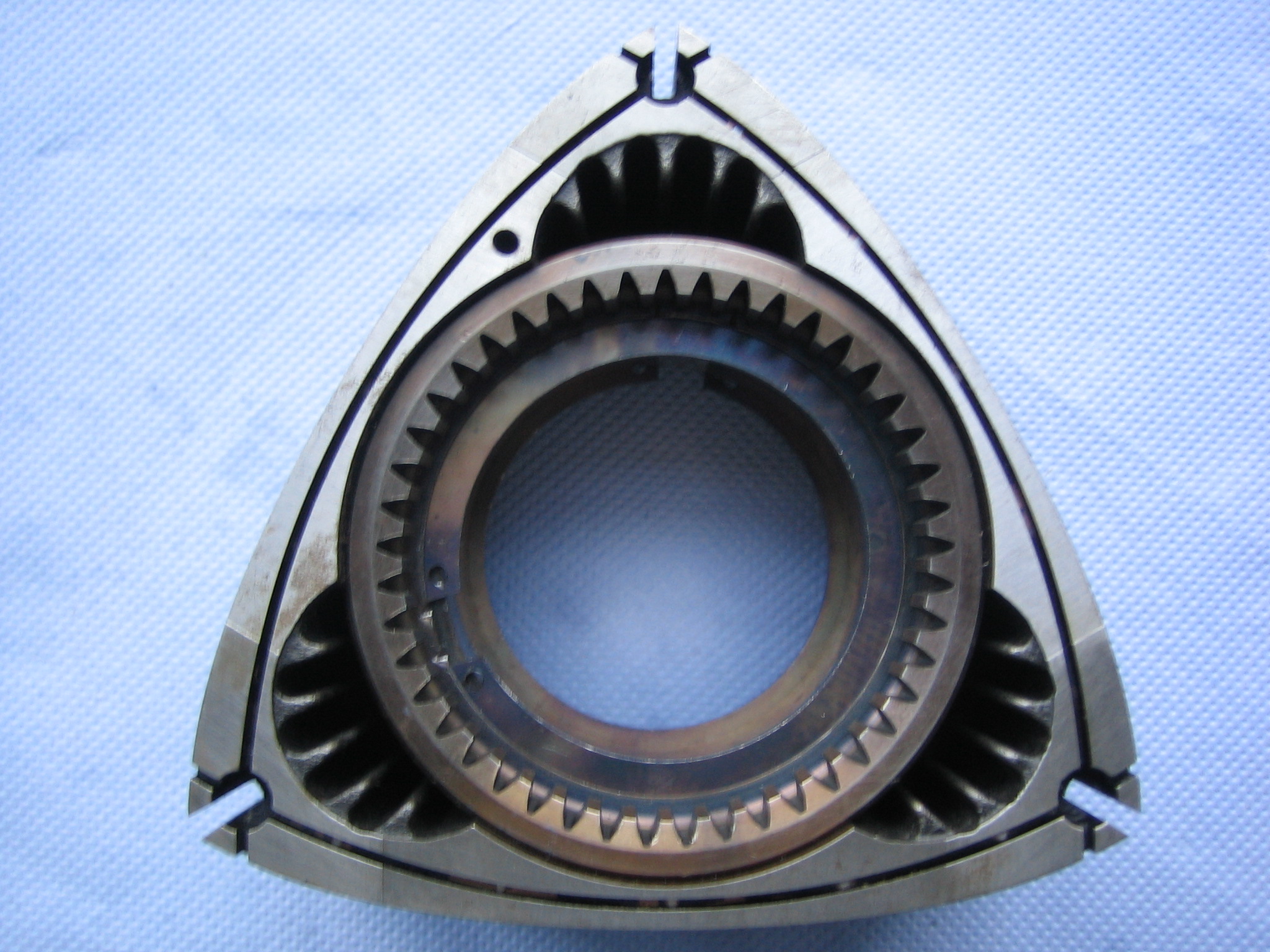
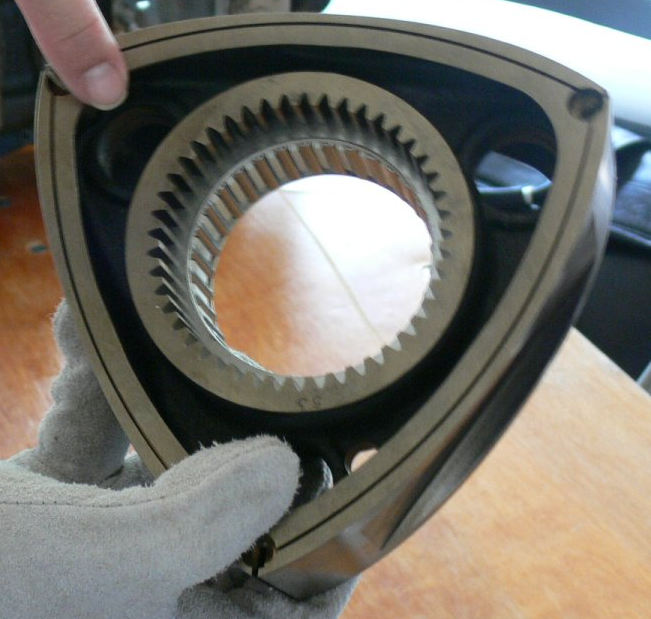
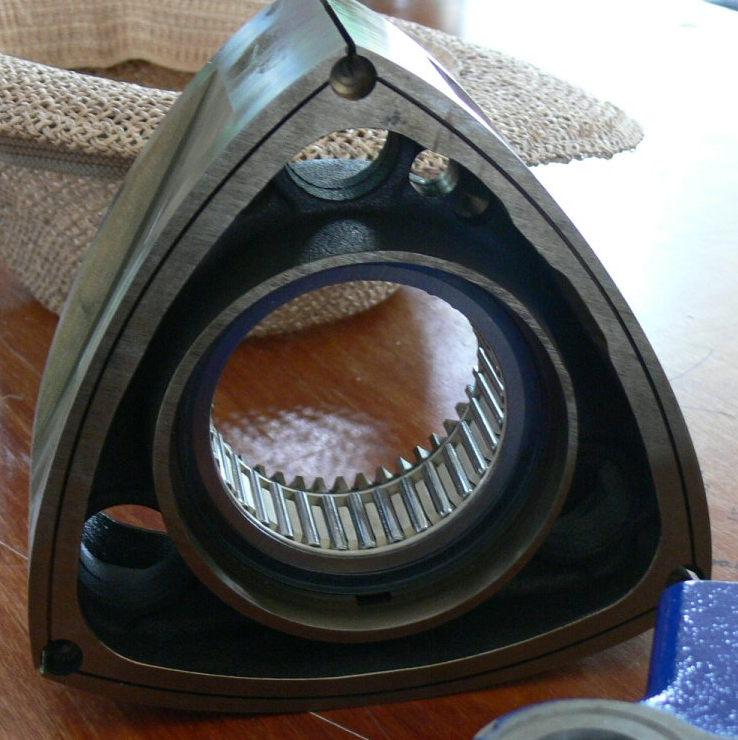
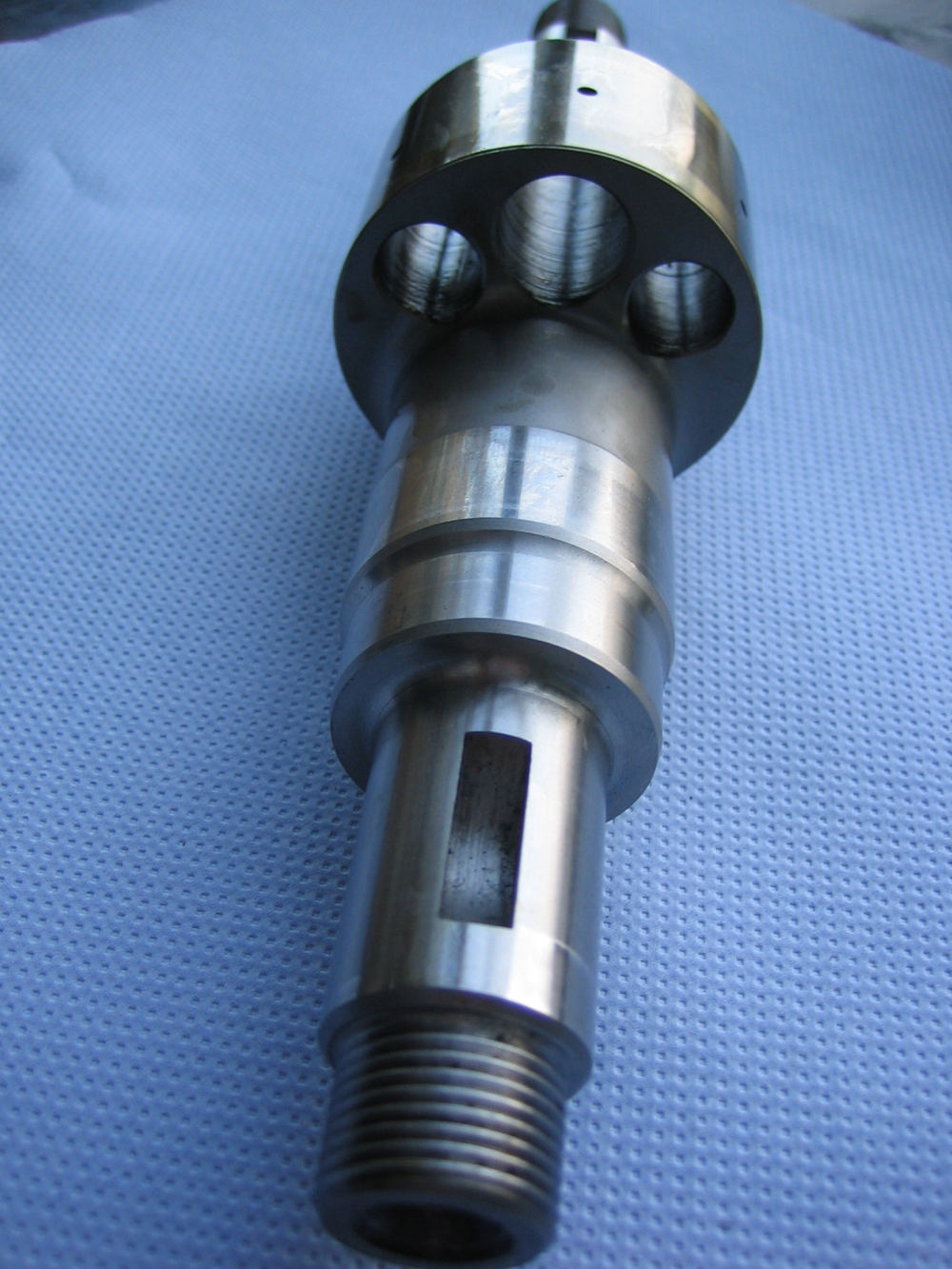
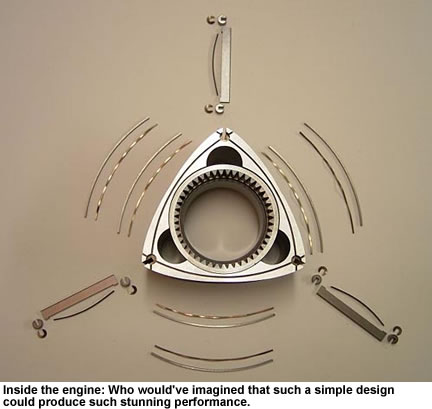
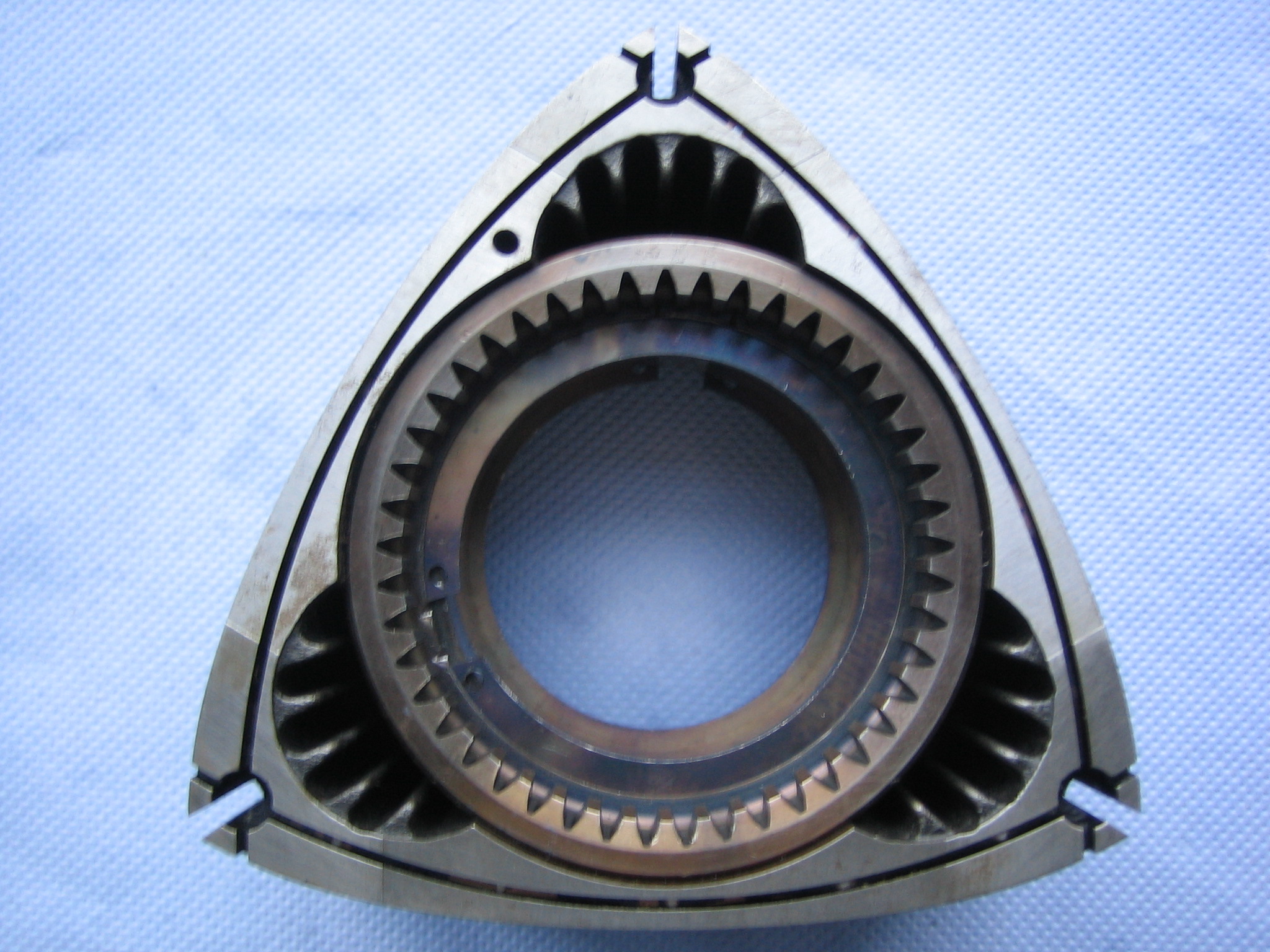
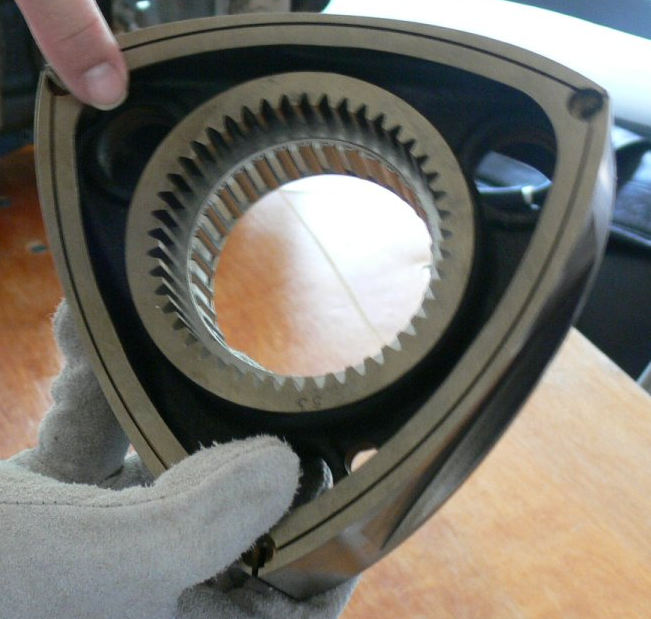
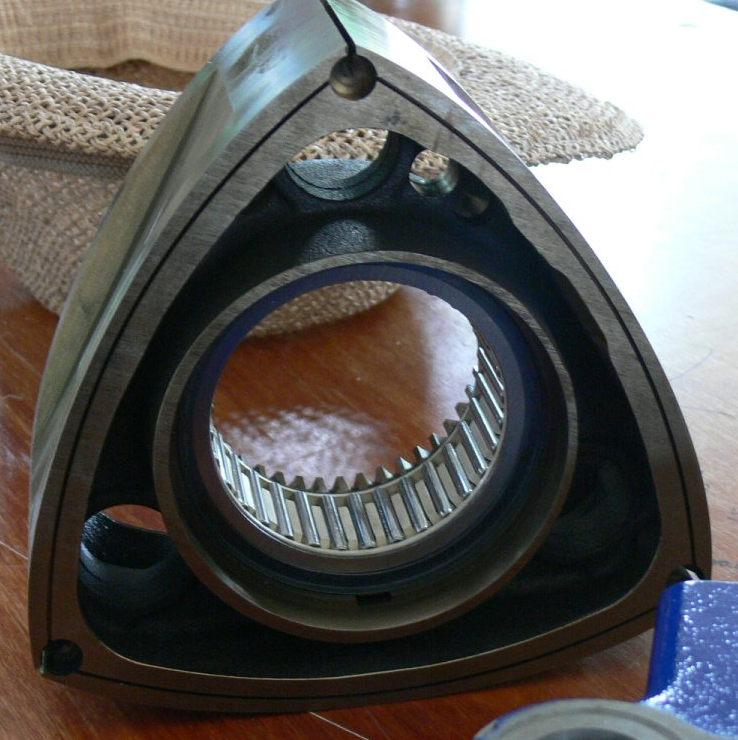
Here are some internal pictures of the RotaMax Martin.
Paul Lamar
Martin,
I stand corrected on all counts, thanks for the clarification.
I replied to the rotary in error as I was send that e-mail to my new
contact
Ron Ligeti ( aviation Engineer) who is further developing his fathers
Stratos development - currently microlight.
My limited input has been to suggest engine choices and some
composite and
material specs.
To answer your question Martin I'm unsure what other engine
developers are
doing, exactly. I can however tell you what some engine developers
have done
in the past and are considering. As stated the primary failure mode ( in
development Al. rotor housings) is substrate failure. Mistral for
example
has test every known surface finish and they all failed, primarily
because
of substrate failure. Some of the very hard coating are fantastic but
brittle, without that appropriate firmness to support the, sometimes
very
thin, coatings - fail.
Paul L. has regularly suggested det-gun coatings, I guess for the
same sorts
of reasons, while acknowledging it is an expensive process.
Others has suggested the use of silicone particle aluminium used in
Piston
Engines successfully. It has been suggested to me that the apex seal
tends
to be too harsh on this finish, and they fail.
Mistral has investigated a more dense aluminium to support the
coatings, but
I guess that's one of their intellectual property rights. I sure as hell
don't know what their using.
Not being a metallurgist I sometimes ponder over the matrix that
would be a good solution, my latest thought would be a matrix of Al and
ceramic nano particles. The particles themselves would stand up to
the wear,
the al would wear slightly below the particles, providing oil
retention and
very light particles should mix well with Al providing greatly improved
density.
There are products out there but only research will identify the
more recent
ones.
HTH
George (down under)
Paul,
thanks a lot for the pictures of the RotaMax engine.
They did shed some light on what seems to be a completely
unknown engine here in Europe; very interesting design.
It looks a bit like a bigger, cruder, water cooled
version of the old KC27 engine from Fichtel & Sachs,
fitted to the Hercules W2000 motorcycles in the 1970es.
Looking at some of the parts I could clearly see some
scope for improvement though. Let's hope they pick up
the bits again!
Having worked quite closely with most of the luminaries
of recent European Rotary development for more than ten
years I still remember Hans-Jürgen Klusowski's words: "Those,
who have lots of money and even more time to spend, are most
welcome to test new materials for rotor seals and surface
plating. Those however, who want to get a rotary engine up
and running reliably within a reasonable span of time should
stick to the compounds that have proven to work without any
problems, i.e. Nicasil for the rotor housing,
Molybdenum (or Nicasil) for the endplates, and IKA for
the rotor seals."
Looking at the RotaMax endplates they seem to be Molybdenum
plated Aluminium. So if there was a problem with that
coating may I suggest that people get the Silicon content
in the Alloy right and don't exceed 0.2mm plating thickness.
But maybe it is more of a thermal distortion problem due to
the greater diameter compared to the 294cc Sachs and
Norton/MWE engines. The Wankel SuperTec Rotary Diesel
KKM 501 however appears to be greater in diameter still,
without suffering from THAT particular sort of problem, see
http://www.wankelsupertec.de/
Is there a chance to get a RotaMax single rotor engine
for reasonable costs (i.e. scrap parts FOC?) just to
have a closer look at the major components myself?
Regards,
Martin.
Unfortunately Rotamx never shared their problems even though I tried
over
and over again to find out. I and others were perfectly willing to help
them for free. One of the big problems was charge cooling itself and
they
refused to admit that. Wankel Gmbh wrote a SAE paper on a liquid
cooled e-shaft
that was rather simple to implement which would have largely fixed
the Rotamax charge cooling problem.
http://www.rotaryeng.net/Wankel-CC-paper.pdf
If anybody wants to build a smaller rotary they should just scale down
a Mazda. If you want to build a rotary just copy Mazda exactly. That
essentially
what Mistral is doing.
BTW Have you applied for a job with Mistral Martin?
Send email to Gordon Anderson <
g.anderson@mistral-engines.com
<mailto:g.anderson@mistral-engines.com>>
Paul Lamar
Paul,
Are you saying that a Rotamax could be converted for better cooling
by using a different
e-shaft, a pump source for the shaft and a heat exchanger for the
shaft operating fluid?If so, couldn't
such a solution be a retrofit for existing Rotamax engines? I don't
have one, but I think I know someone
who does. I understand that the Aixro engine has a similar problem
in that they are heavily downrated
for aviation uses.I know for a fact that they use a different
e-shaft in the 40 hp aviation version re the
stock e-shaft in the kart application. If the liquid cooled e-shaft
is applicable to this engine, then the
possibility of getting serious continuous power out (55-60 hp) seems
possible?
best,
George W
The regular liquid cooling system would be used to cool the e-shaft
as well. One pump one heat exchanger.
It could also be done for air cooled engines like the Sachs but in this
case you would need a new small water pump and small heat exchanger dedicated
to cooling the e-shaft.
In fact it is entirely practical to tig weld a charged cooled
single rotor roller bearing e-shaft out of thick wall 4340 tubing and machine
or grind it after heat treat.
http://www.factorysteel.com/aircraft-tubing.htm
Probably cheaper than hogging it out of solid billet. Also may be
lighter than a solid shaft despite being full of water.
Paul Lamar
--
Paul, and George in particular,
To my knowledge the AIXRO Aero eccentric shaft is not water cooled.
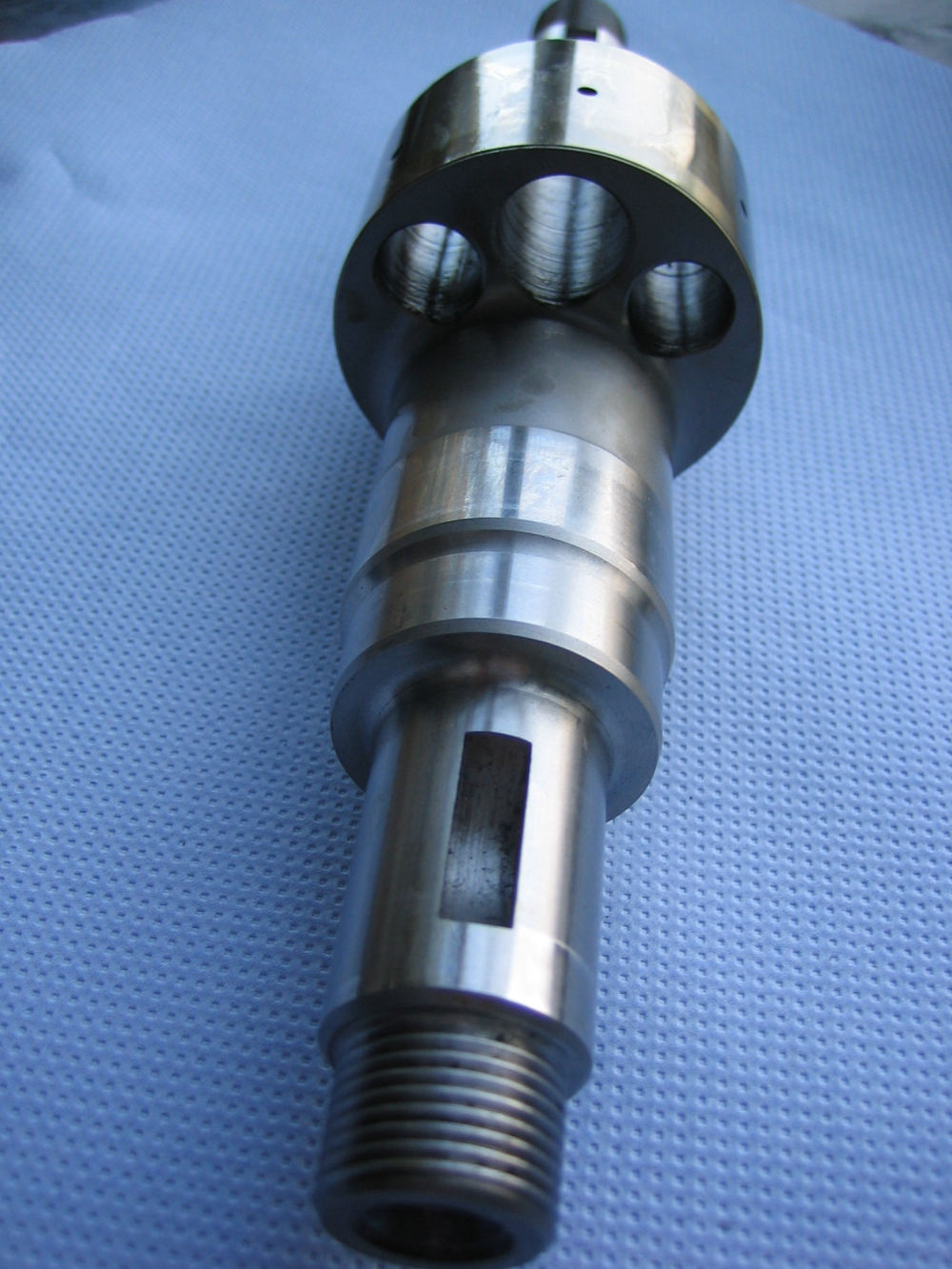
It has just got some larger diameter axial holes in the eccentric
and is hollow all the way through the centre to reduce its weight
considerably.
If you want to fit a water cooled e.-shaft to a charge cooled
engine you either have to:
a) limit the coolant within the centre of the shaft - if you
want to maintain the axial air passages in the eccentric, see attachment, or
b) you have to do away with all the air passages in the eccentric
and need to get all the charge through the rotor tips. To be able
do so you would need the maximum cross section in the rotor tips,
what MWE, Aixro, and RotaMax rotors are miles away from, see attachment!
I have a very clear idea of what such a rotor would look like and
still hope to get one supplied for my own project some time before too long...
Regards,
Martin.
--
The Rotary Engine NewsLetter. Powered by Linux.
ACRE NL web site.
http://www.rotaryeng.net
Youtube key word UTUBPLEASE
Copyright 1998-2008 All world wide rights reserved.