I was just wondering - has anyone ever made a working turbocompounded
rotary? Or if not, then from my standpoint as a young entrepreneur, what
would it take to build one? Something along the lines of a
turbocompounded two or three rotor plus turbocharger, perhaps with a
system to provide extra boost at takeoff, like methanol injection or such.
Would anyone on this newsletter be interested in working on such a
project? And what would you require in order to facilitate doing so?
I can't help but think this is would be a potentially revolutionary
technology, and definitely a area where some money could be made, so I'm
just wondering what it would take to see it done.
- Trevor C
Not yet. NASA studied the heck out of it.
http://www.rotaryeng.net/NASA-Paper-turbo-compound-rotary.pdf
See appendix C
My wild ass guess is a couple of hundred thousand.
It depends somewhat on what kind of shop tools and skills you have.
An NC mill and lathe would be a big plus.
Paul Lamar
Well I was hoping to drop cost by using as many stock parts as possible.
So a prototype would probably be a modified 13b engine (because at least
from what I've read I think the 13b could handle the back pressure of
the TC better than the Renesis). If I had a way to get a dual ball
bearing turbo (the performance kind, for good perfomance...) to act as a
turbocompounder instead of a turbocharger, and used as many other
commonly available parts as possible, I figure I could probably keep
cost to a minimum while getting an incredible engine. And then
recuperate all those costs by installing said engine in a efficient
homebuilt and taking home a prize from the aviation x-games before
marketing the design to someone so it could thus be put into
production... But anyways two main questions:
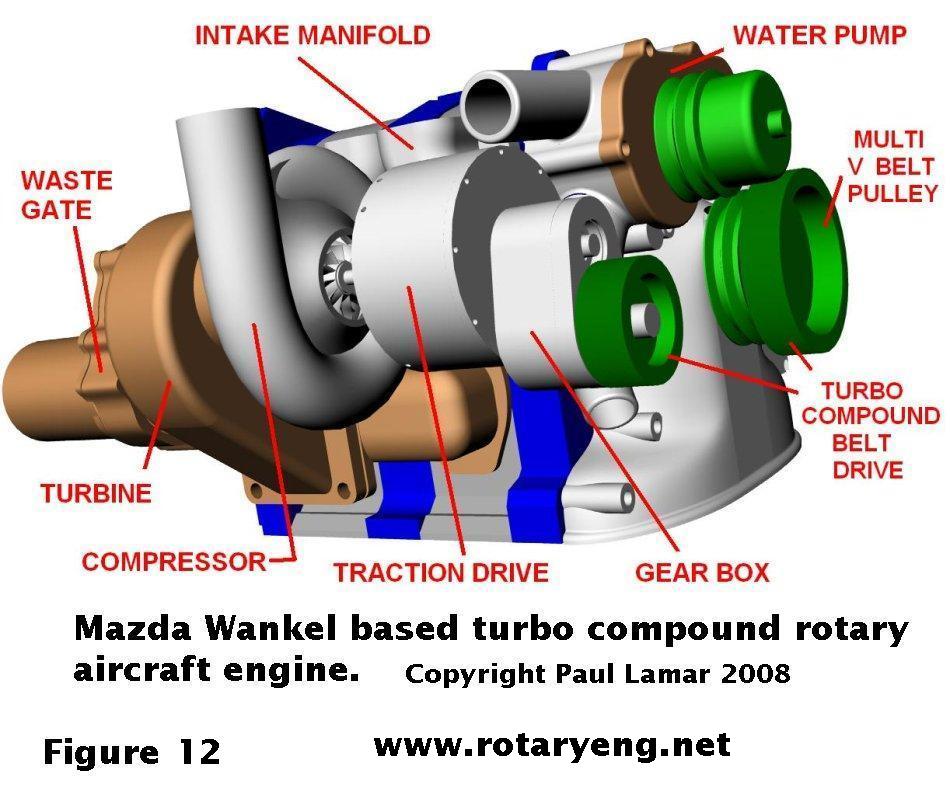
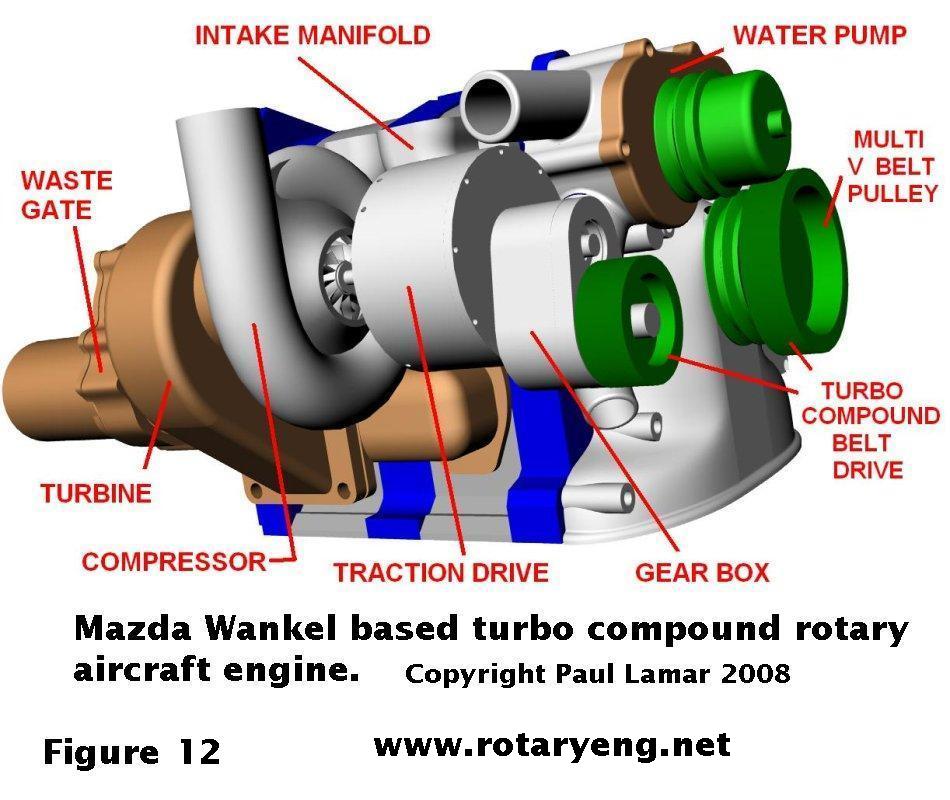
1. Any ideas on how to modify and install a conventional turbo so that
it would function as a turbocompounder? Or moreover, do you have some
sort of visual of what that part of the system would look like? Even
something scratched on a napkin would be helpful - I'm conceptually fine
but I can't get my head to visualize the turbocompounder combined with
turbochargers and the rest of the system.
2. I know that some european companies have made modern turbocompound
diesel engines for use in comercial trucks and such, so they've probably
poured a lot of time and money into figuring things out like pulse
effects which would be present in a design like this. Any ideas on how
to get ahold of this research without breaking either the law or the bank?
Trevor C
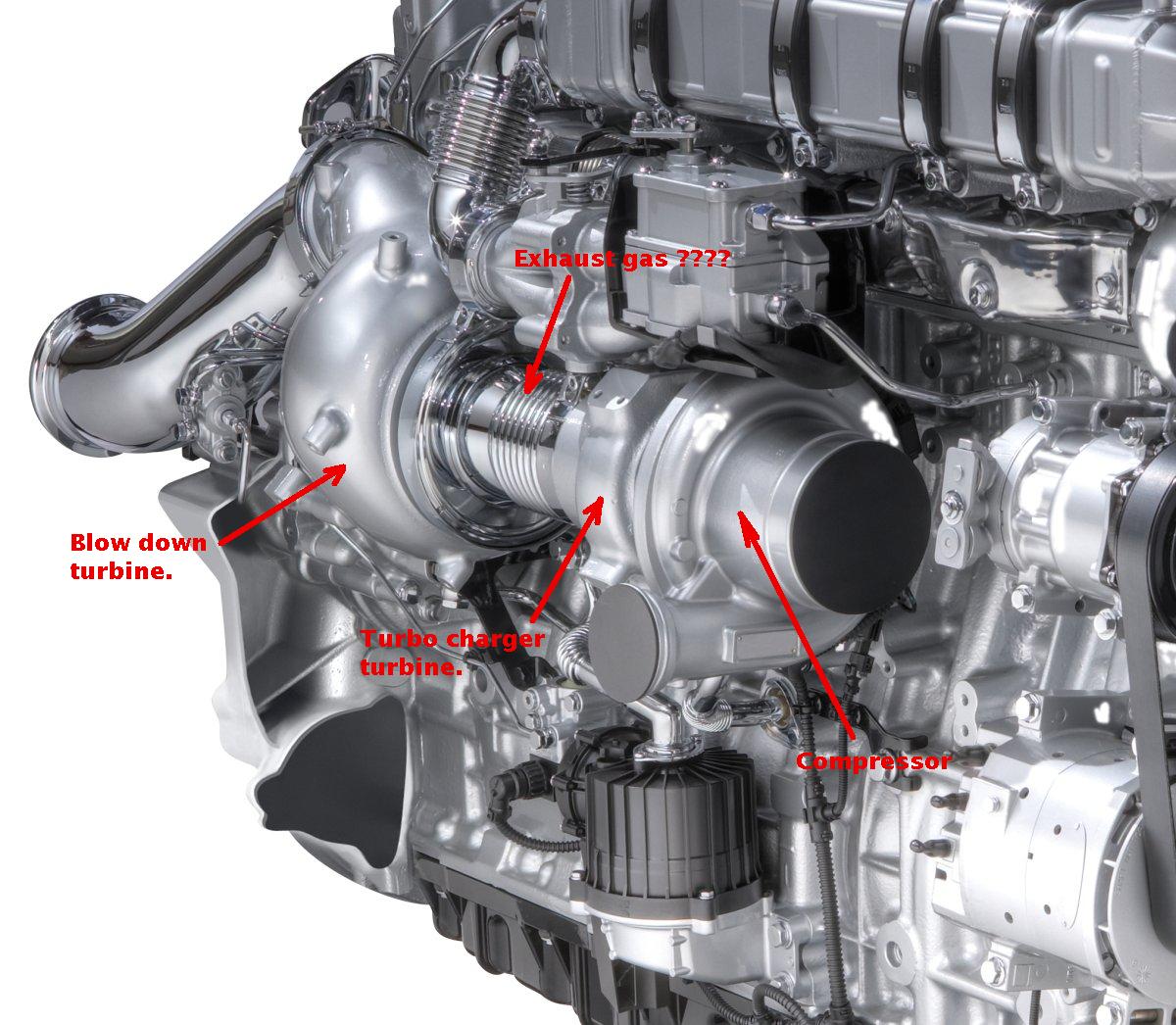
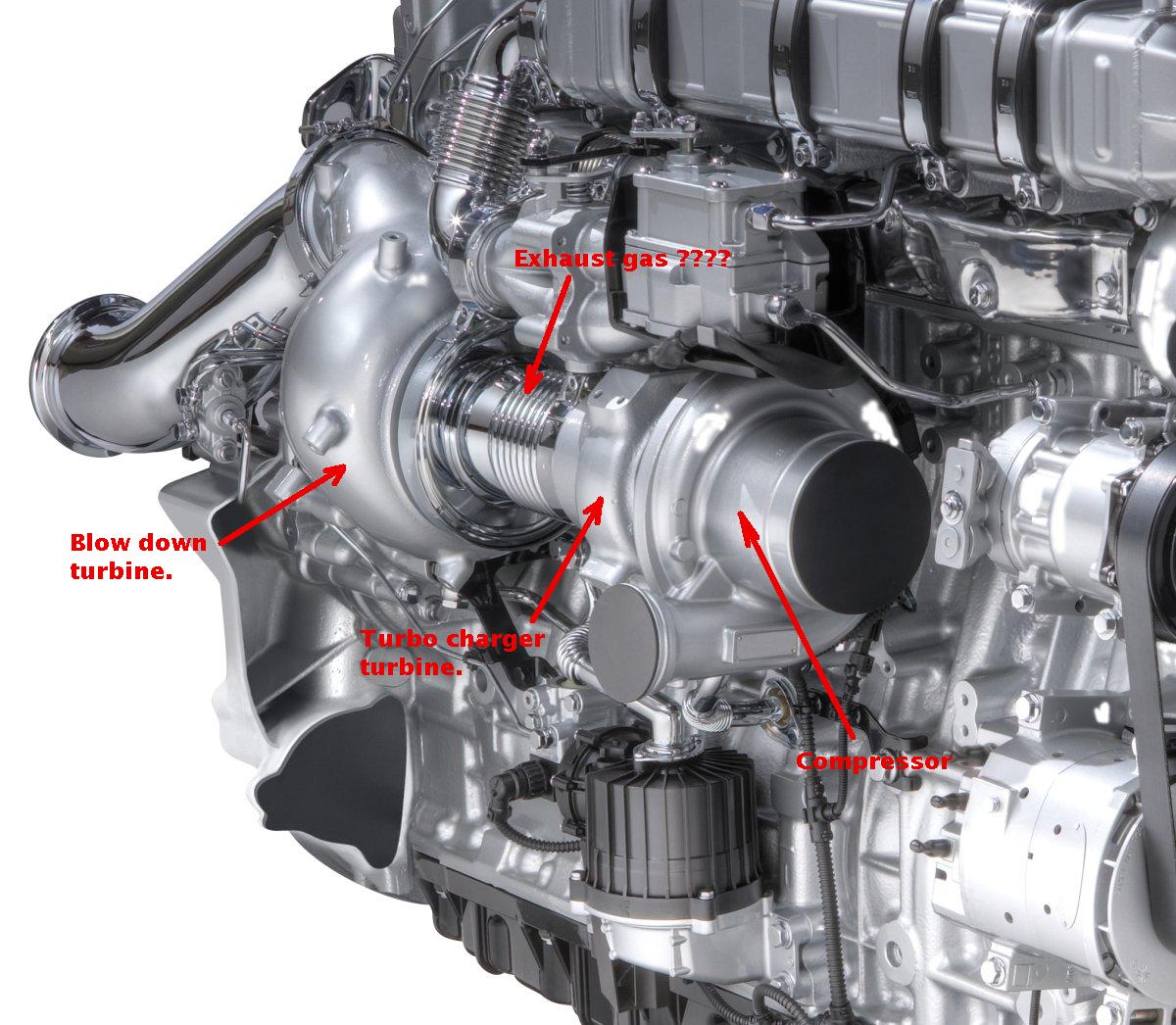
Well the cheap way is to buy a turbo compound set from a Detroit Diesel
DD15 and connect it to a 3 rotor. The match up HP levels are about right.
A turbo 3 rotor could easily be 450 HP.
The blow down system does not have to be connected back to the crankshaft.
The output of the blow down turbine could be connected to a small dyno and
the output of the 3 rotor connected to a large dyno. The data from that test
could be presented in a proposal along with a business plan to try and obtain
some venture capital. Potential investors could witness the test and use
their own engineers to verify the data.
There is plenty of stuff on the web site so check it out.
Here are some examples.
http://www.rotaryeng.net/turbo-compound.html
http://www.youtube.com/watch?v=iy_Jd5kewbM
http://www.youtube.com/watch?v=luoUHrX6DeQ
Paul Lamar
-
The Rotary Engine NewsLetter. Powered by Linux.
ACRE NL web site.
http://www.rotaryeng.net
Youtube key word UTUBPLEASE
Copyright 1998-2008 All world wide rights reserved.