Hi Bill, Try this explanation: 1. Torque is a direct result of the
combustion
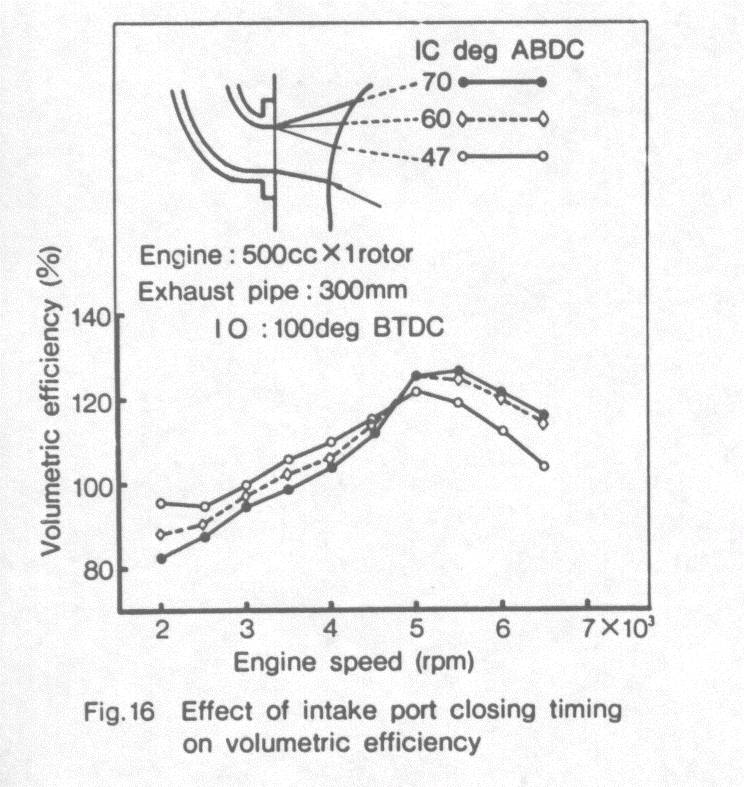
chamber's volumetric efficiency (rotary or piston engine). When this
efficiency peaks; torque peaks.
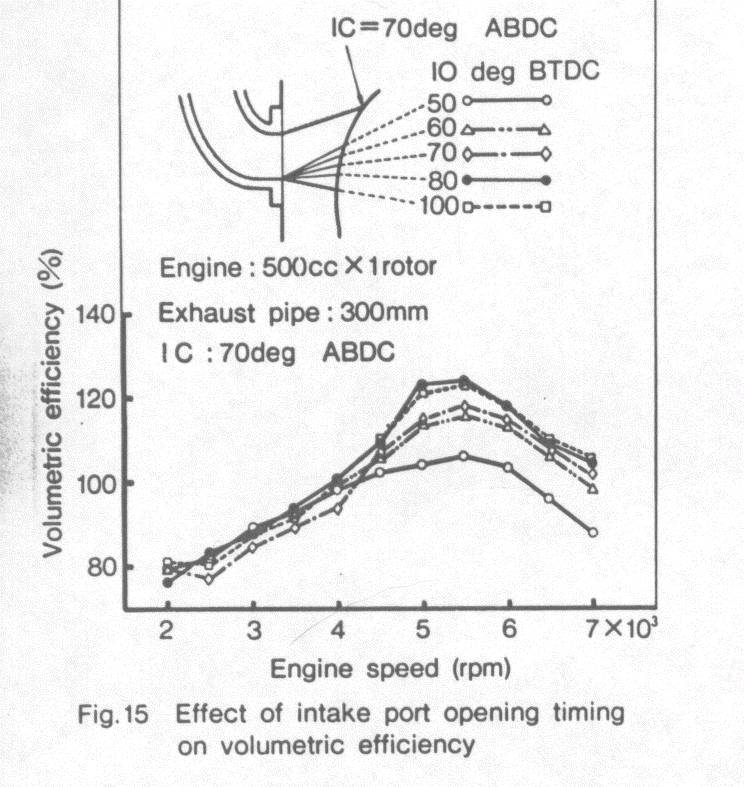
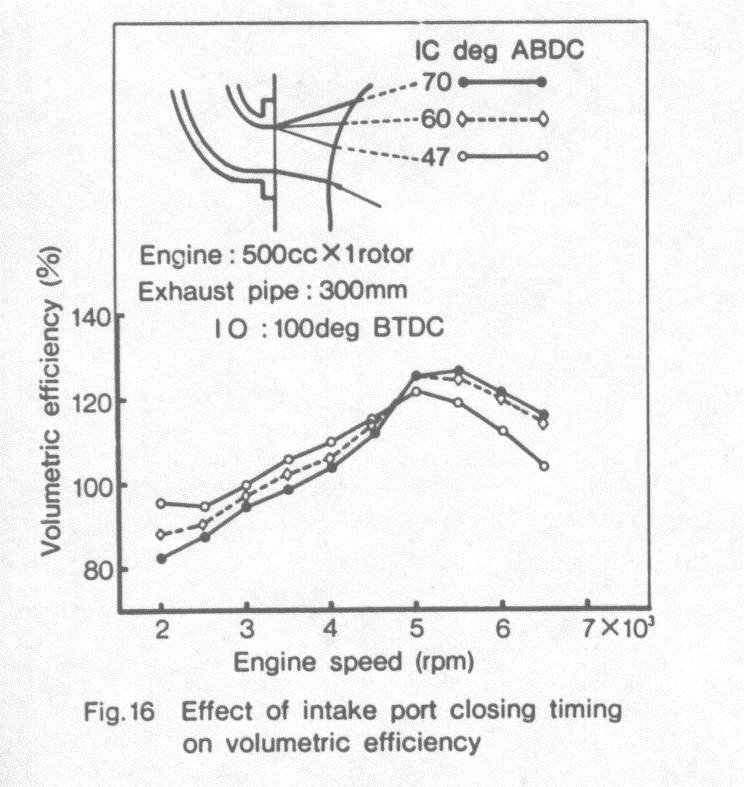
2. The V.E. is mainly governed by the intake system. In the intake pipe
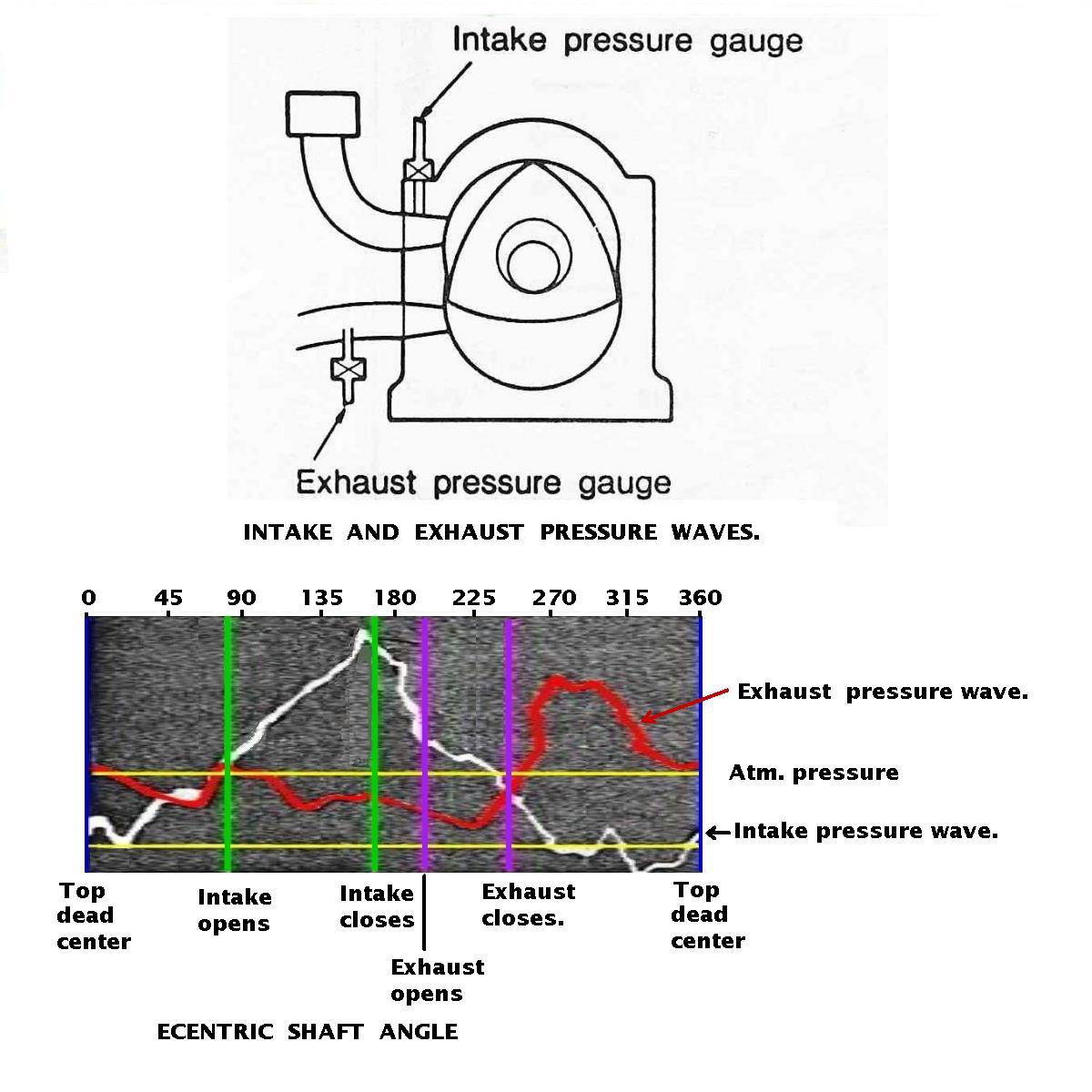
the rush of air resonates, that is each time the combustion chamber
intake closes (whether rotary, 2cycle piston or 4cycle piston) the
air rush stops (sometimes even reverses).
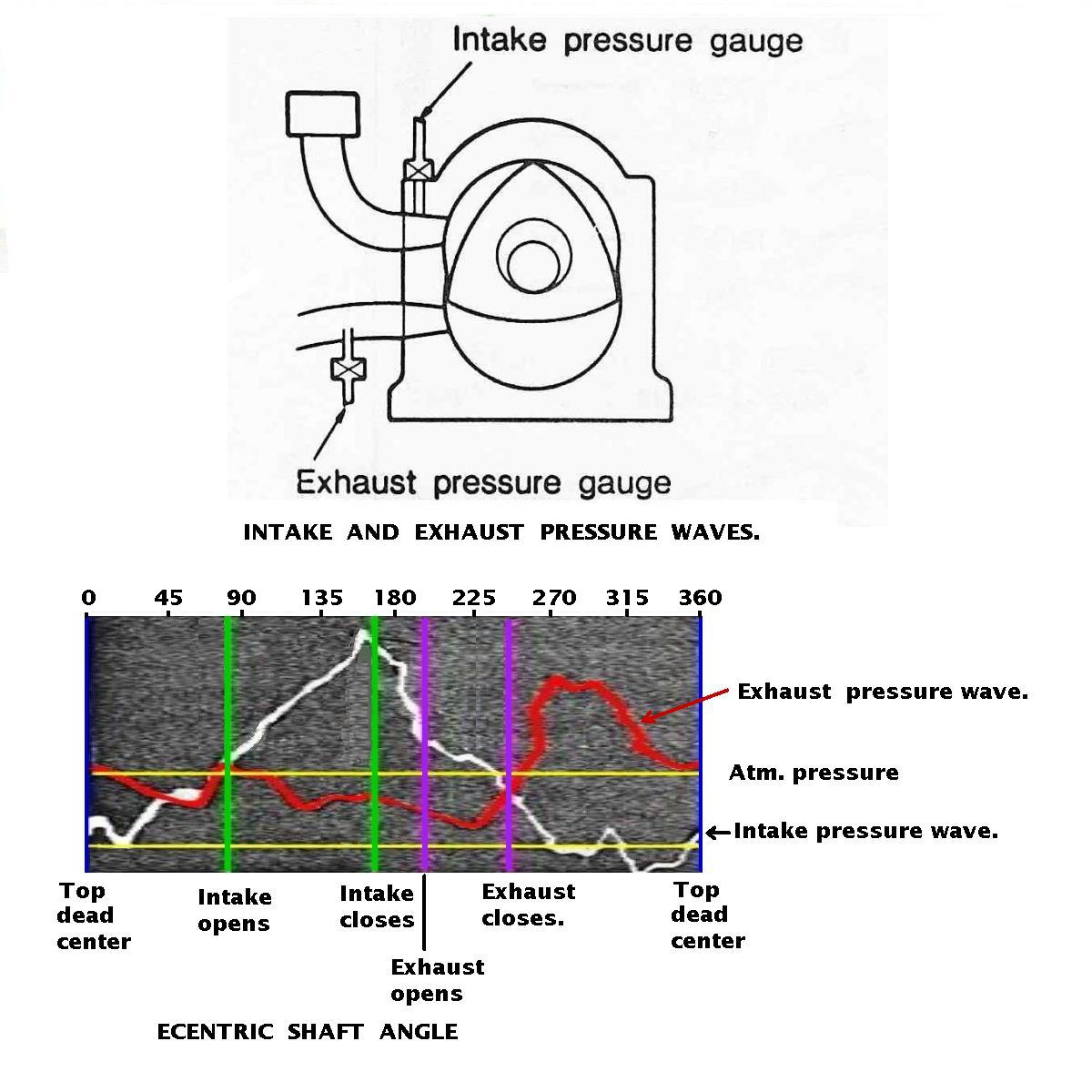
3. This very brief stop sends an energy pulse back up the pipe toward the
open inlet.
4. # 2,and 3 change with RPM.
5. A perfect length intake pipe for a GIVEN RPM will contain that energy
and
revert it to push the next charge TOWARD the combustion chamber.
This is "resonating."
6. This is important: Look at #5 again. The pipe length that works
perfectly at XXX RPM is not the correct length for YYY rpm. So, what to
do?
Adjustable length intake pipes have been used on racing engines but
are too cumbersome for aircraft use. So the next best choice is to
pick an RPM that the engine likes and tune the intake to operate
there and accept less V.E. at RPM's above and below that engine
speed.
The aircraft piston engine (big bore/big stroke = lots of
mass moving back and forth large distances) is happiest at about
2500 RPM and the intake is designed around that.
NASCAR engines
(big bore/ short stroke = lightweight mass moving back and forth
short distances) are happiest around 8000 RPM and their intake is
designed around that (put a NASCAR intake manifold on your family
ride and you will be terribly disappointed)
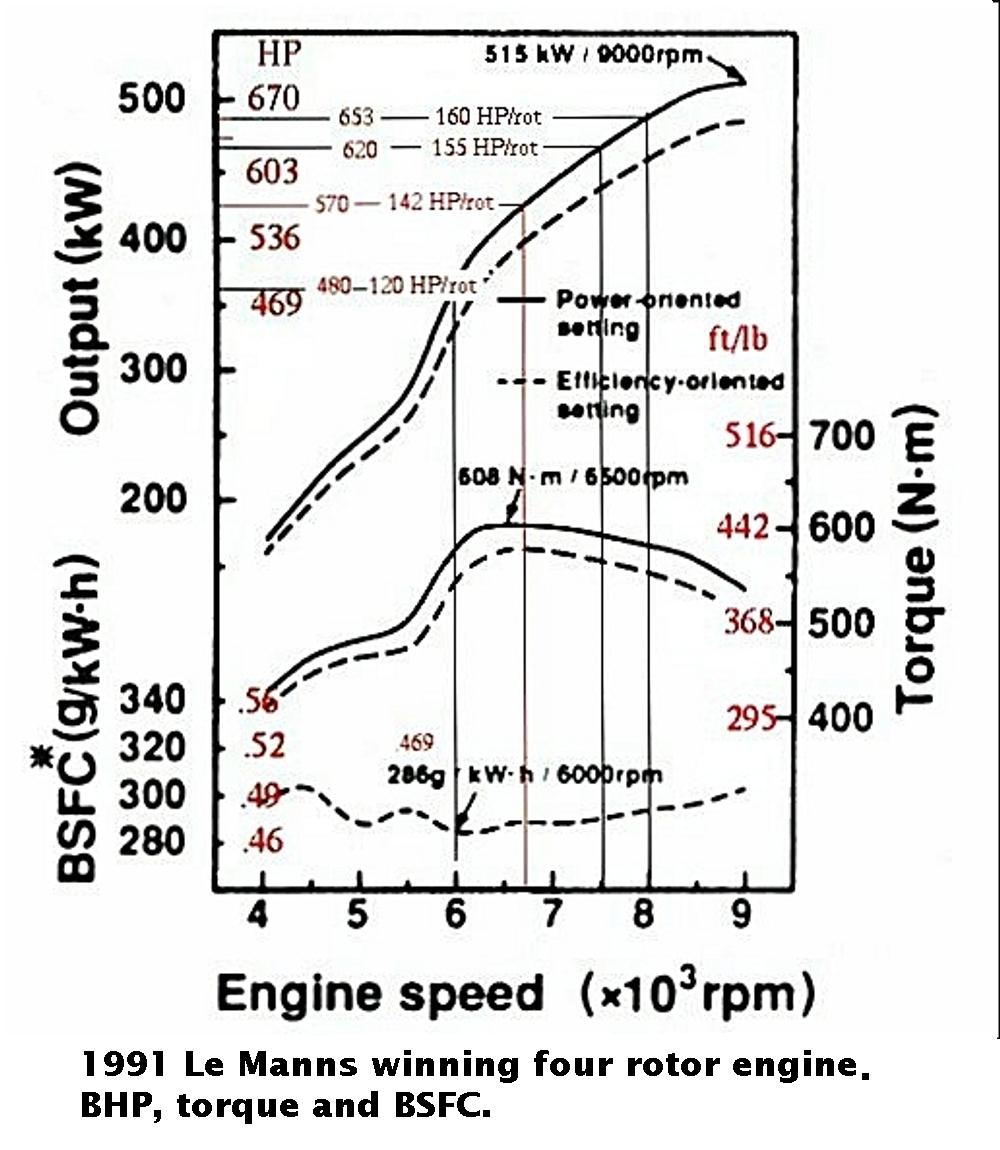
The rotary engine
(lots of mass but NO DIRECTIONAL CHANGE) is happiest around
6000 RPM (rotor speed is around 2000 RPM, bearing loads are
lightest, V.E. is pretty good, vibration is quite low, power
output vs. engine wear is very good).
So with an engine that
wants to run forever at 6000 RPM that's where aircraft conversions
are run and the intakes are designed for that speed. To get back
to a proper propeller speed requires a +/- 40% reduction box.
Seems like a hell of a penalty until you look at the whole picture.
Even with the added weight, the power to weight ratio for a P-Ported
rotary easily surpasses today's standard aircraft engine.
If you've
ever shock cooled your Lycoming, your repair bill exceeded the cost
of TWO COMPLETE rotaries. Can't happen with liquid cooling. Have you
priced a Continental exhaust valve lately? Rotaries have no exhaust
valves. This is only some of why we're here. Stay with the newsletter,
there are nuggets of valueable info here. Hope this affords some more
understanding.
Dave M
I agree with most everything you said Dave - except for the bit about
aircraft engine intakes being tuned for 2500rpm. I don't think
they're tuned at all except for easy packaging. Regardless of the
engine type, tuning for 2500rpm will require
_long_ runners. This
site is interesting:
http://www.wallaceracing.com/runnertorquecalc.php
This page has a model for calculating runner specifics. 2700 rpm and
360 cu-in in four cylinders (a Lycoming) gives runners 31 inches long.
A similar length pipe would be required for the exhaust. Most
aircraft don't have room for such long runners. The F1 racers are
probably the closest - with headers-collectors on some of the O-200's.
They're quite long (24" - a guess), but the engines turn ~4000 rpm.
Headers optimized to work at the stock 2750 rpm red line would be
significantly longer. The F1 rules don't allow diddling with the
intake configuration - otherwise you'd see long intake spiders too.
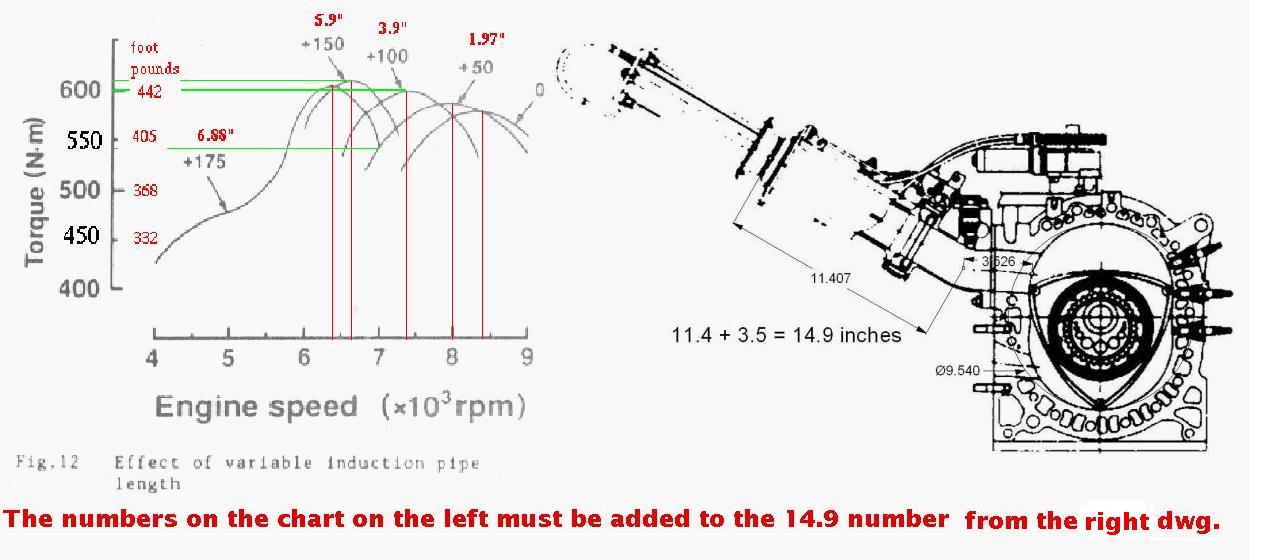
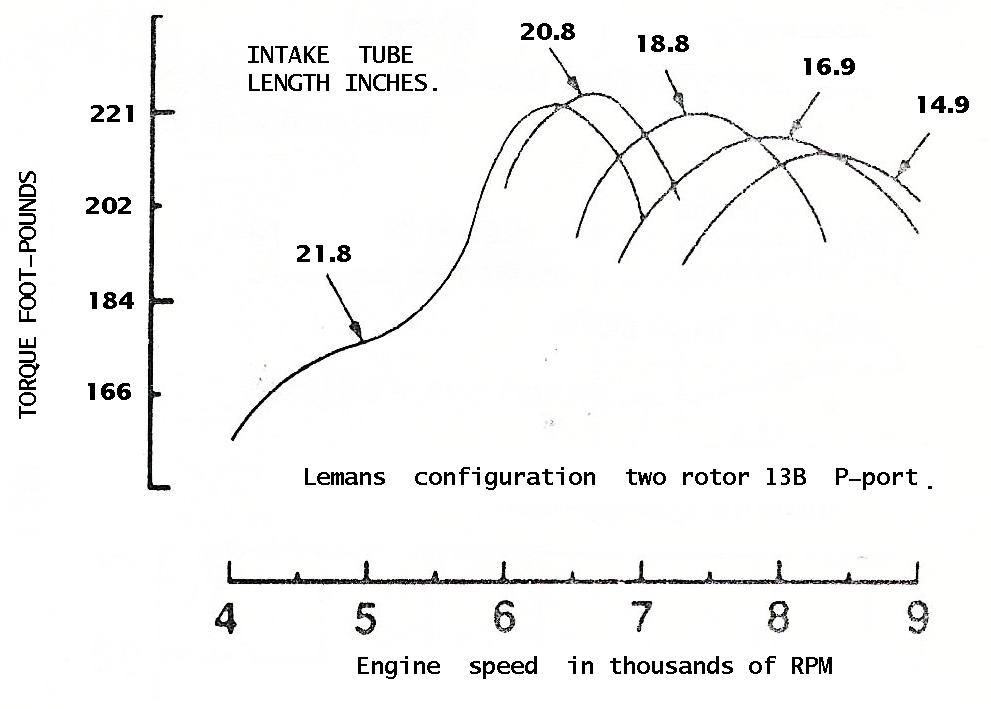
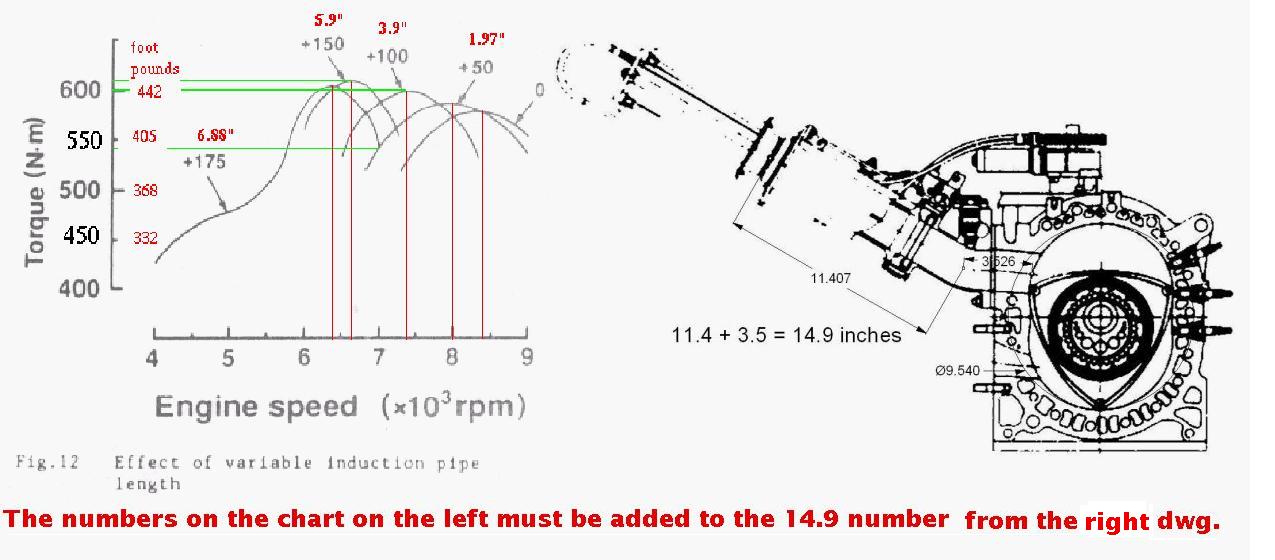
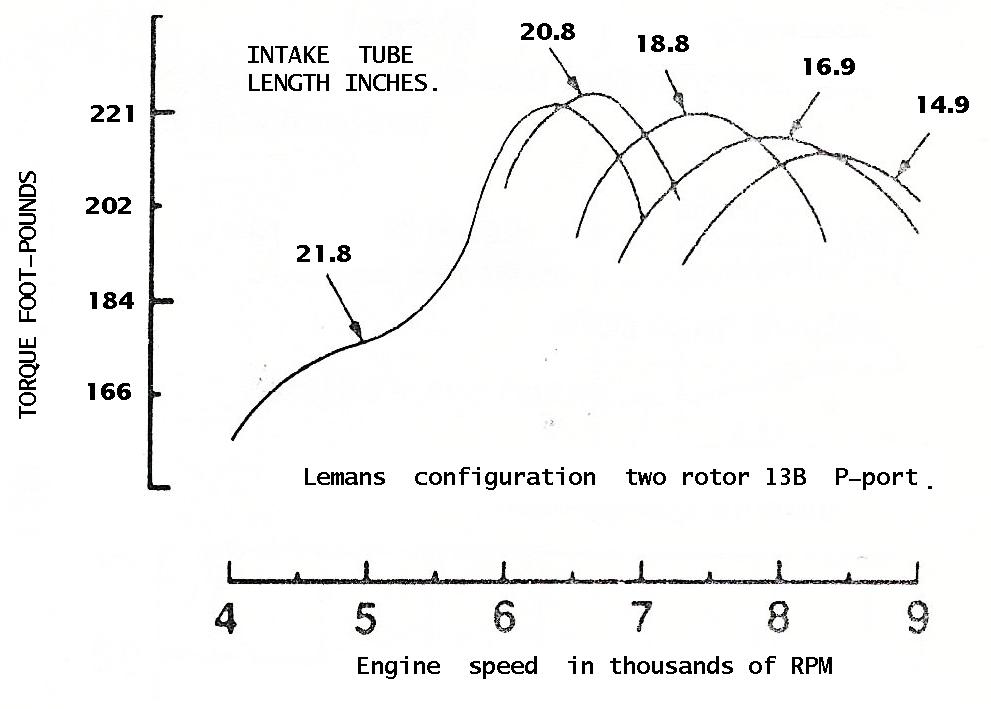
The model doesn't really appear to be set up for a Wankel rotary. A
160 cu-in two rotor (13b) at 6000 rpm calculates to a 14" runner,
which experience has shown is too short. There's probably something
about the multiple rotor faces sharing the same runner, and that the
rotor turns at 1/3 of the e-shaft speed that comes into play - I don't
have that all figured out... It seems like the calculated runner
length is about 1/2 what it should be.
I would add to #2 above that the reason the intake is so important to
VE is that on a naturally aspirated engine, only atmospheric pressure
is available for cylinder filling. I think things look different if
you have forced induction.
Regards,
Matt-
Matt,
A tuned intake is a function of velocity which in turn is a function of
intake diameter and length and RPM.
If you have a set diameter and RPM you can work out the rest.
George (down under)
Or you can just copy this.
Paul Lamar
--
The Rotary Engine NewsLetter. Powered by Linux.
ACRE NL web site.
http://www.rotaryeng.net
Youtube key word UTUBPLEASE
Copyright 1998-2009 All world wide rights reserved.