I have recent 2009 engine data that has it at 200HP at 6000RPM with 175TQ.
I have a older engine data set that has 200HP at 6500RPM with 164TQ,
this is prior to '09
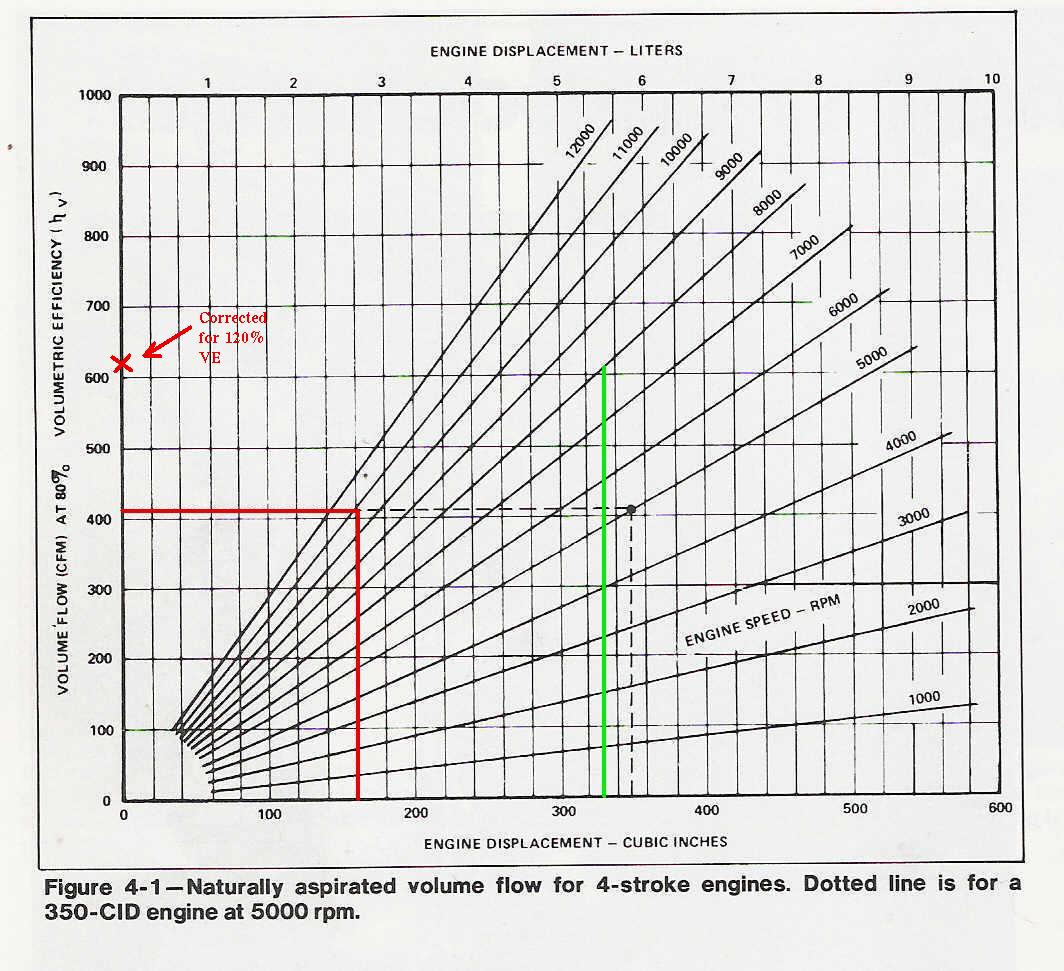
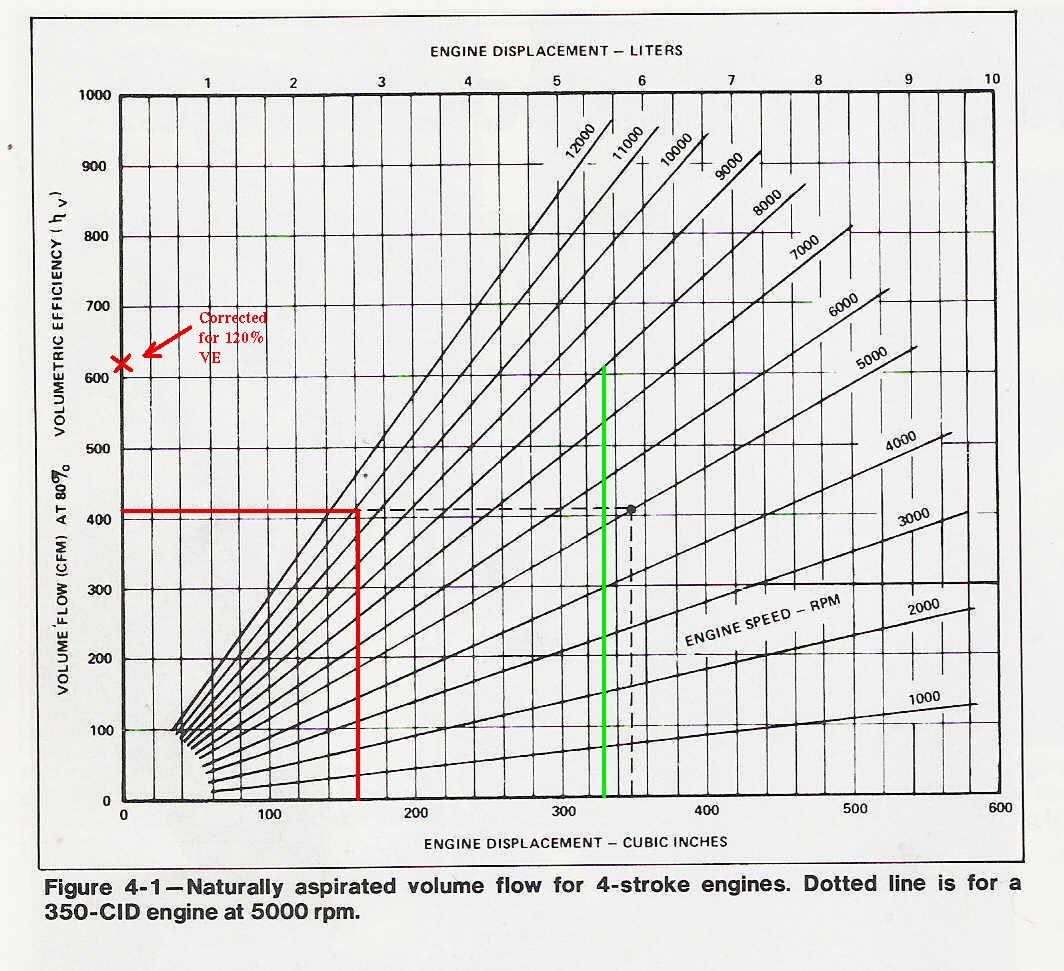
So you'll need 300CFM to supply 200Hp. Almost could use a single HSR48.
Now I said almost.
Skip Gorman
Skip,
No having the wealth of experience and knowledge of individuals such as
yourself, and not having the opportunity for in depth testing, I rely on
such things as research and a little maths. Quite obviously I have something
wrong with the maths, so if someone can see an error I would be happy to
hear about it.
For example I have taken 40 cu" (13B combustion chamber volume) multiplied
that by 3 ( 3 rotor faces) multiplied that by the RPM ( 6,500) and divided
it by 3 ( 3:1 gearing ratio), then divide all that by 1728 ( 12 x 12 x 12
=inches to cu inches) and the formula looks like this:-
40 x 3 x ( 6,500/3 = 2166 rpm)/ 1728 = 150 cu inches per rotor housing and
therefore 300 cu inches.
This is not considering density, and at 100% VEonly. Density can be affected
by atmospheric conditions, altitude and forced induction, including tuned
intake.
Other things which affect density are inlet velocity and the dreaded skin
friction - which is 2 to 3 % x Velocity squared, in a laminar flow tube.
Inlet and tube diameter affect the inlet velocity.
So if your getting a whole heap of power from less than the max VE (what the
engine can breather without forced induction), I really want/ need to know
why?
Or my maths is wrong somewhere.
George ( down under)
Your calculations are out to lunch. The real displacement
of the engine is 2600 cc or 2.6 L. We have have been over
this one thousand times in the past and you have received the
messages but I don't think you read them :) Perhaps you forgot.
I forget a lot of things as I am getting old.
Paul Lamar
I'm getting a headache here. :) 40 cu in per combustion chamber X 4
combustion chambers is 160 cu in. or 2.6L, which is the number Paul
quotes. (It's 4 combustion chambers because the 2.6L comparison is to
the equivalent 4 cylinder piston engine.) The 1728 factor will convert
cubic inches, which you started with (40 cu. in.) to cubic feet. You
are then calculating the volume of air consumed in the engine in one
minute. That would be 40 * 6500 / 1728 = 300 CFM (the factors of 3 and
1/3 cancel) and is what Skip said in the first place.
Best I can tell, everyone pretty much agrees.
Bob W.
Sorry that should have been:
(40 * 6500 /1728) * 2 rotors = 300 CFM
Bob W
--
N93BD - Rotary Powered BD-4 -
http://www.bob-white.com
3.8 Hours Total Time and holding
Cables for your rotary installation -
http://roblinstores.com/
Thanks Bob. Good explanation.
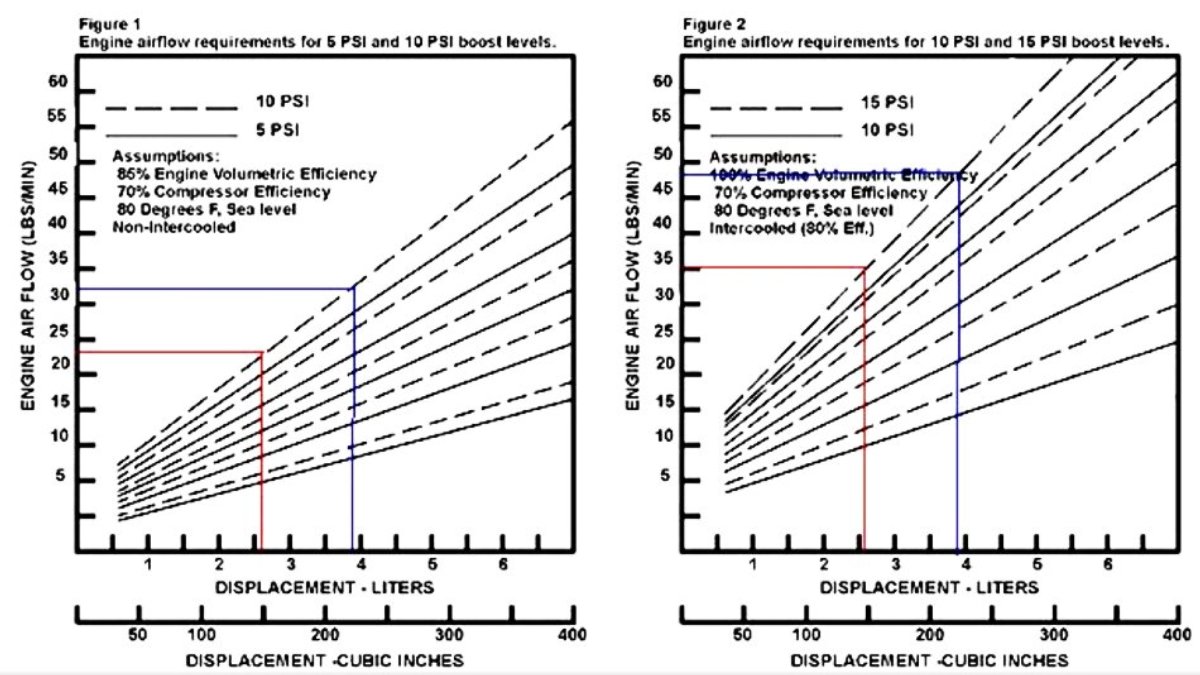
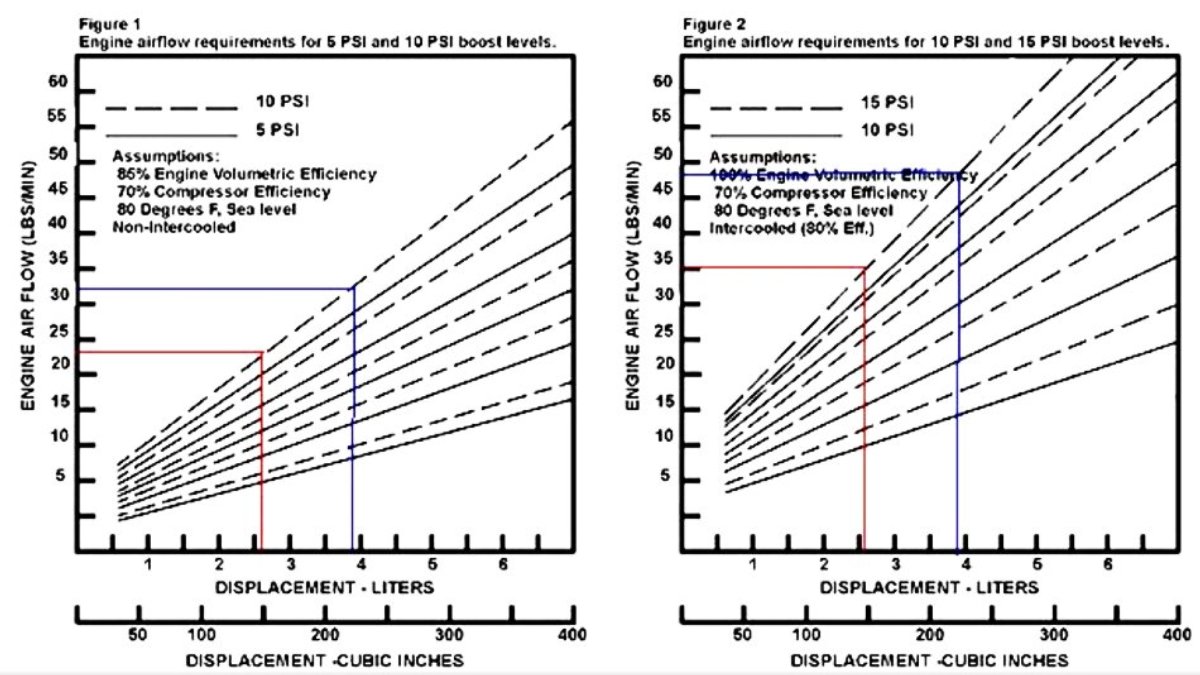
Here is a simple chart so no math is necessary once one accepts the
displacement equivalent.
Paul Lamar
--
The Rotary Engine NewsLetter. Powered by Linux.
ACRE NL web site.
http://www.rotaryeng.net
Youtube key word UTUBPLEASE
Copyright 1998-2008 All world wide rights reserved.