<snip
I can see why Ford went to PWM pumps. I can also see why
carbs are still popular in certain forms of car racing :)
Paul Lamar
Didn't someone say that the RX-8 was a return-less EFI system? If so,
is the RX-8 system PWM or just internally regulated at the in-tank EFI
pump?
-Vince Orton
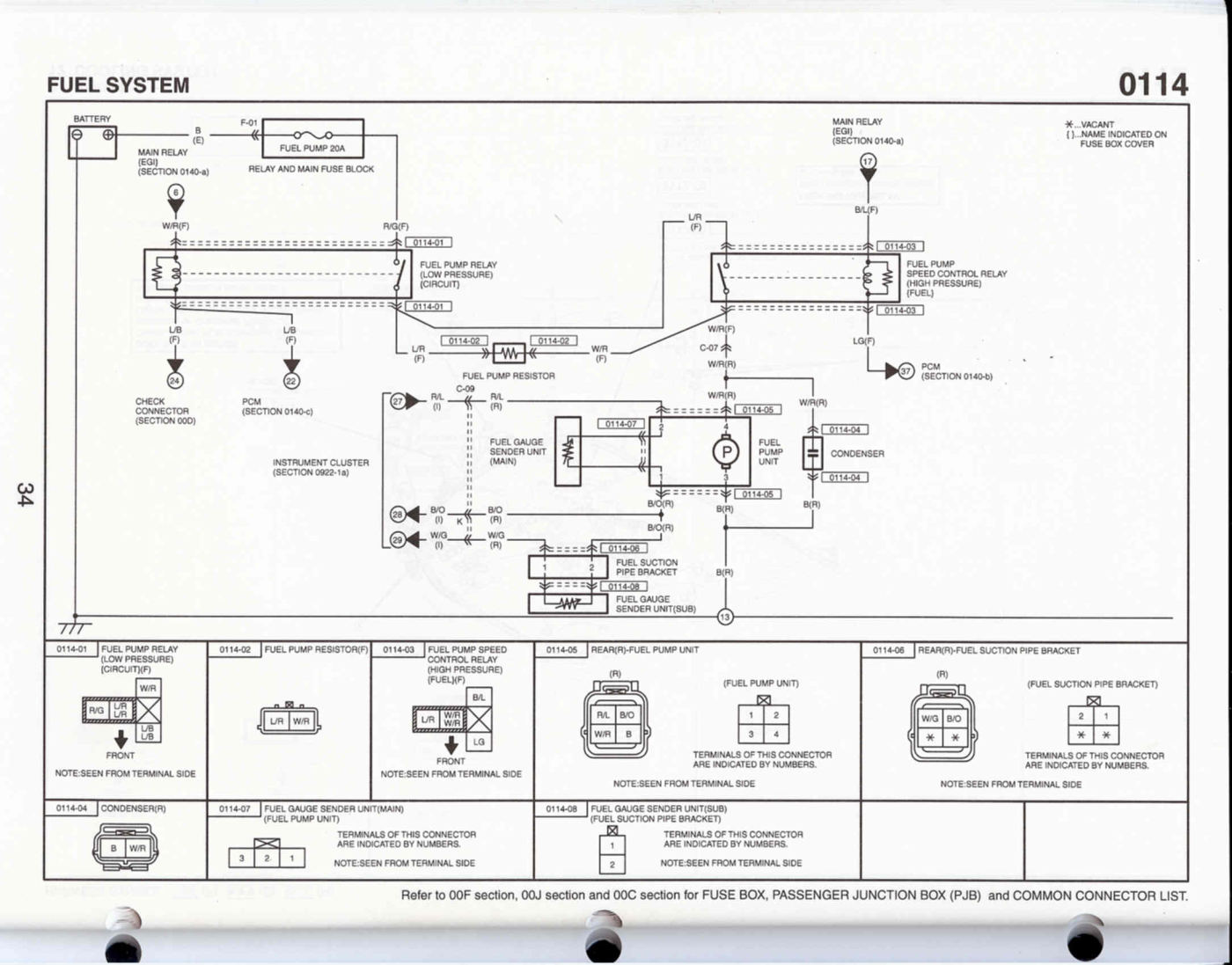
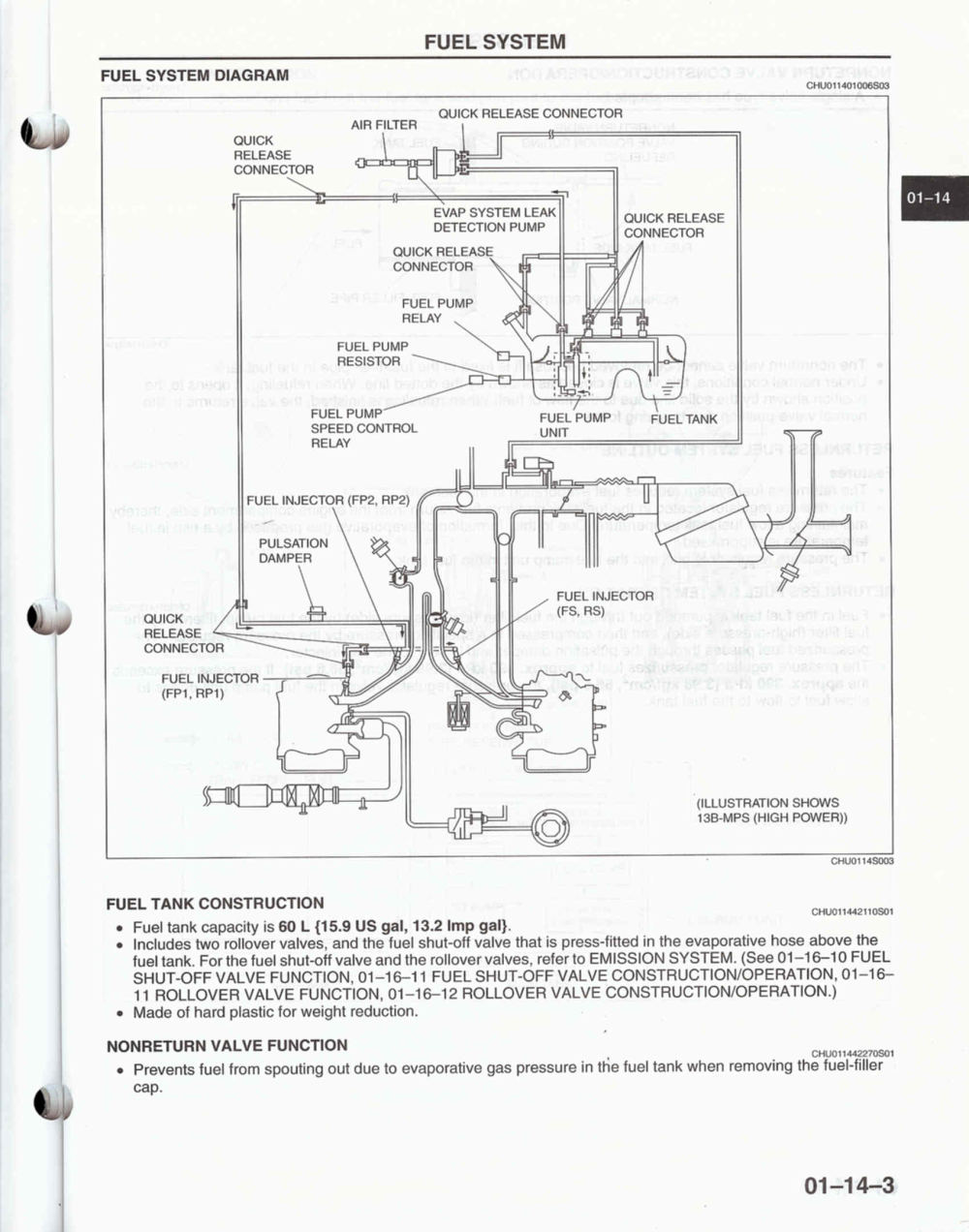
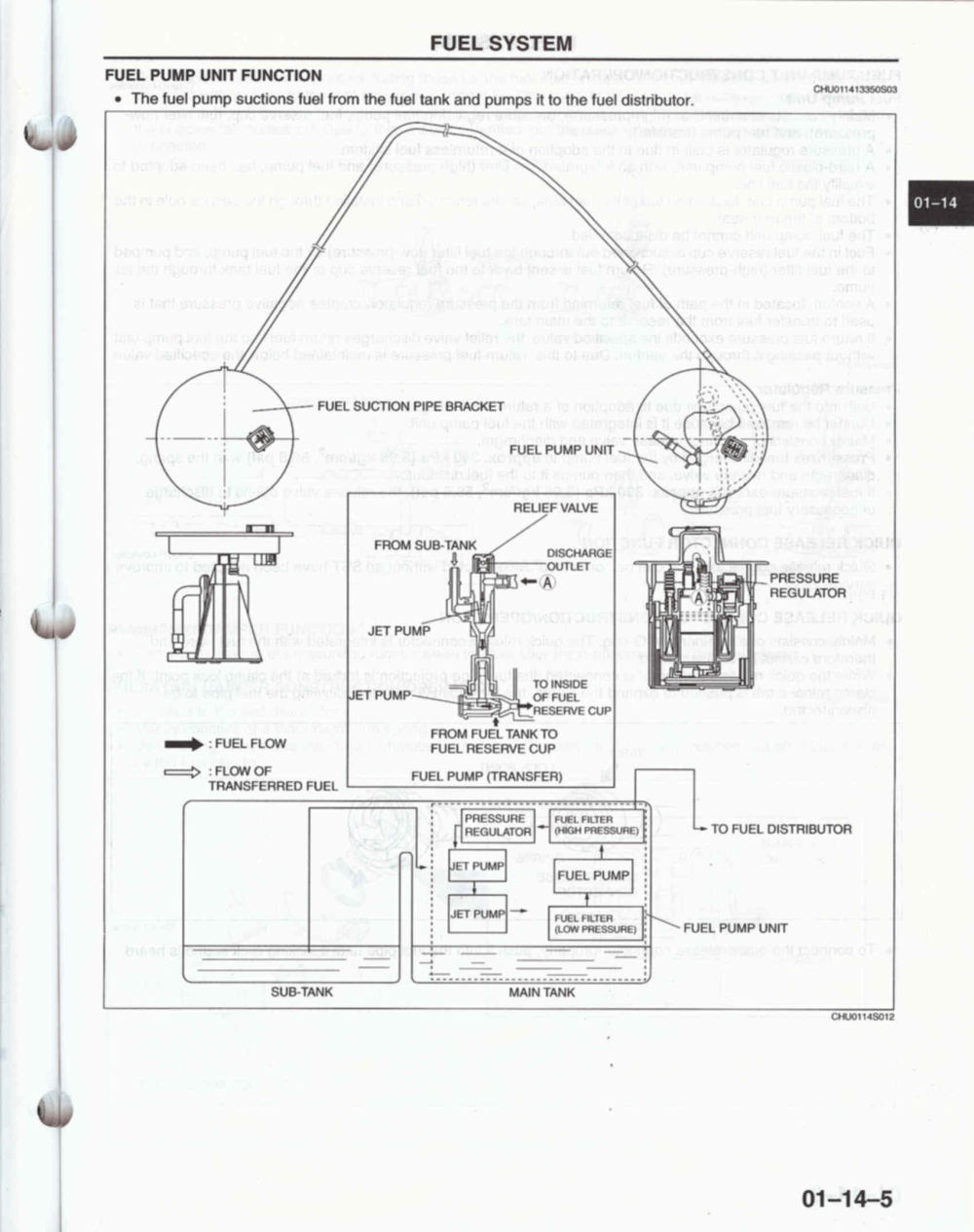
Here is the RX8 fuel system schematic. Does not look like
PWM to me. Lots of relays in there.
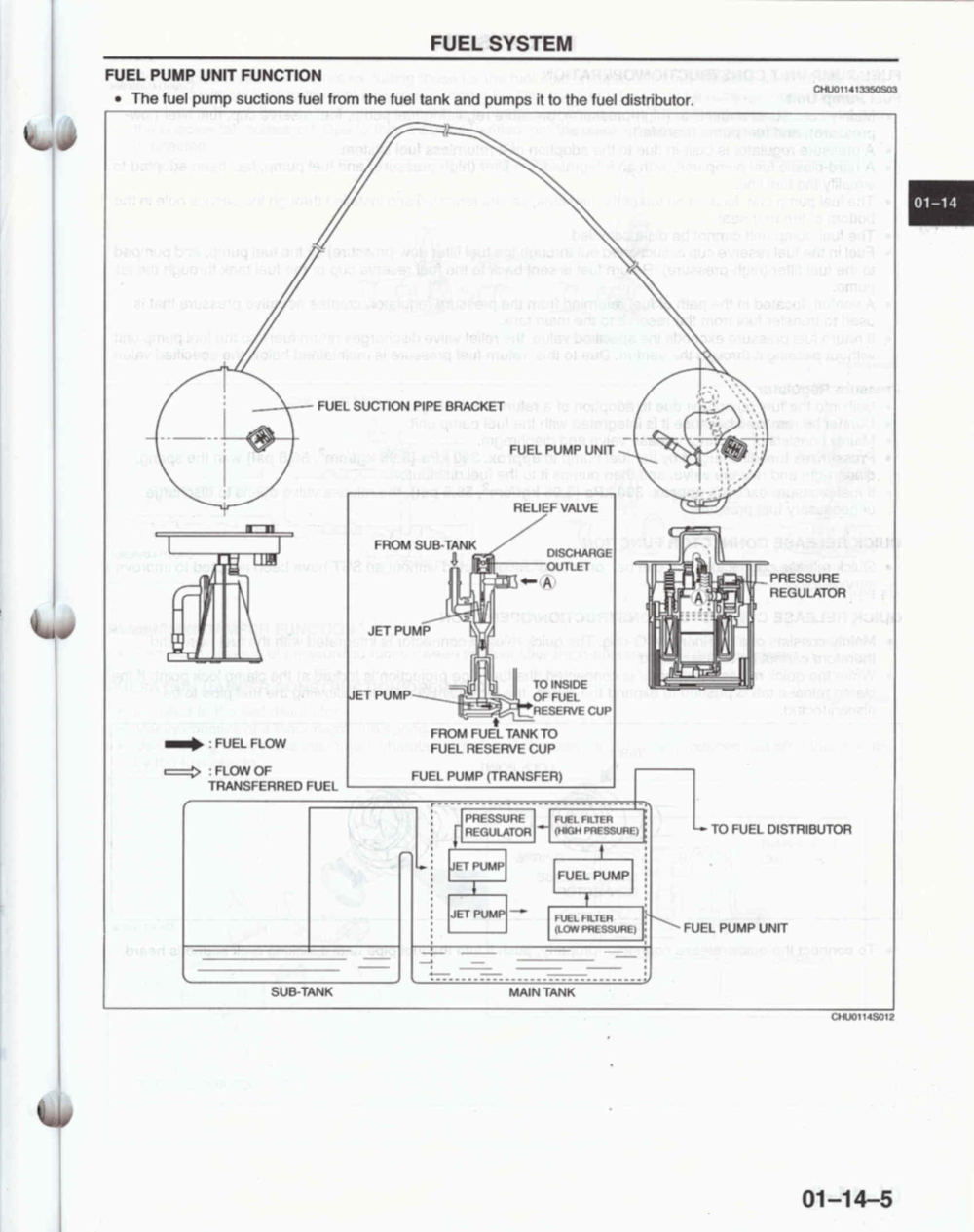
Looks like it is done mechanically inside the pump
at 56.6 psi.
Until you brought it up and I looked it up I did not
realize that perhaps the RX8 system is the way to go.
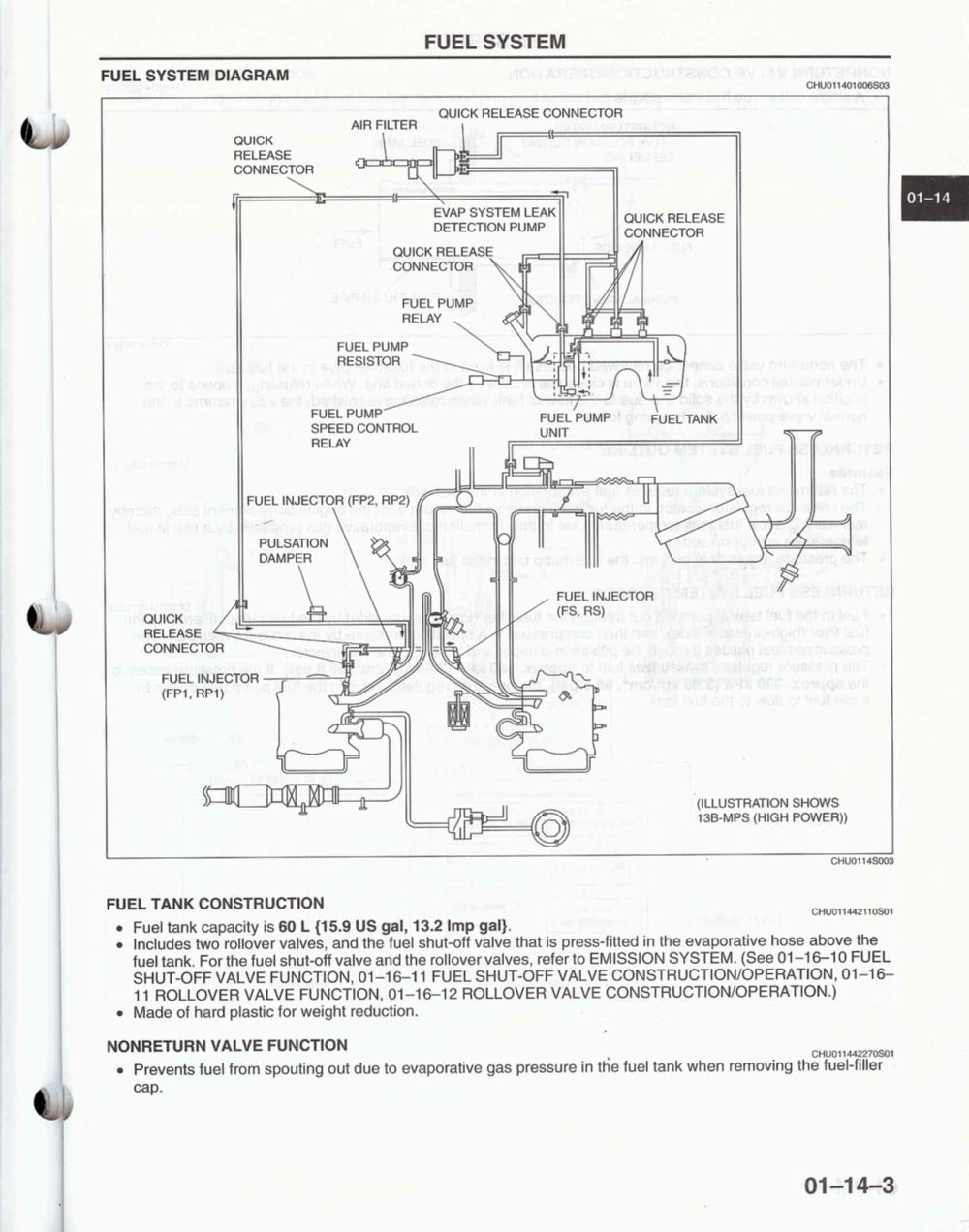
No fuel pressure regulator. That is good and bad.
Saves the cost of a regulator but adds the high cost
of an RX8 pump and the pump must be in the fuel tank.
There is a high and low speed switch as well.
That complicates control. The computer controls
this according to the demand for fuel. At low power
levels the pump is slowed increasing the life of the pump.
Perhaps this system should be investigated before
building a PWM system.
I think I will continue to pursue the intake manifold
pressure controlled regulator route as it is simpler
to deal with, has a long history and it has no requirements
for mounting the RX8 fuel pump in the tank. Any pump
can be used. This has the advantage of automatically widening
the dynamic range of the injectors. No staging of injectors
is required like is done in the RX8 fuel system.
Perhaps some day an after market pump will be developed
with an internal pressure regulator that does not require
a two speed switch and is durable enough to run flat
out forever. Aircraft engines don't have a low power cruise
mode that is less than 50 HP like a car.
Bottom line: I don't think the RX8 pump is up to it :)
Paul Lamar
--
The Rotary Engine NewsLetter. Powered by Linux.
ACRE NL web site.
http://www.rotaryeng.net
Youtube key word UTUBPLEASE
Copyright 1998-2008 All world wide rights reserved.