If we run the engine with the manifold pressure lines *DISCONNECTED *from
the EC2:
- Engine starts very easily
- The engine runs quite smoothly across a pretty wide rpm band after
tweaking the manual mixture control.
- Reasonably smooth running as low as 1500rpm engine (526rpm prop!)
- Very smooth running 3000 - 4800 RPM.
- Above 4800 rpm we seem to "run out of enrichen" on the manual mixture
control & the engine stops.
- MAP table view on the EM2 real-time shows the EC2 using map location
59
or 91 (MP constant matching atmospheric pressure) depending on high/low
throttle (as expected)
If we run the engine with the manifold pressure lines *CONNECTED *to the
EC2:
- Engine noticeably harder to start
- Engine will not run smoothly at any rpm
- Significant surging pattern -- rpm increases rapidly, followed by
engine stumble to low idle rpm, followed by next surge.
- Engine often stops during the stumble / hard to restart
- MP pressure varies rapidly based on engine rpm
- Significant manual mixture changes can help ease the surges somewhat,
but never enough to get the engine to smooth out enough to let us see
if
MAP
values could be tweaked.
Looking at the MAP table with engine off, it seems like all map cells are
at
0 -- as expected. I did not check all 127 cells, only the top cells (say
100 - 127).
Mark (Rocky Mtn High)
----------------------
The surging behavior suggests the engine is running way too lean.
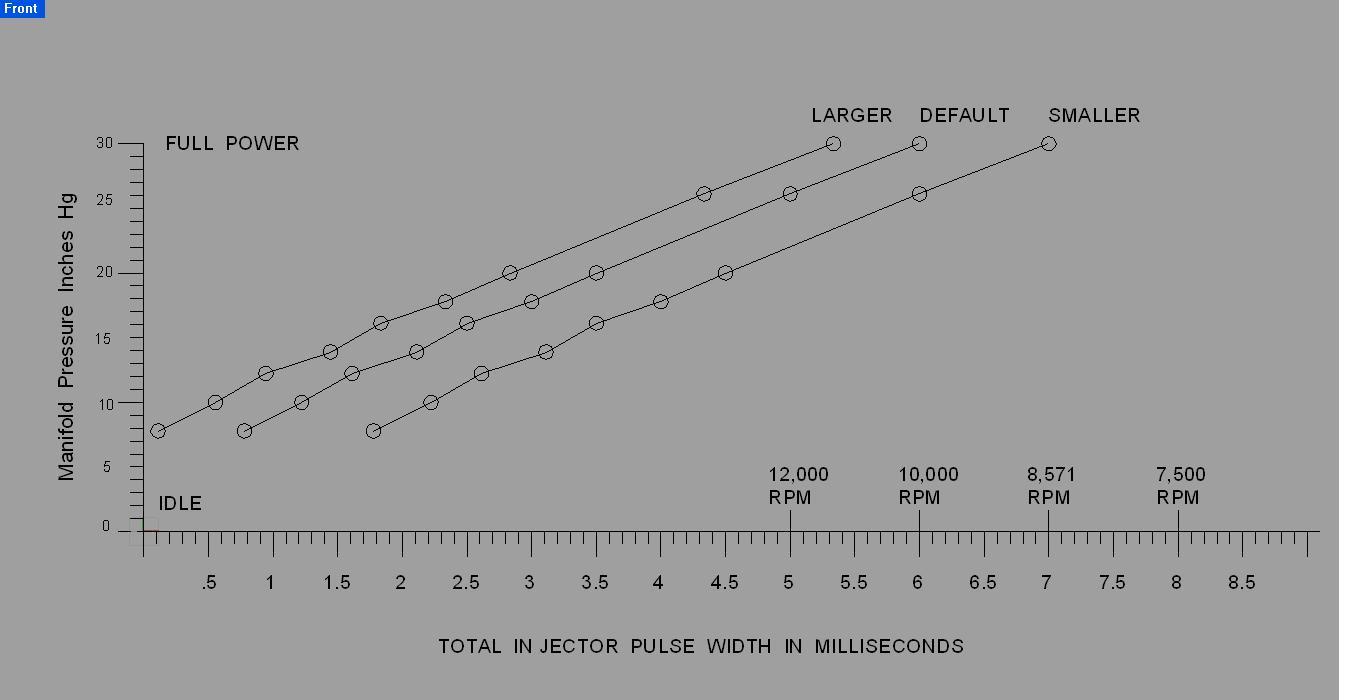
Check the basic pulse width - adjusts with mode 3.
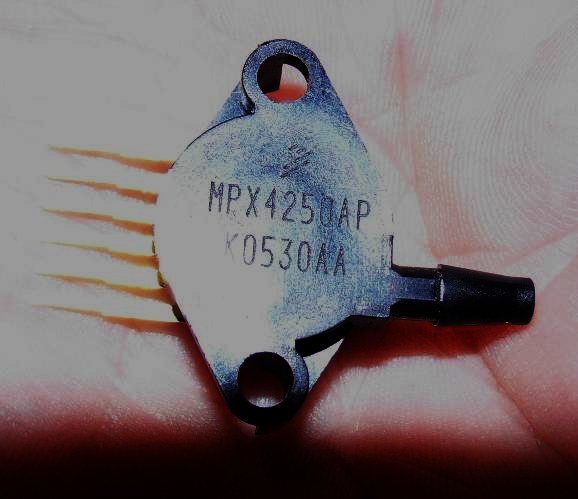
Where are you picking up MAP? Paul's suggestion on damping the
Pulses is a good one. My pickup points are about 8" upstream
From the ports on my 20B. I sense MAP on all three connected together;
And did find that it idled better with some pulse damping. Didn't matter
much above about 1600 rpm.
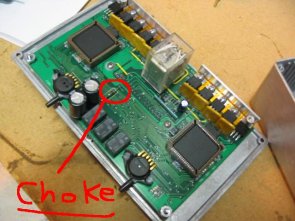
I put a metal fuel filter, about 2 1/2" dia., in the line, and about a
.040", 1/2" long orifice between the filter and the EC2. It helped to
smooth
things out, although one reason was to smooth out rapid pulsation
I noted in the fuel pressure from the MAP reference pressure regulator
T'd off the same line.
You may want to chat with Tracy on the matter.
Al Gietzen
Thanks for the thought's Al. My pickup point for MAP is about 1.5" from
the pport.
Both intakes are T'd together, and then T'd again for the fuel pressure
regulator.
Finally, there is a T at the EC2 itself.
Tracy also suggested Mode 3 earlier this evening.
I think what I will start with is a wipe of whatever is in the EC2 right
now & start from
Tracy's defaults again. We hit mode 3 pretty hard a few weeks ago to turn
down the
larger-than-stock injectors. Then we shipped the EC2 off to Tracy to get
the latest
firmware he has for PPorts. Based on Al's comments regarding surging /
lean I wonder
if we over did it & the new firmware doesn't like it.
If it still is surging, I'll try sticking in a larger air mass to see what
it does for me.
Mark (Rocky Mtn High)
On second thought --
If we were way too lean via mode 3, why would the engine run very nicely
with the manifold lines disconnected? If there were a fuel quantity
problem, you would think that it would apply equally to manifold lines on /
off. Now - it is true that the sensed manifold pressure is different in the
two cases -- 24.2 atmospheric in the lines off case, and around 15.3 at one
point while we were trying to get the engine to settle down & 'run right' in
the manifold lines on case. Perhaps that answers the question? (I must
confess that I do not have a firm grasp on how MP affects fuel quantity, or
anything else for that matter).
Mark (Rocky Mtn High)
=========================================================
Mark did you not get this message?
" We noticed this phenomena on the dyno test of your engine.
I am not privy to Tracy source code but the last time I talked to him
about it was a couple of years ago and he was taking only one sample
of the intake manifold pressure per e-shaft revolution.
Using a computer this takes only about 10 usec.
http://en.wikipedia.org/wiki/Microsecond
Light travels only one mile in FIVE microseconds.
That is 10 millionths of a second. 1000 usec is one msec or one thousands
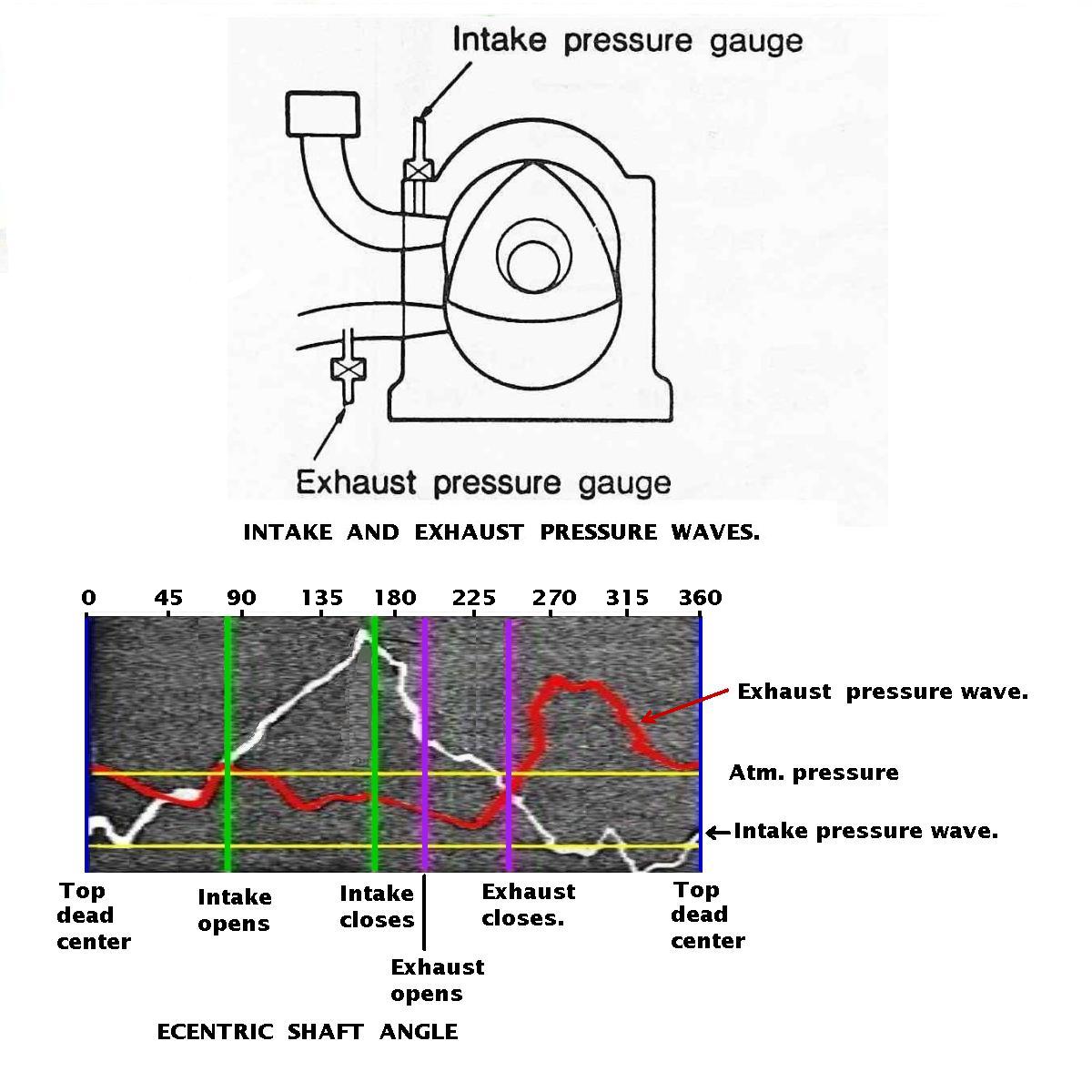
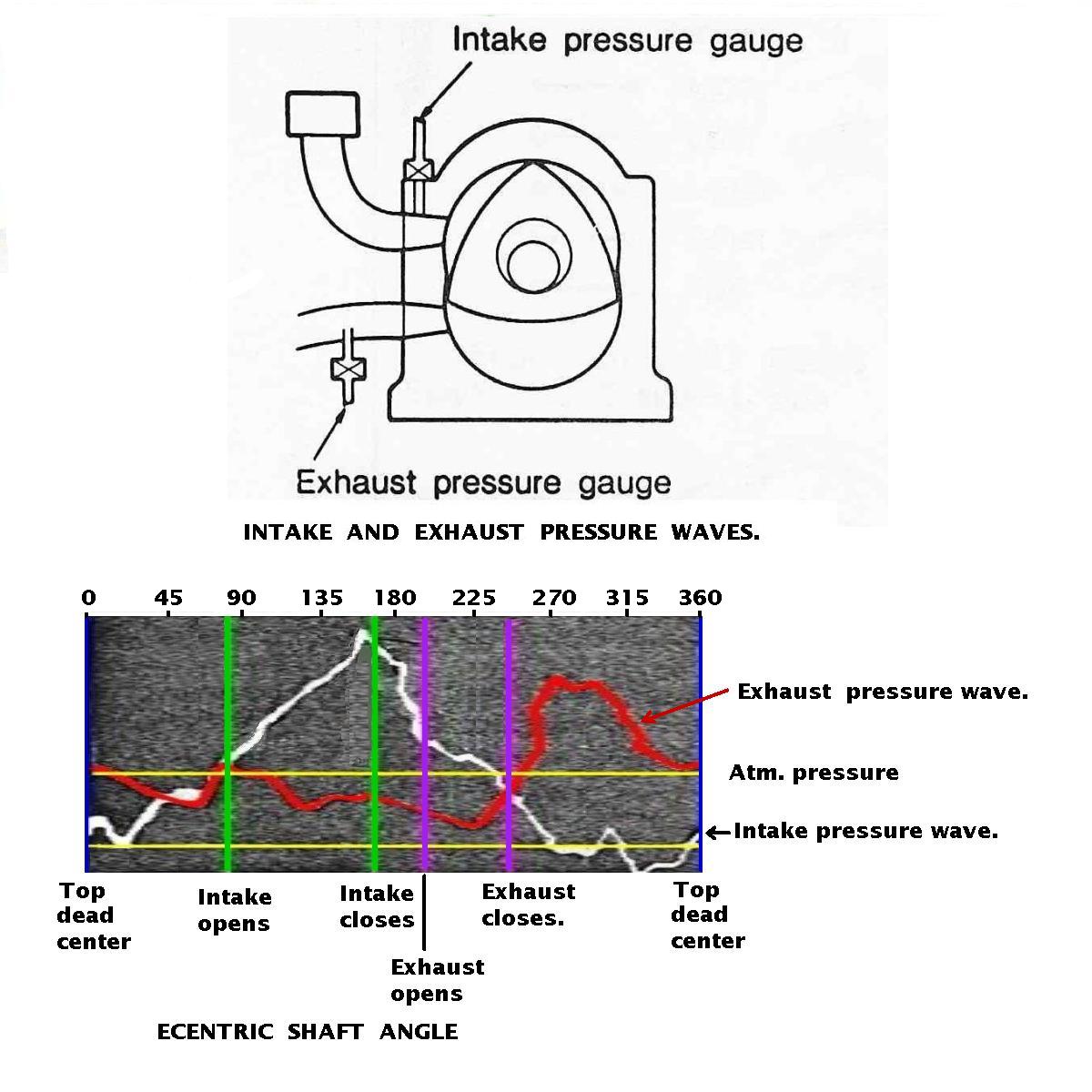
of a second. This is a very brief period of time so the manifold pressure
is jumping around a lot in a p-port tuned manifold. It could be anything
or even above atmospheric pressure at some times. That is what p-port tuned
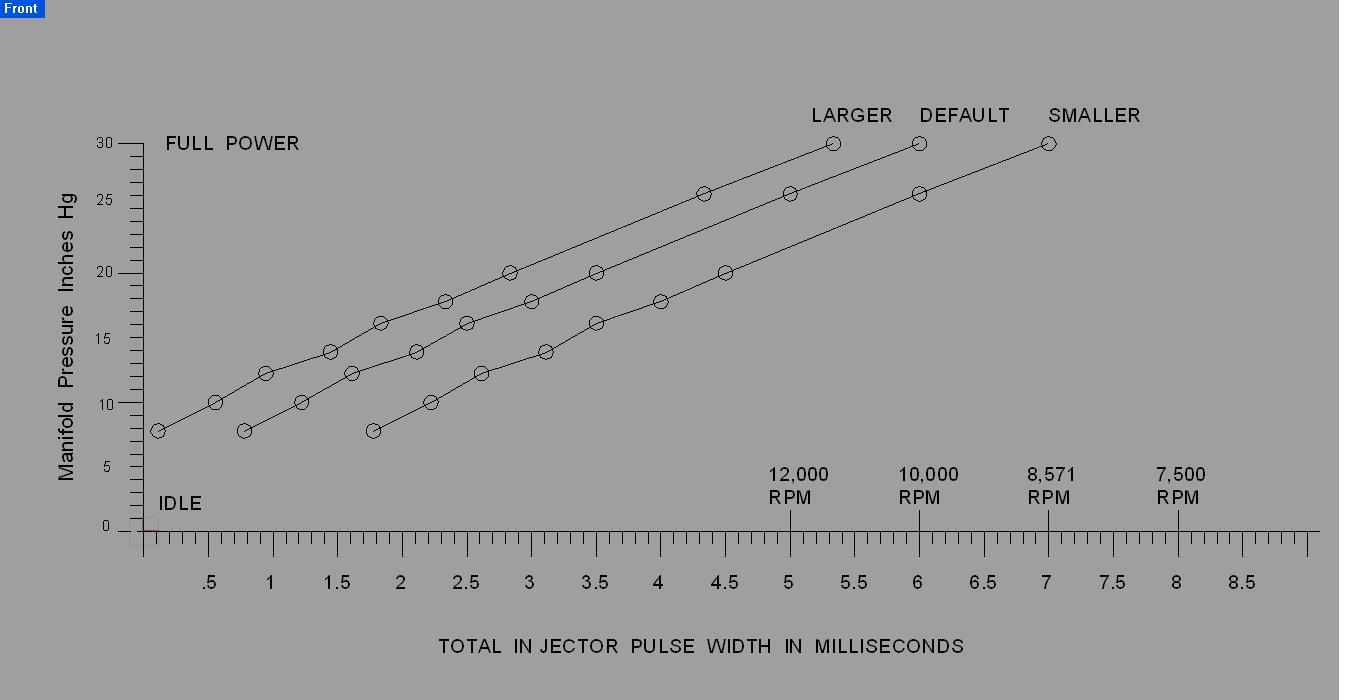
manifolds do. See the enclosed chart. A lot depends on WHEN you sample
the pressure. It changes with RPM in unpredictable and mysterious ways.
IMHO this is confusing the heck out of Tracy's computer. IMHO you need
to feed the manifold pressure from both intake tubes past the slide
throttle
using very small hoses into a beer can and then tap out of the beer can with
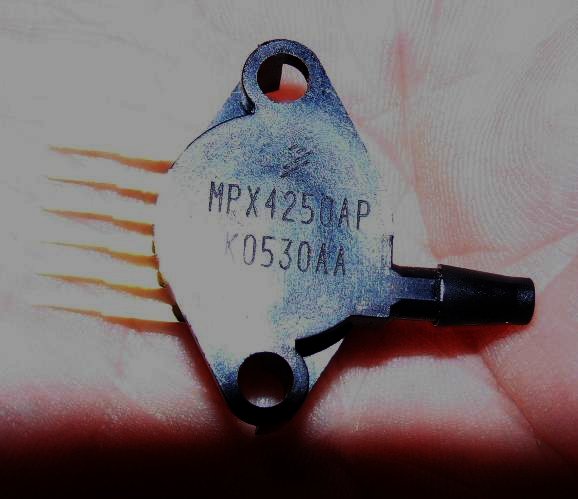
one normal size hose going to the pressure sensor in the computer. Hopefully
this will damp the pulsations and average the intake manifold pressure."
=============================================================================
You are now measuring the manifold pressure with a mechanical gage that is averaging
the pressure.
No way is that comparable to the very brief sample Tracy's computer is seeing.
>>>>> IT COULD BE ANYTHING!! <<<<<<. The engine runs better when disconnected
BECASUE Tracy's computer's pressure sensor is now only seeing CONSTANT ATMOSPHERIC PRESSURE!
The manifold pressure tubes are now disconnected from the pressure sensor in
his computer. The random pressure readings sampled when connected are screwing
things up.
Did you get all that or am I not being clear? Does somebody else want to
take a stab at explaining this?
Tracy developed his system using a throttle plate located up stream from
a large box. He was (and still is in most cases) measuring the pressure in that box.
Not right next to the p-port as we are doing in your engine.
That large box averages the pressures!! We don't have that luxury.
Tracy's program has a nominal set of starting numbers in it called a "base".
These "base" numbers may or may not change with RPM. Manifold pressure merely
"trims" the base UP or DOWN. If we used a constant number (constant pulse width)
in the base fuel quantity injected would increase directly with RPM. One pulse
per rotor per revolution. Not exactly what we want. We want a lot
more fuel per rev at high RPMs because that is when we need a lot more
HP.
In theory change the base (particularly at the higher RPMs) and forget
the manifold pressure and an aircraft engine will probably run fine because
the load is a simple function of RPM. (unlike in a car). I am not advocating
flying with that but figuring out a way to average the manifold pressure.
Tracy could do it in software if he took a bunch of samples at different
e-shaft angles and averaged them. So far I have not been able to convince
him of doing that as far as I know. It should work with any system. P-port
slide throttle or what have you. It is quite feasible because the computer
is lightening fast and is twiddling its thumbs most of the time waiting
for something new to happen. A 1975 6502 microprocessor found in an Apple II
running at only one megaherts (One instruction per msec. A million instructions
in ONE SECOND) could do it no problem.
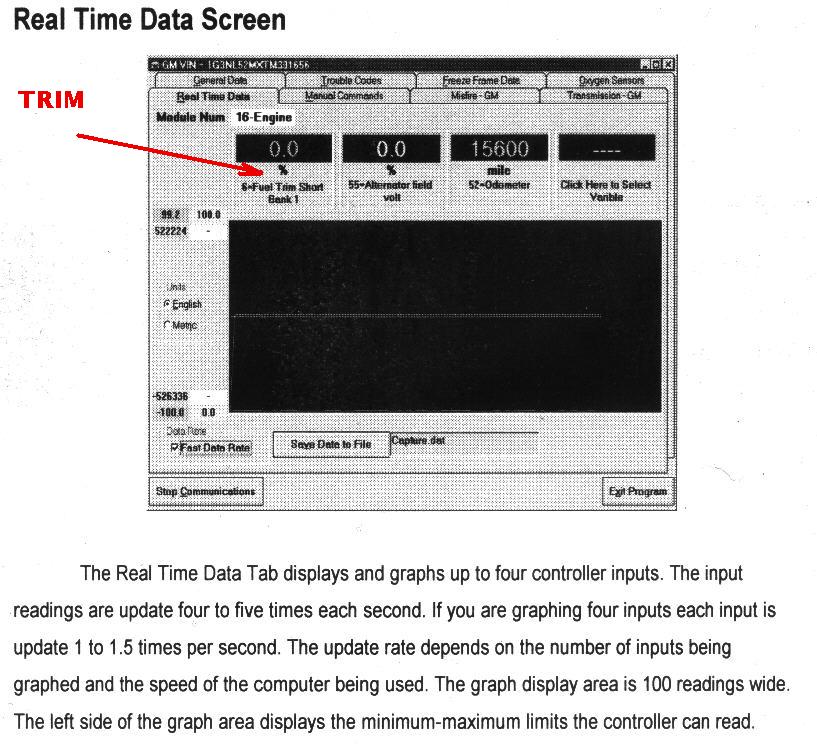
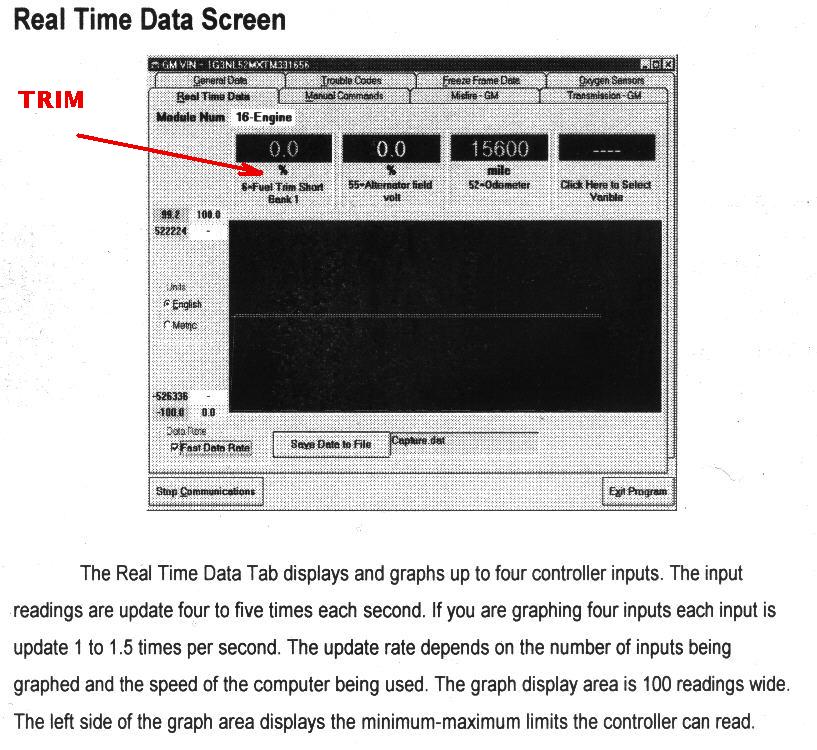
BTW For a quick education on the typical EFI system get yourself an OBD II cable and
software and hook it up to your car engine.
Paul Lamar
--
The Rotary Engine NewsLetter. Powered by Linux.
ACRE NL web site.
http://www.rotaryeng.net
Youtube key word UTUBPLEASE
Copyright 1998-2008 All world wide rights reserved.