... & the Lord taketh away.
Another day, more tuning on the PPort. As we've gotten closer to smooth
running at low RPMs (The giveth part), we've noticed that our wonderful
cooling is becoming less wonderful (the taketh away part).
We've had to lean the engine pretty heavily at low rpms (-50 to -68 in EC2
parlance). The reward was a smooootttthhhhhh idle at 1800 rpm & a somewhat
rough -- but perfectly acceptable -- idle all the way down to 1400 rpm.
Strangely, we are having a tough time getting a nice idle 2000-2300. Ah
well, we'll puzzle it out eventually.
With all that leaning has come higher temps. If the airplane isn't face
into the wind, we now see temps climbing even at the lower rpms. Bummer.
On the other hand, we are also seeing much better performance in fuel burn.
15 - 20 minutes of taxiing around the field & rolling down the runway
consumed appx US 0.8 gal of fuel. Not bad.
To business: There have been a couple of comments on the wave forms of the
two rotors as recorded by the computer last weekend. The debate seems to
have settled on whether the equipment is recording correctly.
Let me add another few data points.
#1 - Bear in mind this is a taildragger installation & the engine is not
sitting level.
#2 - We captured the data with both the intake plenum closed & plenum open
to the air. There was no difference in the wave forms that we saw.
#3 - the biggie - Based on today's runs, we can say with assurance that the
2 rotors are not getting equal amounts of fuel. After getting the low end
MAP'd & tuning to max-power at each manifold pressure station in the
computer, we monitored EGTs throughout the band 1300-3000 rpm. There was
always at least a 50F difference, and as much as 125F difference between the
two rotor sensors. In fact, rotor 1 was only 50F hotter than the egt 3
sensor (located on the exhaust pipe after the collector).
So - my hypothesis is that we need to do some adjustment to better balance
the rotors. This is possible to do with the EC2. My question is does the
tailwheel angle play into the difference in rotors temps, and should I just
leave well enough alone until we get some flight data to see what the temps
look like during straight & level flight??
Mark (Rocky Mtn High)
The gear box rattles in that range with the right prop as you are in the
torsional resonant frequency mode of Tracy's gear box and torque isolator.
Your prop is lower inertia so the freq. goes up a bit.
You are not building a sea plane Mark :) Don't idle it below 2100 RPM
750 prop RPM. There is just no need. I know it is fun to fool around to see how
slow you can get a P-port to idle and count prop blades :) Not worth
stressing the gear box.
Glad to see you got the data acq working.
50 F EGT difference on any engine is to die for :)
You ought to see a Continental O-470 with a carb.
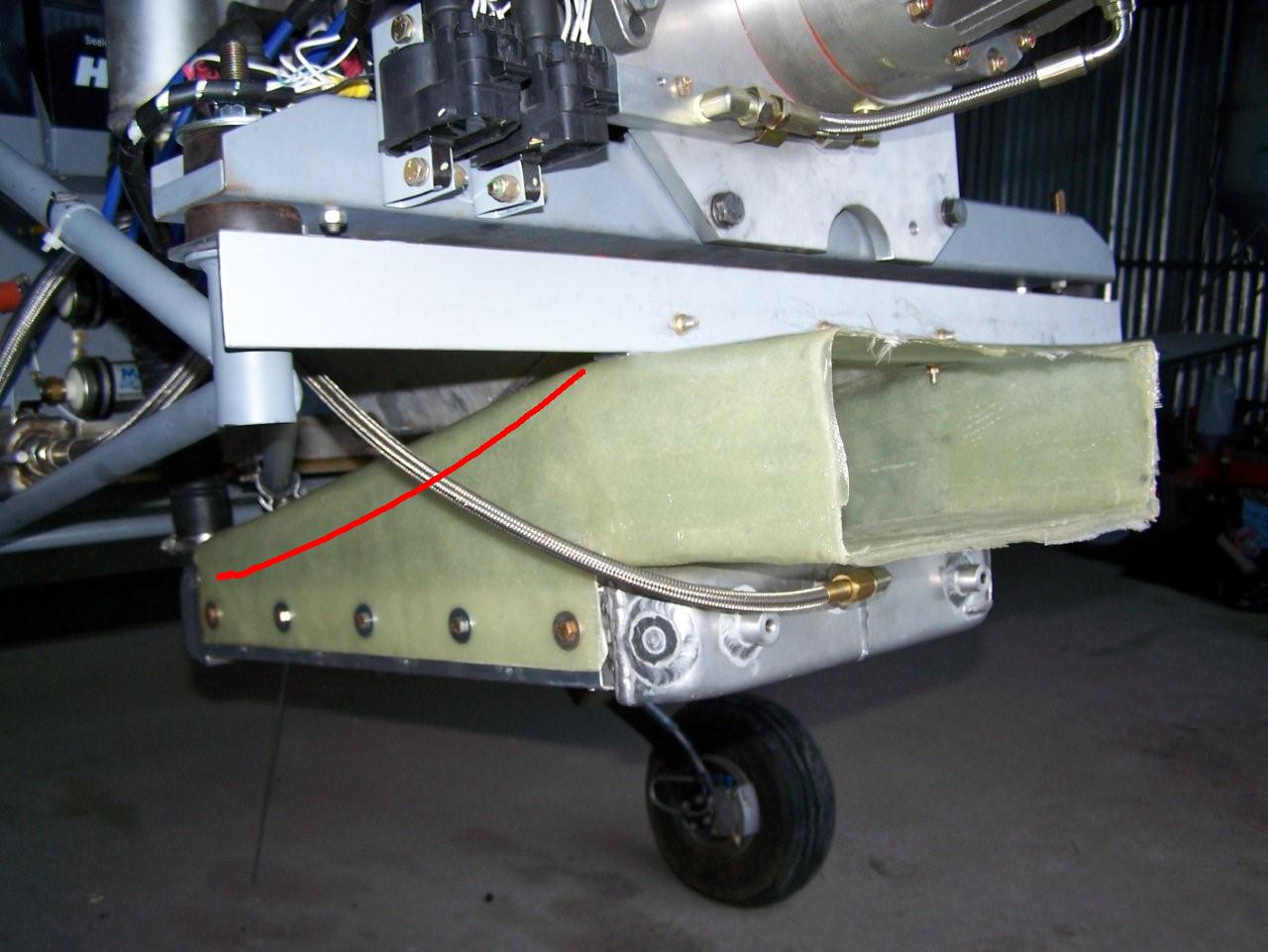
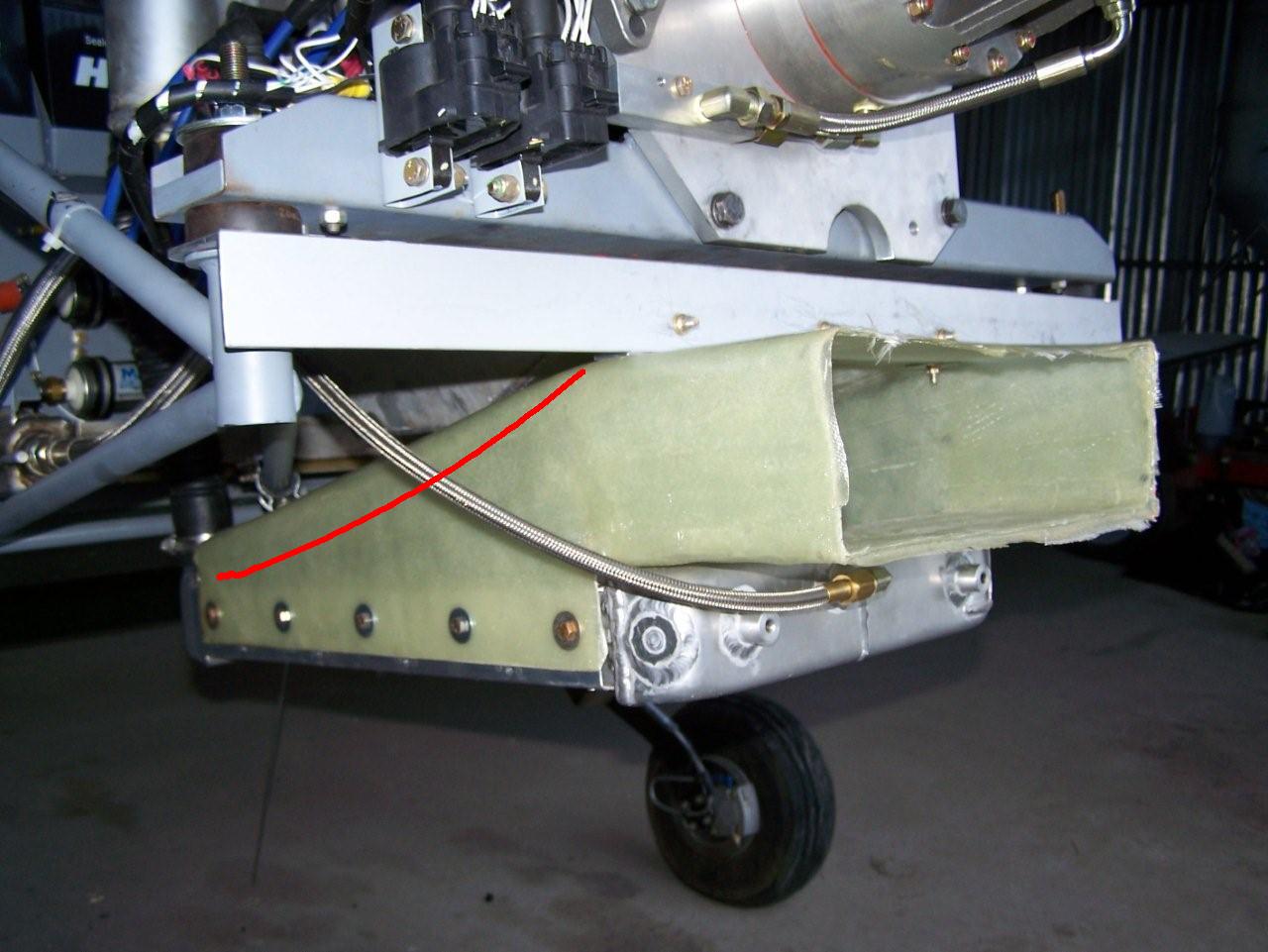
Fix the inside of those rad ducts and make sure they are perfectly sealed.
Sharp wedge or even slightly concave. See the picture.
Wait till you get the right prop unless you plan on flying
with the one you have. It will fly.
Make sure you record outside air temp when you judge cooling.
One degree change outside is 1% change in cooling.
Paul Lamar
--
The Rotary Engine NewsLetter. Powered by Linux.
ACRE NL web site.
http://www.rotaryeng.net
Youtube key word UTUBPLEASE
Copyright 1998-2008 All world wide rights reserved.