There are a few flaws in this paper.
There are also some amazing contentions.
One of the most amazing things is this engine
is only 80 cubic inches. CW, John Deere or RPI
never made any 80 cubic inch rotary engines.
When this paper was written there were plenty
of Mazda rotary engine lying around that could
be modified to test a turbo compound rotary.
Therefore I suspect what it really is
.... is a 160 cubic inch (2.6L) Mazda 13 B running at 8500 RPM
with a total power out of 400 HP in turbo compound form.
See page 171. There are lots of 400 HP 13B engines
out there without turbo compound.
The next one that caught my eye was page 183.
The turbine power is as much as 90 HP!!
There are some assumptions about the inter cooler that
may be flawed. The inter cooler chosen appears to be off
the shelf old fashioned plate and fin with less than optimal
performance given todays level of inter cooler technology.
The real power
out of the engine alone is really only 320 HP which is
a very modest amount for a turbo rotary. Stock
late model turbo charged RX7 3rd gens were 280 HP.
The rest of the 400 HP comes from the turbine.
Assume for the moment the net power out of the turbine
going back into the e-shaft is only 80 HP. 10 HP is being used
by the compressor. This is probably a side port engine so
there is some pumping losses that would not be present in
a p-port version.
So the engine is burning 320 HP worth of fuel at a BSFC of .47
or 150 pounds per hour or 24 gallons and hour.
The net BSFC would be 320/400 times .47 or .376 BSFC !!!!!
Better than a diesel!!!!
I would love to have one of these engines in my RX8 :)
It should bolt right in.
Too bad NASA never built the hardware and tested the engine on a dyno.
Paul Lamar
Paul,
Timely info. Good going. I suspect you are correct on the 13B as I
recently read a dismal paper prepared by a company that did some
subcontract work for John Deere on cermet coatings.They choose the 13B
simply because it was available. Your table paper has an important
figure we have been looking for over the years. Its called 'exhaust
exit flow rate'. It is more than 72 lbs per min. Exhaust temp is about
right as well, assuming that it is measured after the turbine. If before
then that is rather low. Now consider a slightly boosted engine running
at 220 hp setting. Perhaps the flow is a little more than half right?
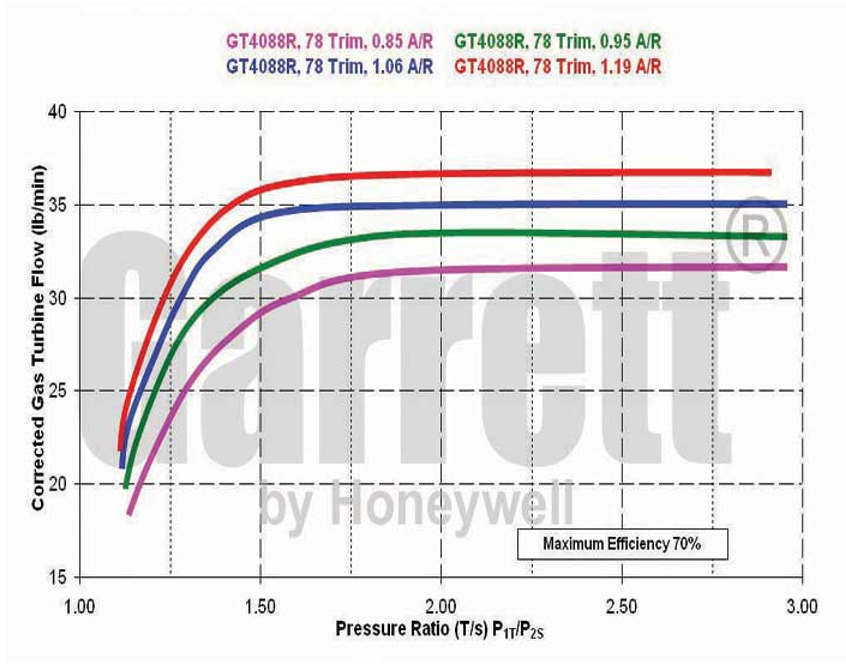
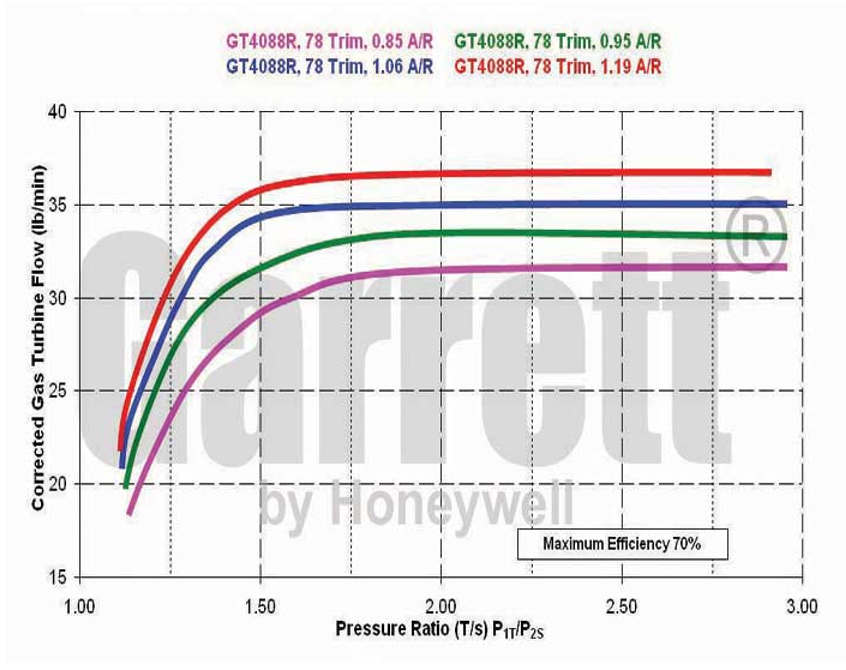
Look at the turbine chart on the right side of the page of this link.
http://www.turbobygarrett.com/turbobygarrett/catelog/Turbochargers/GT40/GT4088R_751470_4.htm
Enlarge the chart and you can see that the unit with an A/R of 1.15
flows at 35 lbs per/min. The P trim in the Turbonetic 60-1 flow is
similar. As you suspected this is still a tad small for a turbo
compound potential. But perhaps usable, just not maximized, especially
at high altitude. One way to increase flow, is increase the A/R ratio.
Because of the split housing divider a Q trim is not possible. If we go
to an open mouth turbine does that effect the gas flows significantly?
Your info source is worth mining. it seems we are narrowing in on a
turbine choice.
Doug in Japan
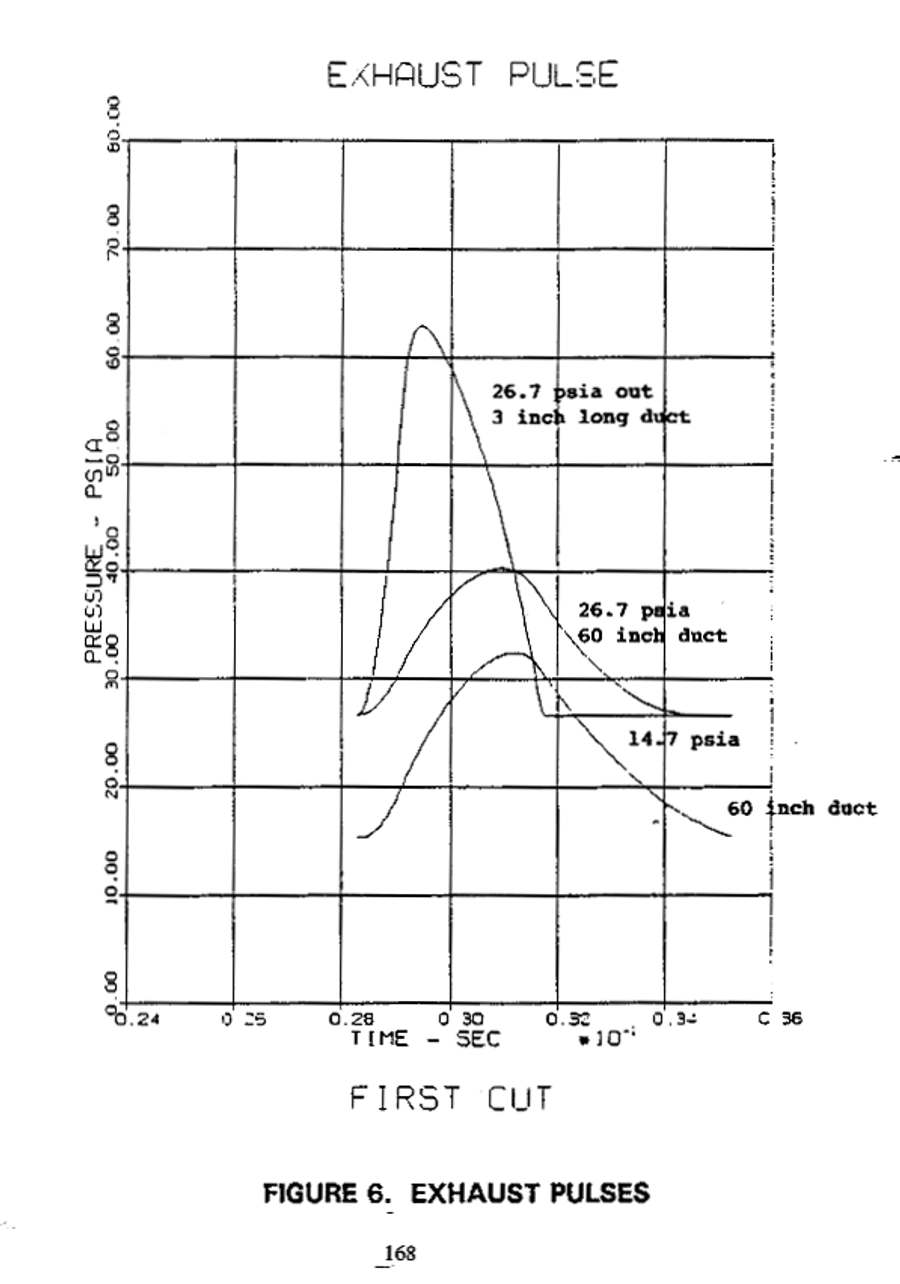
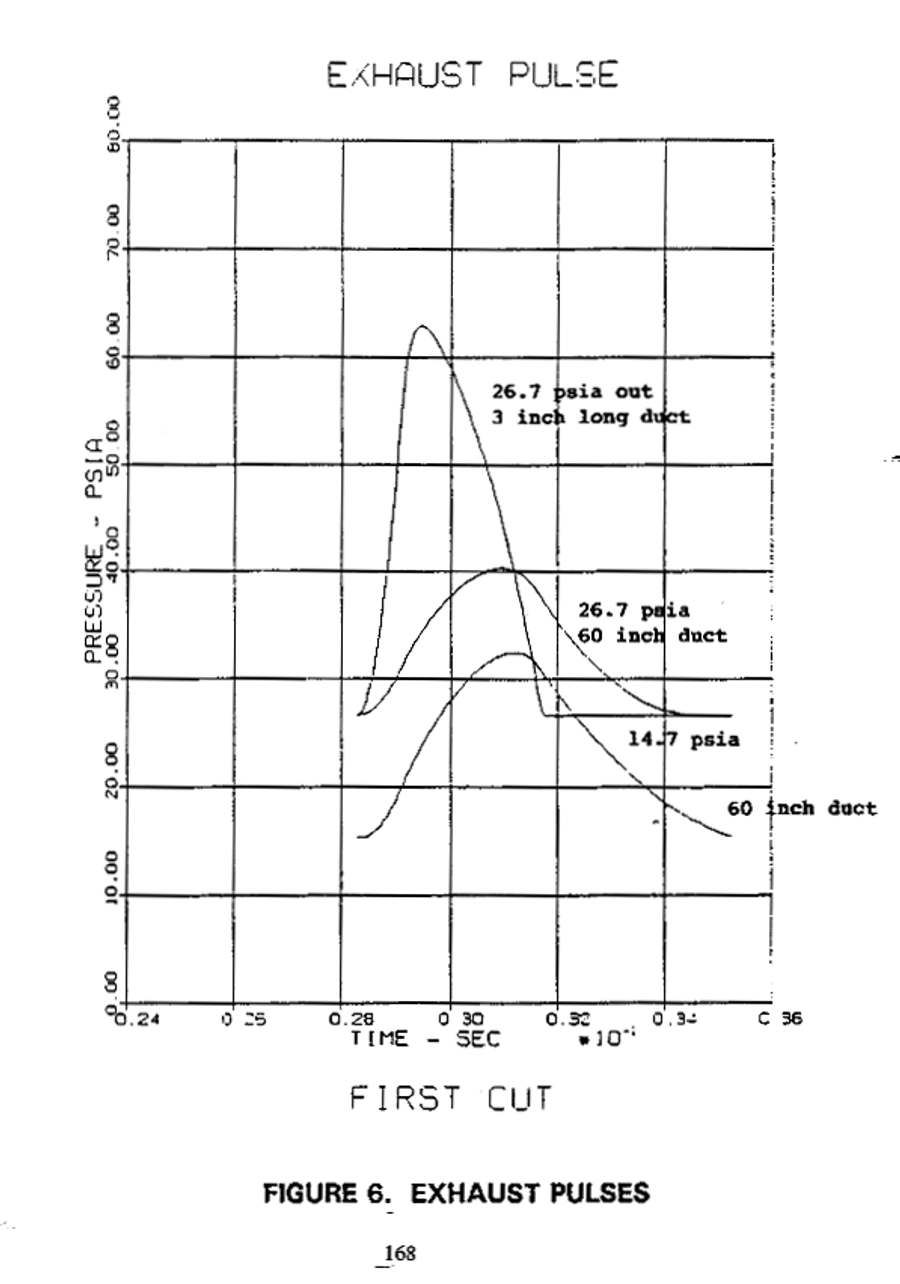
Here is another interesting chart.
Paul Lamar
--
The Rotary Engine NewsLetter. Powered by Linux.
ACRE NL web site.
http://www.rotaryeng.net
Youtube key word UTUBPLEASE
Copyright 1998-2008 All world wide rights reserved.