HI PAUL
I AM READING LOT OF STUFF TESTING REPORT ON INTAKE P PORT AND I
DO HAVE SOME QUESTION ABOUT HIGHT REVOLUTION CENTIFUGAL FORCE
APPLY TO APEX SEAL WHEN PASSING IN FRONT OF P PORT OPENING DOES
AFFECT THE LIFE OF APEX SEAL,
I INCLUDE SOME TESTING AND I WOULD LIKE YOUR COMMENTS
http://www.yawpower.com/CompanyInfo.html
Quote:
Anyone who tells you that they can do either of the above is
either lying, or delusional.
To take this concept to its most ridiculous extreme, imagine
that you ask your engine builder for a quote, and he holds up
two fingers and says "It will take a stack of bills about this
high..." Ones? Twenties? Euro's? This high... WTF?
As ridiculous as that seems, it is no different than randomly
grinding an intake runner, and then proclaiming "It flows more
now!"
In many cases, it is quite possible to enlarge a passage and
make it flow worse!
Let me give you a few examples.
1. Port matching the intermediate runners on a stock 12A intake
manifold. This absolutely ruins the flow. Additionally, the
velocity is reduced, and so both high, and low rpm power is
reduced.
2. Removing the injector boss in a 6-port intake manifold.
Reshaping, and reducing the height of this slightly will improve
the flow a considerable amount, but if you go too far, the flow
will decrease, and you will end up with a port that flows less
than when you started.
3. Cutting a large radius on the roof of an exhaust port. (12A,
or 13B) A generous radius is helpful if the exhaust port is
close to stock size, but if it has been widened considerably, a
large radius will absolutely kill the flow. This is one of the
most sensitive areas of any of the ports in a rotary engine, and
you can lose 10% to 15% flow in a hurry. The difference between
a .050" radius, and a .070" radius can easily cost you 25 cfm.
So how do I know this? I measured it! There is no other way that
I could know. I found out that these things didn't work because
I did what looked right, and then measured the results, only to
find that I could not have been more wrong.
The first time that I tested a stock 12A intake manifold with
port matched intermediate runners, I couldn't believe the
results. I actually spent the next half hour looking for leaks
in the flowbench! Over the years, I have checked for leaks a few
more times after seeing results that I couldn't believe. The
point is that you just can't guess where the air wants to go,
and just to make sure we are all on the same page, if you are
not measuring, you are guessing.
This is the nature of airflow, and this is the reason that
Boeing, NASA, F1 teams, and auto manufacturers still use a wind
tunnel to develop their designs. These companies have entire
teams of engineers with more airflow knowledge, and experience
than we can imagine, and they still go to the wind tunnel to
prove, test, and optimize their designs.
If that doesn't convince you that measuring is far superior to
guessing, nothing will change your mind, and you should not read
any further.
End of Paul Yaw quote.
Jean Prudhomme
Paul Yaw is not talking about intake P-ports.
Paul Yaw mostly deals with side ports as intake p-ports are outlawed in
most car racing (unfair to piston engines) except for one class and he
does not build the engines for that class.
Some of his statements are out and out wrong for certain RPM's.
It is not valid to make a statement about the flow until you specify
the RPM. Also the flow bench must be designed for a wide range of flows
as the velocity of the air flowing through the manifold changes with RPM.
Furthermore the flow bench does not reproduce or simulate the the
effect you get from a tuned intake manifold.
In other words you need a flow bench that excites the organ pipe
tuning effect in the intake manifold. This is done in the real engine
by pressure variations in the intake port.
http://www.rotaryeng.net/fund-of-intake.html
In other words a flow bench test is an over simplified situation compared
to what happens in a real engine.
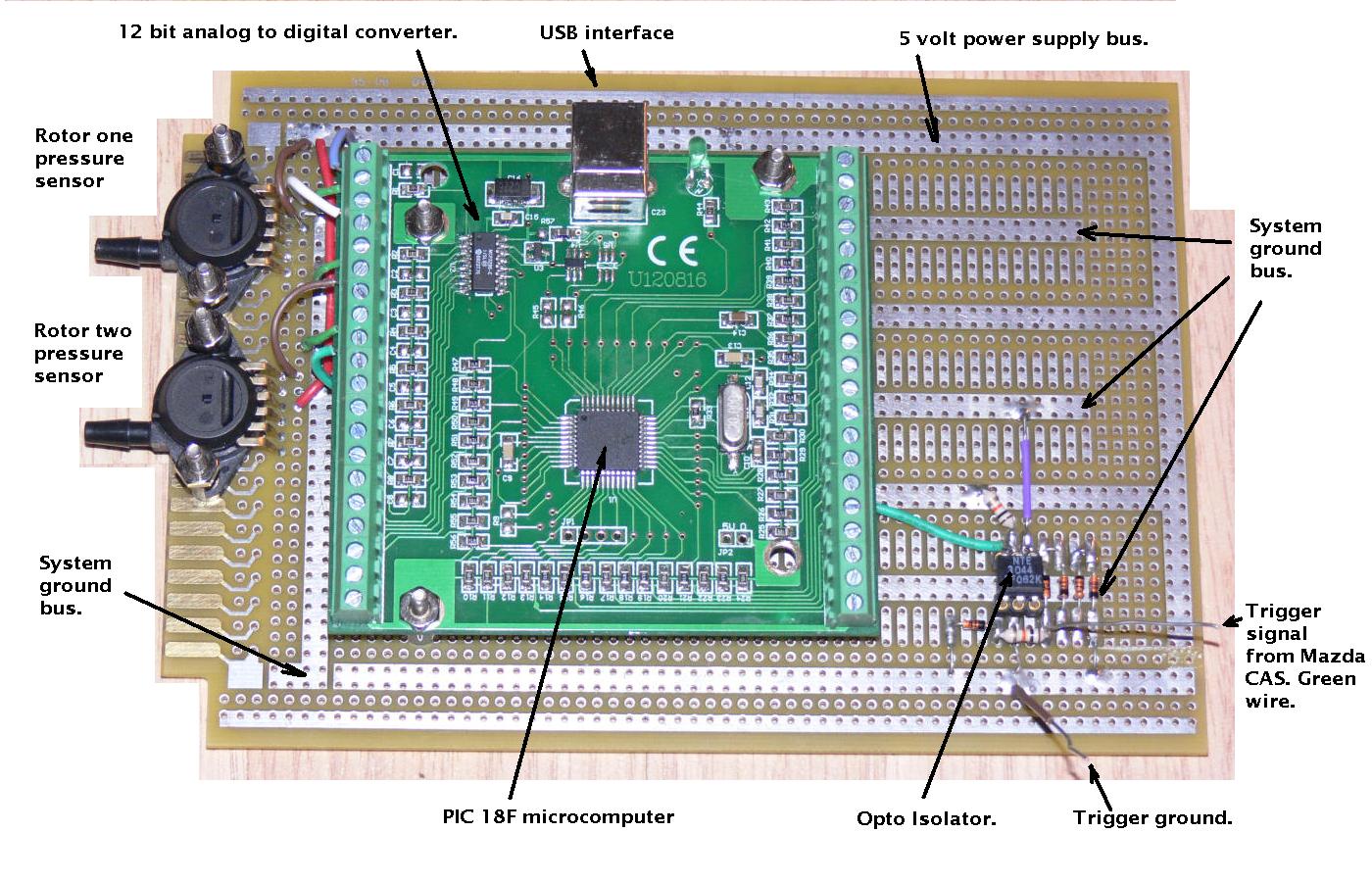
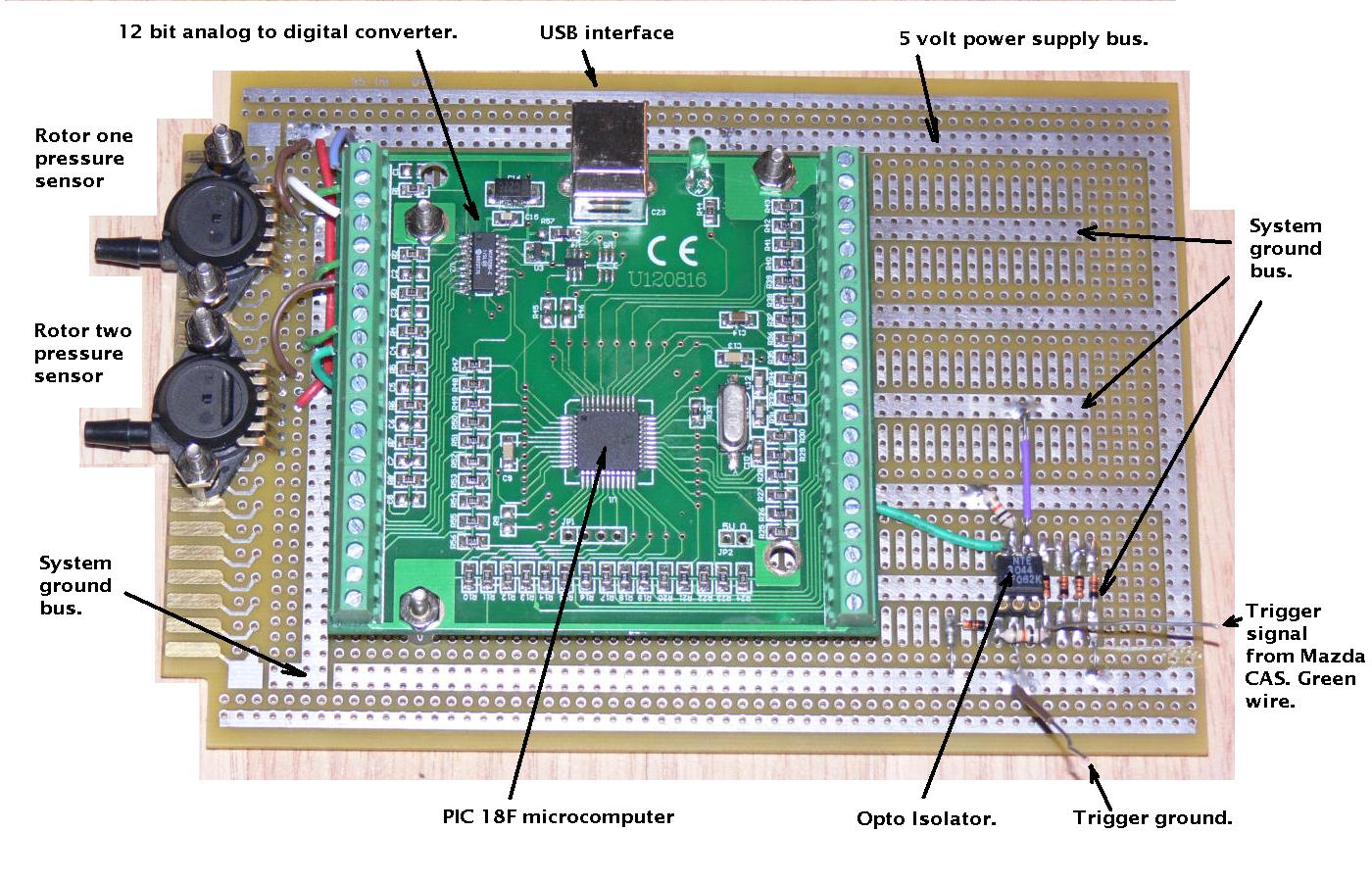
We measured the intake pressure over a wide range of engine RPM's.
Where there is a pressure difference you will always get airflow.
Mazda spent big bucks and far more than Paul Yaw can afford to develop
the intake p-port timing and manifolds diameter and length for the Le Mans
engine. We copied it.
As far as the intake p-port affecting the life of the apex seal that is
nonsense as the 13B has had and still has a P-port exhaust port since 1968.
The exhaust p-port is harder on the apex seal as that is when you have
1800 F exhaust gas flowing through it at supersonic velocities.
If you worried about it buy Iannetti ceramic apex seals.
Paul Lamar
--
The Rotary Engine NewsLetter. Powered by Linux.
ACRE NL web site.
http://www.rotaryeng.net
Youtube key word UTUBPLEASE
Copyright 1998-2009 All world wide rights reserved.