In case you are still interested, there are 125 teeth on my RX-8 13b
flywheel.
... <snip ...
Gene
So, there's only 125 teeth in the flywheel starter ring? That's real
good news for using the NXP KMI15/4 Rotational speed sensor.
Restating what I wrote Paul Lamar earlier:
I did a quick search and came up with a sensor that might work for
you:
NXP KMI15/4 Rotational speed sensor
http://www.nxp.com/acrobat_download/datasheets/KMI15_4_4.pdf
It puts out a digital signal that's already cleaned up. I'll try to
order some samples. (I'm sure others can find something better.)
This part DOES NOT require a magnet, just something ferrous. (Like a
single bolt at the perimeter.) About $4 each at Digikey.
It looks good for 25KHz tooth rate, WAY beyond your intended use.
That's almost fast enough to sense the flywheel starter teeth!
It could certainly count turbo blades.
Plugging in Gene's 125 flywheel teeth:
MATH:
10,000 RPM * 125 teeth/rev
--------------------------- = 20.8KHz (or 20,833 teeth/sec)
60 sec/min
CONCLUSION:
If someone wanted to use the flywheel as a Crank Angle Sensor (backup
or otherwise), this chip fills the bill. Even at 10K RPM, there's a
17% margin for the chip's operating limit.
The nice thing is that when a belt inevitably comes off, it won't take
out your CAS, since this is on the other end of the engine. In our
EFI application, the CAS is critical.
If the group is interested, I'll try to build a CAS demonstrator when
I finish the return-less EFI PWM fuel pump. (Still trying to select
fuel pressure sensors.)
- Vince Orton
So how are you going to know when it is top dead center?
Paul Lamar
ANSWER: With a 2nd sensor and a bolt on the flywheel.
(Sorry, I thought a 2nd sensor was obvious, since we can't use
"missing tooth" schemes on a flywheel starter ring.)
Sensor #1 = tooth (angle) counter
Sensor #2 = counter reset (your choice, but probably 30+ degrees BTDC)
For aircraft redundancy applications I would use (at least) two pairs
of sensors, each at opposing sides of the flywheel.
For a 125 tooth flywheel, each tooth is 2.88 degrees (360/125=2.88).
I still can't believe there're only 125 teeth on the flywheel.
Paul - for your "Sensors-On-A-Ring" setup, I'd instead recommend a
simple counter/comparator circuit with the above two sensor scheme.
Let the sensors run a counter, and have multiple DIP-switch-selected
"trigger points" or "trigger counts" that fire when matched. No
computer chip required, just simple logic gates. Of course, circuit
implementation variations abound (gray code, etc.)
So, Paul, do you like the NXP KMI15/4 chip or not? Any other
recommendations?
-Vince Orton
Fine for a computer.
For the 555 and the multi strike ignition we don't need
that many pulses. We do need ten sensors with one rotating magnet.
IMHO counting pulses in hardware gets too complicated and ten hall
effect sensors are cheap and good for backup.
I don't have the bench set up done yet. Maybe this week.
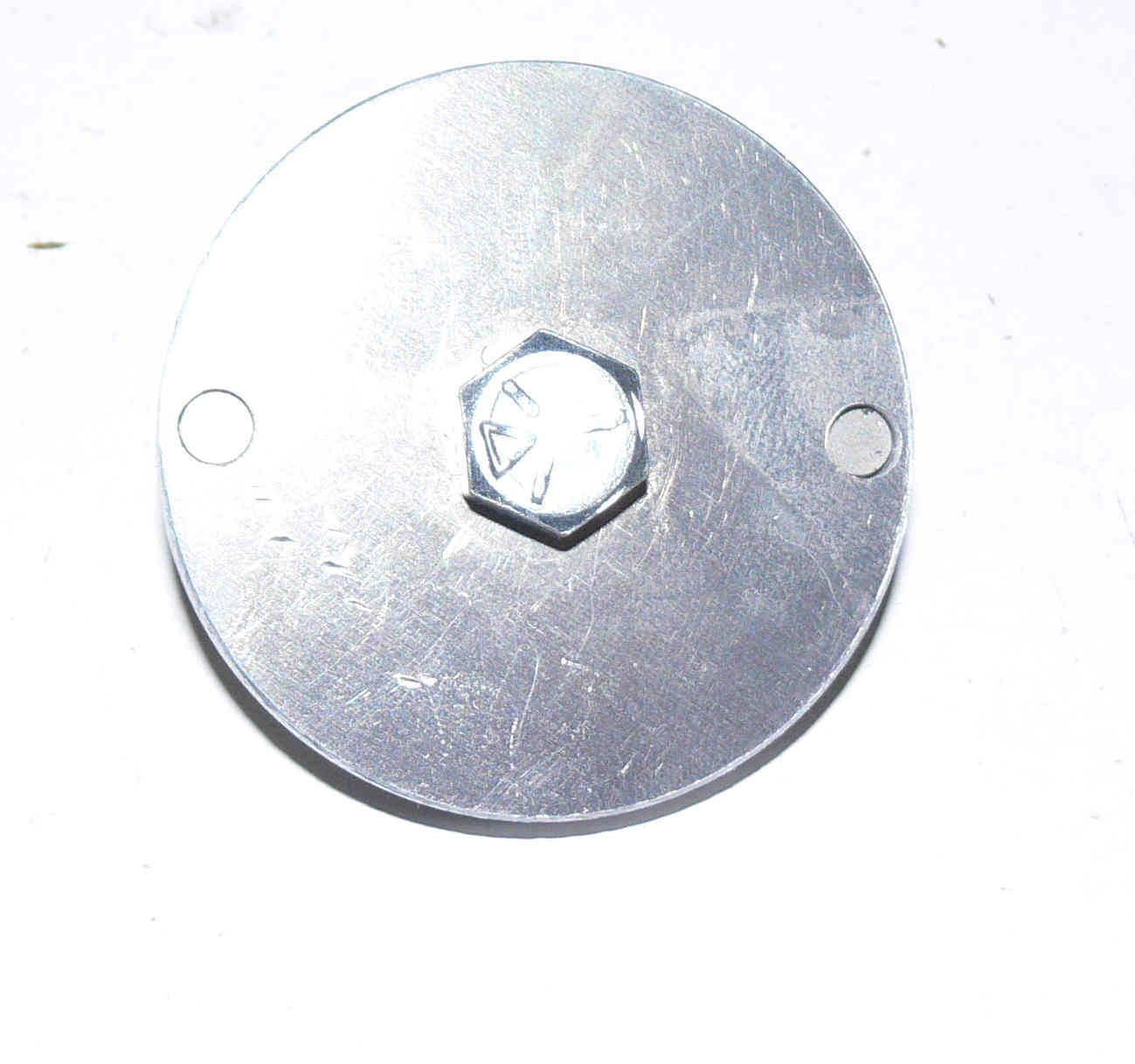
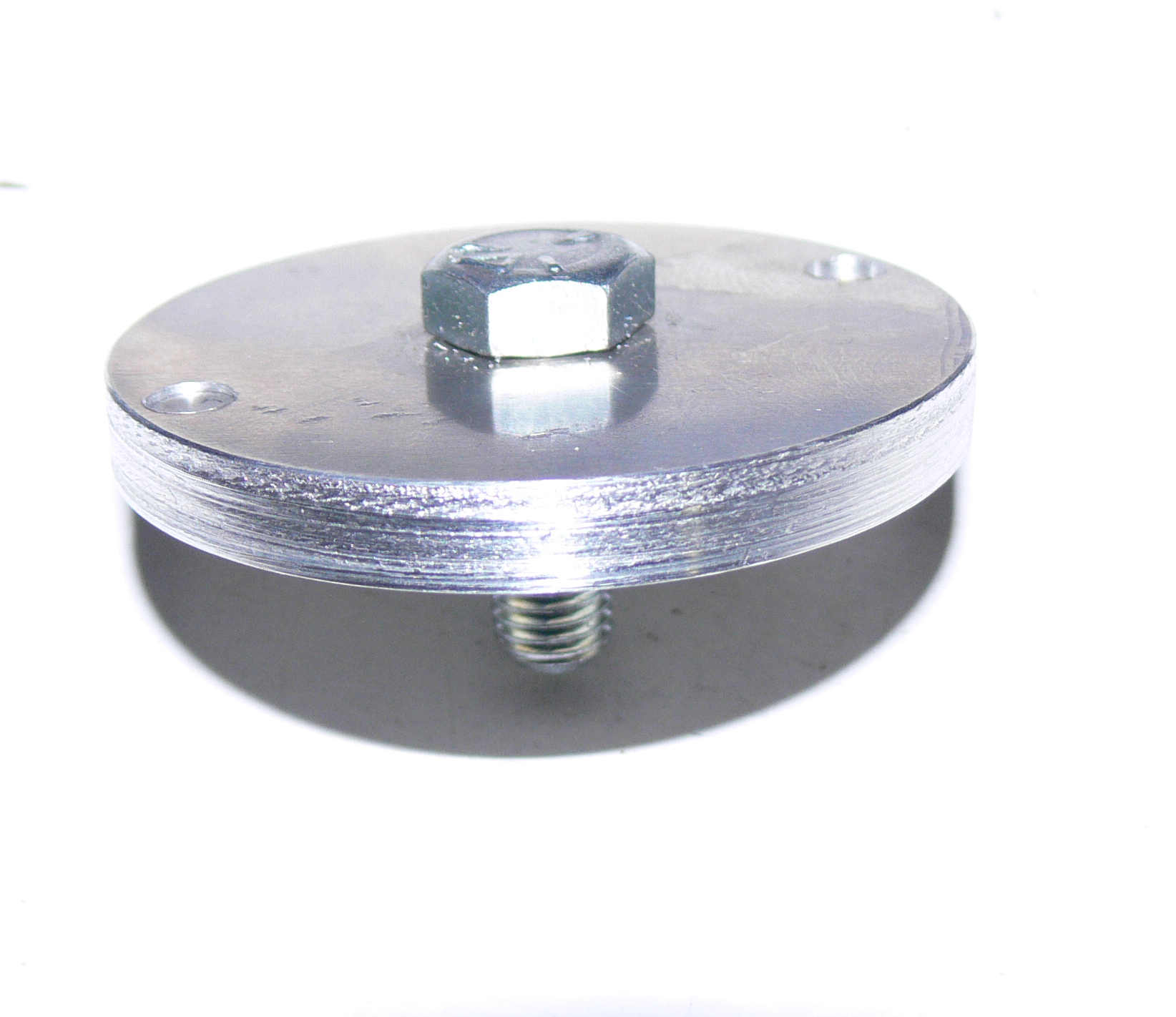
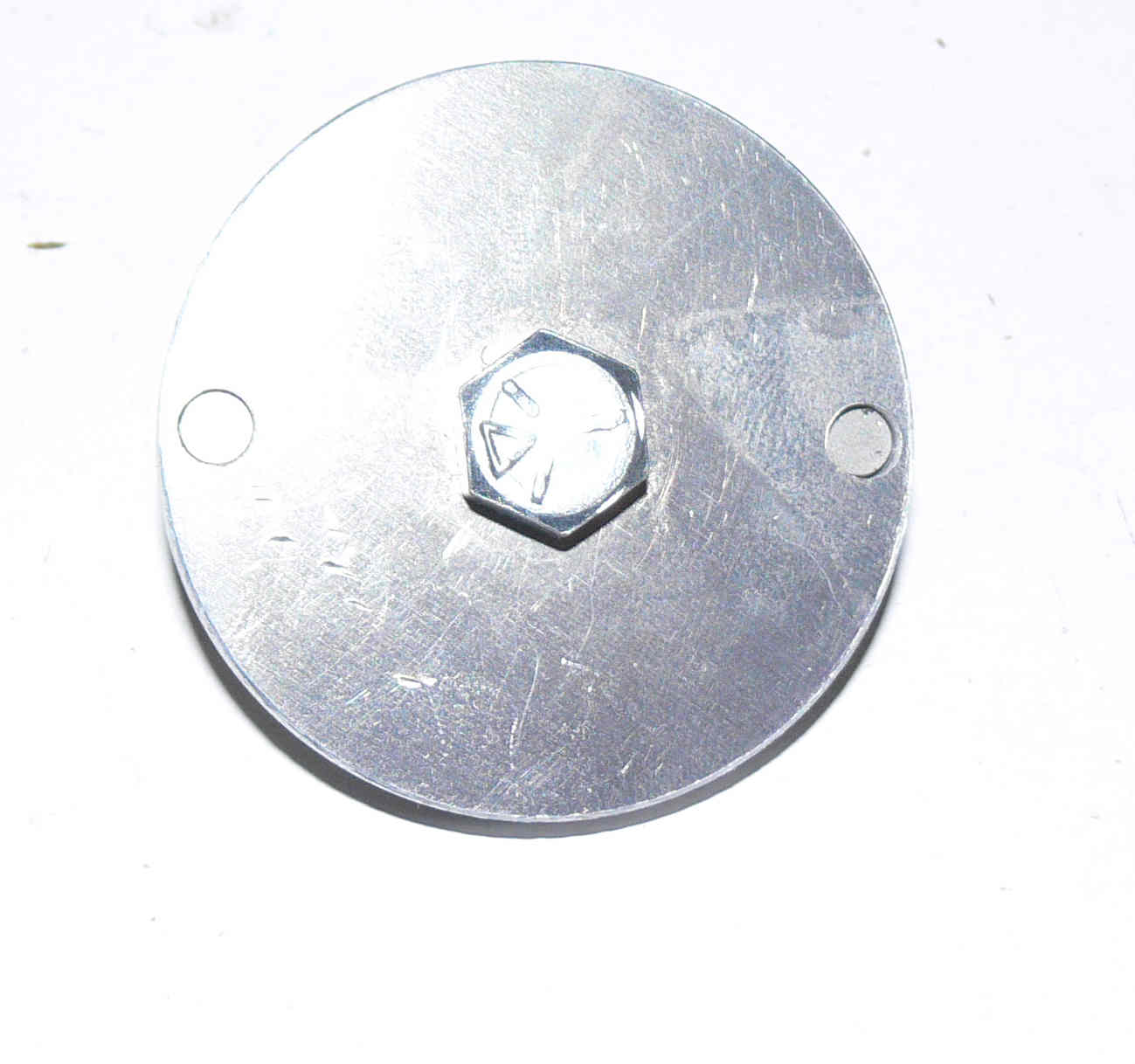
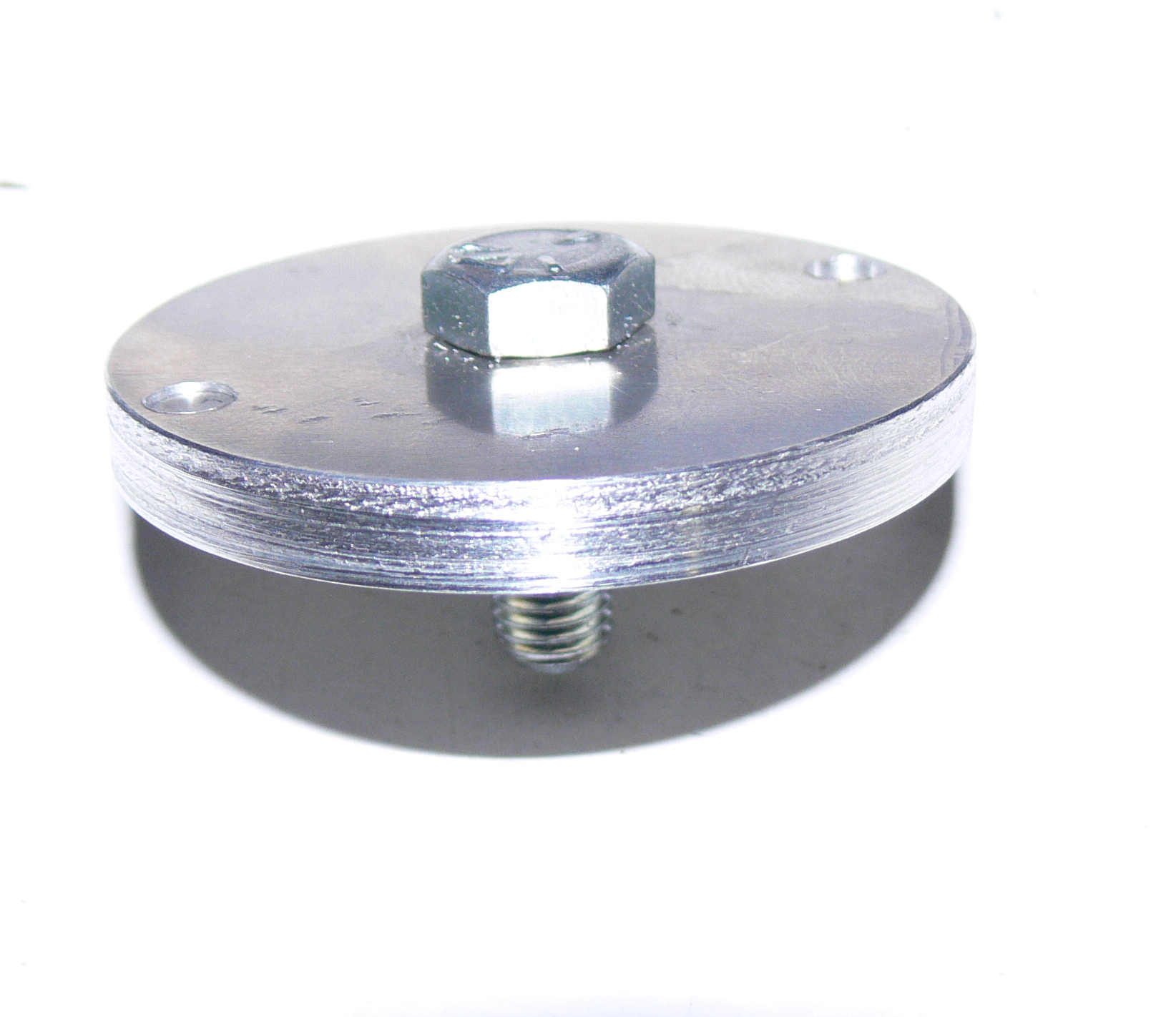
Here is the trigger wheel. The 3/16" OD $2 magnets are rare earth
from Radio Shack. The trigger wheel has two because I want
to be able to test at over 7000 RPM and my drill motor only
goes to 3700 RPM. I made this part with a hole saw and a drill
press.
Not quite as small as a dime Tu Rong :)
Paul Lamar
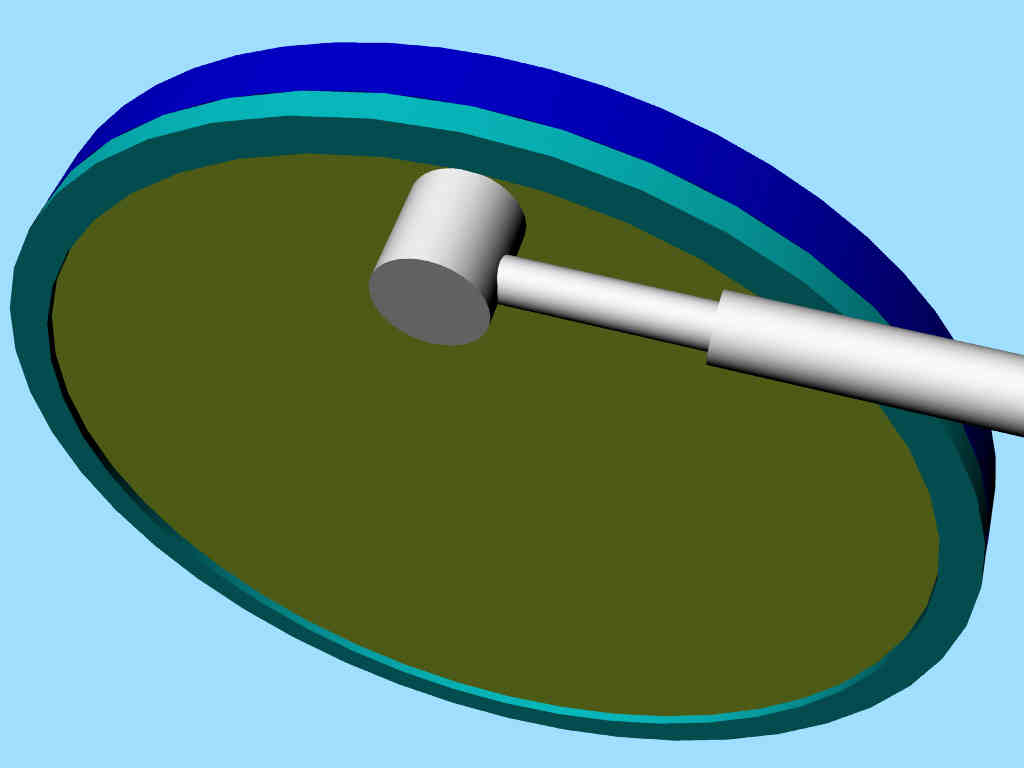
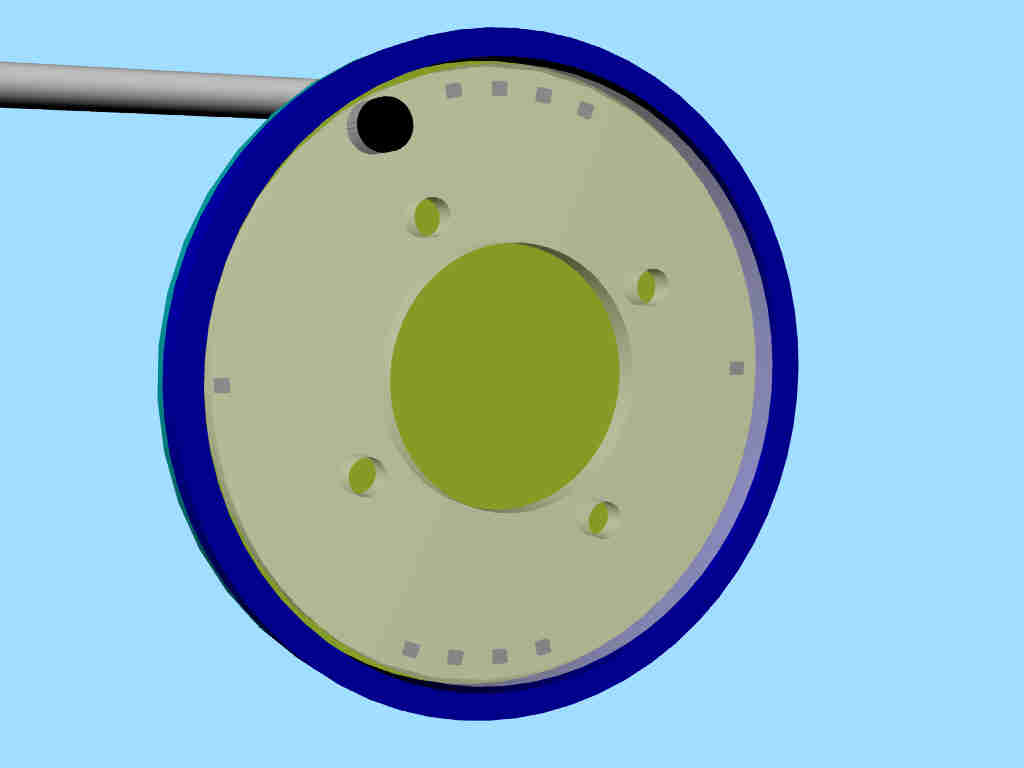
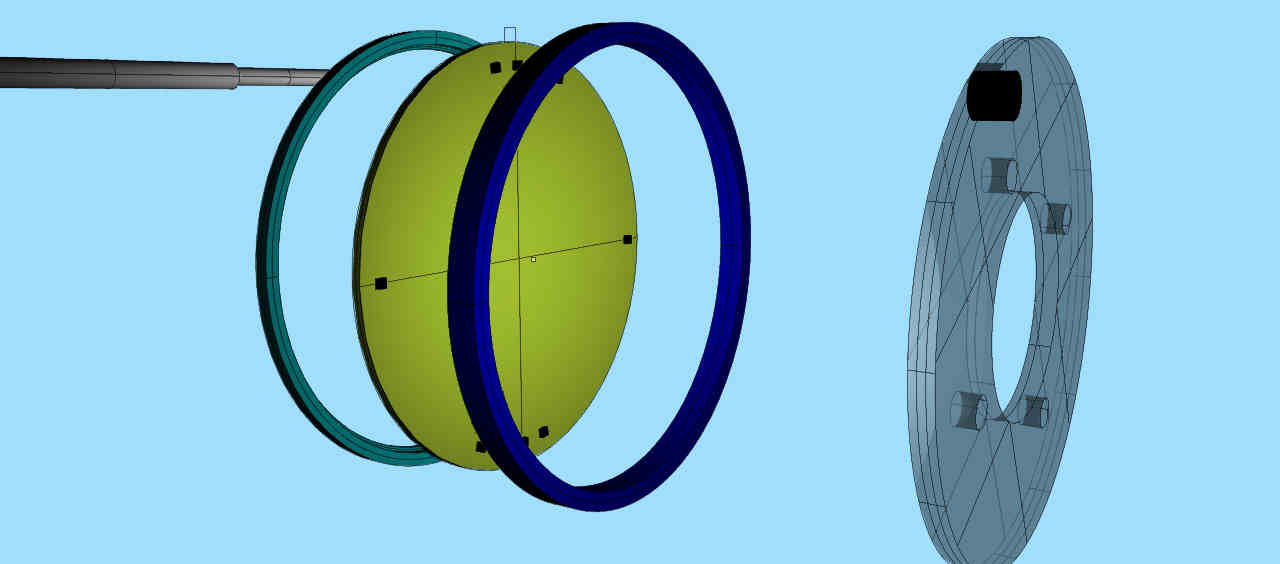
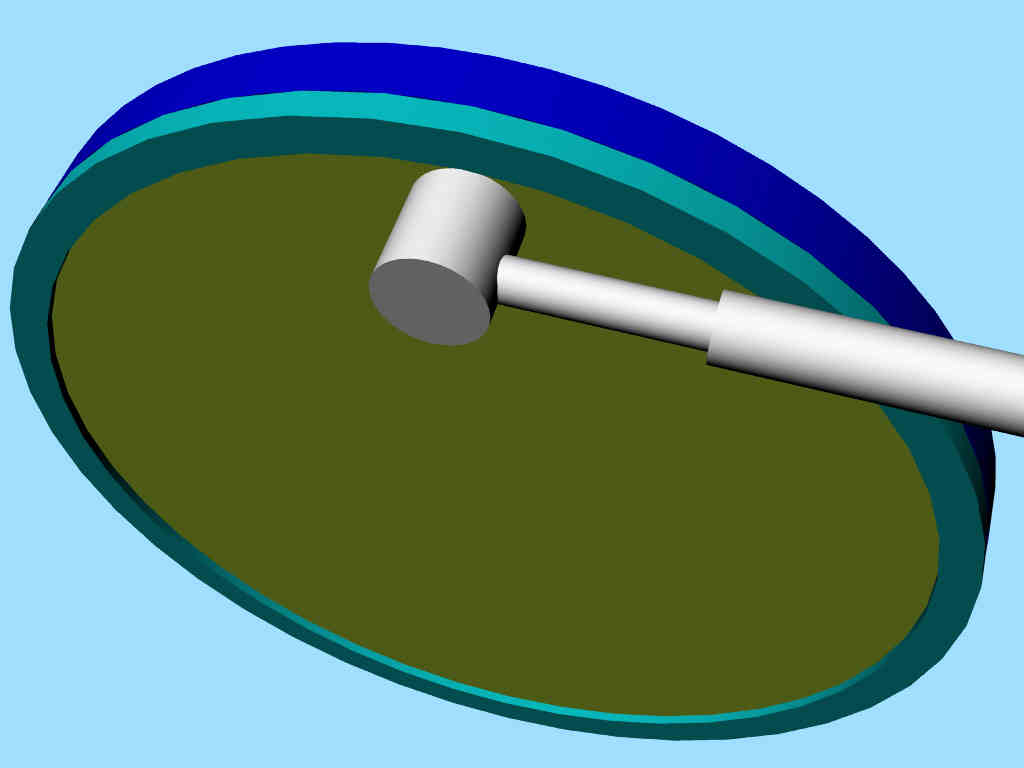
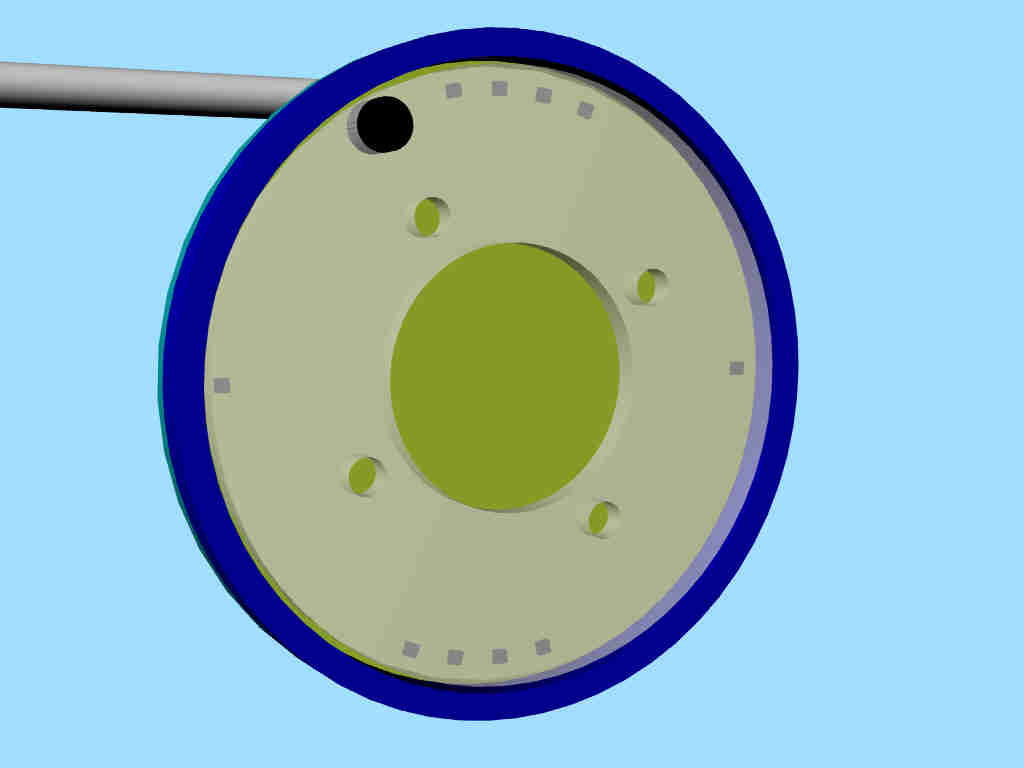
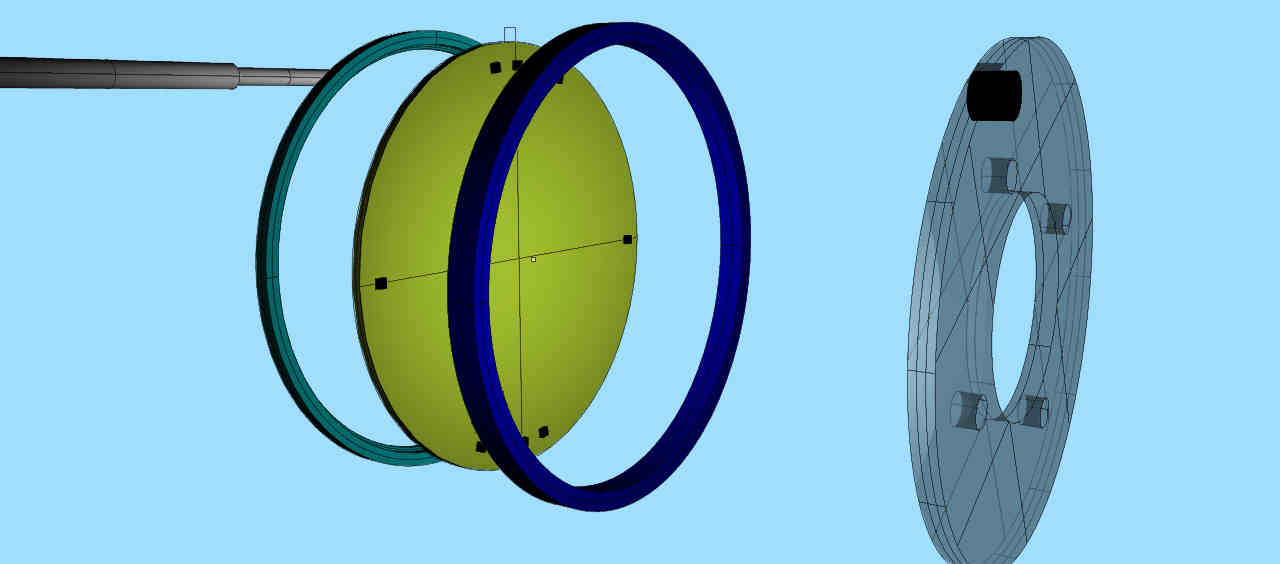
Here is what the 555 crank angle sensor system could look like.
The little black squares are the .1" by .1" Hall Effect sensors.
The 3/16" round black cylinder is the $2 magnet from Radio Shack.
The OD of this device is about the same as the
e-shaft pulley or about 4.5 inches. Not quite as small
as a dime but getting there. The magnet wheel is attached
to the e-shaft with spacers and long screws.
The Model T type ignition advance cable is shown. The whole
circuit board rotates up to 30 degrees for starting (0 degrees TDC)
and high altitude advance (30 degrees BTDC).
The circuit board and the magnet wheel are enclosed to prevent
a broken water pump belt from taking it out.
Paul Lamar
The Rotary Engine NewsLetter. Powered by Linux.
ACRE NL web site.
http://www.rotaryeng.net
Youtube key word UTUBPLEASE
Copyright 1998-2009 All world wide rights reserved.