Paul,
Attached is a picture of a crossflow radiator like I was considering.
Notice that the tanks are on the ends rather than on top/bottom
configuration. This one is for a Lincoln (model not specified). Here are
the specs per the Summit Racing web site. Something around this size
could
be made to fit in a fore/aft configuration inside my Lancair cowl. I was
thinking of converting two of these into a cross-counterflow design. Two
of
these would give 2.7 cu. in. of core per hp. The question is would two 7"
inlets (77 sq. in.) feed enough air to cool 375 hp?
Brand
Proliance Ready
Rad<
http://www.summitracing.com/search/Brand/Proliance-Ready-Rad/
Manufacturer's Part Number
431393
Part Type
Radiators <
http://www.summitracing.com/search/Part-Type/Radiators/
Product Line
Proliance Ready-Rad
Radiators<
http://www.summitracing.com/search/Brand/Proliance-Ready-Rad/Product-Line/Proliance-Ready-Rad-Radiators/?autoview=SKU
Summit Racing Part Number
*PLI-431393*
Radiator Style
Crossflow
Row Quantity
Single-row
Radiator Finish
Natural
Radiator Material
Aluminum/Plastic
Transmission Cooler
No
Inlet Location
Upper driver side
Inlet Size
1 1/2 in.
Outlet Location
Lower passenger side
Outlet Size
1 1/2 in.
Core Height (in)
18.375 in.
Core Thickness (in)
1.000 in.
Core Width (in)
27.500 in.
Fan Included
No
Quantity
Sold individually.
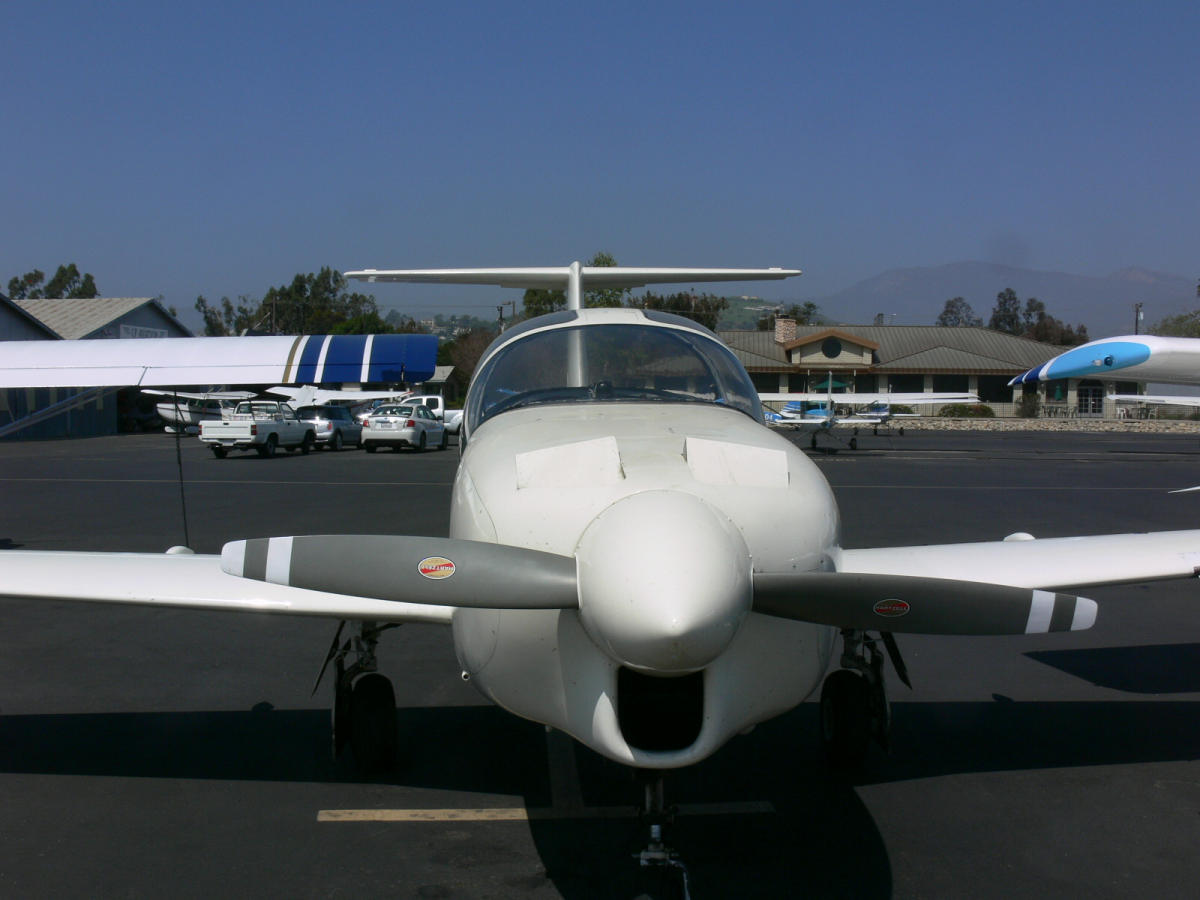
With that said, I saw a picture of a turbo-prop Columbia 400 on the EAA
website today that I really like the looks of the cowl, and very low drag.
I sure would like to be able to do something like that for my rotary ES.
The only thing I can think of is to put the radiator on the firewall and
use
a wedge shaped plenum. (You did a sketch like this for a Legacy a while
back.) Now back to reality...
Mark S.
Looks good. Use two back to back in a counter cross flow configuration
on the right side of the engine. I think a single 10 inch diameter inlet
would work OK if you have a nice set of cowl flaps you can open
to suck the air out the back side through the right side of the
cowl. Keep the oil cooler as is on the other side.
Pointy noses are over rated as far as drag is concerned :)
Paul Lamar
Paul,
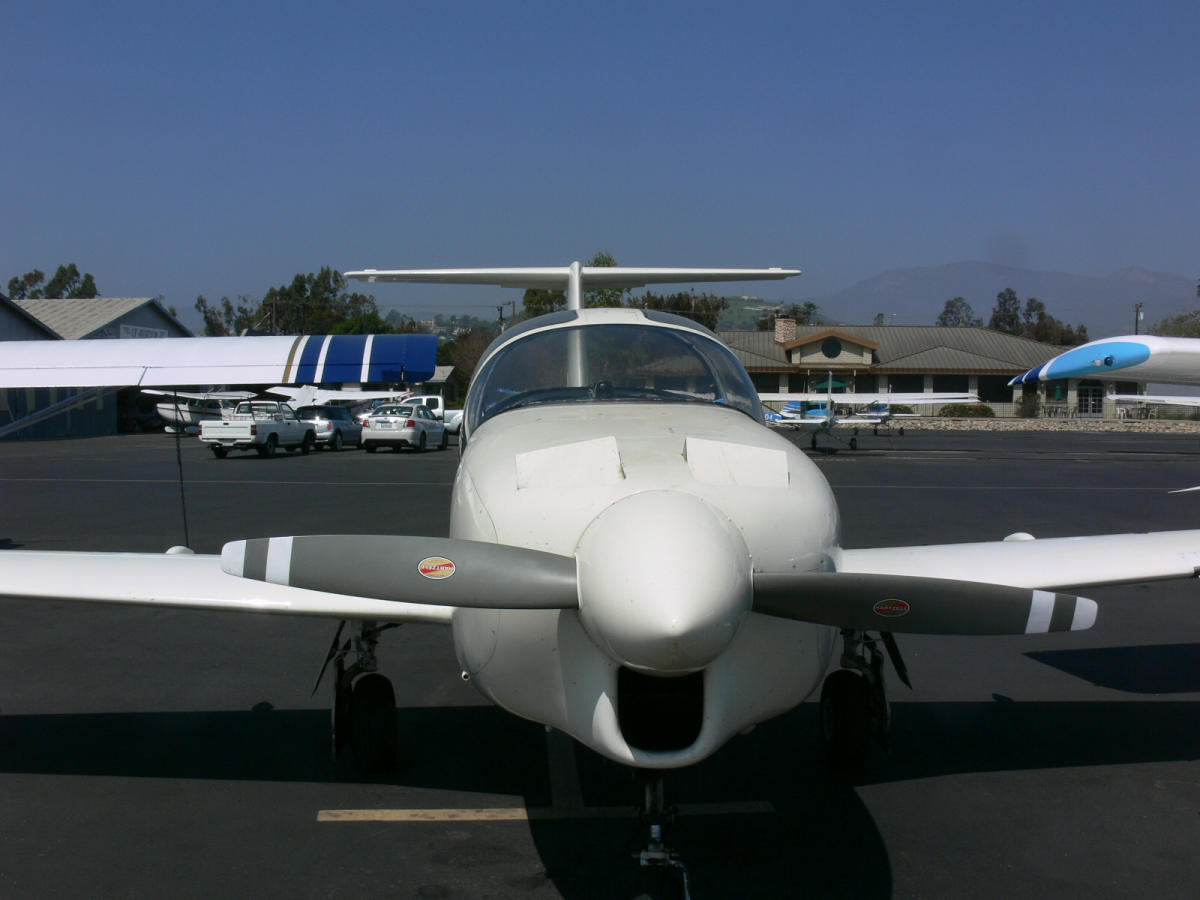
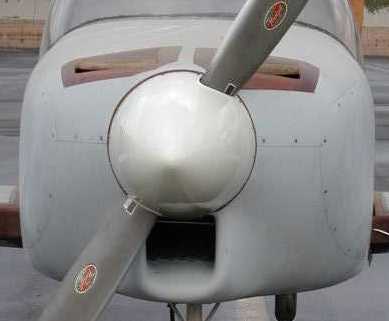
I have a spare cowl which has dual 7" inlets (original cowl has 5.5"
diameter inlets). I would like to plumb both sides to the water radiator
and then add a small chin scoop for the oil cooler. I calculate the area
for the two 7" inlets at 77 sq. in. Assuming adequate exit area, do you
think that 77 sq in would provide enough cfm to cool 350 hp? I was told
that I should have between 20% and 30% inlet area to radiator face area.
If
so, then 77 sq in. is not even close.
Mark S.
Kind of on the shy side. Also there will be some losses plumbing
the right side over to the left.
Here is a suggestion. Use the right intake and the lower center for the
rad and the left intake for the oil.
Paul Lamar
Paul,
Yes, that would probably work out better, especially for routing the
plenum. And it could be sized as necessary.
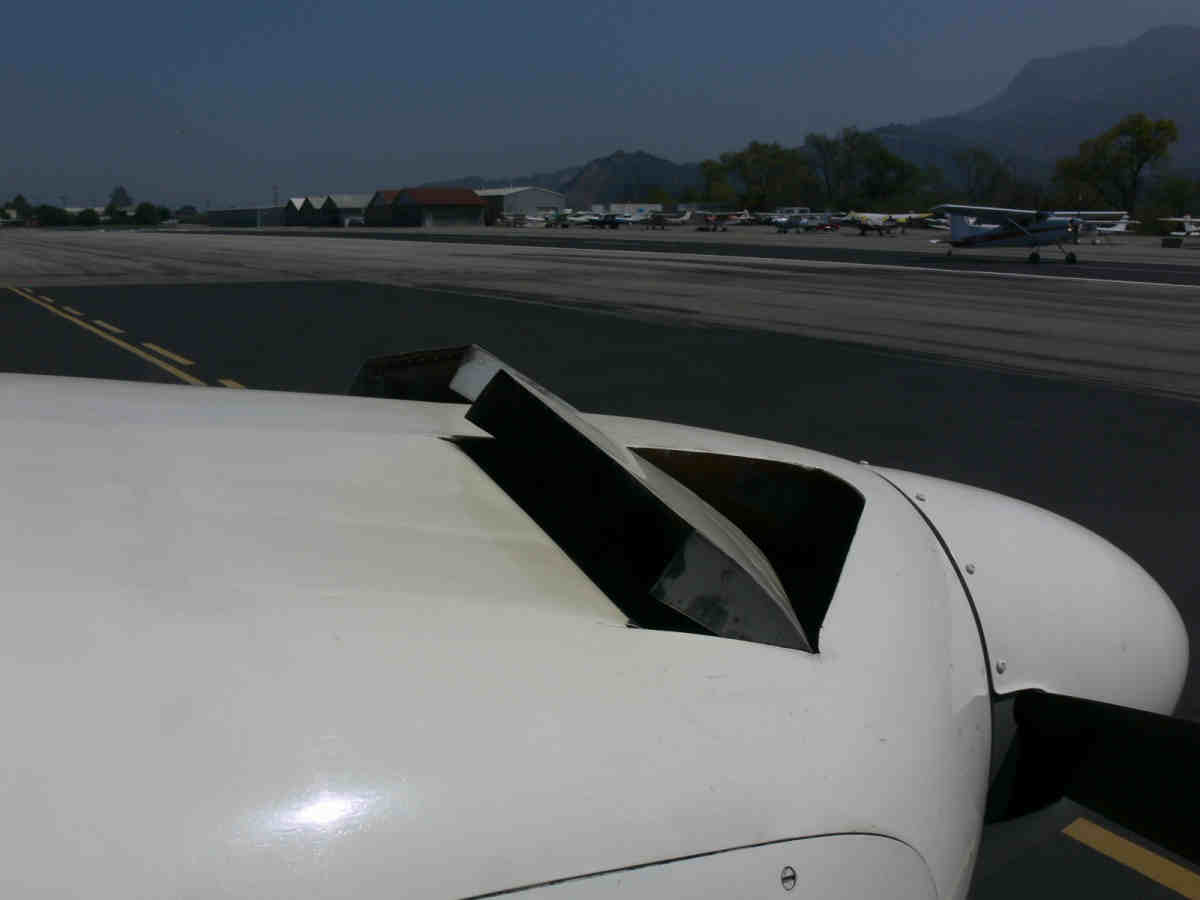
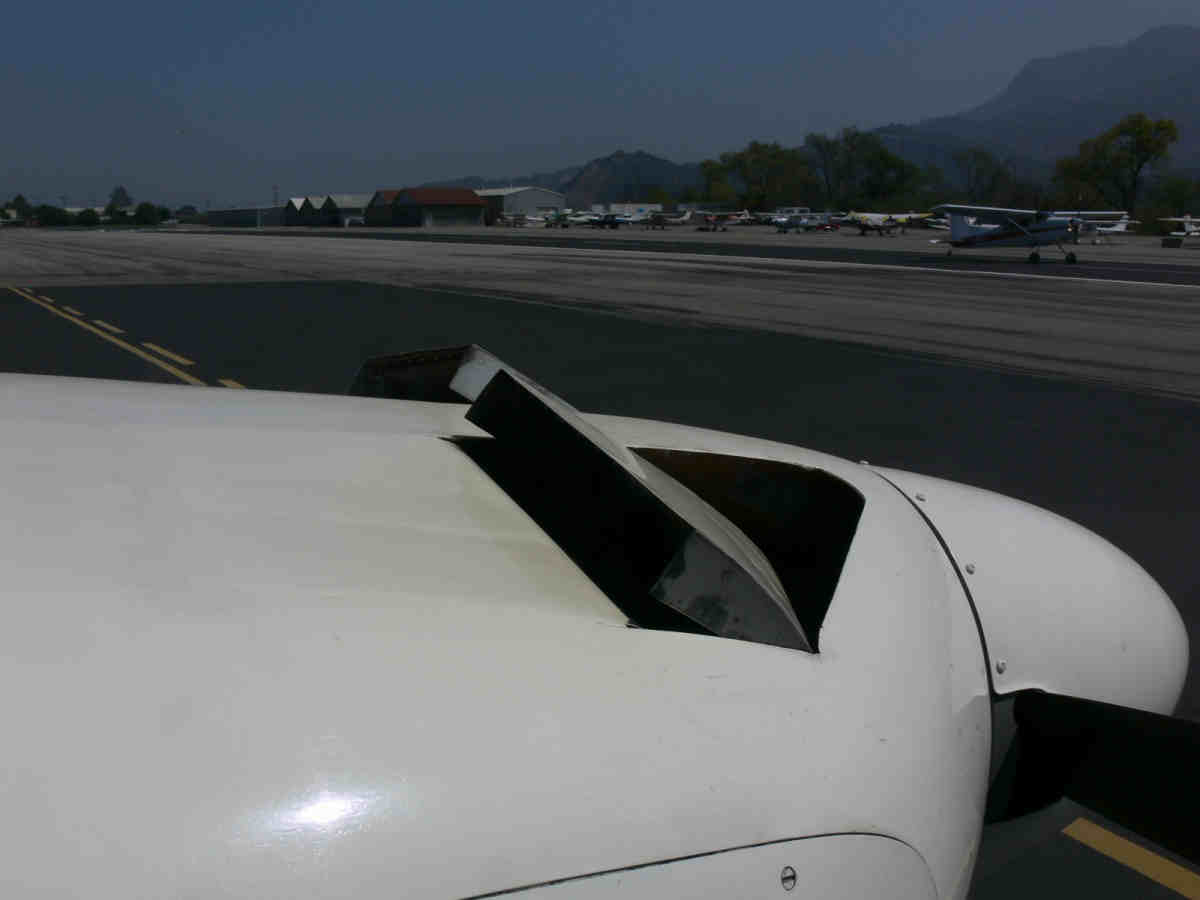
Let me ask this. I've seen some a/c with a cowl flap on top of the cowl,
just aft of the spinner. I understand this is a low pressure area,
especially during climb mode. I have considered trying that since my water
radiator is directly below this area. Once up to altitude and into cool
air, it could be closed. Any thoughts?
Mark S.
That works for an updraft air cooled engine
but hard to take advantage of with liquid cooling
as a lot of stuff like the PSRU gets in the way of the exit
flow. The internal geometry is just not favorable.
However it would probably help your current
configuration as it would lower the entire air pressure
and temperature in the cowl.
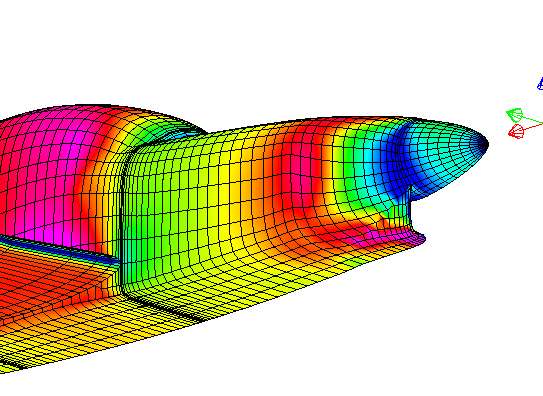
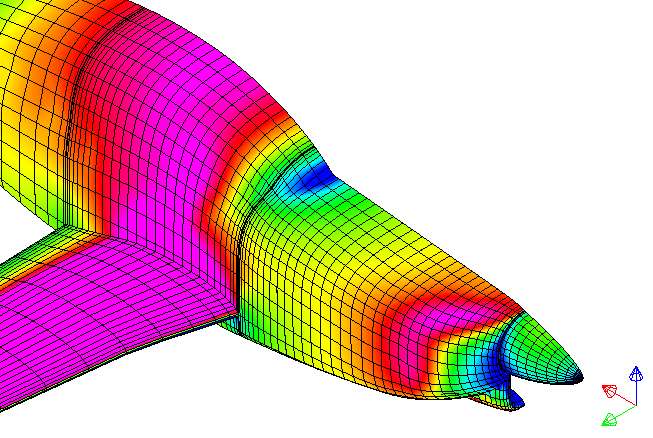
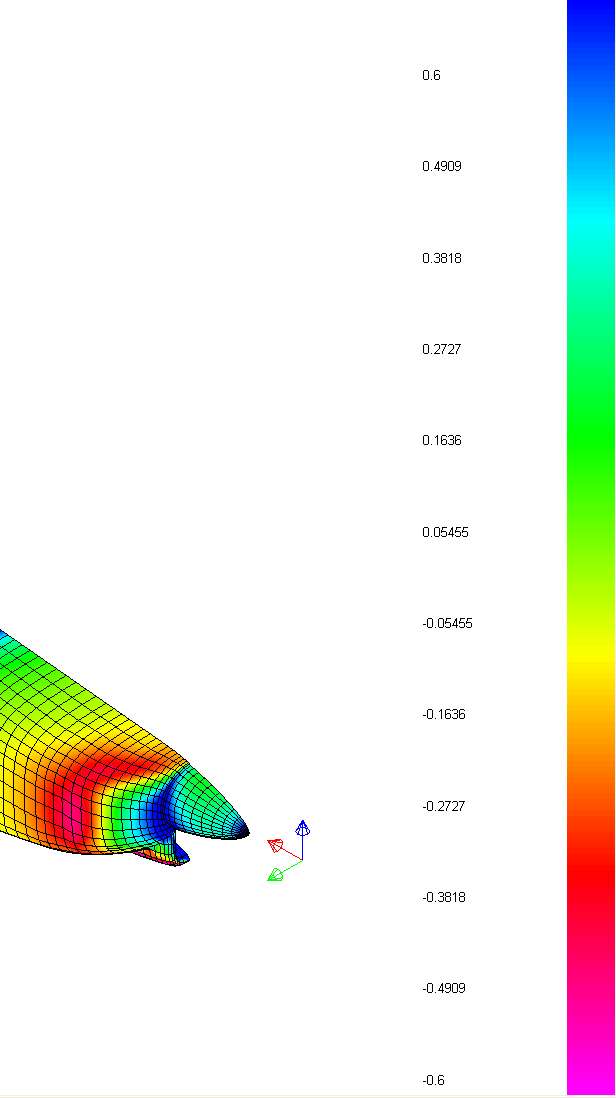
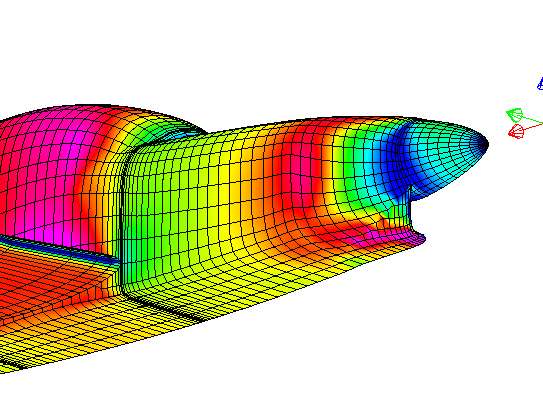
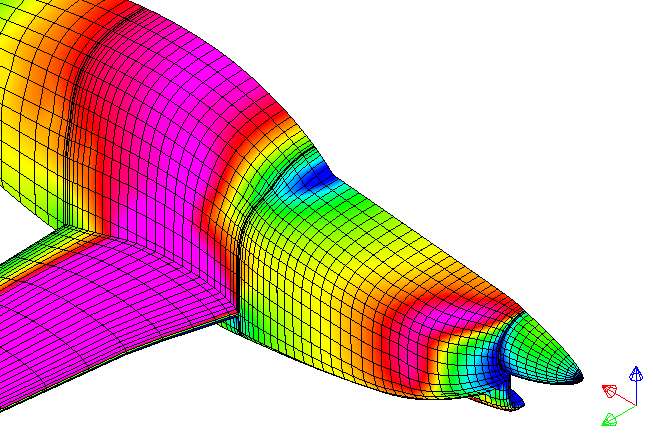
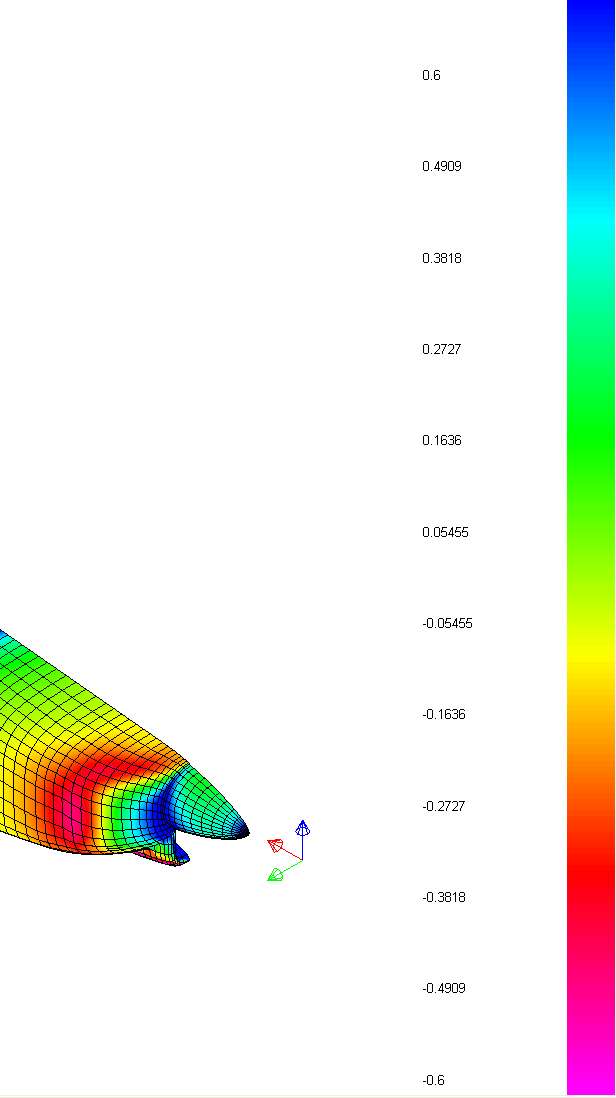
Here are some CFD's from Peter Garrison. The blue is dynamic
pressure. At the aft end side of the cowl right in front
of the wing is an ideal place for a cowl air outlet.
A large flap there on the side of the cowl would work
wonders for cooling.
IMHO right now your rad is being affected by the
high heat under the cowl as well as some radiation
from the exhaust. Increaseing the air flow through
the cowl will reduce the heat the rad is subjected to
of course.
It is always better however to duct cool air directly
to the rad and shield it from internal cowl temperatures.
A one degree F reduction in temperature the rad is subjected
to is a one percent improvement in cooling. The reason for
this is the temperature difference between the cooling air
and the rad being only 100 F with 200F water temperature. The
water temperature cannot get much higher than this as it would
boil. In an air cooled engine with the heads running at 400 F
the rule of thumb is more like one degree cooling air
increase is worth only .3 percent reduction in cooling.
You need to get some actual static pressure numbers on
various areas of the cowl using a water manometer. It is possible to
state a particular area is high or low static pressure but one needs
to know how much relative to dynamic pressure.
Send me the dimensions on the width and height
of the fire wall and the length of the cowl from firewall to prop flange.
I'll do some 3D's suggestions of the internal cooling ducting
Also consider using a 16 inch diameter spinner as that results in more
cowl volume for internal cooling ducting.
BTW IMHO with all due respect Peter Garrison missed a point about
air cooled aircraft engines in that most are designed for down draft
cooling with the hot exhaust part on the bottom and the cool part
on the top. Franklin discovered, back in the early
1930's, that it is best to have cool air go over the
cool part of the engine first and then the hot part.
Most downdraft air cooled engines use this configuration.
This is the same rational used on the counter cross flow
heat exchanger. It maximizes the average temperature difference
over the parts to be cooled. The rate of heat transfer is
directly related to the temperature difference.
Paul Lamar
--
The Rotary Engine NewsLetter. Powered by Linux.
ACRE NL web site.
http://www.rotaryeng.net
Youtube key word UTUBPLEASE
Copyright 1998-2009 All world wide rights reserved.