snips...
A little turbine theory.
When the blades are stationary and the gas velocity flowing through
the blades is high torque is a max but HP is zero. When the blades are
going as fast as the gas the torque is also zero as well as the HP.
Right around 50% blade velocity to gas velocity HP is a max
and torque is half of what it is a zero blade velocity.
I had to explain this to all the phd's in charge of Formula One
R&D at the World MotorSports symposium :)
It is
in my video.
http://www.rotaryeng.net/Oxford-640-4802.wmv
Shaft seals made from Teflon would work. SS hubs will transfer
less heat to the shaft. Also the blades are self cooling as they
are hollow and pump cooling air through them. A feature of all
early GE aircraft turbo chargers starting back in WW I.
Paul Lamar
Paul,
Thank you for the clarification... its seems obvious now that you have explained it.
Some rough calculations for 350mph blade velocity at 7500rpm put
the direct drive turbine diameter at about 1.35 ft... not too
unreasonable. do you see a problem with incorporating a second
stage turbine to recoup the an additional 25% from the exhaust flow?
Does anyone produce 'off the shelf' axial turbines that are
suitable for this design?
I am trying to envision the concept of air flowing threw the
vanes of the turbine. I can see how air would be forced
threw by way of centrifugal force but how does this cooling
air exit the system??
The only way I can see this at the moment is if exhaust
ported out to the atmosphere immediately after hitting
the turbine. Would you happen to have any
detailed pictures of this type of system... perhaps one
of the earlier GE systems you made mention of?
Thanks much
No and in fact that is a good idea. That is a relatively cheap
and technical risk free way of doing it as turbine technology is off the shelf
from Barber Nichols.
http://www.barber-nichols.com/
Here are some pictures of the R3350TC housings.
Paul Lamar
Again thank you for the info and the pictures. I was up into
the wee hours last night scething, drawing and coming up with
new questions. -In short, desktop experimenting.
I mention off the shelf turbines because hobbyist need to remain
as practical as possible. Would you happen to know of a
Barber-Nichols turbine model/part number suitable for what we
are talking about? Also would you have a ballpark idea of their
cost?
Also... something else that I can not pin down in my head...
Considering that it is being propelled by the motor, does a the
compounded turbine develop PEAK HP at 50% flow rate ? I guess
this question comes to mind because in my visualizationson of
the system, I see the the exhaust flow 'chasingin a moving
target' thus closing/widing the speed gap between the exhaust
flow and the turbine. -or- does the fact that the exhaust flow
is perpendicular to the rotation of the turbine make this a
non-issue.............. I am starting to think that RPM should
be determined by the flow to the turbine with the engine
throttle being second. Are my assumptions on on the right track
or am I missing something?
My mind is spinning faster then the turbine.
Rick.
Other than a R3350 turbine I know of no other parts numbers but
I am not into turbo jet engines. I'll bet there are a bunch
of used turbo jet turbines out there that will work.
Here are the pictures Rick is referring to.
It develops PEAK HP at 50% no load peak FREE to turn turbine RPM.
Not shown in the pictures.
Lets say the exhaust flow is 800 MPH. If the blades are going
800 MPH on a free turbine then there is no load on the turbine.
In the pictures the turbine is fixed to the e-shaft and cannot exceed
the RPM of the engine therefore the blade diameter is sized to go half
exhaust gas velocity.
At 50% exhaust flow rate the turbine HP would be way down.
The exhaust flow to the turbine will be max at wide open throttle
at the engine red line. In the case of a P-port rotary that
will be around 10,000 engine and turbine RPM with this configuration.
At wide open throttle at less than red line the flow to the turbine
will be a max FOR THAT ENGINE and TURBINE RPM!
This remains the easiest and lowest cost way to build a turbo compound
rotary to demonstrate the fuel burn advantages and HP increase. No high
reduction ratio gear box required. All that is required is a little
Inconel or SS sheet metal fabrication and an off the shelf turbine.
Paul Lamar
Paul,
I absolutely agree that this is the most straight forward method to Turbo compound.
After countless hours of trying to identify the variables (turbine dia,
flow rate, RPM, ducting.. etc) it would appear to me that what is needed
is a variable pitch turbine.
Now the question is this... is it easier to vary the pitch of the turbine
or is it better to vary the flow rate? I"m thinking that varying the
exhaust flow rate would present efficiency losses and some exhaust
back pressure. What are your thoughts on a variable pitch turbine?
Does one even exist?
Also, what are your thoughts with regards to controlling engine
RPM by variing the exaust flow to the turbine.?
Rick.
Borg Warner makes a turbo charger Porsche uses with a variable
area nozzle. In effect almost the same thing as variable pitch turbine.
Paul Lamar
Paul,
I looked at the Borg Warner VNT setup... It appears to me that rapid
turbo spool up at any RPM is the goal and not exhaust gas HP recapture
efficiency.. Doesn't this method come at the expense of pumping
losses/increased exhaust back pressure?
Rick
Yes but it is not as bad as one would think. It is common practice
to built turbo chargers with different A/R ratios which in effect
vary the nozzle area.
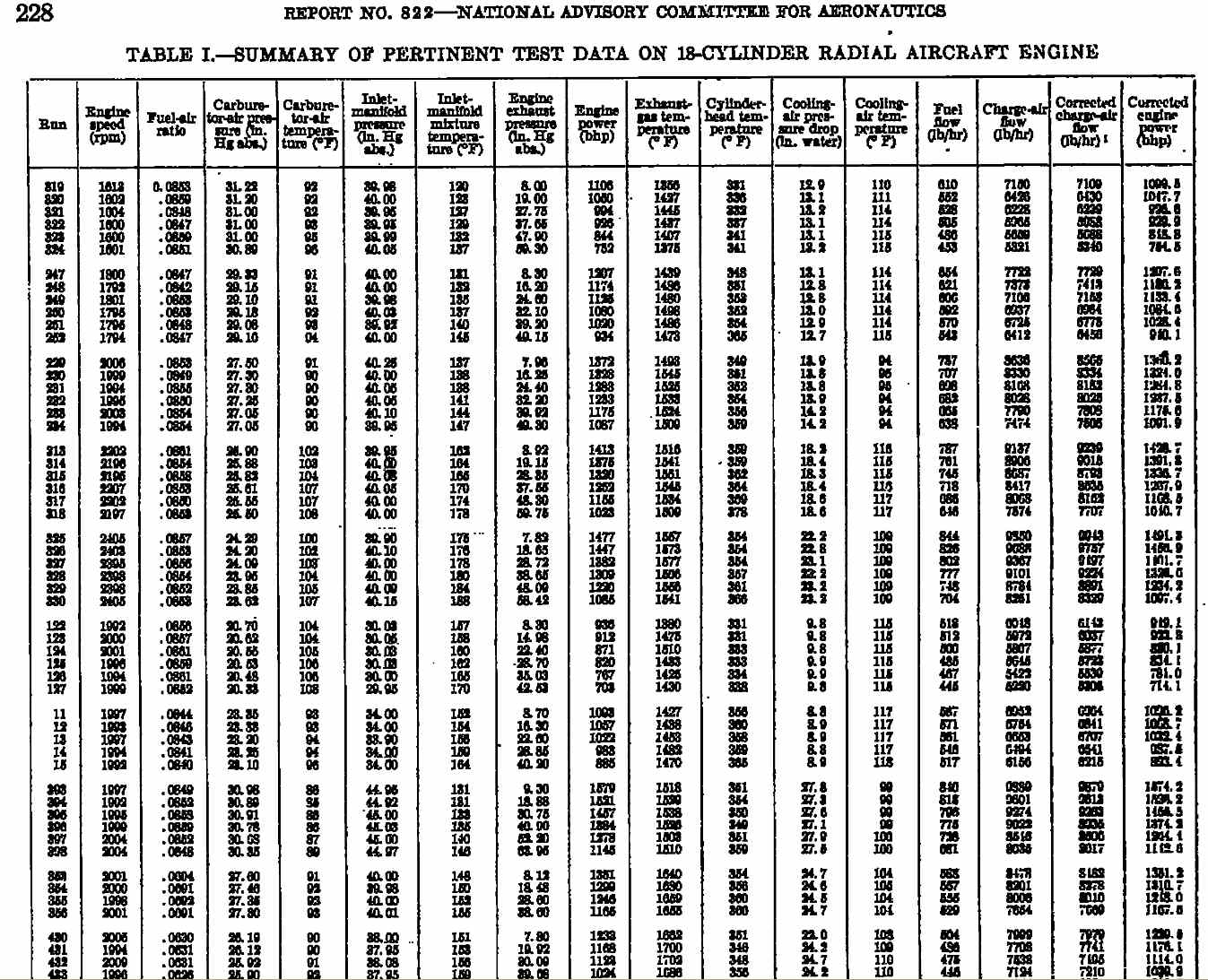
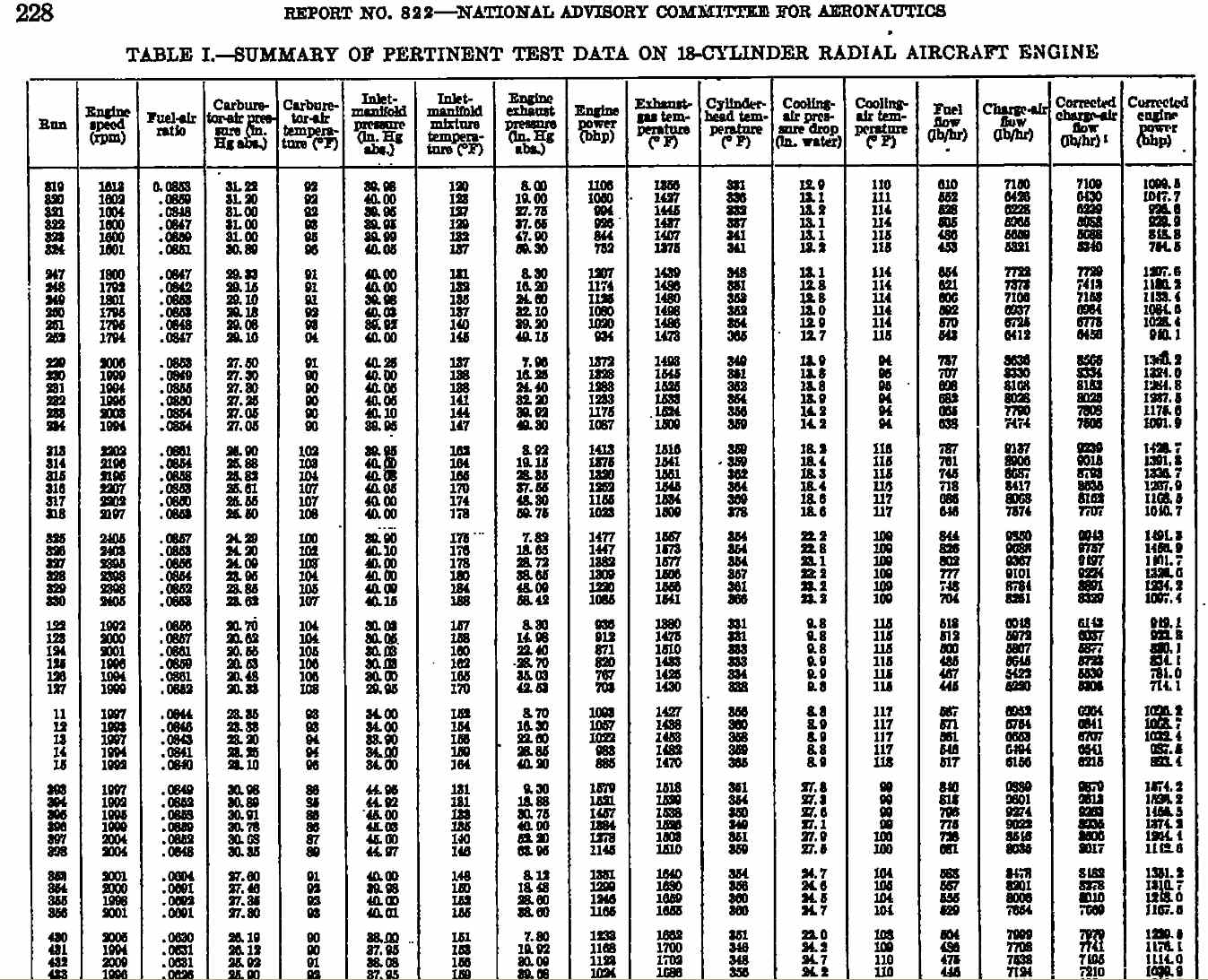
Here is some early NACA turbo compound table data on the subject.
The quality of this pdf is disgusting. I don't understand
why we can't fire some of these people? :)
Back in P51 and Spitfire days they found that necking down the exhaust
stack area and pointing them aft resulted in a bit of thrust that was worth
several hundred HP at 400 MPH despite the higher back pressure.
My friend Klaus uses the same idea on his O-200 powered Variez.
He is anal about small improvements :)
Paul Lamar
--
The Rotary Engine NewsLetter. Powered by Linux.
ACRE NL web site.
http://www.rotaryeng.net
Youtube key word UTUBPLEASE
Copyright 1998-2009 All world wide rights reserved.