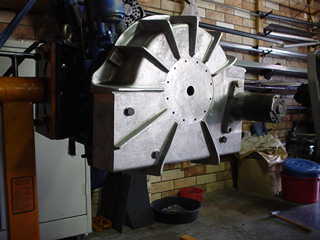
If you think there is 10 lbs to save in Tracy's PSRU, that's huge
considering CG and all...If someone is willing to get the necessary
components that can be whittled and you direct in the ares to be
machined, I would be willing to do this for a very small sum to
cover the tooling and possibly the fixture material, about $200. NO
other machine shop would touch something like this for under
$1000 .................
thanks
jeff
I'm interested! My psru still in the crate.
C. Smith
Here is another way Jeff. We rejected this idea a few years ago
because of excessive cost. The cost on NC milling has come way down
recently.
The big weight savings is it combines the schertz beam with the adapter
plate. A schertz beam alone weighs up to 9 pounds depending on the
length.
Bob White tested it for us in a crash.
The right side can be much shorter to accommodate a rad on the cool
side of the engine. I'll do a suggested dwg for you. It is a half
inch thick. Jerry Hey tested it for deflection and Jarrett did an FEA.
Paul
I will have bottom Radiator, and what looks like 25.98 between barry
centers if I read the drawing Paul made of the mount for me
correctly. So combo plate, then some shaving on the housing, what,
19 lbs saved???? 8-D
C. Smith
Not quite that much as some goes and some stays. I would say 15
pounds is possible. We should standardize on the asymmetric mount as
it can be used with a bottom rad or a right side side rad.
It will look something like this. I'll have to redo that zenair dwg
if we use this plate.
Paul Lamar
Standardization is cool, guess I'll have to find something to put
there..
;-)
I just hope the dust settles before I start cutting steel.
Any chance of relocating starter on other side? Or at least having
it as an alternate layout in a drawing?
C. Smith
The reason the starter is over there because we need the metal anyway
so a hole for the starter kills two birds with one piece
of metal. However the starter can go anywhere you want if you weld
on a bracket for it. To keep the cost down we
need to standardize on something.
BTW in case nobody noticed this eliminates the cost of the steel
schertz beam.
I am very happy that Jeff offered to do this so cheaply. I was always
a good way to go but too costly up until now. In the mean time the
cost of the schertz beam went up while NC mill technology got cheaper.
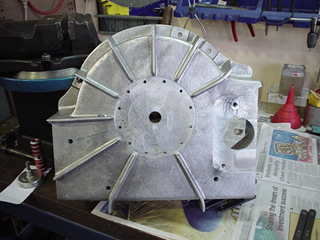
Here are a few more pictures.
Paul Lamar
Could you save a couple of more pounds by whitling a couple of triangle
areas above and below the bushing holders and outside the Mazda bolt
pattern
disk. Also rounding off the outside dia but leaving the metal where the
bolts are close to the outside of the mount plate.
Dale Davies
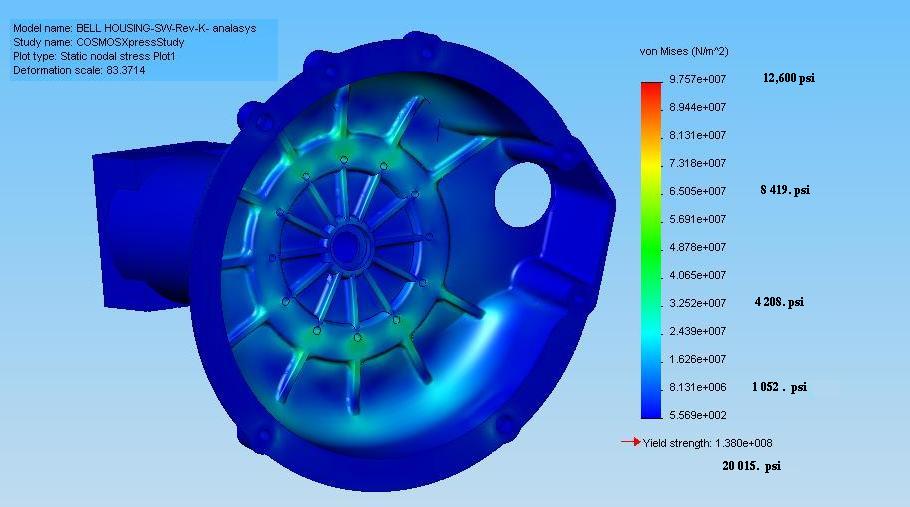
If your willing to whittle material from the triangle area of the bell
housing, I assume with a machine, why don't you machine off the entire
bell housing and build an adapter off the long 17 engine bolts (longer
bolts needed of coarse). The adapter is flat aluminum plate with the
outside holes, now a rounder stand off section to accommodate the
flywheel and the plate that mounts Tracy's unit. Machine off the
unneeded profile material remaining on the housing. This would save
weight and be significantly stronger. The stock bell housing has only 3
threaded bolt holes. It has 2 dowel pin holes and 1 non-tapped hole.
The cast housing machines easy and all this adapter stuff is prismatic
quick easy to do. How far do you want to go???
Tracy's unit is nice, but I think this is one area of
improvement....what do you think, is it a problem getting longer bolts???
jeff
We need a 12.5 inch ring gear in there for the starter.
The bolt circle on the tension bolts is too small.
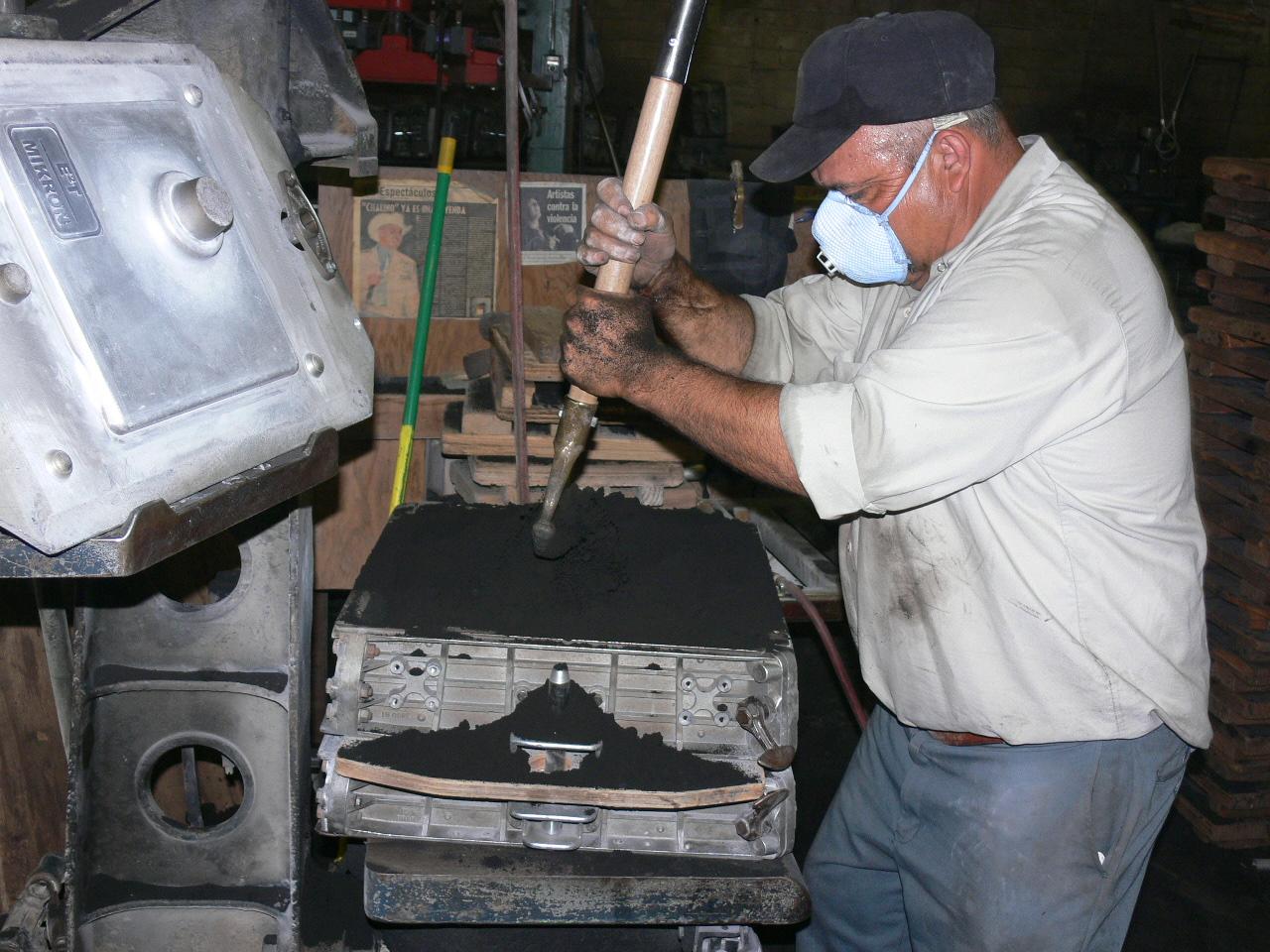
The stock bell housings are rare in the junk yards and new ones
cost big bucks. Other than that I like them a lot as they are
very strong for their weight being high pressure di cast with
very thin walls. No way could we get a sand casting down to that
weight and believe me we have tried.
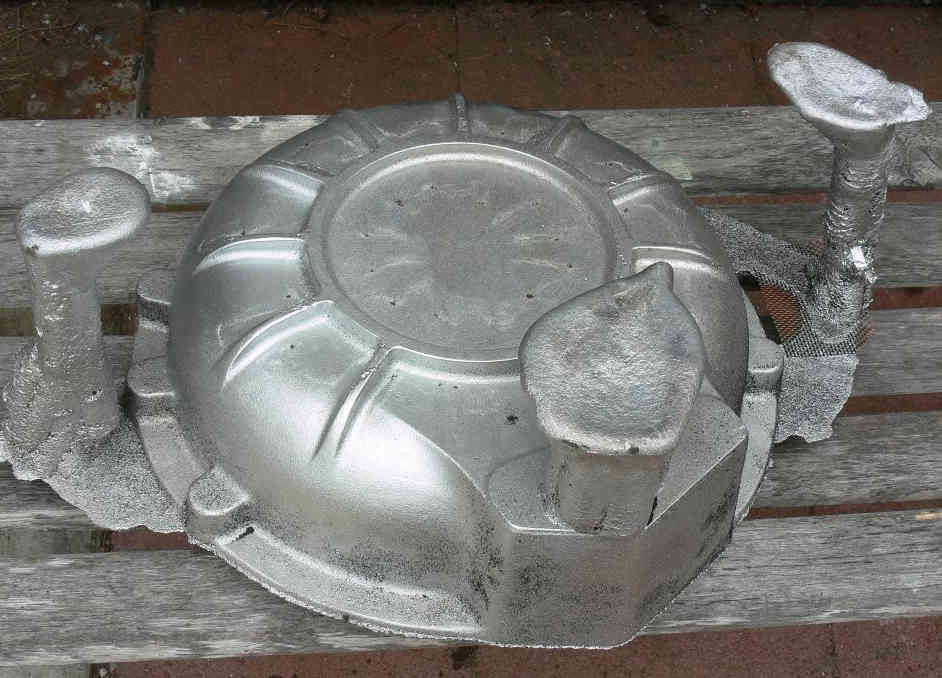
The only other thing I have not tried is a stamping. There is an outfit
in LA that makes 1/4 inch thick scatter shields. I was thinking of asking them
to make one out of .090" aluminum material for our use.
Of course we would still have to weld on the motor mounts.
1/2 inch plate billet and spacers is the way to go if you can
keep the cost down.
Paul Lamar
--
The Rotary Engine NewsLetter. Powered by Linux.
ACRE NL web site.
http://www.rotaryeng.net
Youtube key word UTUBPLEASE
Copyright 1998-2009 All world wide rights reserved.