kevin in denver, Doing a dry sump you can use the current oil pan to
collect the oil and easily scavenge it out of the oil pan with an
aftermarket gerorotor pump such as moroso sells (parker hannifin internal
parts).This adds firewall forward weight due to the tank which should be
larger than the pan capacity particularly on the smaller RX8 pan, a
minimum
of two more hoses which present a place to leak, a third vent hose back
to
the engine and weight of the oil pump and drive.
There is an upside to this
IMHO in that you would be filtering and then cooling the much hotter
temp
oil returning from rotor cooling and end housings and only this hotter
oil.
Also you will add the pressure pump bypass oil and be cooling as well as
filtering it on each pass. the stock syster has the oil fall into the oil
in
the pan mix up with it avaraging the temperature then pumping it back to
the
engine without any heat removal.
After the engine pressure pump their is a
relief valve which maintains a set oil presure and flow into the engine.
The
oil which is surplus at the relief valve is directed to the engine
mounted
filter and thru the oil cooler back to the pan. Therefore we are
filtering
less of the oil and cooling with less delta T at the cooler. These
engines
reject A larger percentage of heat to the oil than a recip because the
hottest parts (the rotors) are oil cooled.
The extra 18 pounds of hardware
would be on the accessory end of the engine and firewall area and lessen
the
impact on the firewall forward CG. Add the new one piece front mount/
PSRU
adapter Paul is developing and get the weight back.As far as inverted
operation goes, take a look at the internal structure of the
center housing found in photos of housings sawed in two as seen in this
newsletter.
Notice that the oil path up thru the engine from the eccentric
shaft is of a similar size to the oil return to the pan. IMHO one could
collect the oil from the filler tube, the top of the accessory housing
with
some tedious drilling and tapping, or just brute force drilling and epoxy
a
steel tube from the top of the rear housing down to the oil relief ring
inside the rear oil seal part of the housing.
The overflow from the engine
pressure pump relief valve woild be sent (check valve) through this
collection header to a separate scavenge pump so that the pump would be
lubricated with this oil when flying with the rubber down. I have not
done
this scheeme but plan on doing so, if anyone on the news letter sees
something I am missing don't be shy.
george grimes
Keep in mind that I'm doing this in my head as I am TDY in Washington and
my
garage is in Denver.
I'll have to search through past graphics on this board to find oil
galley
pathways to see exactly how difficult or easy this may be.Also, this
question was inspired by my oogling an Aston Martin this weekend. It has
a
dry sump system allegedly for lateral forces during racing (or because it
impresses wealthy car buyers...). Lateral forces are not a factor for
aircraft engines. I suppose the 13B factory designed sump would be fine
for most everyday straight and level flying.
But, here's my thought: Remove the oil pan completely.Create a header
system for the oil collection.Use an in-line pump to push the oil into
the
oil tank.Mount the oil tank onto the fire wall (which could act as an
additional oil cooler/separator).
This shifts weight back toward the CG and exposes the underside of the
engine to air flow (not a major concern but a possible added cooling
benefit).With A/N tubing and fittings I don't think leaks are a factor,
but
complexity is indeed added to the factory designed system.
There is an increase in HP for piston engines using a dry sump, but is
there
a major benefit for rotaries?I would think a shift of weight, increased
cooling and increased oil capacity would be the benefits. Added weight
and
added complexity is a liability. Do they cancel each other, or is there
a
consideration I'm missing?
Kevin in Denver
The reason piston engine lose HP with oil in the sump is churning
loses due to the spinning crank. The oil in the sump of a rotary does
not come near the rotors or the e-shaft.
The oil drain backs in a rotary are several starting in the front and
going
all the way to the back. You will need some sort of oil pan to collect
all
this oil.
Paul Lamar
Years ago we made the dry sump just a flat plate. No pan. The stock pump
was used for pressure, and a single stage scavenge pump for collecting oil
through a hole in a rotor housing leg. The stock pump was fed through the
flat plate with a flanged fitting in the stock pickup holes. Worked just
fine.
Good steady oil supply to the stock pump. The line from the scavenge pump
goes through a filter and cooler. The same for the pressure line from the
stock pump.
Then we got a real dry sump pump (Moroso) with 2 scavenge sections. The
stock pump is no longer used. The front scavenge pickup was a half circle
cut
into the side of the pressure relief in the front cover. The normal oil
out
fitting becomes the scavenge out for the front of the engine. The rear
scavenge pick up is a stock oil pressure relief valve gutted and a window
cut
into one side. The window is installed in the down direction and the jamb
nut tightened. The normal oil-in, banjo fitting in the rear iron becomes
the rear scavenge out fitting. If there is a fear of debris damaging the
pump, you can install in-line bug screens.
Some dry sump pumps have the scavenge exit each section, so you have two
scavenge out lines to run through coolers and or filters, and some run one
section into the other inside the pump, and have only one scavenge out
line.
A bit less complexity but either one works fine. Peterson has a selection
of toothed belt pulleys and belts. Also any power transmission shop has
all
of the drive stuff. The later square Peterson pumps are no good.
The pressure section splits open. The older round Petersons are fine.
For inverted use I would use the stock oil filler pipe as the inverted
pickup, using some sort of more secure cap. For long runs right side up,
rig a
1/8 Nylon line from the pressure pump, or any line or filter stand to feed
the inlet side of the inverted scavenge section, through a .015" orifice
so
it never runs dry. One scavenge pickup for up and one for down is fine.
The scavenge pumps pull a huge amount of air out of the engine and run it
through the oil tank and then into the breather hose and back into the
engine.
So air goes the wrong way through the breather hose.
Oil pressure is controlled in the pressure pump, not inside the engine.
You still need the ball type selector valve to pull oil from both top and
bottom of the storage tank.
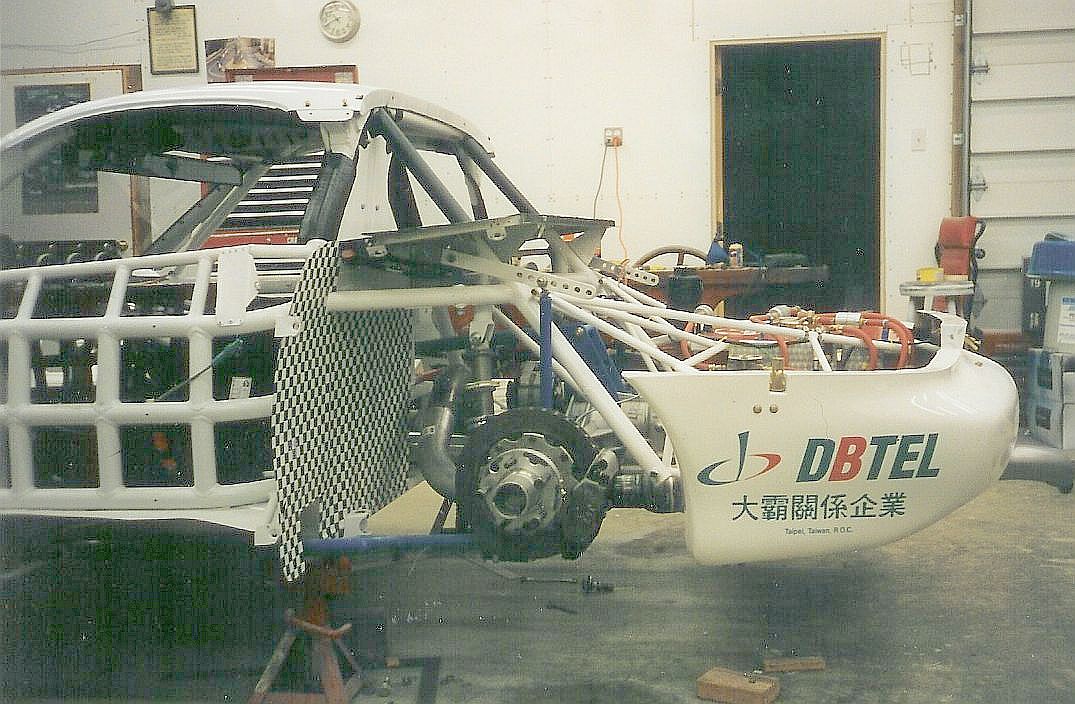
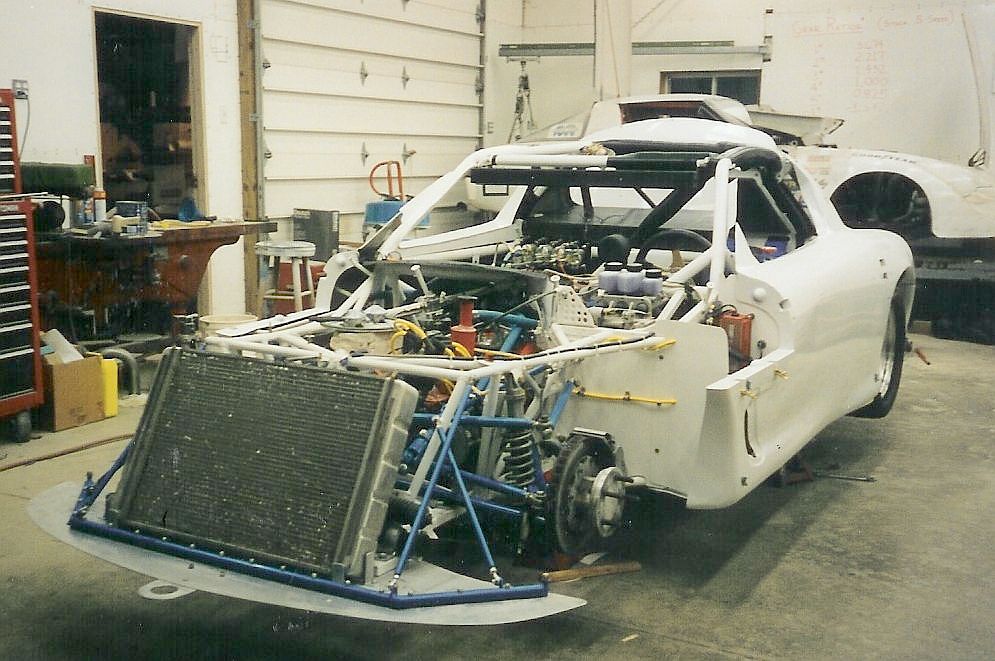
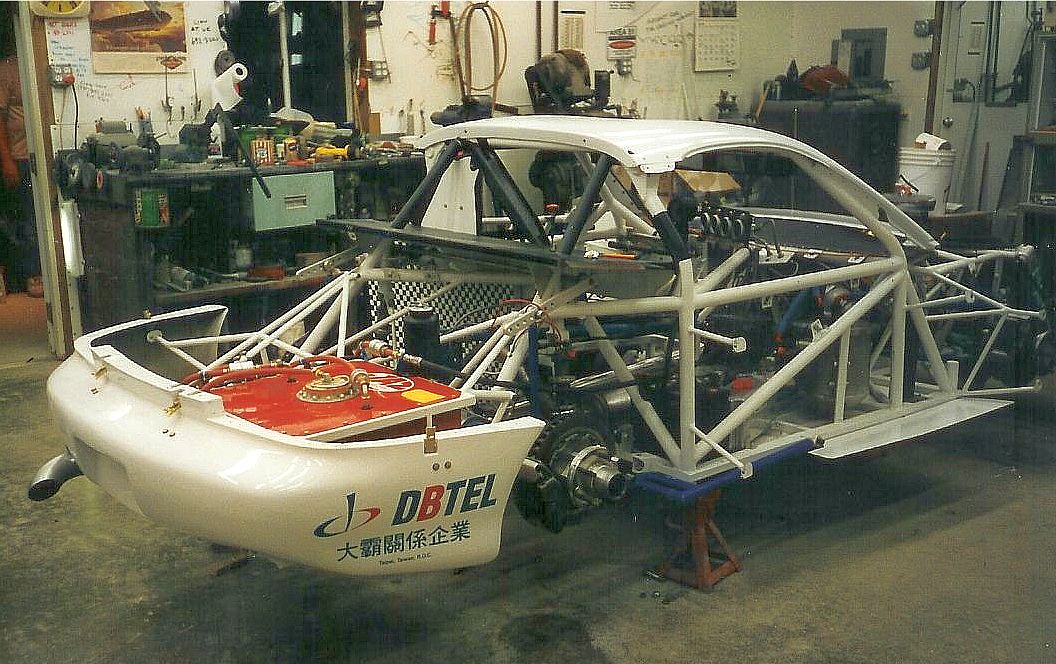
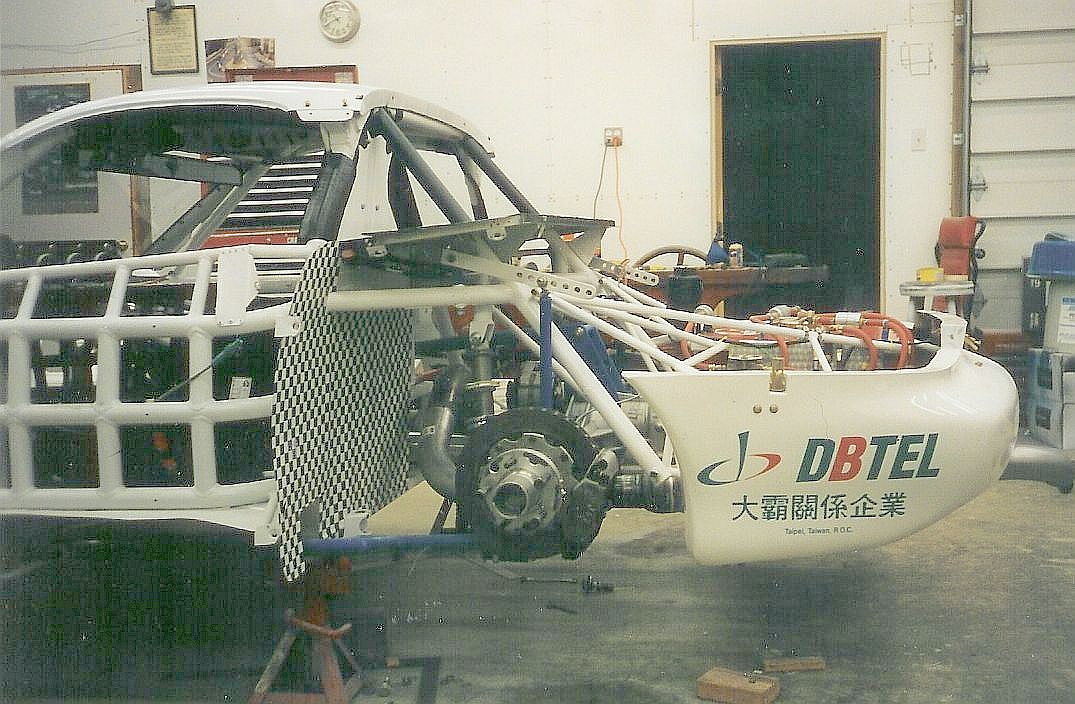
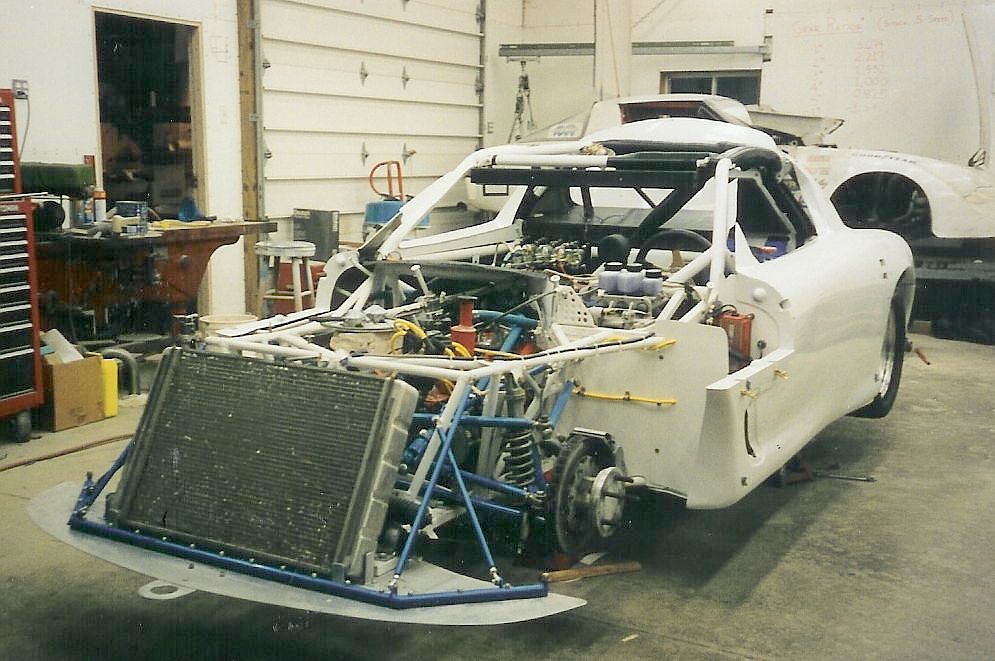
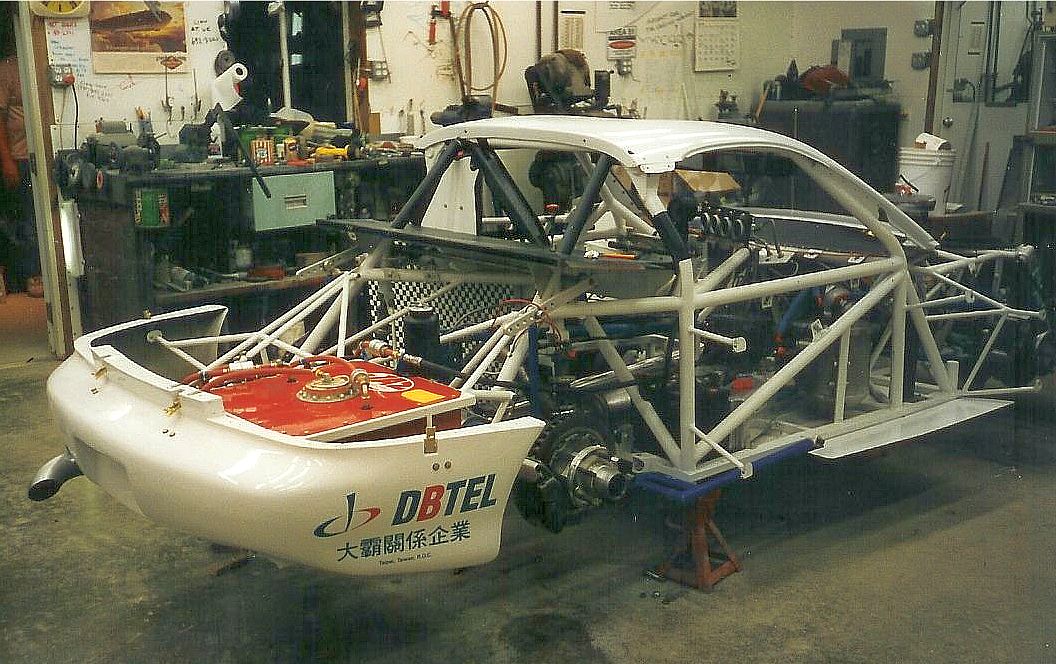
In the picture, find the dry sump storage tank. Way too big. Later
replaced
with tank made from a hand held fire extinguisher bottle.
Lynn E. Hanover
Lynn--what years/class/driverdid you run this? Have other photos of
engine
compartment and suspension/chassis and with body on it?
Steve Beckham
I have many, if Paul wants them here or perhaps a private
transmission..........The car is a 93-95 RX-7 built to SCCA GT-3 rules. Raced from 2000 to
2006. Driver retired.
Lynn E. Hanover
--
The Rotary Engine NewsLetter. Powered by Linux.
ACRE NL web site.
http://www.rotaryeng.net
Youtube key word UTUBPLEASE
Copyright 1998-2009 All world wide rights reserved.