The reason piston engine lose HP with oil in the sump is churning
loses due to the spinning crank. The oil in the sump of a rotary does
not come near the rotors or the e-shaft.
The oil drain backs in a rotary are several starting in the front and
going
all the way to the back. You will need some sort of oil pan to collect
all
this oil.
Paul Lamar
Years ago we made the dry sump just a flat plate. No pan. The stock pump
was used for pressure, and a single stage scavenge pump for collecting
oil
through a hole in a rotor housing leg. The stock pump was fed through the
flat plate with a flanged fitting in the stock pickup holes. Worked just
fine.
Good steady oil supply to the stock pump. The line from the scavenge pump
goes through a filter and cooler. The same for the pressure line from
the
stock pump.
Then we got a real dry sump pump (Moroso) with 2 scavenge sections. The
stock pump is no longer used. The front scavenge pickup was a half circle
cut
into the side of the pressure relief in the front cover. The normal oil
out
fitting becomes the scavenge out for the front of the engine. The rear
scavenge pick up is a stock oil pressure relief valve gutted and a
window
cut
into one side. The window is installed in the down direction and the
jamb
nut tightened. The normal oil-in, banjo fitting in the rear iron
becomes
the rear scavenge out fitting. If there is a fear of debris damaging
the
pump, you can install in-line bug screens.
Some dry sump pumps have the scavenge exit each section, so you have two
scavenge out lines to run through coolers and or filters, and some run
one
section into the other inside the pump, and have only one scavenge out
line.
A bit less complexity but either one works fine. Peterson has a selection
of toothed belt pulleys and belts. Also any power transmission shop has
all
of the drive stuff. The later square Peterson pumps are no good.
The pressure section splits open. The older round Petersons are fine.
For inverted use I would use the stock oil filler pipe as the inverted
pickup, using some sort of more secure cap. For long runs right side up,
rig a
1/8 Nylon line from the pressure pump, or any line or filter stand to
feed
the inlet side of the inverted scavenge section, through a .015" orifice
so
it never runs dry. One scavenge pickup for up and one for down is fine.
The scavenge pumps pull a huge amount of air out of the engine and run
it
through the oil tank and then into the breather hose and back into the
engine.
So air goes the wrong way through the breather hose.
Oil pressure is controlled in the pressure pump, not inside the engine.
You still need the ball type selector valve to pull oil from both top and
bottom of the storage tank.
In the picture, find the dry sump storage tank. Way too big. Later
replaced
with tank made from a hand held fire extinguisher bottle.
Lynn E. Hanover
Lynn--what years/class/driverdid you run this? Have other photos of
engine
compartment and suspension/chassis and with body on it?
Steve Beckham
I have many, if Paul wants them here or perhaps a private
transmission..........The car is a 93-95 RX-7 built to SCCA GT-3 rules.
Raced from 2000 to
2006. Driver retired.
Lynn E. Hanover
Thank you for photos Lynn--A three rotor normally aspirated peripheral
port?
You build the chassis and the engines? Empty weight? Car competitive then
and now or rules crippled? Still have the car Lynn?
Steve Beckham
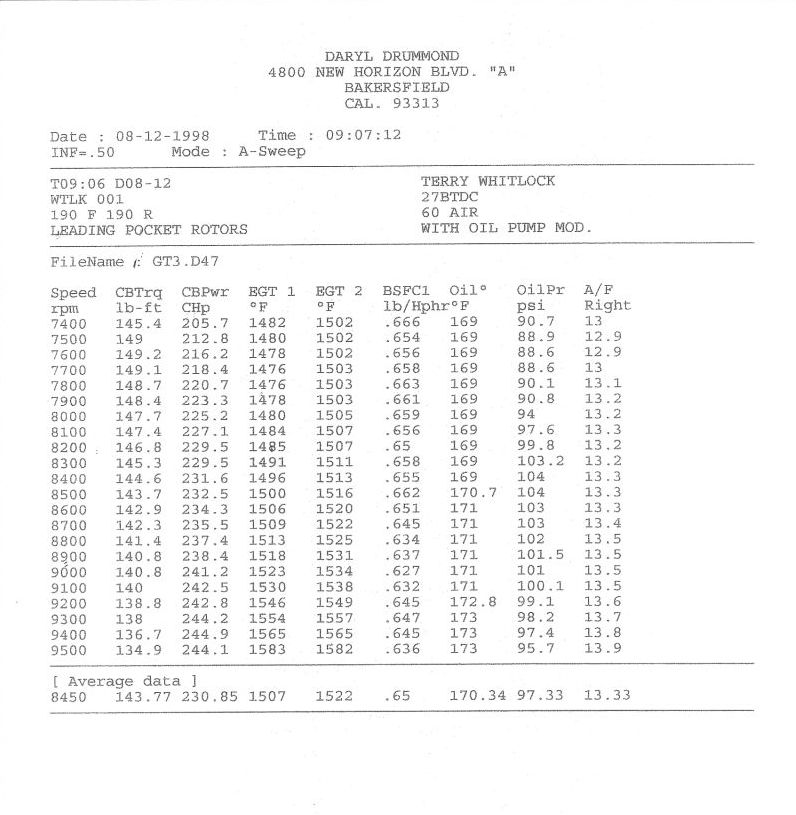
At the time it was built it was competitive with 244 HP 12-A with a "J"
bridgeport. Then they let the Nissan 6 cylinder SX200 into the class With 6
38MM chokes and 315 HP. The first two of those that came to Mid Ohio were
both under the lap record in their first time on the track. They qualified
under the lap record for GT-2 the next faster class. So my car and all other
Masda's are obsolete in GT-3 and have been for a long time. They let us
have 38MM chokes up from 36MM chokes, so we might have 250 HP now, but still
no chance in hell of going fast enough. They could have made us tow a 6 foot
diameter drag chute behind us, but I guess it would have been too obvious.
The car has to weight 2080 with the driver in it. So maybe 1880. We have to
have 4 gallons of 93 octane left to make that weight.
The trans is a Richmond Gear road racing with changeable gear ratios, and
synchronizers. Designed for full size muscle cars. Note the Chevy S-10 bell
housing bolted to the Mazda engine. The other trans is a Saenz dog ring
trans from Argentina. Very nice. The clutch is (drum roll) a Tilton double
disc 5 1/4". The coaxial throw-out assembly from Coleman. The flywheel is a
cut down Tilton button made for a Chevy. About 6 1/2" and weighs about 1 1/2
pounds. The last two engines came from Daryl Drummond, about $14,000.00
each.
I have rebuilt and modified them several times since (twice each season)
These are reliable as a stone shifting at 9,600 RPM. I still own this one.
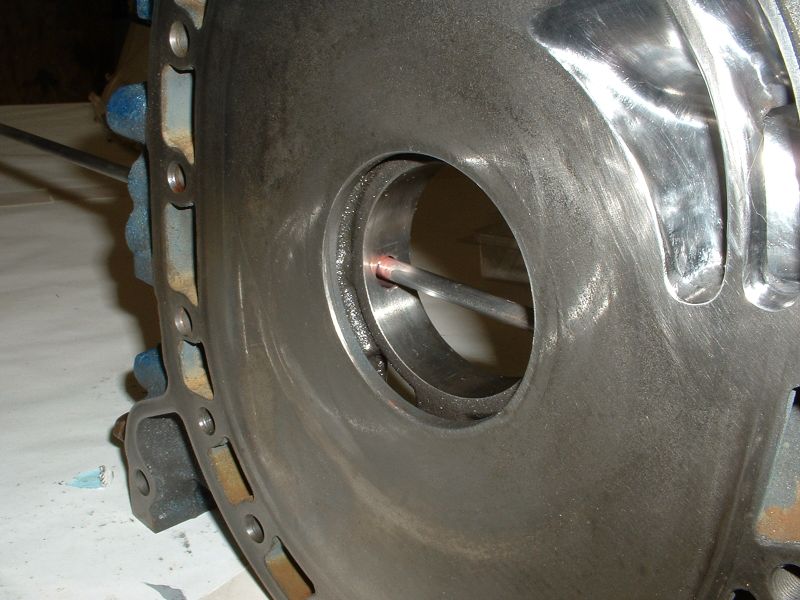
Here is the car with its clothes on. The "J" bridgeport and a tube stuck
through the lateral gallery that feeds the front stationary gear from a Tube
to Boss fitting in the front iron.
Here is a pictogram of the oiling system for a dry sump.
Here are two dyno sheets. The one has the lowest RPM I have ever seen a
rotary dynoed.
Lynn E. Hanover
Was that Nissan the 3.1 Liter stright six Lynn?
Hardly fair since the 12A is 2.4 Liters.
The SCCA should be ashamed!
Paul Lamar
--
The Rotary Engine NewsLetter. Powered by Linux.
ACRE NL web site.
http://www.rotaryeng.net
Youtube key word UTUBPLEASE
Copyright 1998-2009 All world wide rights reserved.