Years ago we made the dry sump just a flat plate. No pan. The
stock pump was used for pressure, and a single stage scavenge
pump for collecting oil through a hole in a rotor housing leg.
The stock pump was fed through the flat plate with a flanged
fitting in the stock pickup holes. Worked just fine. Good
steady oil supply to the stock pump. The line from the scavenge
pump goes through a filter and cooler. The same for the pressure
line from the stock pump.
Then we got a real dry sump pump (Moroso) with 2 scavenge
sections. The stock pump is no longer used. The front scavenge
pickup was a half circle cut into the side of the pressure
relief in the front cover. The normal oil out fitting becomes
the scavenge out for the front of the engine. The rear scavenge
pick up is a stock oil pressure relief valve gutted and a window
cut into one side. The window is installed in the down direction
and the jamb nut tightened. The normal oil-in, banjo fitting in
the rear iron becomes the rear scavenge out fitting. If there is
a fear of debris damaging the pump, you can install in-line bug
screens.
Some dry sump pumps have the scavenge exit each section, so
you have two scavenge out lines to run through coolers and or
filters, and some run one section into the other inside the
pump, and have only one scavenge out line.
A bit less complexity but either one works fine. Peterson has
a selection of toothed belt pulleys and belts. Also any power
transmission shop has all of the drive stuff. The later square
Peterson pumps are no good. The pressure section splits open.
The older round Petersons are fine.
For inverted use I would use the stock oil filler pipe as the
inverted pickup, using some sort of more secure cap. For long
runs right side up, rig a 1/8 Nylon line from the pressure pump,
or any line or filter stand to feed the inlet side of the
inverted scavenge section, through a .015" orifice so it never
runs dry. One scavenge pickup for up and one for down is fine.
The scavenge pumps pull a huge amount of air out of the engine
and run it through the oil tank and then into the breather hose
and back into the engine. So air goes the wrong way through the
breather hose.
Oil pressure is controlled in the pressure pump, not inside
the engine.
You still need the ball type selector valve to pull oil from
both top and bottom of the storage tank.
In the picture, find the dry sump storage tank. Way too big.
Later replaced with tank made from a hand held fire extinguisher
bottle.
Lynn E. Hanover
Lynn--what years/class/driverdid you run this? Have other photos of
engine
compartment and suspension/chassis and with body on it?
Steve Beckham
I have many, if Paul wants them here or perhaps a private
transmission..........The car is a 93-95 RX-7 built to SCCA GT-3 rules.
Raced from 2000 to
2006. Driver retired.
Lynn E. Hanover
Thank you for photos Lynn--A three rotor normally aspirated
peripheral port? You build the chassis and the engines? Empty
weight? Car competitive then and now or rules crippled? Still
have the car Lynn?
Steve Beckham
At the time it was built it was competitive with 244 HP 12-A
with a "J" bridgeport. Then they let the Nissan 6 cylinder
SX200 into the class With 6 38MM chokes and 315 HP. The first
two of those that came to Mid Ohio were both under the lap
record in their first time on the track. They qualified under
the lap record for GT-2 the next faster class. So my car and
all other Mazda's are obsolete in GT-3 and have been for a long
time. They let us have 38MM chokes up from 36MM chokes, so we
might have 250 HP now, but still no chance in hell of going fast
enough. They could have made us tow a 6 foot diameter drag chute
behind us, but I guess it would have been too obvious.
The car has to weight 2080 with the driver in it. So maybe
1880. We have to have 4 gallons of 93 octane left to make that
weight.
The trans is a Richmond Gear road racing with changeable gear
ratios, and synchronizers. Designed for full size muscle cars.
Note the Chevy S-10 bell housing bolted to the Mazda engine. The
other trans is a Saenz dog ring trans from Argentina. Very nice.
The clutch is (drum roll) a Tilton double disc 5 1/4". The
coaxial throw-out assembly from Coleman. The flywheel is a cut
down Tilton button made for a Chevy. About 6 1/2" and weighs
about 1 1/2 pounds. The last two engines came from Daryl
Drummond, about $14,000.00 each.
I have rebuilt and modified them several times since (twice
each season) These are reliable as a stone shifting at 9,600
RPM. I still own this one.
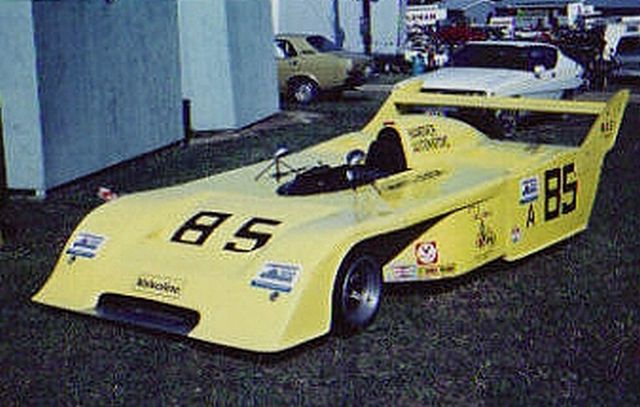
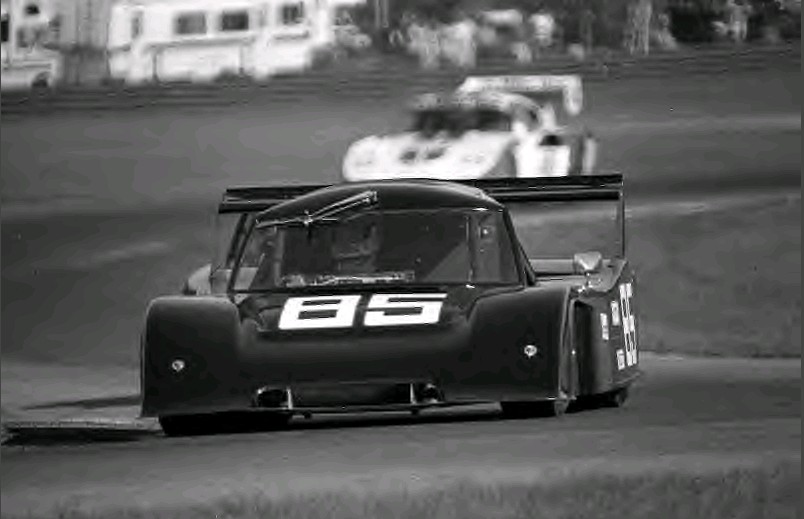
Here is the car with its clothes on. The "J" bridgeport and a
tube stuck through the lateral gallery that feeds the front
stationary gear from a Tube to Boss fitting in the front iron.
Here is a pictogram of the oiling system for a dry sump.
Here are two dyno sheets. The one has the lowest RPM I have
ever seen a rotary dynoed.
Lynn E. Hanover
Was that Nissan the 3.1 Liter stright six Lynn?
Yes it is.
Hardly fair since the 12A is 2.4 Liters. Officially 2292CCs
The SCCA should be ashamed!
The SCCA makes no promises that any given car will be competitive and
they
usually deliver. The "pro" racing classes are better but I'd venture to
guess that's because theirs money in those series. Not going to beat
around
the bush. IMHO, SCCA sucks. NASA is leaps and bounds better in regards to
"club racing."
Vlad
I have yet to go to a NASPORT race but talk is good about the classing
system. IMSA at first was great.
$10.00 entry fee. Got it back if you started. Money back for each lap. The
rule book for all three classes was 1/8" thick. Their tech guy Mark Raffuf
is still out there.
SCCA went down the drain when they hired a businessman to run it. Club
racing has not one thing to do with business.
The SCCA would not allow aftermarket rods in piston engines to keep costs
down. So after 13 shattered engines, I went rotary and sold my Fiat. Then
two years later they allowed aftermarket rods. Genius (in the Wile E.
Coyote sense of the term)
In these pictures:
The sump tank is a steel (very thin wall) fire extinguisher bottle. A line
in on the side is scavenge from both scavenge sections then through two 40
row Setrabs, then a Peterson in line bug screen. The line from top center
is for breather and goes into an aluminum fire extinguisher bottle (blue).
The line just off center is to the engine breather where the oil fill tube
would have been. The line back to the pressure section is 1 1/4" ID.
The black bottle is the catch tank for transmission. Required by rules. At
the bottom is a RX-2 pressure bottle/make up tank. Part of the stock
cooling system from 1972. Notice it does not need to be higher than any
other
part of the cooling system. Kept 1/3 full. Removes every bit of air from
the
system in two heat cycles.
The Mandaville style front cover has fabricated pickup tubes installed into
tubes welded to dash 10 male fittings and pressed through holes in the
cover and epoxied in place. They could have TIGed them but the covers are
thin
and warp easily. The other cover is the quick and easy front pickup that
uses the stock Oil-out fitting in the front cover as the scavenge out. The
pressure relief that is left out for this protects the front cover "O"
ring
joint (no longer used) and the oil cooler from a cold start. They are set
at
144 pounds, which is pointless because the "O" ring fails before that.
Lynn E. Hanover
----------------------------------------------------------------------------
----
Lynn, thank you for sharing this information...very interesting and
educational.
Really admire the way you think out systems and parts, then take a
real-world approach to design and fabrication that results in relatively
low cost parts made from readily available items. It all shows not only
that you are smart, but practical as well--two qualities often not present
with engineers. Sure wish you were living next door.
Regarding the engine, Daryl's dyno sheet shows low EGT's at that power
setting and output range, based on dyno work we did with peripheral port
engines. Our EGT's with the peripheral port engines at much lower
RPM's--5500 to7,000 RPM range, always ran about 1700F on the dyno and in
flight testing. Could those lower EGT's shown on your dyno sheet to some
degree result from the distance of the EGT probes being further downstream
from the port? Remember how far this were placed in exhaust pipes?
Yes, on instruction from Daryl exactly 3" out from the port face. So the
readings in the car would be the same as on the dyno. More advance lowers
EGT. Higher octane increases EGT. So he dynoed on 97 or 100 octane because
some folks run 27 or more degrees of advance. We ran 25 degrees and 87 or 93
octane. We got the same EGT in the car as on the dyno or just a bit lower.
What were you using for fuel delivery?
The required by rules Weber 48 IDF with 36 MM chokes. The whole carb is at
its limit flow wise and a number of tricks are used to try to stay in the
12s F/A wise all the way to top RPM. So the EGTs may be affected by droplets
of fuel in the mixture due to the float being set so high that the
boosters drip frantically at idle. We would turn on only one pump for a few
seconds then turn it off to get to the false grid. Otherwise we would flood the
engine. It seems to me that since the EGTs do not reflect the FA at any RPM
that we were fooling both sensors to some extent. I think the goal was 12.7
but once the engine was screaming it was not attainable. F/A would wonder
into the 13s. I had a movie camera on the EGTs in each session, so we got
real good data on that and shift revs.
Daryl said fuel injection would add about 8 HP. The runners in these
engines were barely touched from stock. Velocity was what he wanted, so I think
most folks get carried away with runner cross section for most applications,
(RPM).
Most of the current 12-A people are claiming about 270 HP, but are
screaming the daylights out of the engines. Over 10,000 RPM on every shift.
Finally, if your car were mated to a three rotor w. p-port, would SCCA
class
it to where it would simply be hopelessly uncompetitive...put in with
sports
racings/prototype classes? Sorry for what probably is a really stupid
question, but it just seems a damned shame for that car to be sitting in
the
back of the garage.
Steve Beckham
The car was designed to run in National races. There is no class for it in
altered form. In regional racing, where there are no teams with
Semitrailers and big crews, there is a superproduction class where anything can run if
it passes the safety inspection. It was always more fun at regional races
anyway. When you first get your student license you must race in 6 regional
races in order to get a national license. Lots of beginners needing help.
My car would be hell on wheels at a regional race. Like taking candy from a
baby.
We have tested at regionals but pull into the pits and get tire temps two
laps before the end. No point in taking a three dollar trophy away from a
new kid.
Lynn E. Hanover
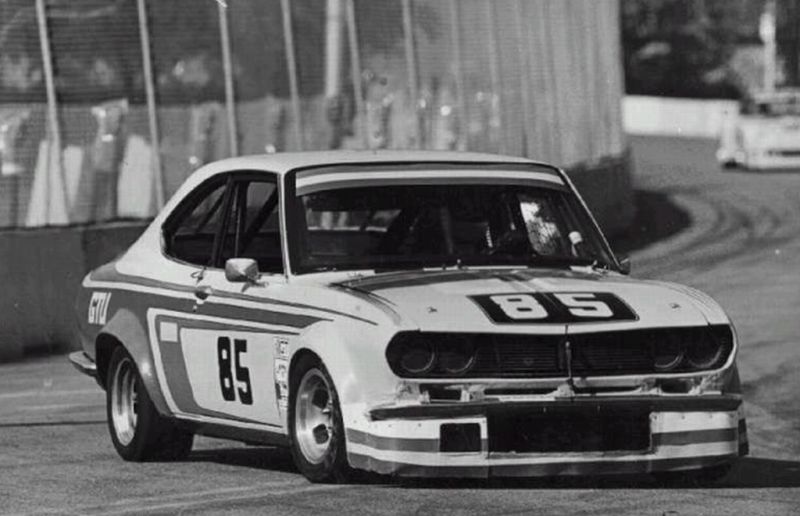
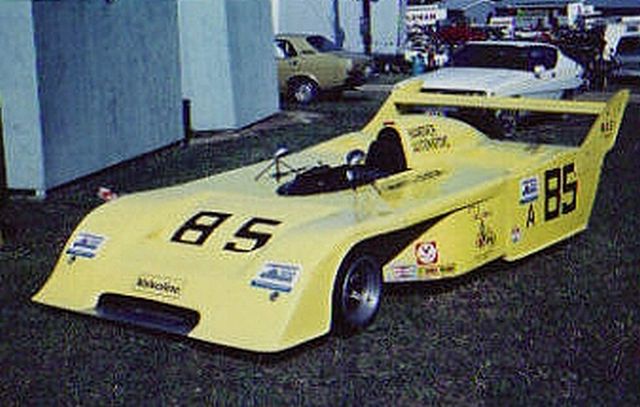
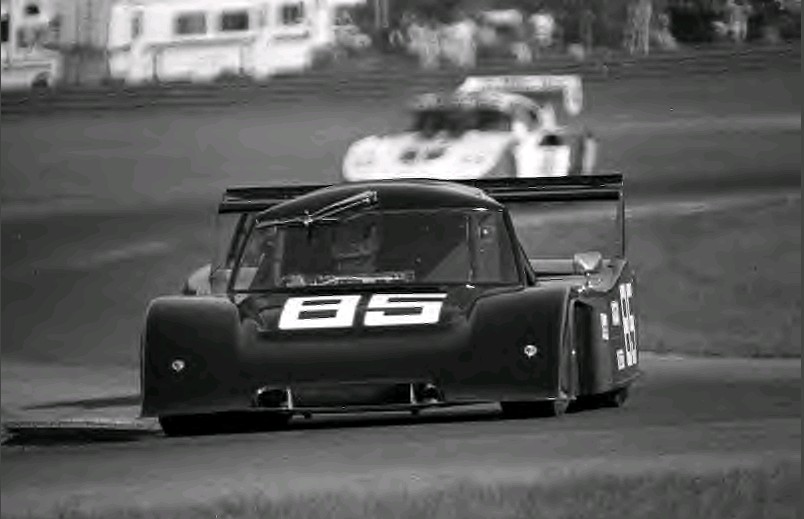
Here are three more of my rotary powered cars.
-
The Rotary Engine NewsLetter. Powered by Linux.
ACRE NL web site.
http://www.rotaryeng.net
Youtube key word UTUBPLEASE
Copyright 1998-2009 All world wide rights reserved.