Kelly Troyer wrote:
Paul,
I would like to buy 2 of your "P" port sealing plates............Please
let me
know how much and where to send payment.............
Thanks,
--
Kelly Troyer
"Dyke Delta"_13B ROTARY Engine
"RWS"_RD1C/EC2/EM2
"Mistral"_Backplate/Oil Manifold
Sure no problem. Every body pays cash. No checks or credit cards.
Ten dollars each. Plus $5 US PO flate rate box.
send to:
Suite 303
830 East Santa Maria St.
Santa Paula CA
93060
We should have some contoured SS tubes any day now to go along with
that.
We also have a whole bunch of other bits and pieces for slide throttle
p-ports.
Paul Lamar
Paul,
Has anyone pressure tested the sealing plates? If so, what would be an
adequate pressure to test them. I'm figuring 45 psi which is 3 X my
normal
operating pressure.
Mark S.
I was going to suggest 50 psi.
Paul Lamar
Sounds good to me.
Mark
The beauty of these sealing plates is they are easily repairable if you do
have a leak.
If you are talented with a Dremal tool it is possible to put a large
O-ring
in there :)
Paul Lamar
Paul,
As long as the RTV does its job, why install an o-ring, belt and
suspenders? Where are we talking about putting the o-ring? How would you
go about replacing the o-ring if it leaked? I like the RTV solution
better
as you can easily re-do it if it leaks.
Mark S.
Just for grins? :)
The O-ring would go in the joint to seal both out and sideways
in theory. It is a compound grove so hard to machine even in an
NC mill.
Paul Lamar
Well, I'll know in a couple of days whether my p-ports pass the 50#
pressure
test.
Mark
I have my fingers crossed :)
Paul Lamar
Paul,
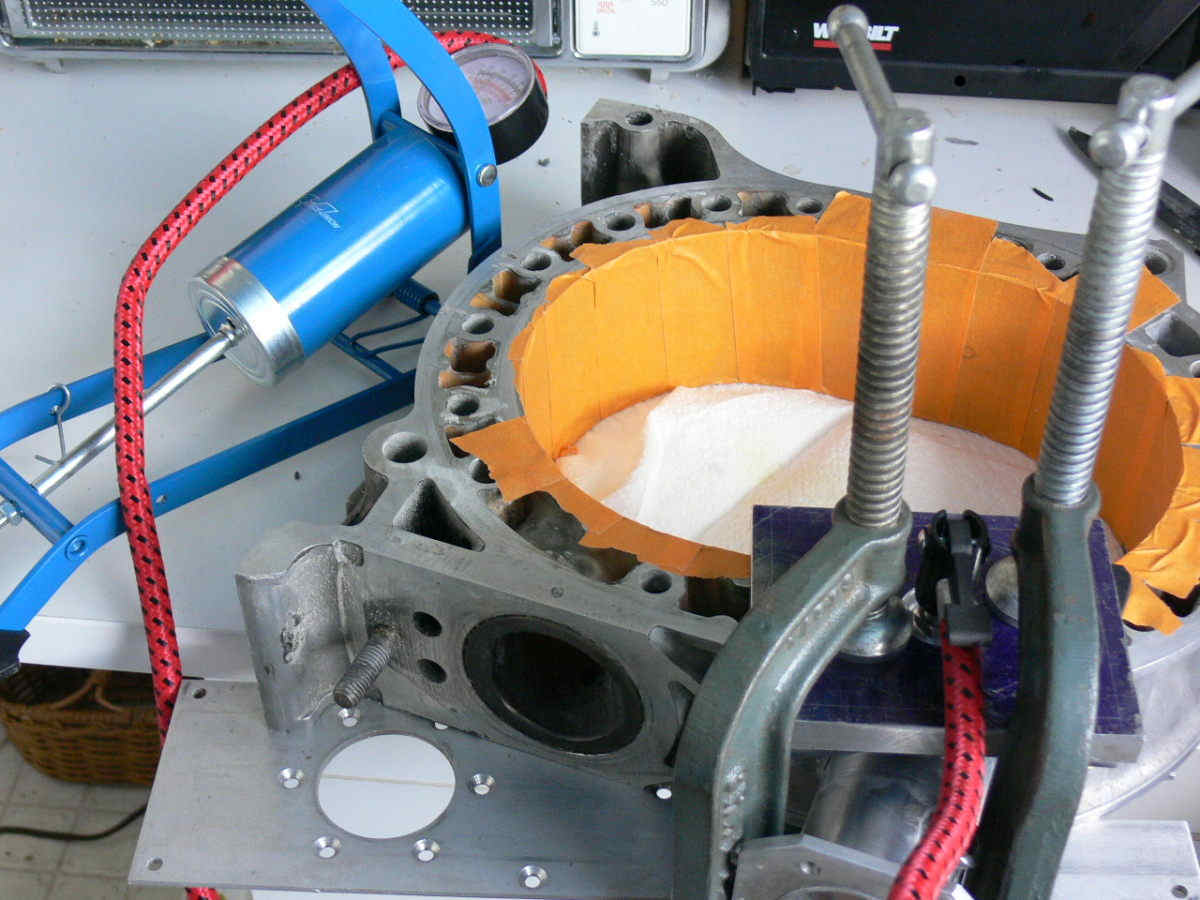
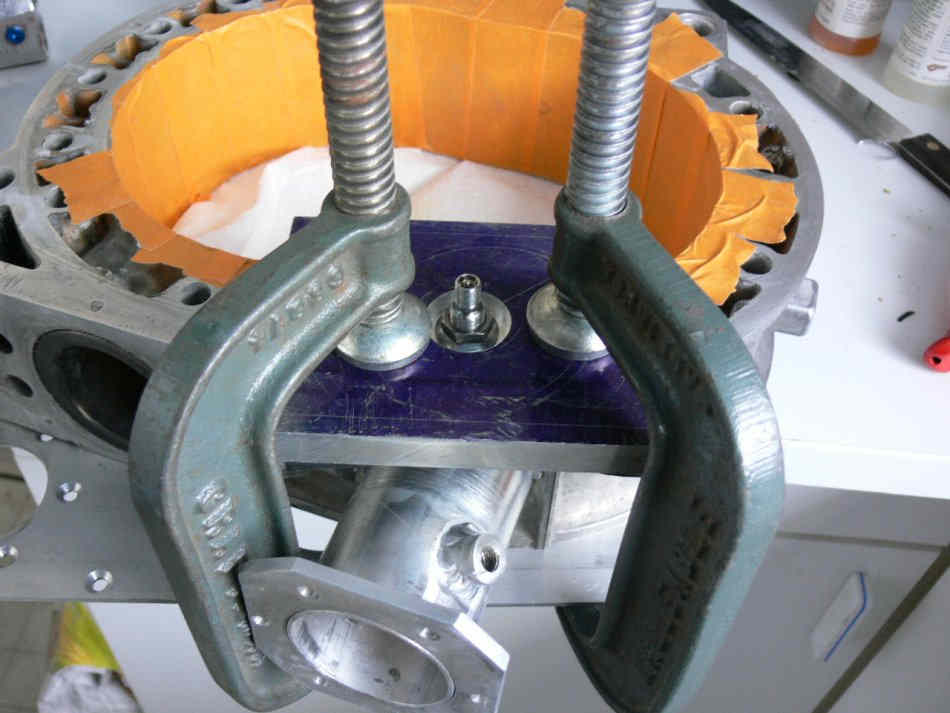
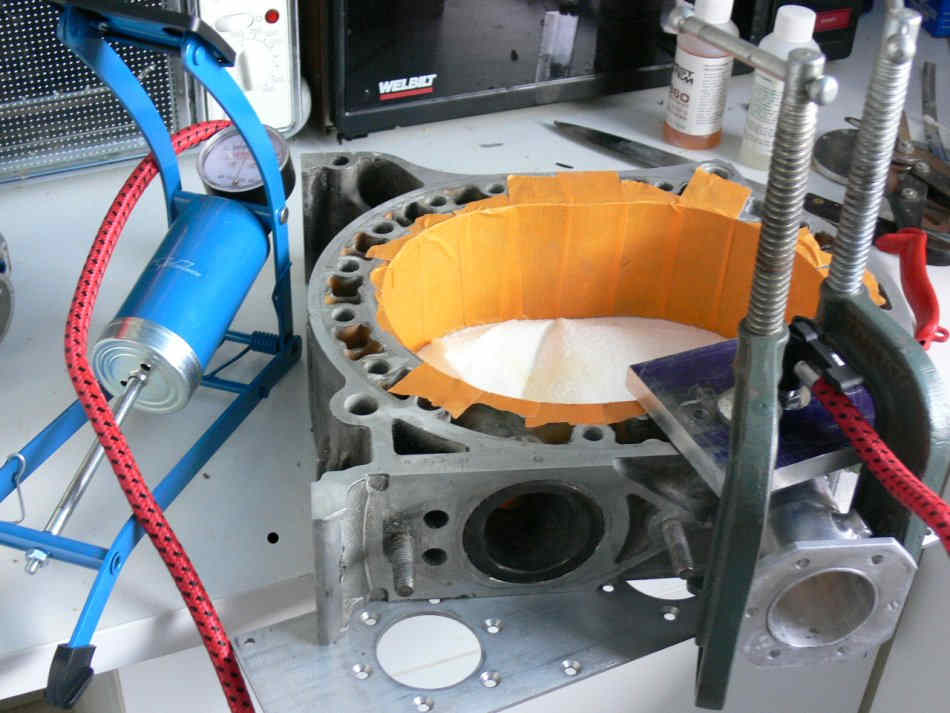
The RTV has had 48 hours to set up, so I fabricated a testing rig and
pressurized the p-port rotor housings last night after work. I used 50 psi
as the test pressure. The bad news is that all three housings had
very small pinhole leaks in the vicinity of the welds. This was obviously
due to the smoothing and blending of the welds. That was easy enough to fix
with the TIG and a little more blending and smoothing.
I also had leaks around the sealing plates on 2 of the 3 housings. Both are
at the 7-8 o'clock positions and between the plate and the SS tube. This is
the thinnest area as far as sealing surface is concerned. I'm thinking that
an o-ring between the plate and SS tube would be a good fix for this.
Bottom line is for everyone to pressure test their p-port modifications
before engine assembly.
Mark
Thanks for the feedback Mark.
I'll check into see how much a internal O-ring grove will cost
in all new sealing blocks. If people wish we will retro fit the blocks
that people have now. That would be one less area they would need RTV.
In fact one could buy sheet RTV and use it as a gasket. You would still need
a bit on the threads.
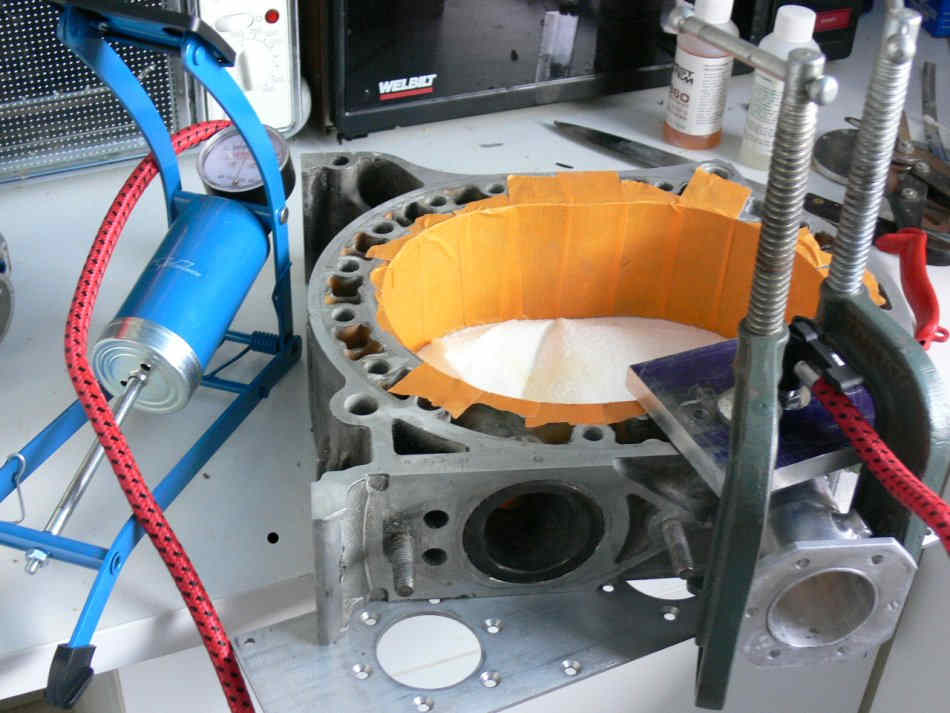
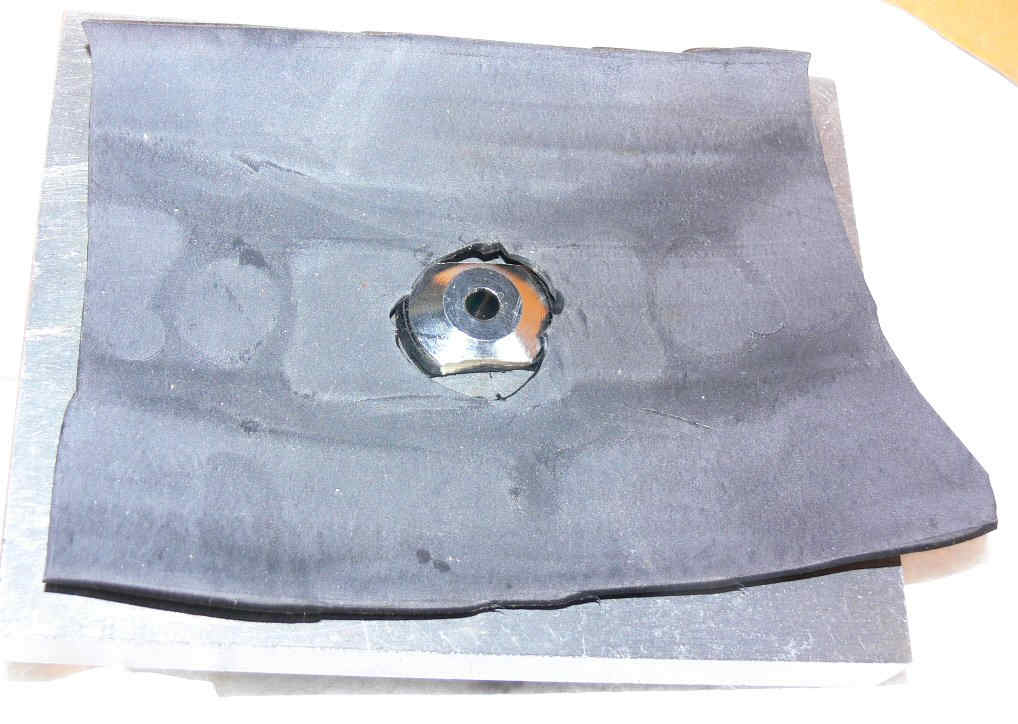
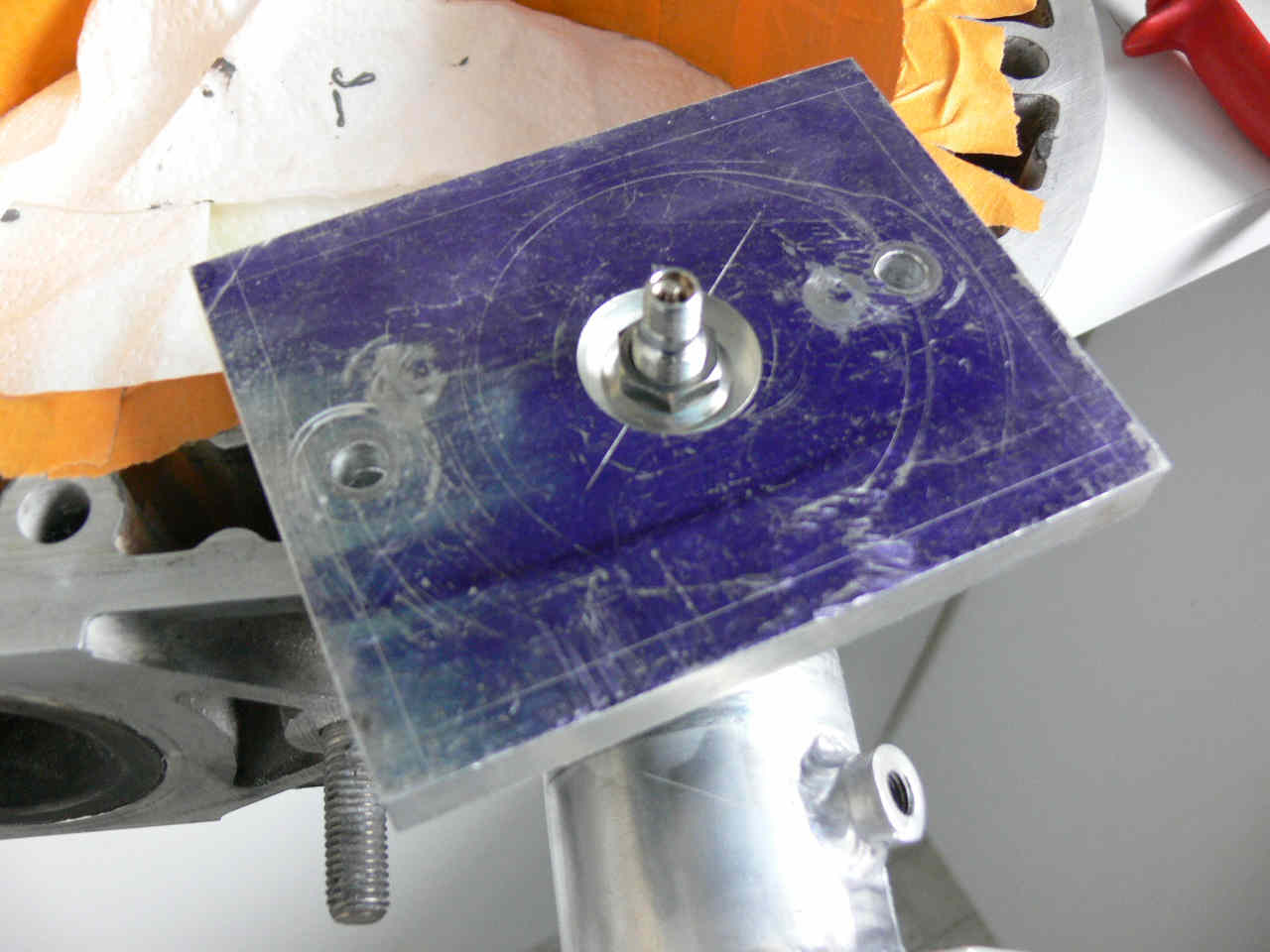
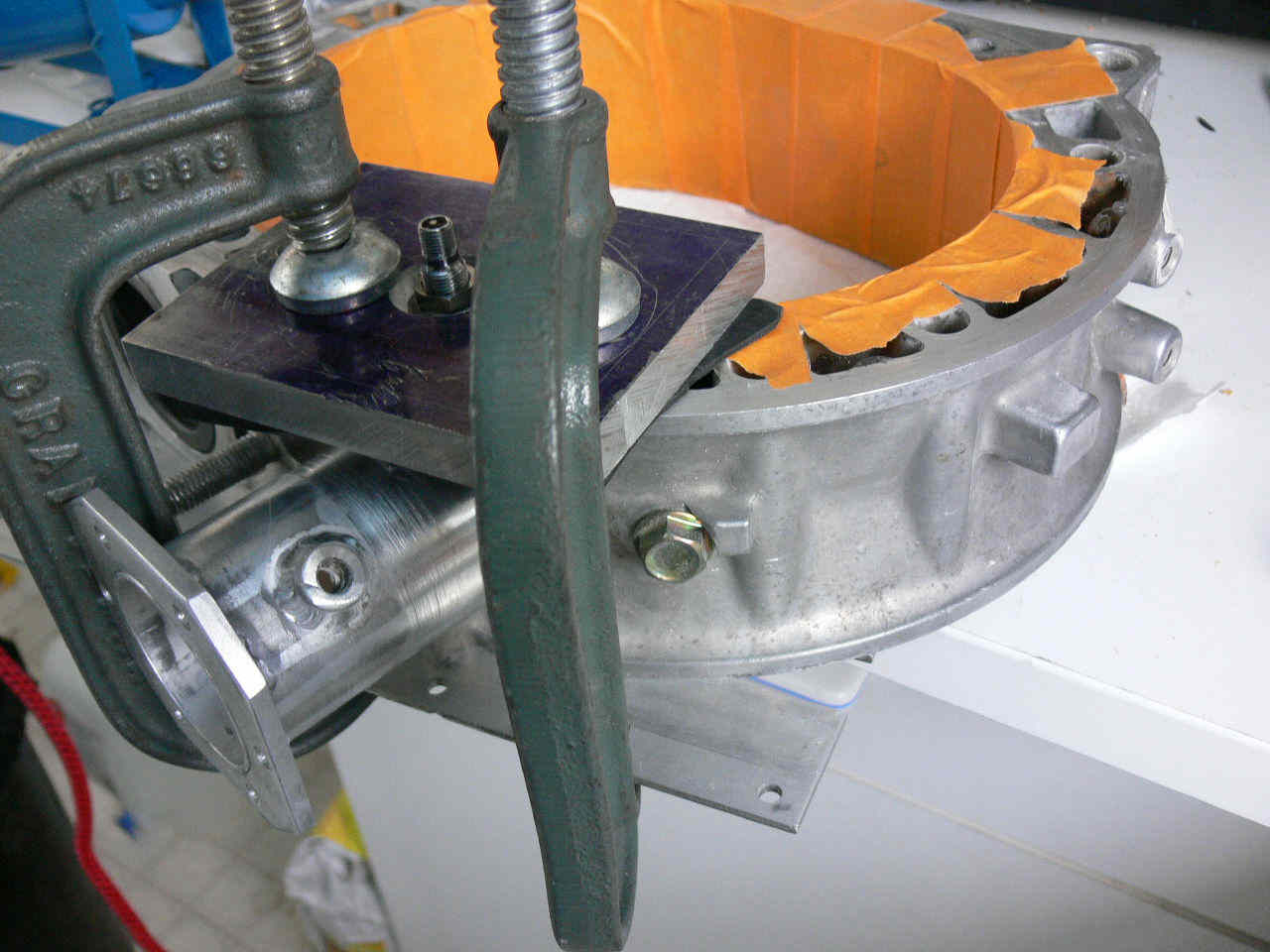
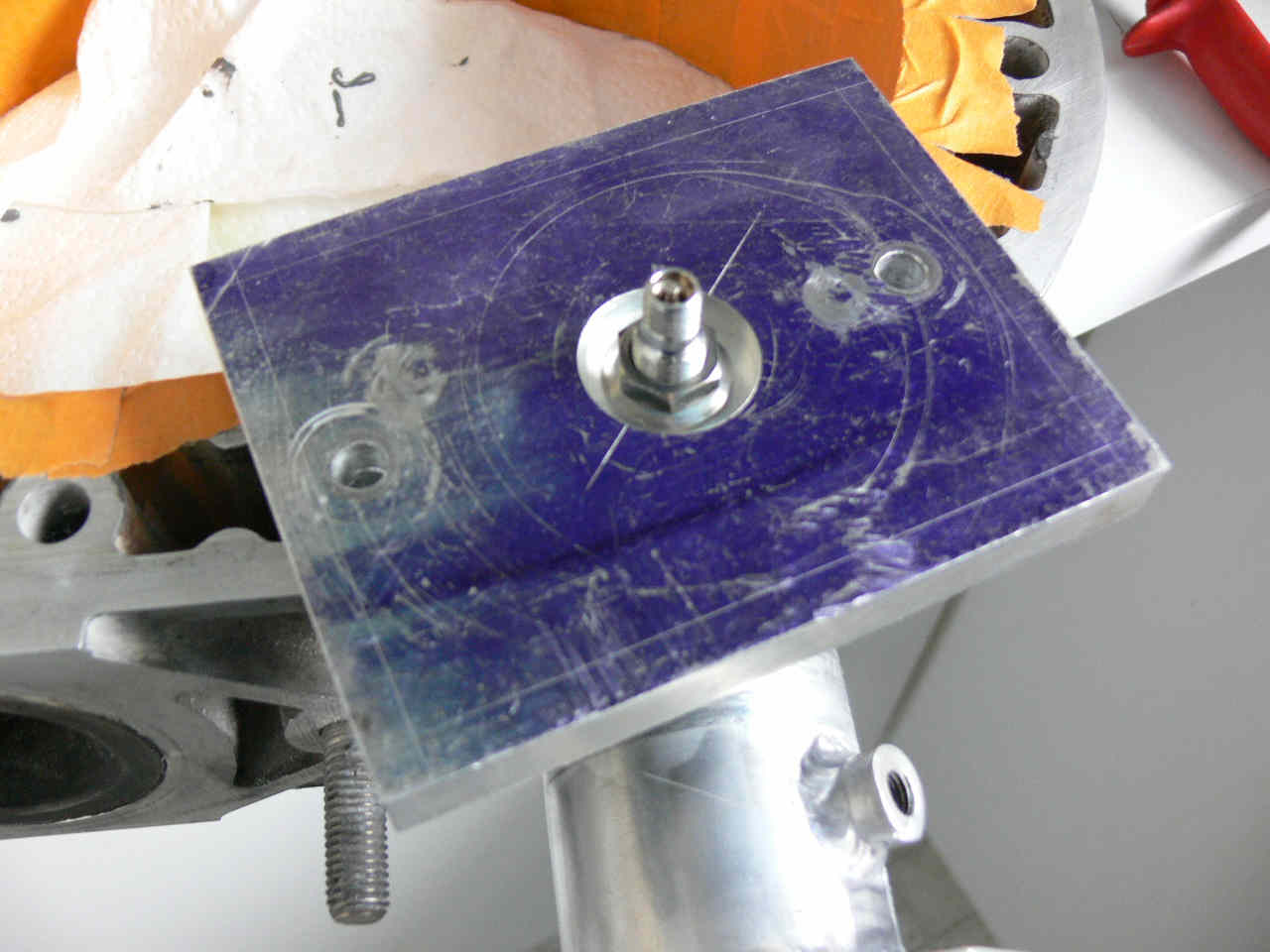
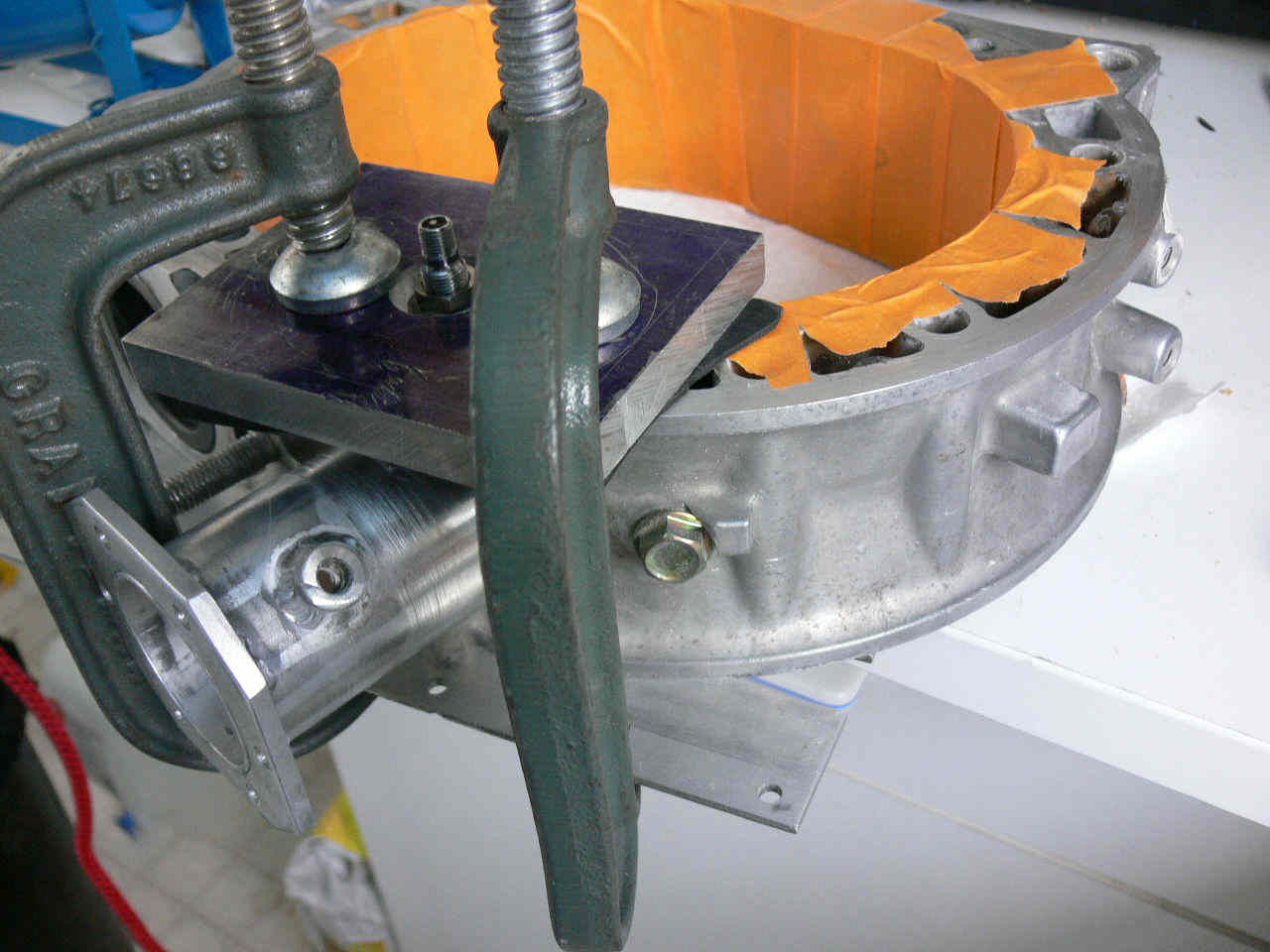
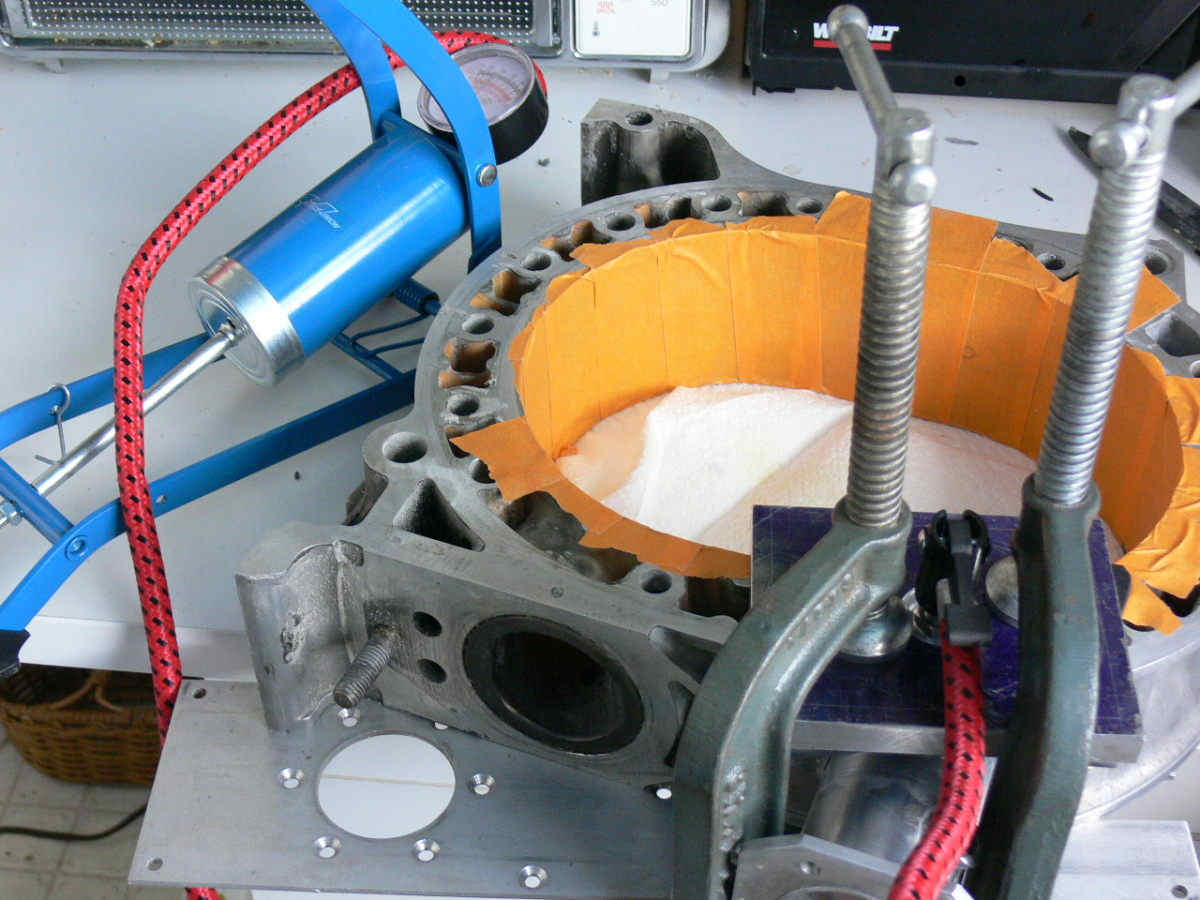
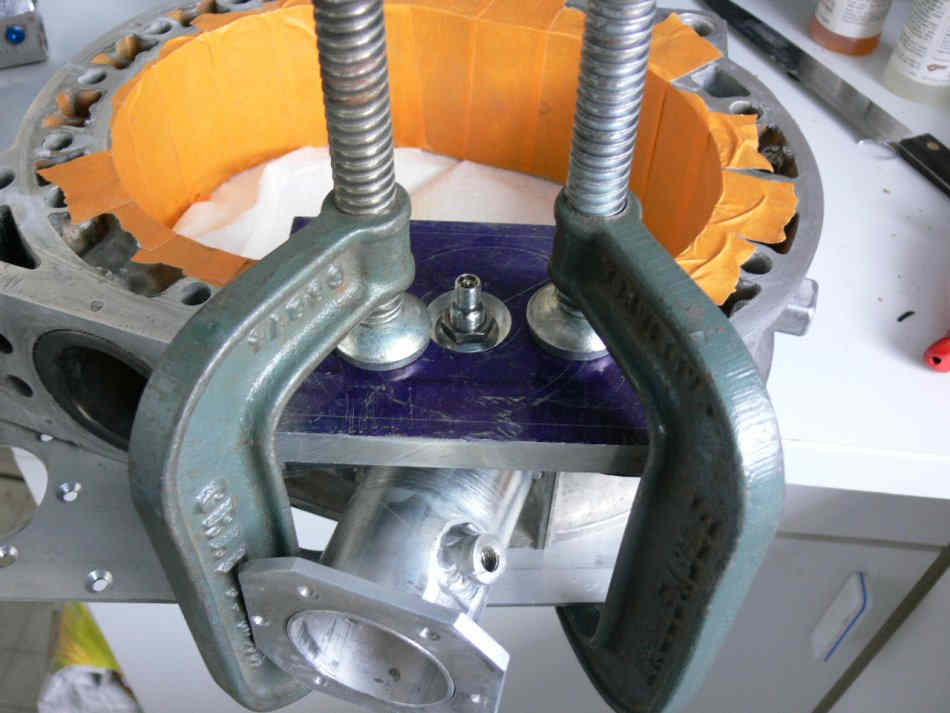
It is easy enough to pressure test the just section of the rotor housing
where the weld is with a section of tire tube. Here is how I did it. No
need to assemble the engine.
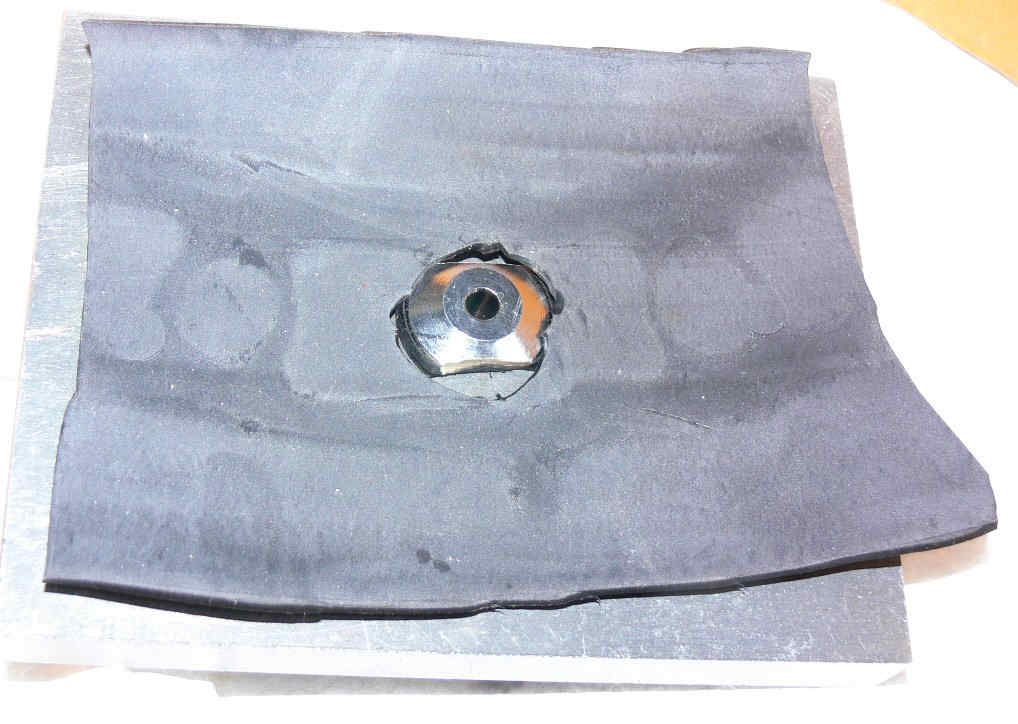
No need for the tubeless tire fitting if you use the section of tire
tube with the molded in tire valve. Just buy a new tube and cut it
up.
Paul Lamar
--
The Rotary Engine NewsLetter. Powered by Linux.
ACRE NL web site.
http://www.rotaryeng.net
Youtube key word UTUBPLEASE
Copyright 1998-2009 All world wide rights reserved.