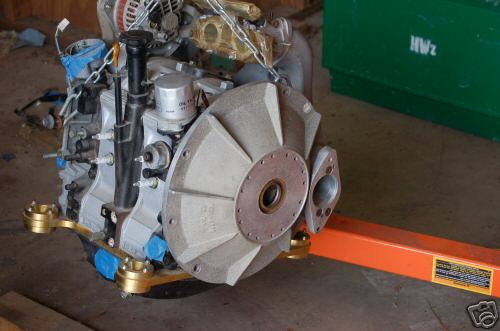
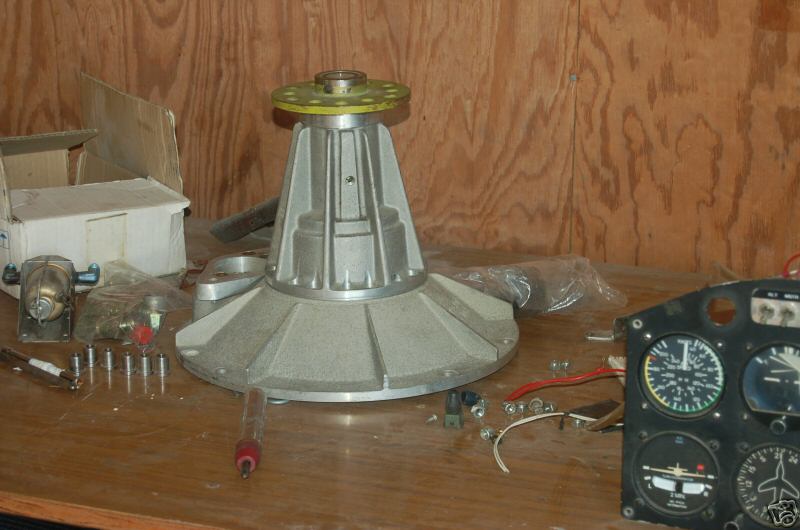
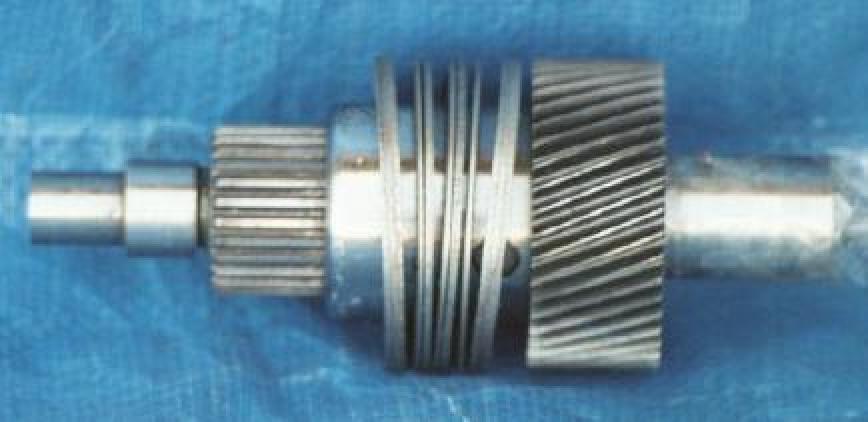
If you think there is 10 lbs to save in Tracy's PSRU, that's huge
considering CG and all...If someone is willing to get the necessary
components that can be whittled and you direct in the ares to be
machined, I would be willing to do this for a very small sum to cover
the tooling and possibly the fixture material, about $200. NO other
machine shop would touch something like this for under $1000
.................
thanks
jeff
Hi Paul;
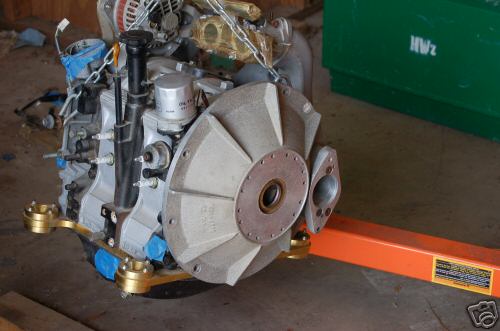
I had a few questions regarding Tracy's PSRU.
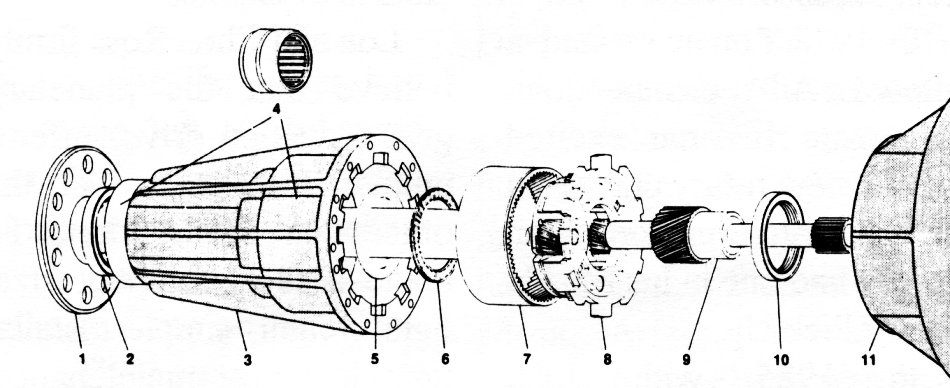
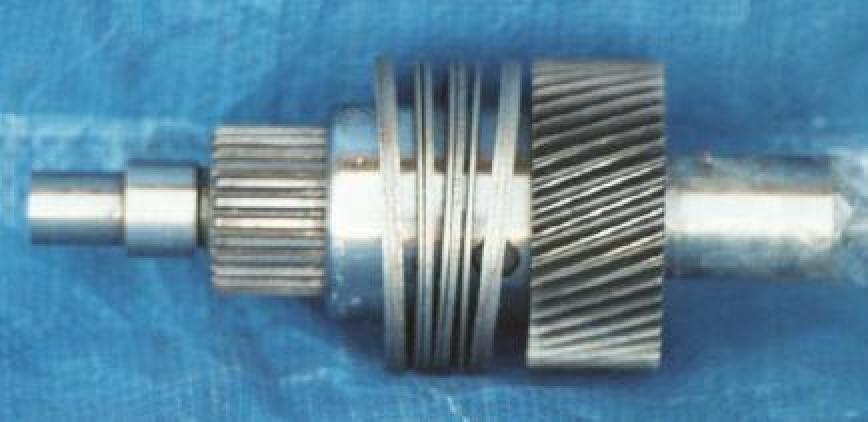
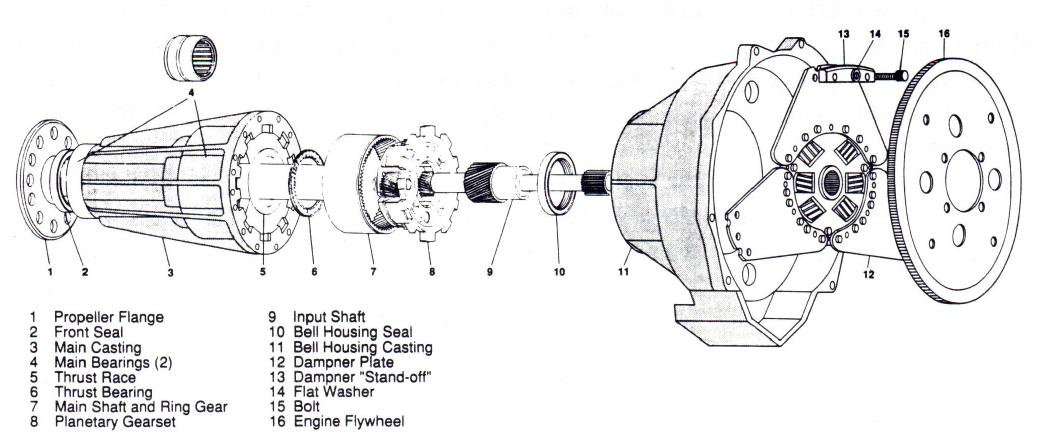
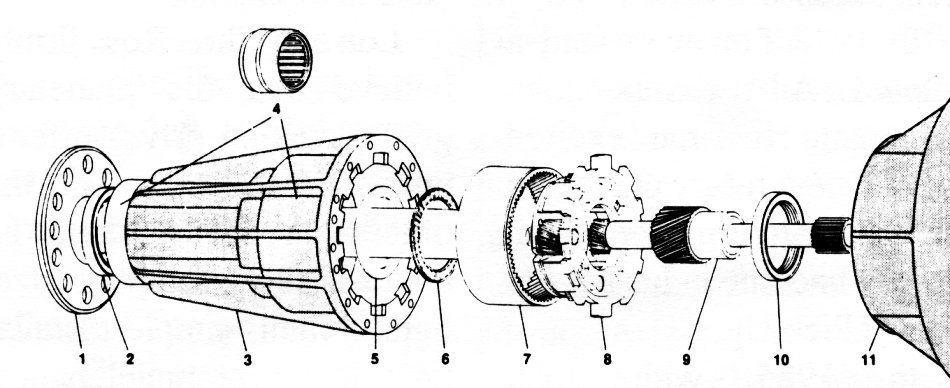
IIRC, the original RD-1 used the Ford C6 gear set. Do later versions
use the Ford E40D gearset or something else?
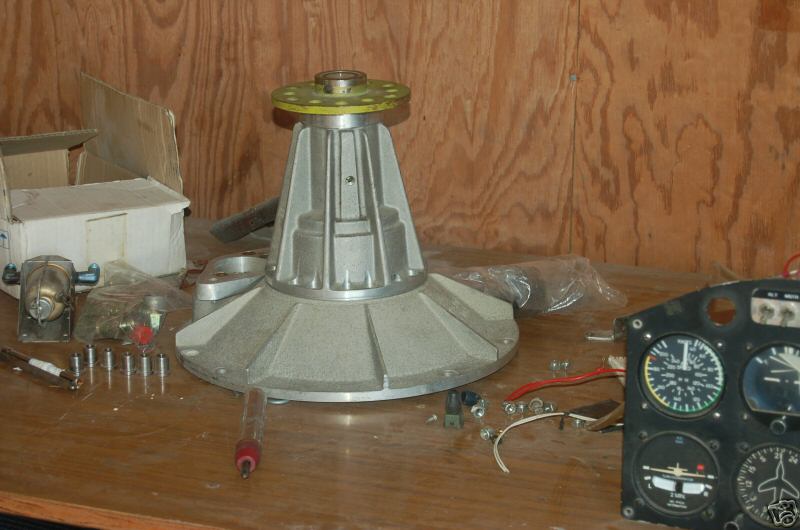
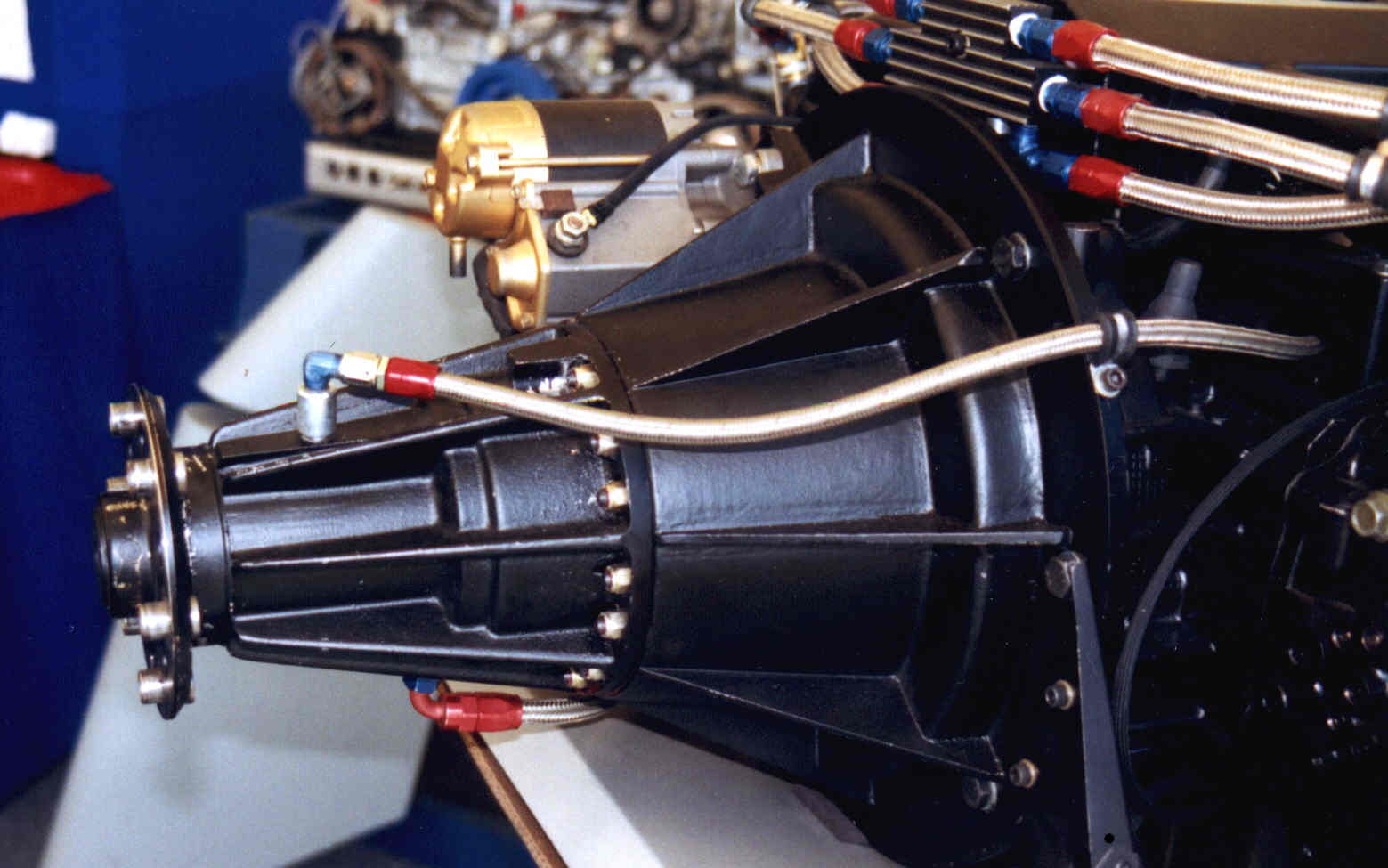
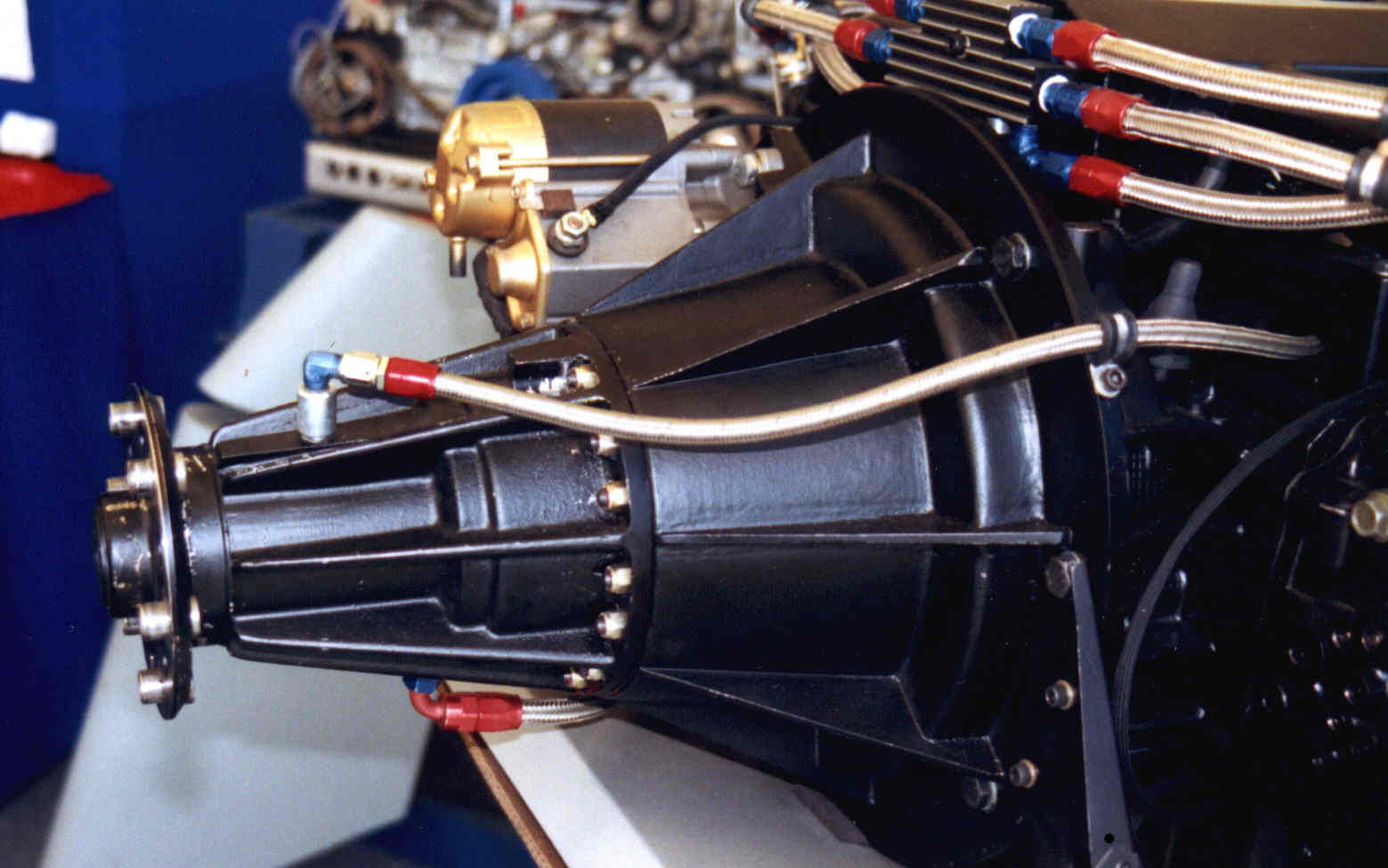
Are the prop shaft and flange still from a drag (or sprint) car rear
axle and flange - any idea which companies produce off the shelf parts
like this?
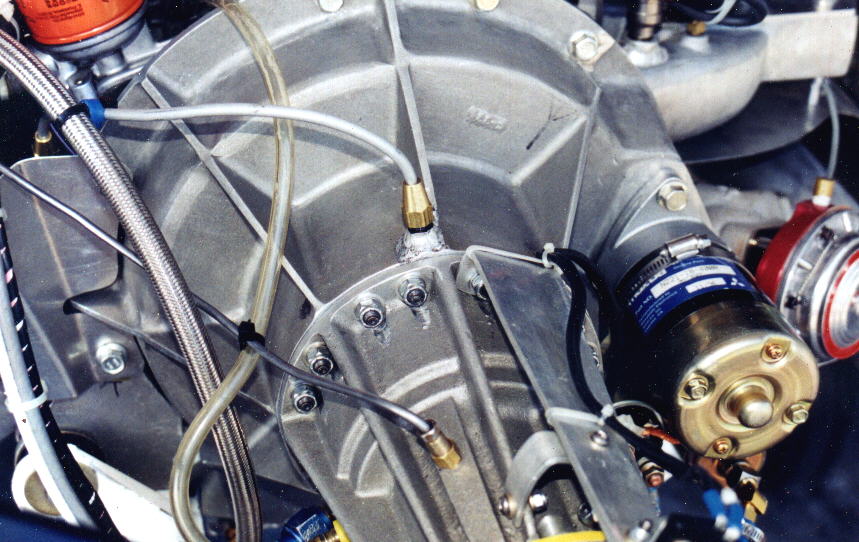
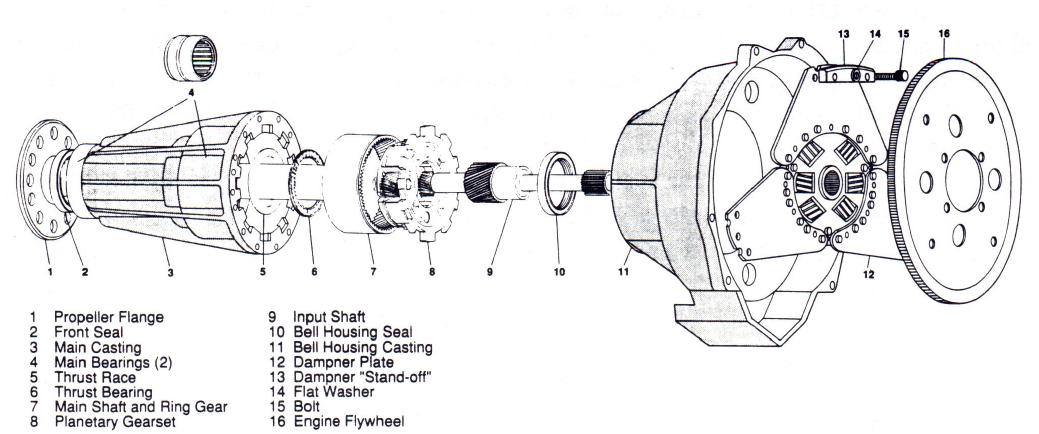
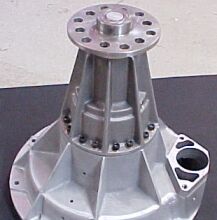
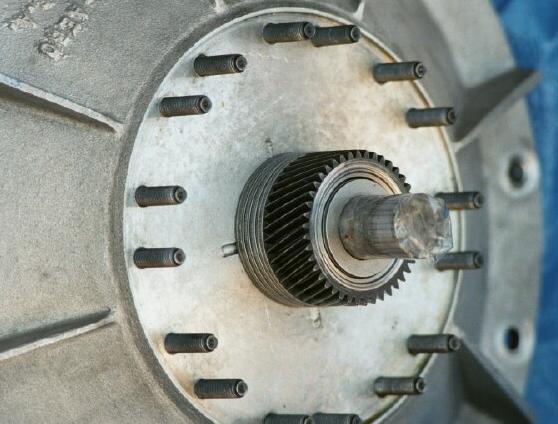
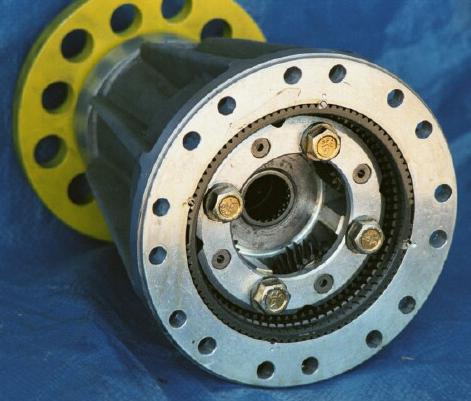
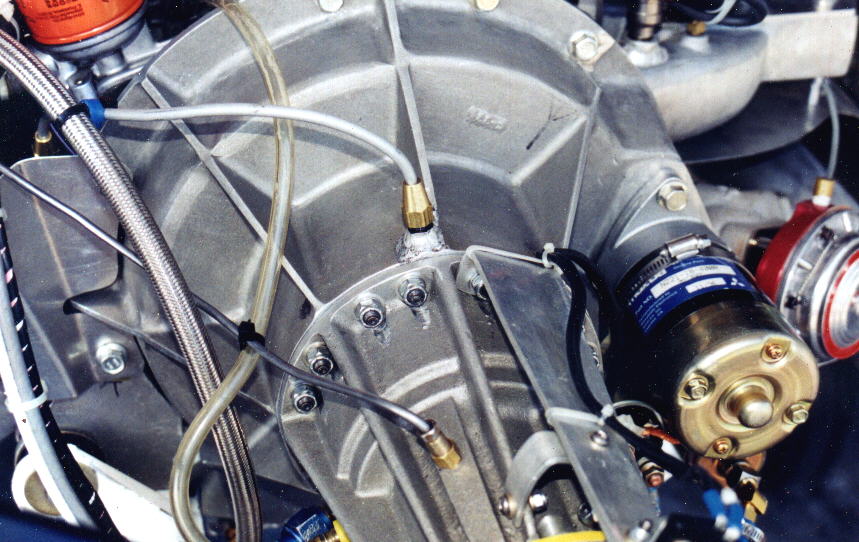
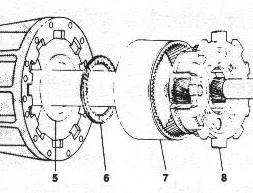
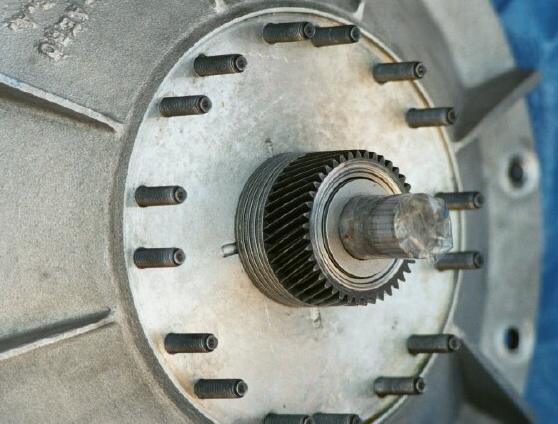
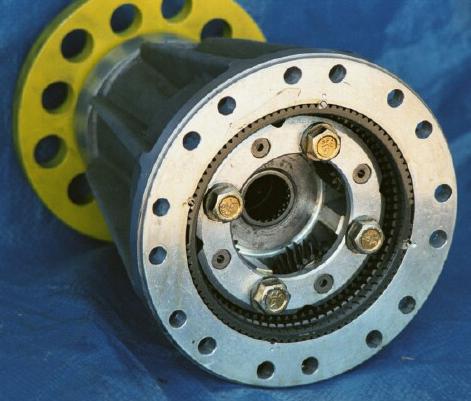
Also, do you know if the female splined flange in the damper plate (see
attached pic) is based off stock transmission parts?
Thanks
Cary
Yes the gear set are from the latter versions of the C6 called E4OD.
Yes on the prop shaft and flange. Supposedly a AA Fuel dragster rear axle.
Yes the damper plate is based on stock parts. I have not figured
out what make of transmission they come from yet.
Sluson Transmission parts has a catalog showing a lot of
auto transmission parts.
http://www.slauson.com/
Paul Lamar
Hi Paul,
You have mentioned several times over the years that Tracey's PSRU is NOT suitable
to handle the loads imposed by heavy constant speed props.
If Tracey's prop shaft is from a dragster rear axle, what part of the overall assembly
do you think is the weak link? The prop shaft appears to have good bearing support
and good bearing spacing. Is the weak link within the gearbox or is it the flex the
gearbox could impose upon the aluminum adapter plate? Thanx, Dave M
Well Tracy will tell you the same thing. I think the 1 3/8th" shaft is a
bit undersized compared to an aircraft engine over 2 inch diameter
crankshaft. That does not sound like much but the bending moment of inertia
is diameter to the fourth power as I recall.
The other thing about the design that makes it heavy is the front ball bearing
takes both radial load and thrust load. In a two inch size it would weigh
well over 5 pounds I am guessing. Ross did the smart thing and used needles
in that application as well as needle thrust bearings on a two inch hollow shaft.
Not only are they much lighter in weight they are much cheaper. The original Ross
gear box was ten pound lighter than Tracy's. Some of them are still flying
30 years later. True they had a few minor problems like no thrust bearing
for the helical sun gear but that problem was fixed near the end of the company.
A copy with the six pinion gear set and Tracy's torque isolator
design would be great.
Paul Lamar
--
The Rotary Engine NewsLetter. Powered by Linux.
ACRE NL web site.
http://www.rotaryeng.net
Youtube key word UTUBPLEASE
Copyright 1998-2009 All world wide rights reserved.