Here is Bud's opinion on planetary gears the rotaries have been
flying with for the last 38 years.
The truth is the planetary has six times the critical line contact
length of any spur gear of the same width and that is why they have
been used in all size aircraft engines for the last 100 years.
Just because you can rebuild a racing engine does not mean you are a
competent engine designer or gear box designer let alone aircraft
engine designer. I know a lot of race engine builders :) Just about
every SCCA racer builds his own engines.
Paul Lamar
"What about planetary gears in a PSRU? I choose to use the best for
safety and dependability in the Geared Drive. For this reason, I am
against the use of planetary gears in a PSRU. Consider what they were
designed for; to change an automatic transmission from one gear and
into another. They were designed to work at high RPM for only short
periods of service. They are very small and turn at ultra high RPM
when in continuous use, and from twenty plus years of personal
experience in professional auto racing, my personal opinion is that
there is any way that planetary gears can possibly hold up long term.
The strongest and most dependable kind of gear is a straight cut
spur, which is what I chose to use in the Geared Drive PSRU. "
The next generation of high bypass jet engines from GE will use
planetary gears to drive the fan.
http://www.geae.com/engines/commercial/genx/ C. Smith
Jack Kane has an interesting note on his website:
http://www.epi-eng.com/propeller_reduction_technology/implementation_overview.htm
#######
On that subject, a big problem we have seen when trying to use
automotive planetary hardware in a PSRU is the fact that the needle
bearings inside the planet gears often do not have an acceptable life
under the applied loads. We require an L-10 life of at least 2000
hours for rolling element bearings. We do not consider 200 hours (or
even 500 hours) acceptable.
Here is an example. Consider the use of a 6-planet E4OD front
planetary gearset. The available ratios are 1.538 (Ring-driving,
Sun-fixed, same direction), 1.857 (Sun-driving, Carrier-fixed,
reverse direction) and 2.857 (Sun-driving, Ring-fixed, same
direction). At 6000 input RPM, 300 HP applies 263 lb-ft of torque to
the gearbox. Using the sun-driving, carrier fixed (1.857 ratio)
arrangement, the planets spin at 14000 rpm and the load applied to
each set of planet-gear needle bearings is 884 pounds. Under those
conditions, the expected life of the planet-gear needle bearings is
195 hours, assuming ideal conditions and fully-equal load
distribution. In the Sun-driving, Ring-fixed configuration (2.857
ratio), the planet speed drops to 9100 RPM but the bearing load is
still 884 pounds, giving an expected life of 296 hours. However,
using the Ring-driving, Sun-fixed arrangement (1.538 ratio), the
planet-gear speed is also 9100 RPM but the bearing load drops to 475
pounds (at the same 300 HP, 6000 RPM input). In that configuration,
the expected life of the planet bearings is 2344 hours. Quite a
difference depending on the gearbox configuration, yes?
########
As far as i can see from RD-1C pictures on Tracy's website, outer ring
is fixed, sun ie. middle gear is input, and planet wheel carrier
transfers the power to the prop. So:
2.857 (Sun-driving, Ring-fixed, same direction)
In the Sun-driving, Ring-fixed configuration (2.857 ratio), the
planet speed drops to 9100 RPM but the bearing load is still 884
pounds, giving an expected life of 296 hours.
I don't have E40D needle bearing specs, so can somebody check what's the
validity of 296 hour@300 hp/6000 rpm claim...
Cheers,
Petri
Assuming for the moment all this is true and I have not checked it yet.
Yes but nobody runs the engine full power for 100% of the time.
Lyc. and Cont. aircraft engines are limited to full power for 5 minutes
during take off and climb out.
As you climb out to altitude at full power power falls off to about %80
power at 8000 feet. We don't have an engine that will generate 300 HP at
6000 RPM. Yes at 7500 RPM but not at 6000. Typically people back off to
save fuel at that point.
Early three and four planet... Ross planetaries have as much as 2400
hours on them so far in rotary engine powered aircraft use. The latest
versions have six planets and are rated for Ford diesel pickup trucks
with 650 foot pounds of torque. I have never seen one with worn out
needle bearings. I have seen them with the sun gear teeth cleaned off
due to poor machining of the gear box.
The cost of overhaul is cheap as the complete gear set of off the shelf
10 pound Ford planetary is less than $200.
If you need more grunt there is always the Allison.
Jack Kane would have you use one of these rock crusher porker gear sets
:) The major problem is aluminum gear box expansions due to heating
which increases the back lash.
So far no Chev V8 has made it past 300 hours in an aircraft to my
knowledge. The Orenda, after spending 50 million on re-design, had a
final 1200 hour TBO.
The Merlin had a TBO of 1000 hours and few made it that far due
to combat damage or war emergency power. The planetary AC radials used
in commercial airline service had TBO's of up to 3000 hours.
Paul Lamar
------------------------------------------------------------------------
Checking from SKF calculator, at
www.skf.com - Calculations - Bearing life
Assuming 16x22x20 needle bearing on v=12 oil (SAE30@100C) with nc=0.5
300 hp - 4.0 kN force (887 lb), 9100 rpm, gives L10h=260h L10ah=320h
200 hp - 2.7 kN force (591 lb), 9100 rpm, gives L10h=950h L10ah=1130h
160 hp - 2.1 kN force (473 lb), 9100 rpm, gives L10h=2190h L10ah=2600h
So, if assumptions are on the right side, 20B engine could be just too
much for an E40D unit.
Cheers,
Petri
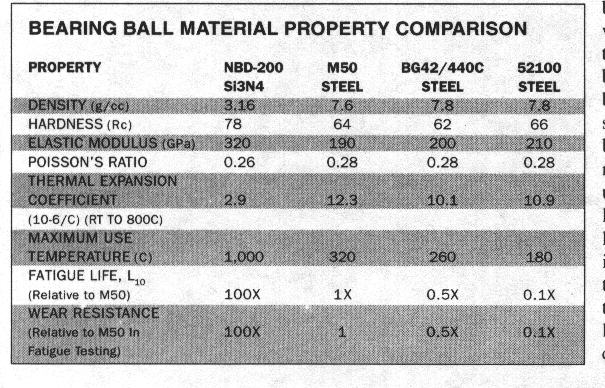
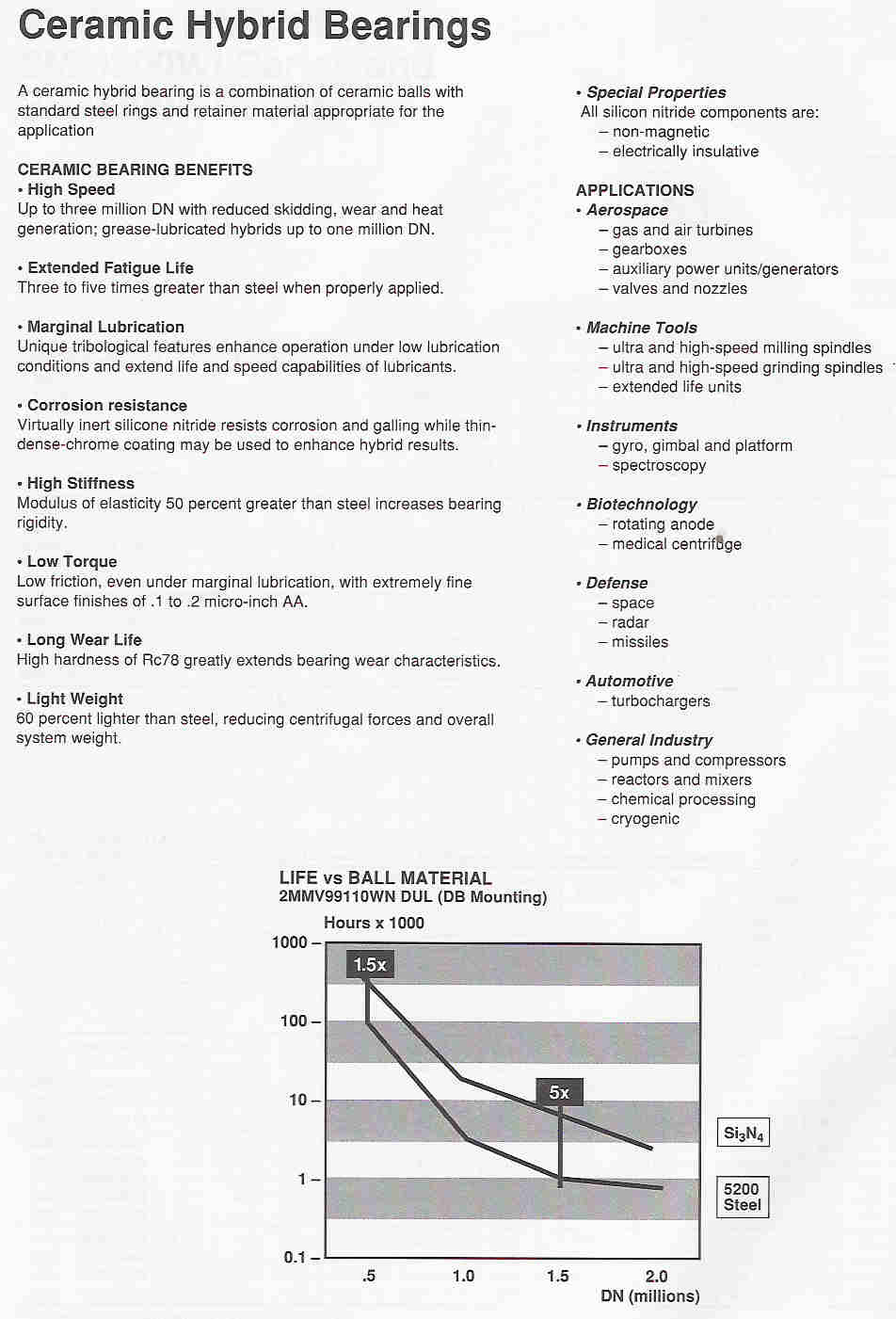
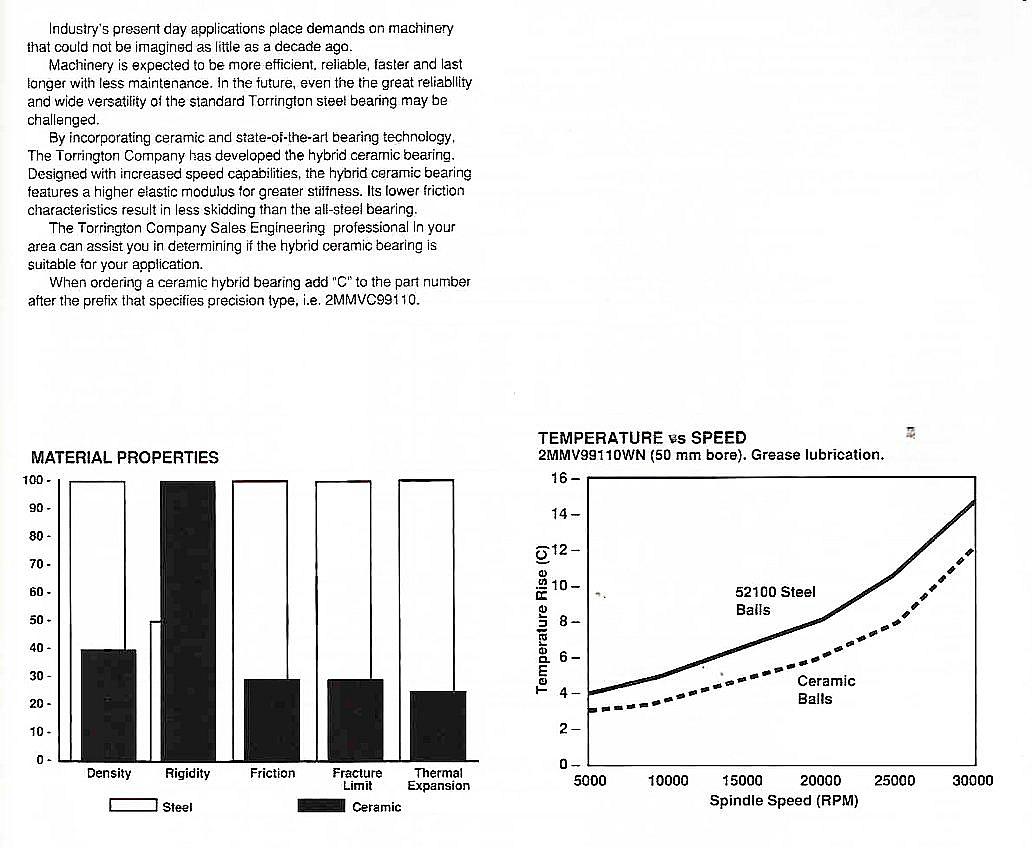
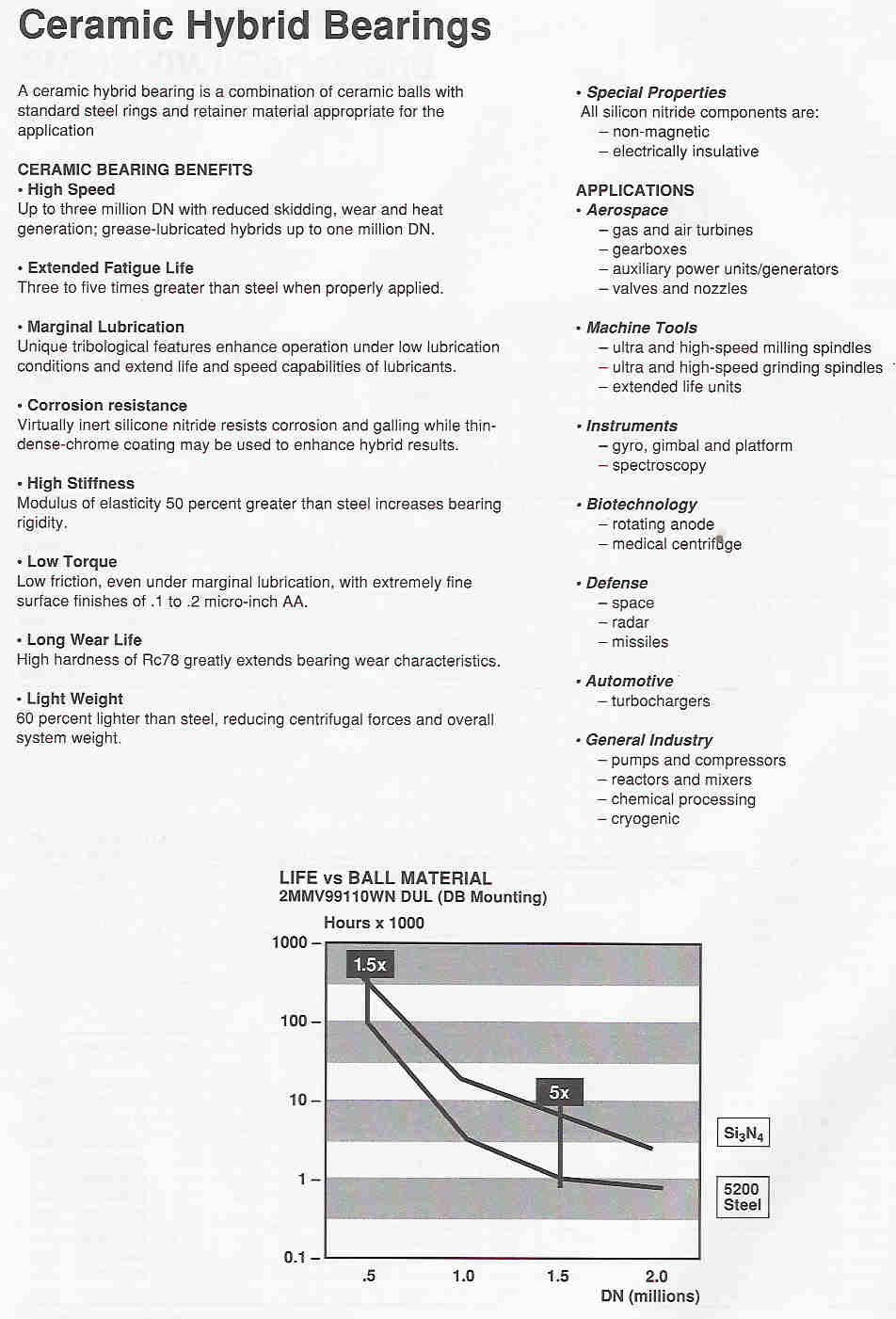
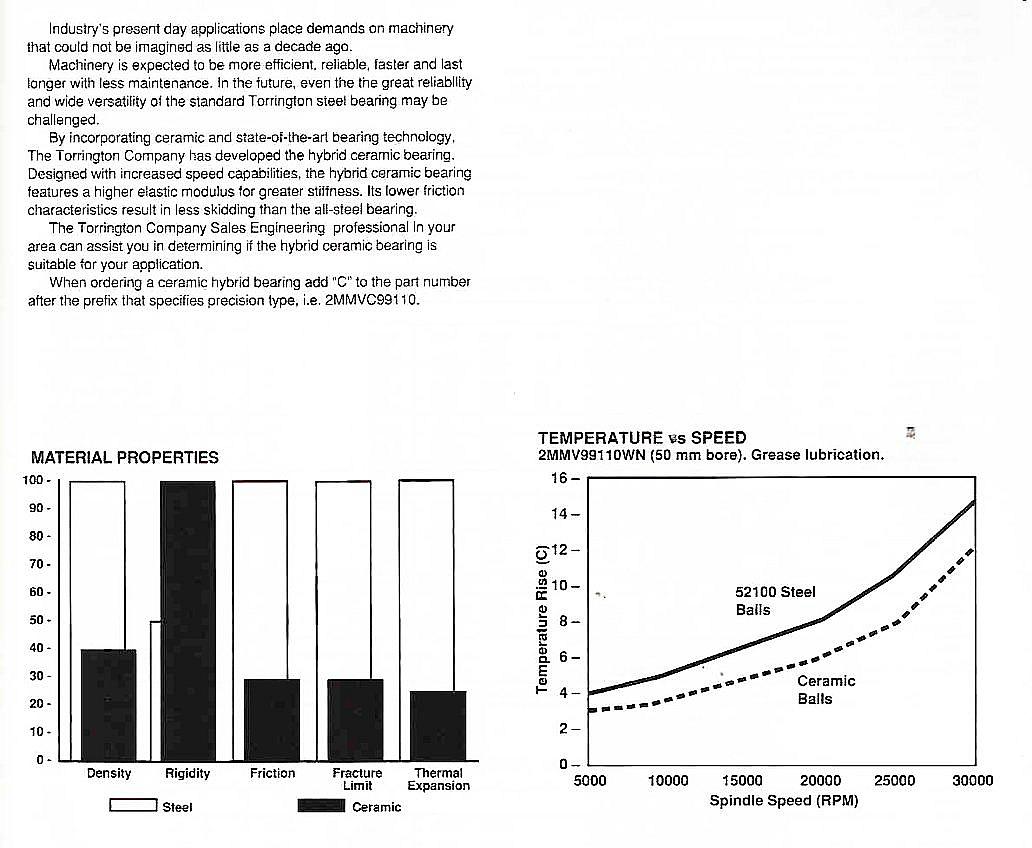
One can always take the steel needles out and replace them with silicon
nitride as used in 30,000 RPM machine tool spindles and Formula 1 cars.
They are ten times better :)
Paul Lamar
--
The Rotary Engine NewsLetter. Powered by Linux.
ACRE NL web site.
http://www.rotaryeng.net
Youtube key word UTUBPLEASE
Copyright 1998-2009 All world wide rights reserved.