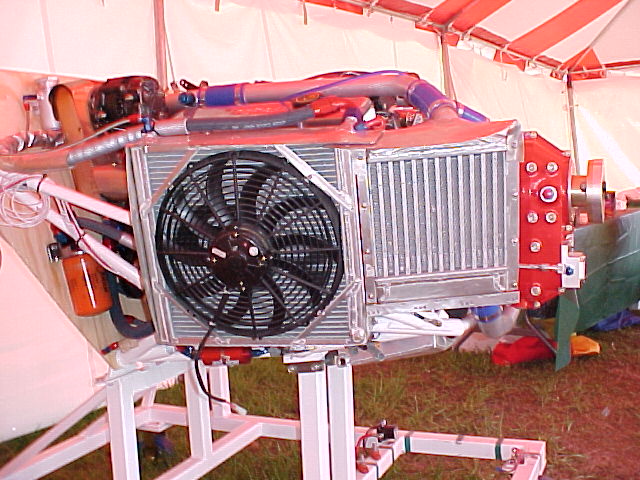
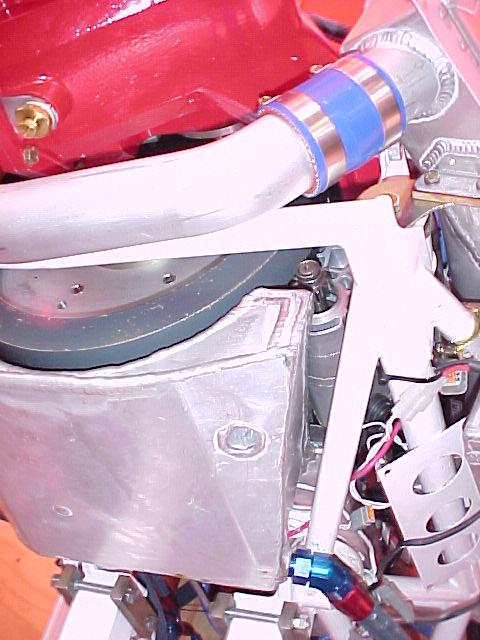
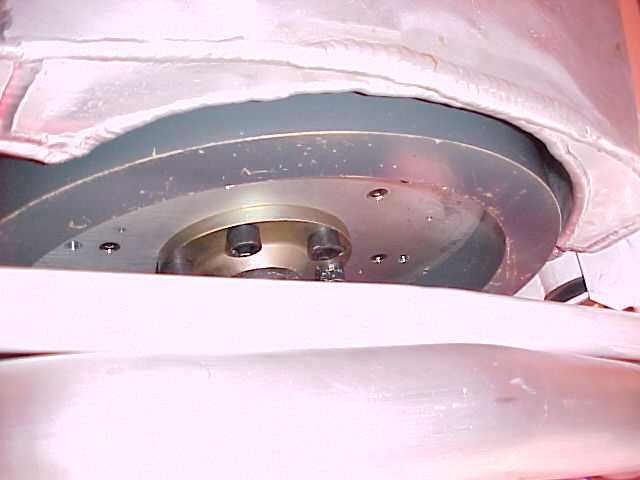
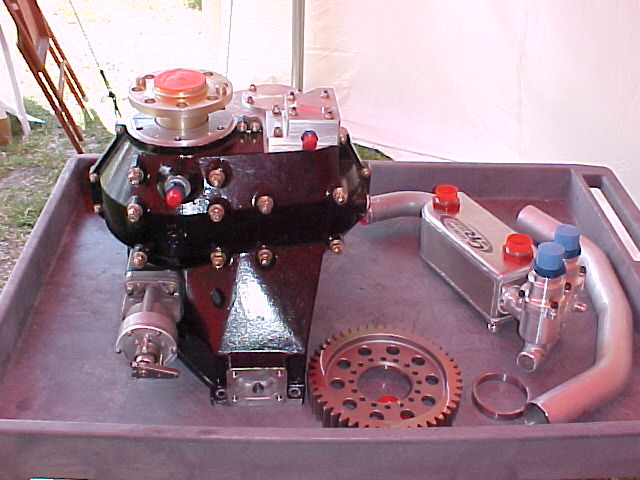
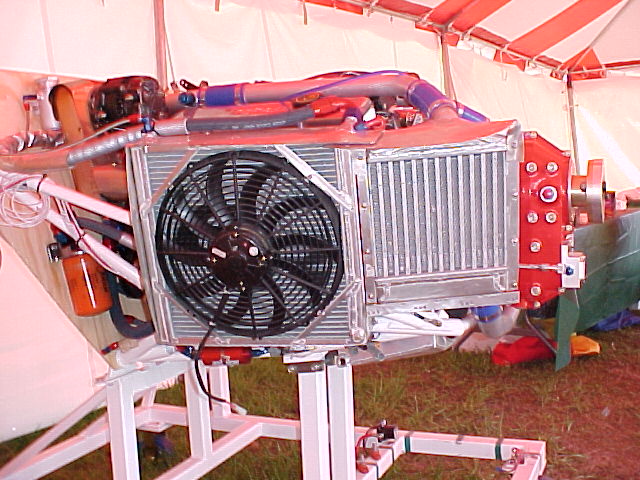
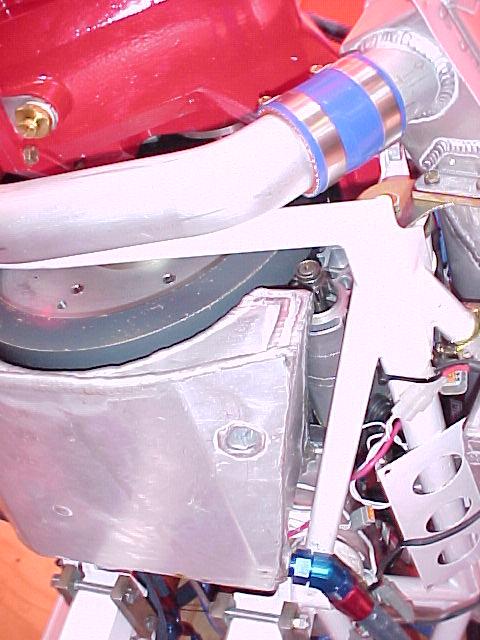
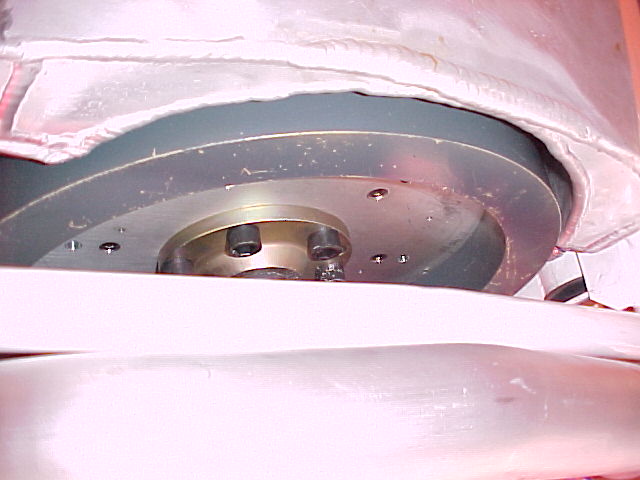
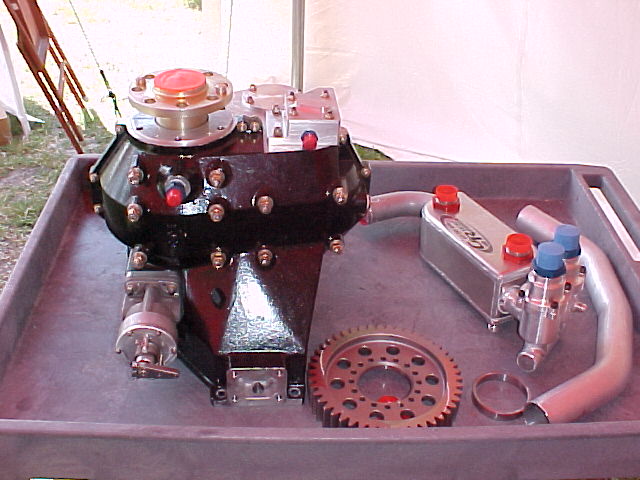
Here is Bud's opinion on planetary gears the rotaries have been
flying with for the last 38 years.
The truth is the planetary has six times the critical line contact
length of any spur gear of the same width and that is why they have
been used in all size aircraft engines for the last 100 years.
Just because you can rebuild a racing engine does not mean you are a
competent engine designer or gear box designer let alone aircraft
engine designer. I know a lot of race engine builders :) Just about
every SCCA racer builds his own engines.
Paul Lamar
"What about planetary gears in a PSRU? I choose to use the best for
safety and dependability in the Geared Drive. For this reason, I am
against the use of planetary gears in a PSRU. Consider what they were
designed for; to change an automatic transmission from one gear and
into another. They were designed to work at high RPM for only short
periods of service. They are very small and turn at ultra high RPM
when in continuous use, and from twenty plus years of personal
experience in professional auto racing, my personal opinion is that
there is any way that planetary gears can possibly hold up long term.
The strongest and most dependable kind of gear is a straight cut
spur, which is what I chose to use in the Geared Drive PSRU. "
The next generation of high bypass jet engines from GE will use
planetary gears to drive the fan.
http://www.geae.com/engines/commercial/genx/ C. Smith
Jack Kane has an interesting note on his website:
http://www.epi-eng.com/propeller_reduction_technology/implementation_overview.htm
#######
On that subject, a big problem we have seen when trying to use
automotive planetary hardware in a PSRU is the fact that the needle
bearings inside the planet gears often do not have an acceptable life
under the applied loads. We require an L-10 life of at least 2000
hours for rolling element bearings. We do not consider 200 hours (or
even 500 hours) acceptable.
Here is an example. Consider the use of a 6-planet E4OD front
planetary gearset. The available ratios are 1.538 (Ring-driving,
Sun-fixed, same direction), 1.857 (Sun-driving, Carrier-fixed,
reverse direction) and 2.857 (Sun-driving, Ring-fixed, same
direction). At 6000 input RPM, 300 HP applies 263 lb-ft of torque to
the gearbox. Using the sun-driving, carrier fixed (1.857 ratio)
arrangement, the planets spin at 14000 rpm and the load applied to
each set of planet-gear needle bearings is 884 pounds. Under those
conditions, the expected life of the planet-gear needle bearings is
195 hours, assuming ideal conditions and fully-equal load
distribution. In the Sun-driving, Ring-fixed configuration (2.857
ratio), the planet speed drops to 9100 RPM but the bearing load is
still 884 pounds, giving an expected life of 296 hours. However,
using the Ring-driving, Sun-fixed arrangement (1.538 ratio), the
planet-gear speed is also 9100 RPM but the bearing load drops to 475
pounds (at the same 300 HP, 6000 RPM input). In that configuration,
the expected life of the planet bearings is 2344 hours. Quite a
difference depending on the gearbox configuration, yes?
########
As far as i can see from RD-1C pictures on Tracy's website, outer ring
is fixed, sun ie. middle gear is input, and planet wheel carrier
transfers the power to the prop. So:
2.857 (Sun-driving, Ring-fixed, same direction)
In the Sun-driving, Ring-fixed configuration (2.857 ratio), the
planet speed drops to 9100 RPM but the bearing load is still 884
pounds, giving an expected life of 296 hours.
I don't have E40D needle bearing specs, so can somebody check what's the
validity of 296 hour@300 hp/6000 rpm claim...
Cheers,
Petri
Interesting analysis. But I wonder if Bud is talking about the
same thing. The RD-1B is sun driven, carrier fixed and the
reverse direction ratio is 2.17, not 1.857 as Bud suggests so
there is something wrong with his calculations right there.
Also, Bud is talking about the stock needle bearings(?), but
Tracy uses upgraded needle bearings so Bud is probably
referencing the wrong rating table (for the wrong set of needle
bearings)
Paul is also right about the duty cycle. Tracy rates the
6-pinion versions to only 200h.p. continuous and 300h.p.
intermittent. Most of the time in cruise I am seeing less than
100hp. Going from 300 to 200 hp probably increases the expected
life by an order of magnitude.
Not only that, but the needle bearings are easy to replace. I
can do it in less than 2 hours for less than 20 bucks including
the RTV. I last inspected mine at around 300 flight hours and
there was no measurable wear.
IMHO, the plenary has long since proven itself as the best
power/weight design, although obviously many designs can suit
the need if done correctly. The Ford 6-pinion via Tracy's box
has long since proven reliable and well-suited for the rotary in
aircraft use. For Bud to deny those obvious truths equates in
my mind to ignoring the facts in order to sell stuff.
But I do feel bad for Bud. It must really suck to have almost
killed his daughter because he ran the fuel lines too close to
the exhaust. Not that I haven't ever done anything stupid like
that, I was just lucky to not have have my daughter or wife with
me at the time.
--
David Leonard
Turbo Rotary RV-6 N4VY
http://N4VY.RotaryRoster.net
http://RotaryRoster.net
That was Jack Kane David and not Bud. I don't think Bud is at that
level of engineering :) There is a Ford part that gives 1.87 which we
don't use of course. The main reason those guys don't like planetaries
is they need the off set upwards or the V8's would not fit in the cowls.
The needle bearings in question are inside the planets and not the easy
to replace thrust needle bearings. Those can always be slowed by stacking.
As a humorous note one V8 supplier, I think it was EngineAir, used a
sledge hammer approach to the torque variation problem by simply adding
mass to the flywheel :) The V8 is much smoother to begin with than a six
or four cylinder piston engine. Probably almost as smooth as a rotary :)
I am kidding. A two rotor is about as smooth as a six piston engine.
Paul Lamar
--
The Rotary Engine NewsLetter. Powered by Linux.
ACRE NL web site.
http://www.rotaryeng.net
Youtube key word UTUBPLEASE
Copyright 1998-2009 All world wide rights reserved.