Hello Paul et al,
I am now starting with my B.Eng thesis work, which I decided to be:
A Rotary PSRU for constant-speed propellers.
Because of availability, i think it is best to design this unit first
for Renesis engine, and for FAA commuter class req's. Aerobatic, 13B and
20B can come later.
First, I need to find valid parameters to design the unit.
Regarding this - I just found out that on Contact magazine Sep-Oct 2007,
Issue 90, there has been an article named:
#
A Vibration Study of a Mazda 13B Installation in a Van?s RV6A. Steve
Boese goes about studying vibrations in a thorough manner.
#
Um, er... :) does anybody have that article - and could be willing to
scan it, and send it to me?
I have ordered the issue, but it takes a couple of weeks till it arrives.
I guess that subject could interest others too. What you think Paul,
would it be possible to make it available on rotaryeng site, or posted
on newsletter feed?
Cheers,
Petri
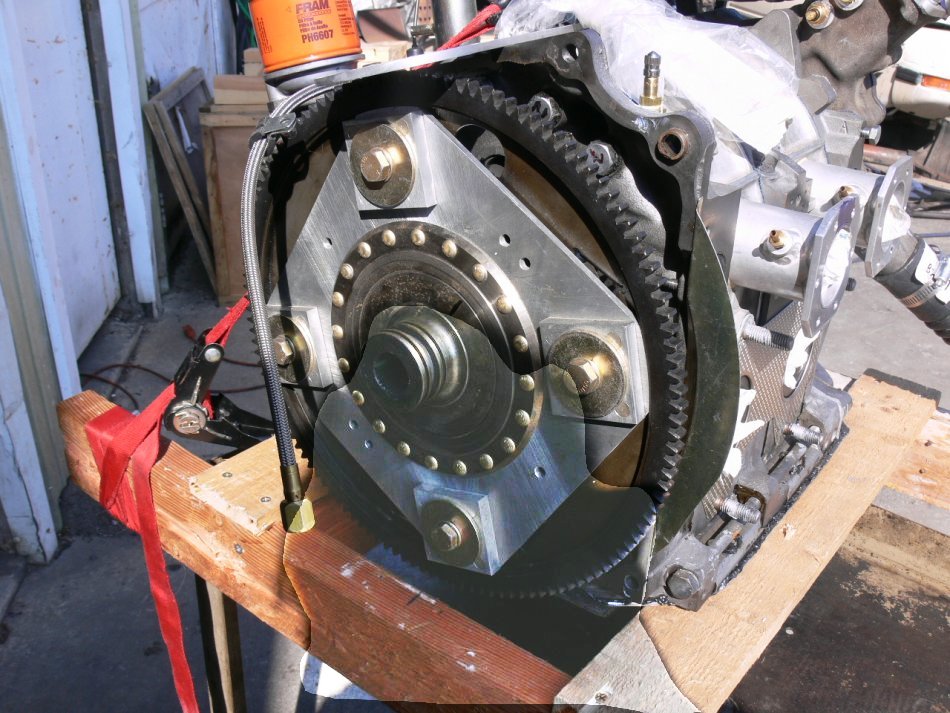
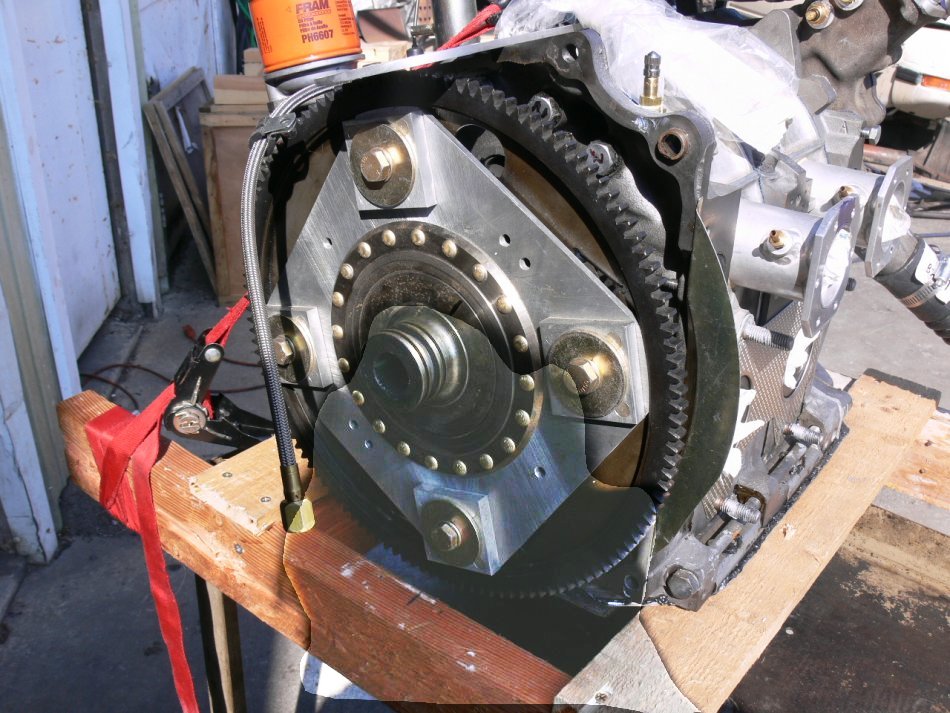
The best thing to do is copy what works. Tracy's isolator has worked fine
for years and can be tuned by changing the durometor and or the diameter
of the
rubber bushing. We pretty much know the theory. No need to reinvent the
wheel.
Paul Lamar
Paul,
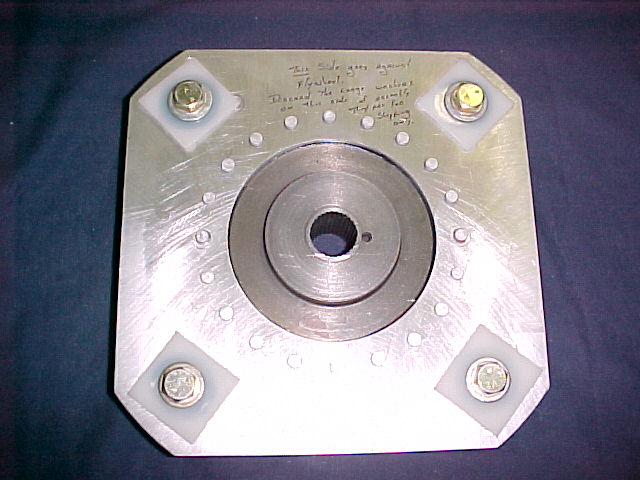
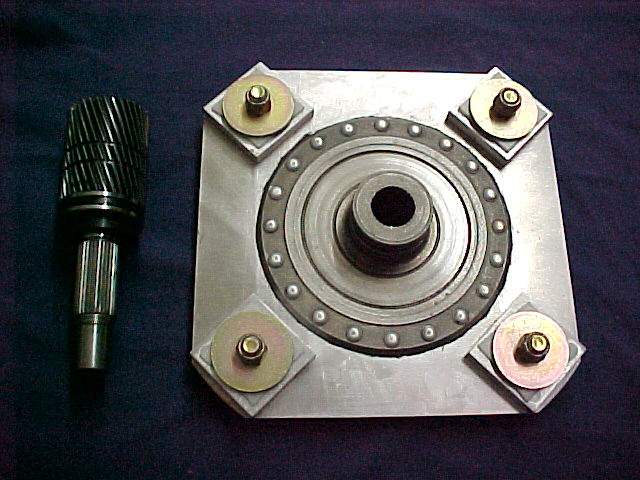
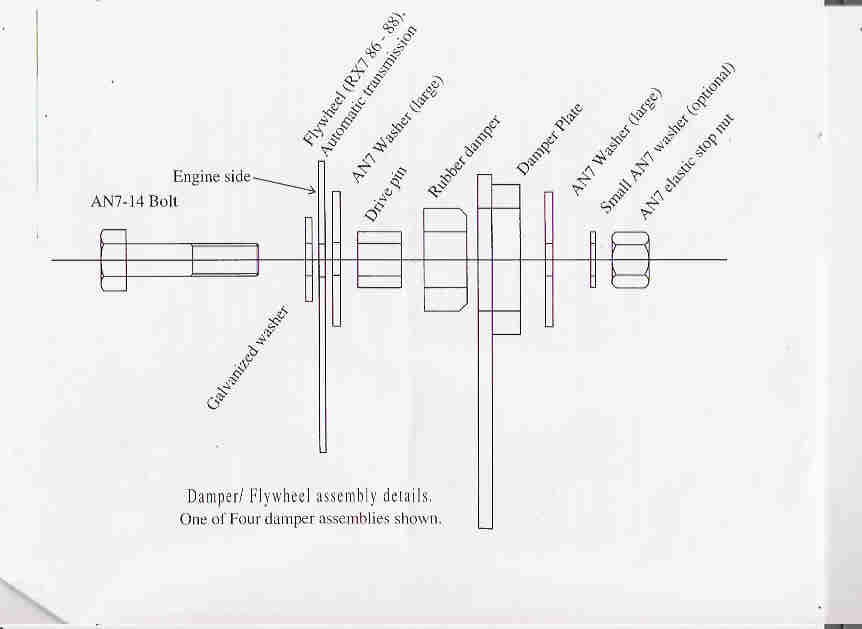
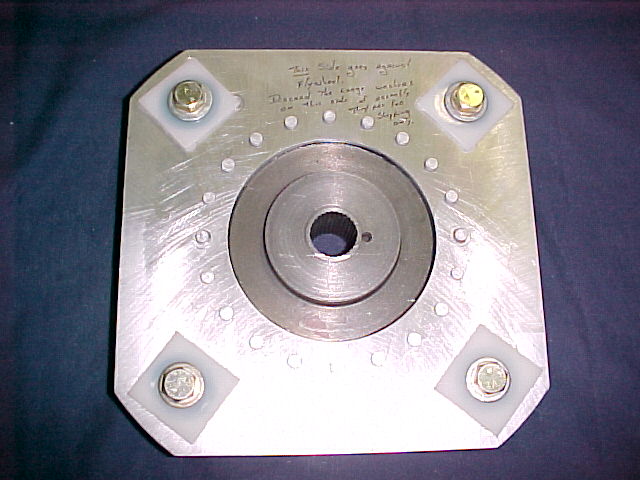
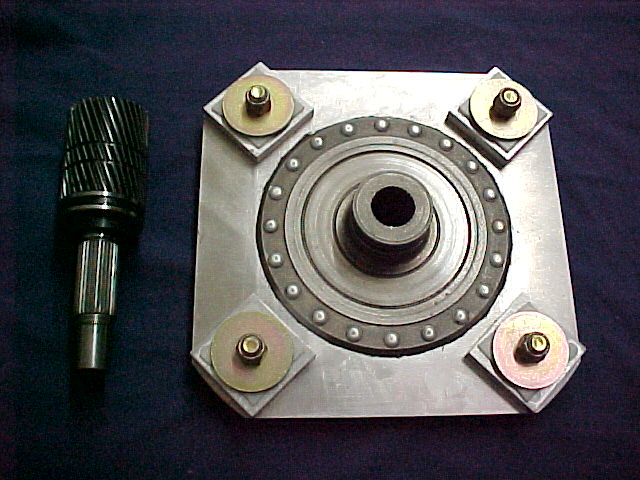
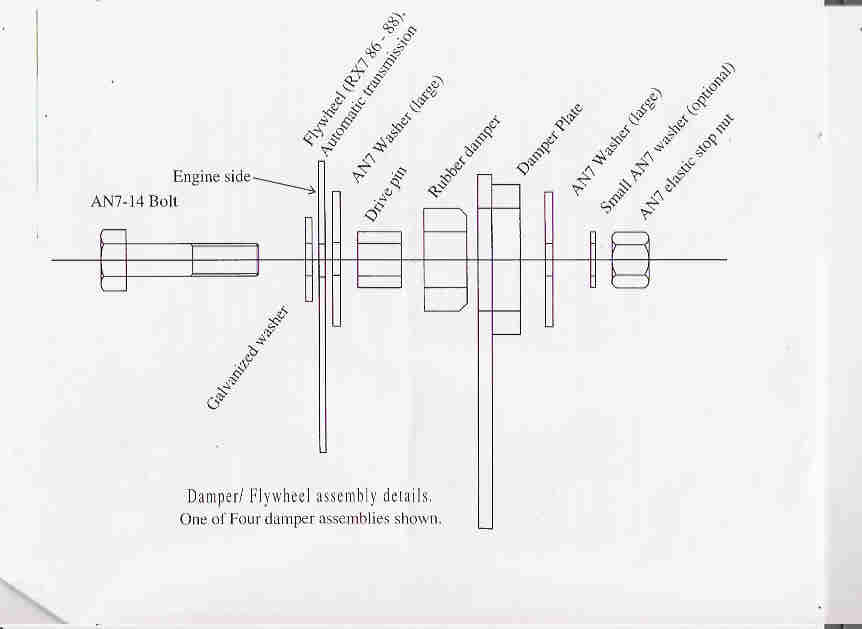
The picture of the damper plate seems to have the bolts the wrong way
around, not as shown on the diagram. All the pulses would seem to be on
the threads, which does not seem good.
Colin Smith
We did that for a reason. We needed some S beam clearance on that engine.
Later S beams were redesigned to solve that problem. This is not a problem
in the new Motor-plate/Motor-mount Jeff is building.
The bolt bearing stress is also not a problem as the vast majority of the shear force is
transmitted by friction between the steel spacer and the flex plate in a bolted
single shear joint. Not by direct contact between the bolt shank and the material
the bolt hole is in. Only in a loose pin joint is the bearing stress the major issue.
Bolted joint theory is very complex. Particularly by the fact this joint is rotating
at high RPM and subject to centrifugal loads on the bolt, washers and spacer. The
weight of the over hanging bolt enters into the stress calculations. These loads
are mitigated to a small degree by the stiffness of the rubber bushing.
Bolted joints like this are additionally complicated as the flex plate is subject to a local
bending load. It is beyond my ability to analyze it. FEA is about the only way
to get a real handle on what is really going on in this joint.
I will say a another large AN970-7 washer on the back side of the flex plate and an
all metal lock nut would be an improvement.
However the bottom line is; it is working so far :)
Paul Lamar
--
The Rotary Engine NewsLetter. Powered by Linux.
ACRE NL web site.
http://www.rotaryeng.net
Youtube key word UTUBPLEASE
Copyright 1998-2009 All world wide rights reserved.