Paul ,
I have been out of the loop for a couple years. Looking forward to
getting back to my 13B Murphy
Elite project this winter. I was hinging on the P-port as an intake
option but never really got
enough info with regard to my application to make a good decision. I am
setting the plane up for
STOL and alot of my flying will be river bars and back country strips.I
need crisp responsive low
RPM throttle response . Does the p-port intake have any low end throttle
penalty's for bush flying
as opposed to a factory 4 port intake.
Geir Anderson.
Not that I noticed. Idle is 2000 engine RPM. Prop RPM is 700.
Do you have the 2.17 gear box? If so prop RPM is then 920 RPM.
A p-port will help a lot depending on your current manifold but will
not be top HP with a 2.17:1 PSRU. It is 250 HP at 7500 but you will
not get that high with a 2.17:1. You should see about 200 HP at 6000 RPM.
Is this still your current intake manifold?
Is that Ross a 2.17:1 ?
Paul Lamar
--
I have a Ross 2.85:1
I will not be using the intake you have shown ,However if the P-port does
not suit my type of low
and slow flying I will rebuild something along the same lines .
if I remember correctly Daryl Drummond dyno'd the engine with that intake
at 180HP/7200 RPM
geir andersen
That is pretty good HP. Steve Beckman has a lot of experience flying a
p-port.
What about throttle response Steve?
Paul Lamar
--------------------------------------------------------------------------------
Paul, throttle response of our peripheral port engines was very good on the
ground and in the air, and at any point throughout the operating range. No
discernible lag. No stumble with throttle advanced from idle slightly or
full throttle when on short final, etc. so made it very nice to fly. Idle
speed approx. 1000-1200 engine rpm. But we had the throttle shaft and
plates located inside the rotor housing. Although locating the throttles in
the rotor housings is probably the optimum for response and idle speed, it
involves a lot of work. Putting a slide or throttle-body with plates/shafts
just outboard of port probably next best location.
Steve Beckham
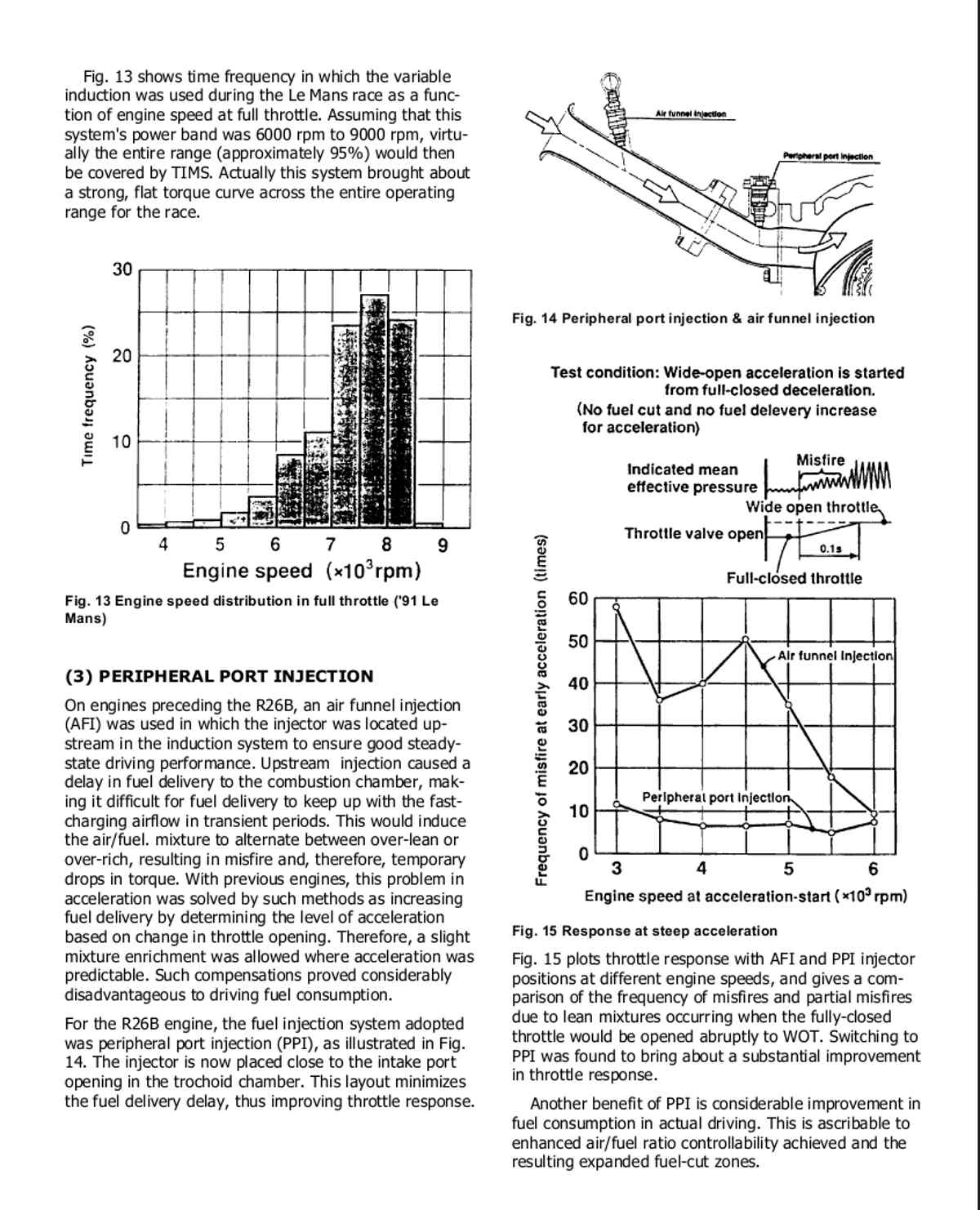
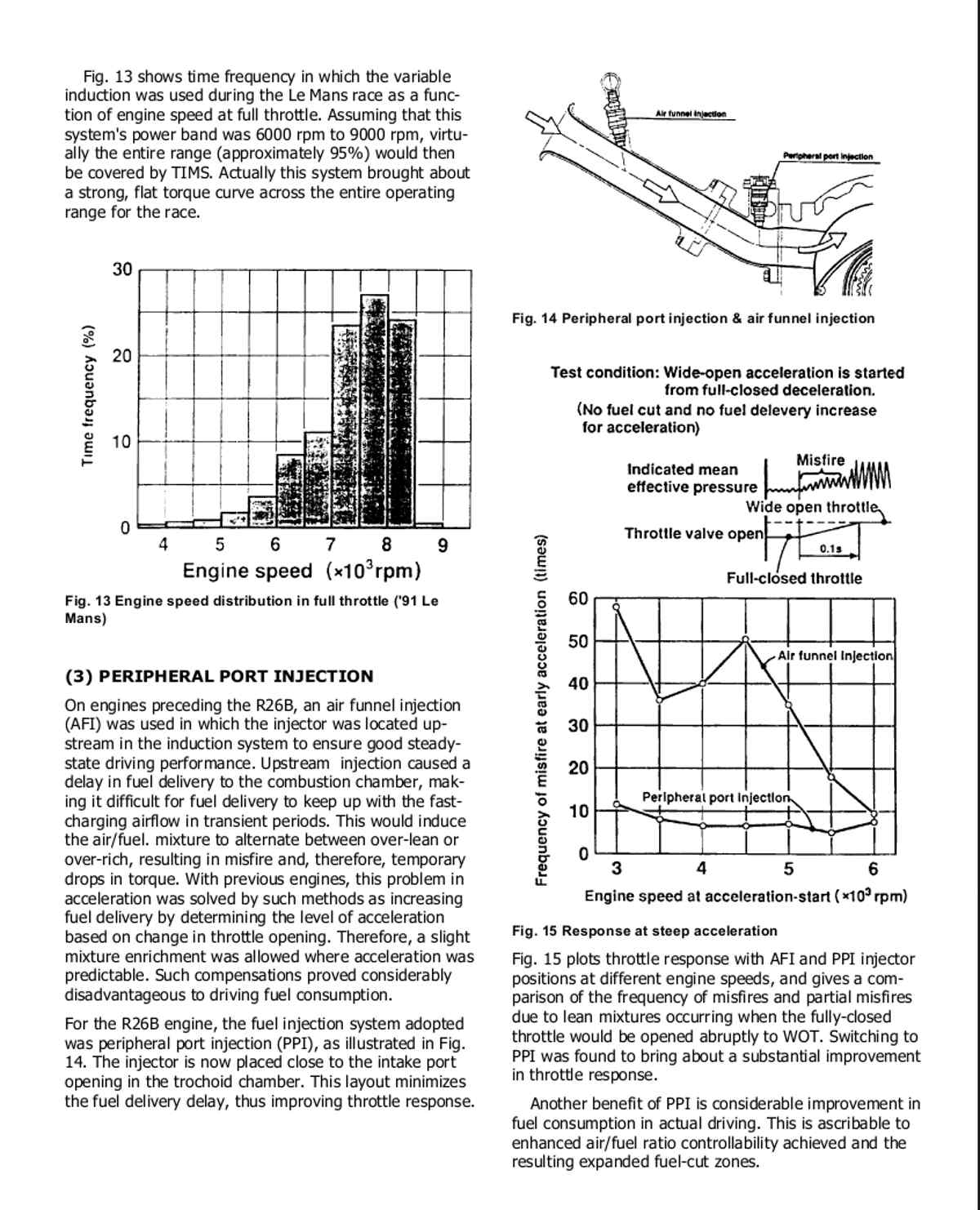
As I recall Mazda placed the injectors close to the P-port on the Lemans
engine for throttle response reasons as it is very important when road racing.
http://www.rotaryeng.net/Mazda_R26B_US.pdf
Also it might be a good idea to use a Megasquirt in this application.
The 555 system and Tracy system has no provision for rapid engine acceleration.
We did discuss it at one time by putting a special switch on the throttle knob to
temporarily enrich the mixture.
"Basically it is short stroke pancake air cylinder mounted on the slide throttle
knob inside the cockpit with a small air hose connected to the back
side of the diaphragm in the Tillotson type carb. The increased air pressure
will inject an extra shot of fuel and open the supply needle valve at the same
time. When the knob is released the diaphragm spring will slowly restore the diaphragm
and close the needle valve again.
Something like a 1 inch bore (2" OD) cylinder with a .5 inch stroke
or smaller should do the job. A spring inside the cylinder will restore the
stroke after the knob is released. A one way valve on the intake port to the cylinder
will fill the cylinder with air."
Paul Lamar
--
The Rotary Engine NewsLetter. Powered by Linux.
ACRE NL web site.
http://www.rotaryeng.net
Youtube key word UTUBPLEASE
Copyright 1998-2009 All world wide rights reserved.