Paul ,
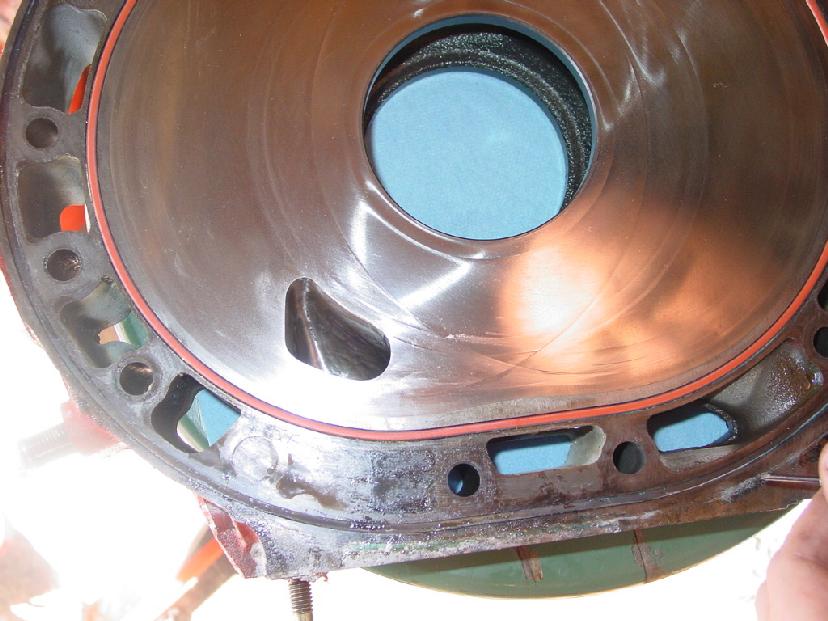
One of the rotor housings I sent has a very small chip out of the steel
liner at the
edge of the housing.They should be arriving today.
If you have time would you please take a look at it and let me know if you
have any
concerns.
Thanks,
Geir
Hi ,Paul
Just wanted to confirm my rotor housing's arrived last week.If you could
let me know
what you think on the chip , I can round up another housing if nec.
Thanks,
Geir
The chip is not a problem. They look OK. Thanks for cleaning them up.
Paul Lamar
Paul--Maybe it would be helpful for folks rebuilding with used rotor
housings if you would take a photo of the chip in the housing (and/or
other
other housings) to give builders an idea of what is servicable or not?
Steve Beckham.
That is very subjective. Some of them that look pretty bad will still work.
You may be down on power and torque in the lower RPM ranges. In the upper
RPM ranges
it hardly affects the power at all. Urban legend has it if you can get it
started it
will run without apex seals.
It all boils down to if it will start it is probably OK assuming there are
good apex
seals in it. I suspect the new apex seals and the housing come to a mutual
understanding
so to speak. A bit of wearing in of the apex seal and a bit of wearing in
of the rotor
housing to a lesser extent.
The vast majority of after market seals on the market do not have the
slight crown shape
of the stock Mazda seals. My guess is this is 99% of those after market
seals. If you
check the compression with new rotor housings and the new after market
apex seals the
compression will be down about 10%.
In one case of after market seals that I know about the housing was
scratched with only
a few hours of running. For that reason I do not recommend after market
apex seals as
the surface finish is not nearly up to Mazda standards. The stock seals
are heated with
a laser and cryogenic cooled. Technology beyond the after market
providers. The only
exception is the Ianetti ceramic seals. If you buy a set of after market
apex seals
inspect them with a high power jewelers loop and reject them if the
surface is not a
mirror finish.
Paul Lamar
Would you NOT recommend the RA seals?
Don
That is correct. I do not recommend them. You can buy stock seals
from Mazdatrix or Mears Motors in Lubbock with a discount.
http://www.mearsmotors.com/
Paul Lamar
Ugh, so many choices and so little time. I was very close to ordering a
rebuild kit for my 20B from Rotary Aviation, before I read your comment on
RA seals. Currently their kits are only available with RA "super" seals.
Last I checked I think Atkins kits were more expensive than RA's. Since you
don't recommend RA seals and assuming RA won't sell me a kit w/o them (I
haven't asked yet) do you have any suggestions about a rebuild kit? Are you
guys even using kits, or just ordering all the rebuild parts separately?
Jay
--
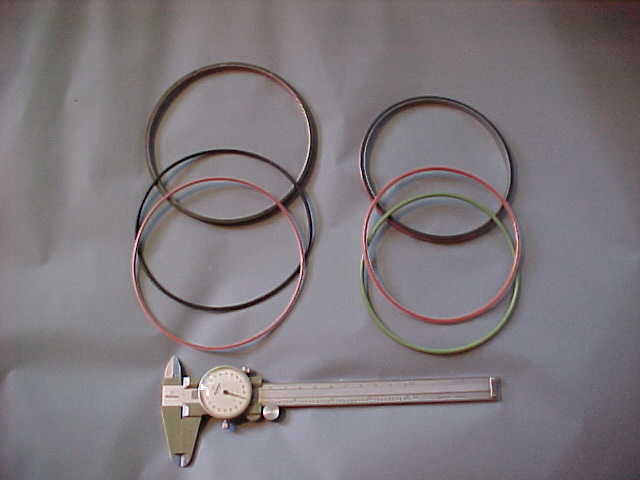
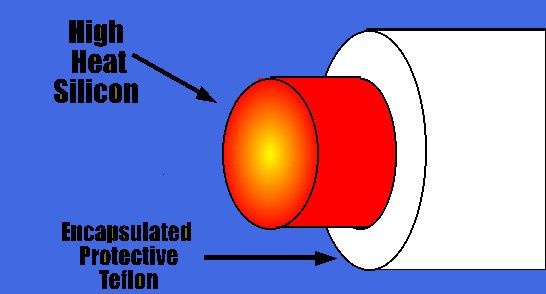
I would order the parts separately. Install Teflon Encapsulted o-rings
from Creavy.
You will need new water O-rings so get the Creavey TES versions
as they are better than Mazda and reusable. Probably cheaper too. Same
goes for the oil O-rings on the sides of the rotors.
http://www.creavey.com/
I will outline what we are talking about.
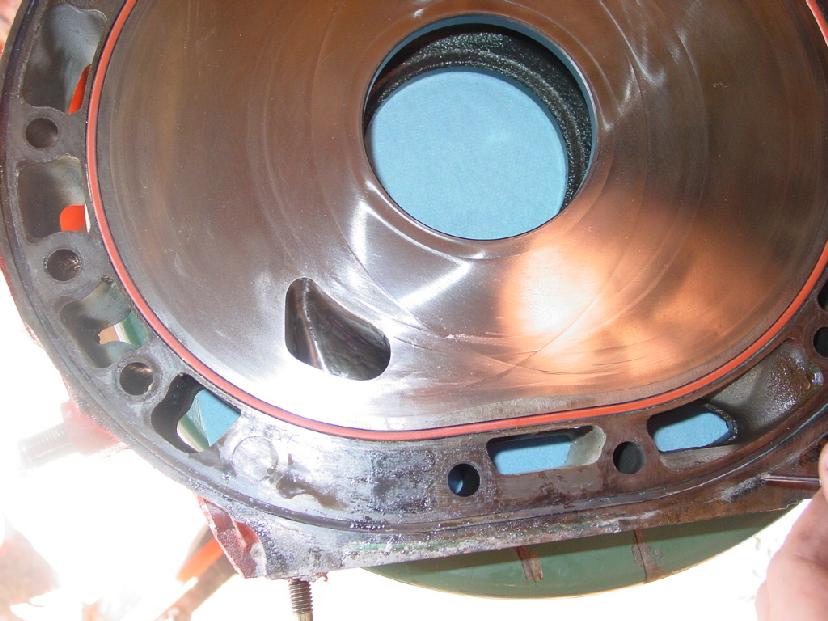
There are four coolant sealing O-rings per rotor housing.
Two outer and two inner. Two on one side two on the other.
If the slots are in the end housings there are two per end housing
surface.
There are also four oil sealing O-rings per rotor. Two on each side of
the rotor proper. These are located on the flanks of the rotor.
Two per side.
Teflon encapsulated silicone O-rings are the best there is for this
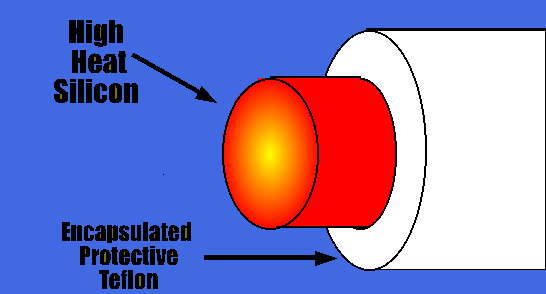
application. Teflon is about the most inert material you can
find and it is resistant to most known chemicals. Unfortunately
it is not rubber like and that is where the high temp silicone
rubber core comes into play.
http://www.creavey.com/
> 1. Inner coolant oring -
>
> circumference = 28.625
> diameter = 9.111
> slot depth = 0.062
> slot width = 0.141
> section size = 0.098
> 2. outer coolant oring -
>
> diameter = 11.340
> slot depth = 0.062
> slot width = 0.110
> section size = 0.093
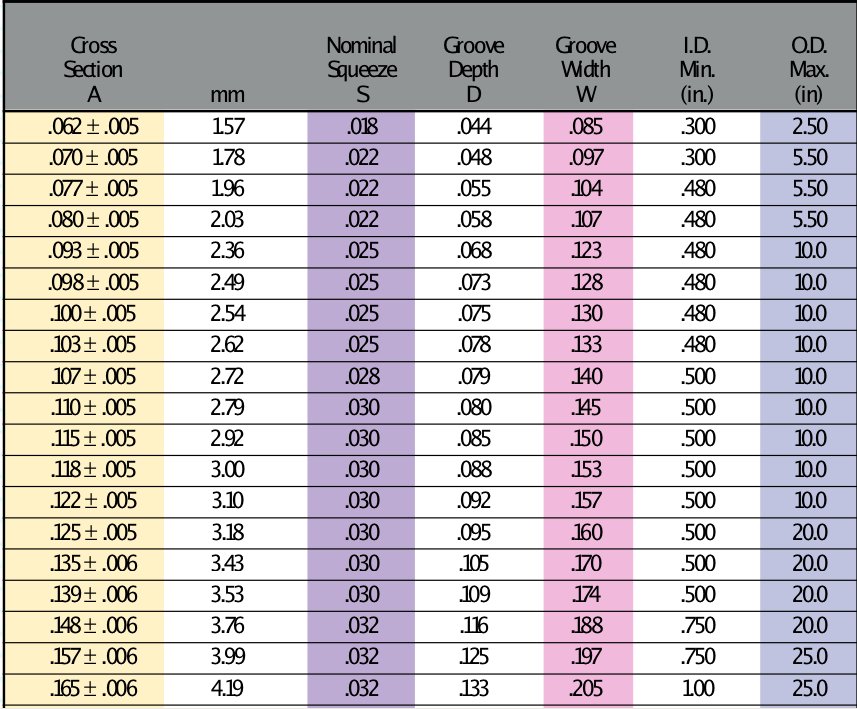
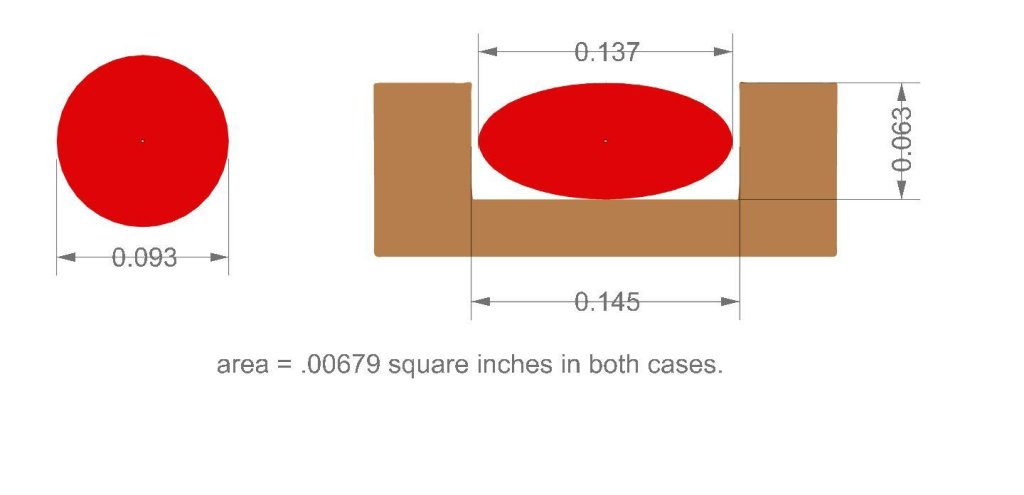
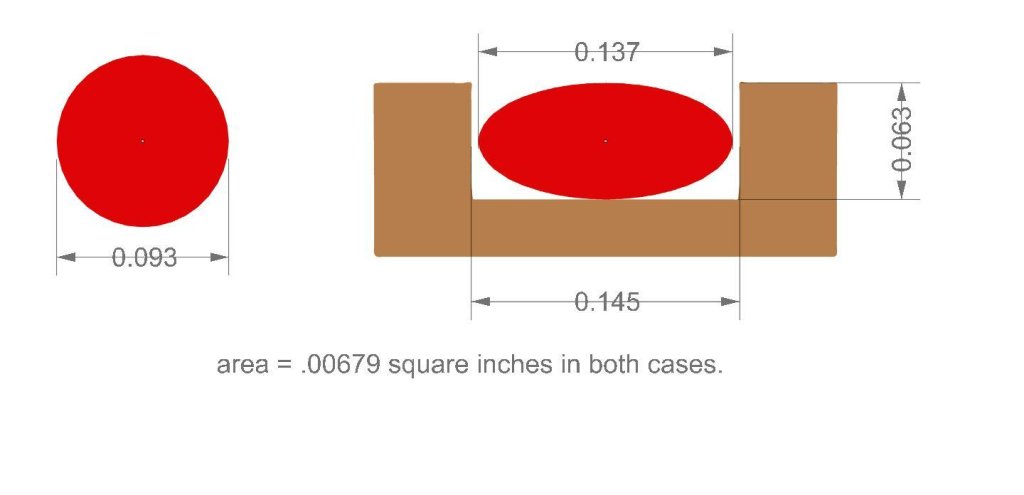
This is critical! The proper section size is .093. Not 3/32
as a 3/32 O-ring is bigger in section size than .093.
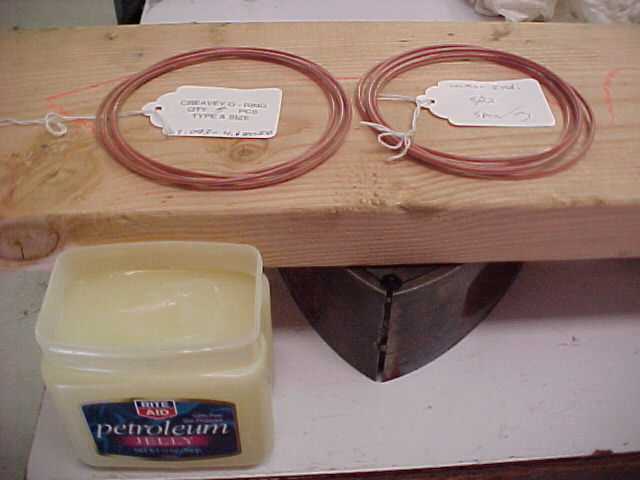
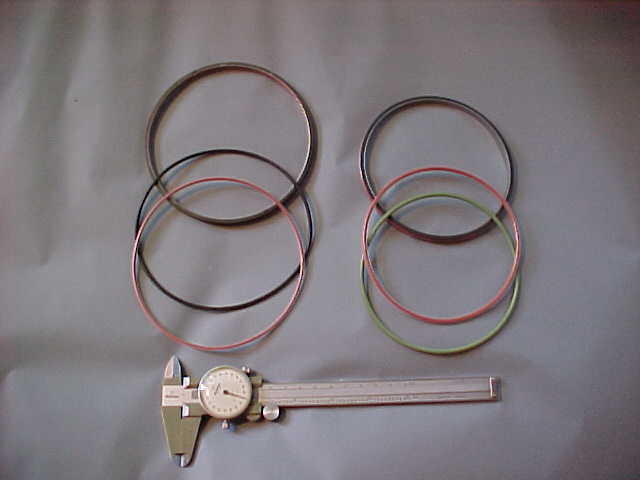
The TES O-rings are stiffer than the stock O-rings. It is harder
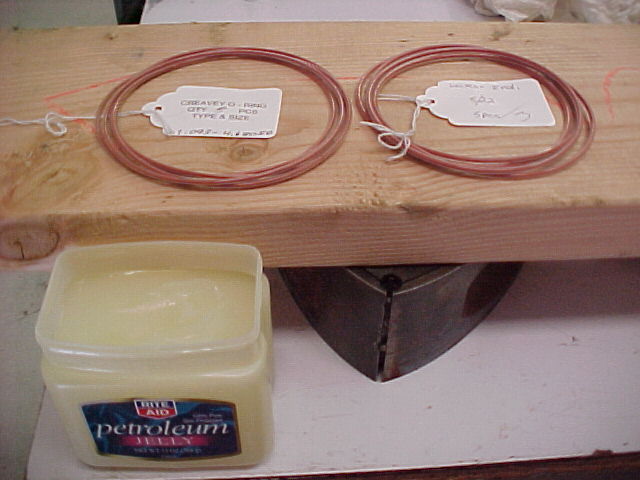
to get them to lie in the groove. Even with Vaseline. When you buy
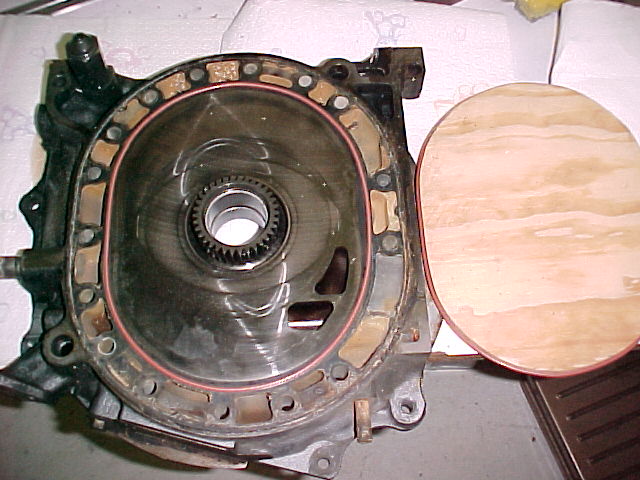
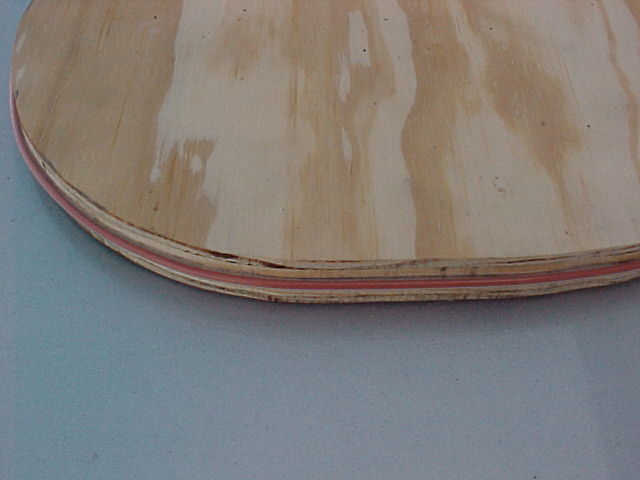
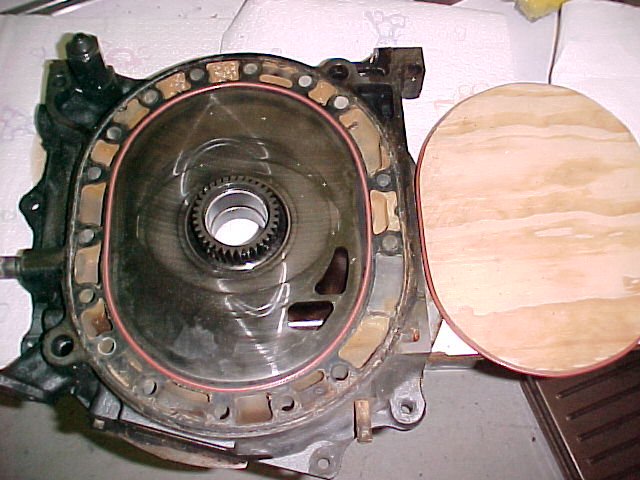
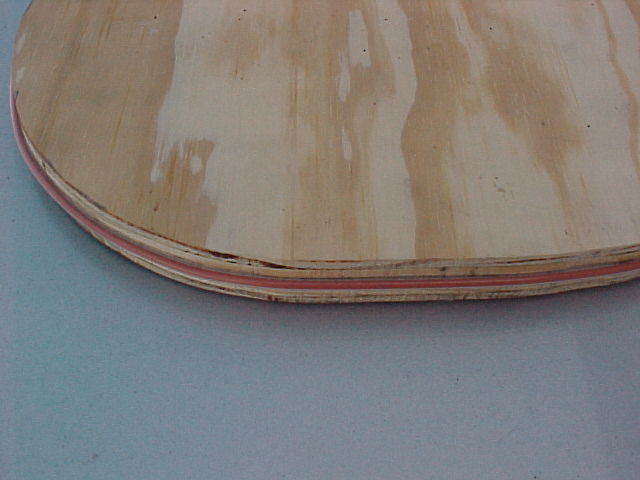
them they don't come flat. I found that using a plywood
form to pre set the slightly under size TES O-rings for a few
days works well. Here is a picture.
--------------------------------------------------------------
Oil O-rings.
I checked the installation of the oil O-rings with the new
sizes I got from Creavey. They worked perfectly and were
very easy to install. You will need a little O-ring lube
and a 2 by 8 to install them. They were also easy to remove
with no signs of distortion.
One of the secrets is if you reuse the old oil scraper rings
they must be spotlessly clean inside and out. Soak them
in carb cleaner for a few days. If you use new scraper rings
this will not be a problem of course.
The second thing to watch out for is don't nick the
rotor wall between the two scraper rings when you remove them.
Very very important!!
These can be the same or just a little more than the
stock oil O-rings from Mazda.
The proper oil O-ring sizes are:
0.093" section 4.68 inch ID
0.118" section 4.33 inch ID
Paul Lamar
The Rotary Engine NewsLetter. Powered by Linux.
ACRE NL web site.
http://www.rotaryeng.net
Youtube key word UTUBPLEASE
Copyright 1998-2009 All world wide rights reserved.
Paul-

I started my teardown last night after finally getting a second copy of
the Turrentine dvd.  I'm one step away from cracking the case & seeing
what is what.  One thing that wasn't in the Turrentine video was how to
remove the counterbalance -- in his video there is a flywheel which I
believe has an integrated counterbalance, vs the stand-alone one on my
engine.

In any case - I'm guessing I'll need to use a puller to get it off.  I
tried to give it a wiggle on my way out the door this morning & it
didn't act like it was going to come willingly.

Also - will I be able to reuse any of the seals (since the engine has
what -- a grand total of 10 hrs on it?) or am I replace everything along
the way.

Finally - you alluded in an earlier email to new apex seals... Why?
Again - the ones in there are Tracy's and only have 10 hrs.

Mark Supinski


You must be very careful to record the exact position of all the
rotor seals. They must go back in the slot they came from. Mark the
rotors... rotor one... rotor two. Then mark the apex seal slots on
each rotor ...slot one... slot two... slot three.

Use marked paper cups to separate
all the seal sections so you can get everything back in the
exact same place it came from. Take as much time as it takes to
do this. This is very very important as seals are adjusted to fit.

--------------------------------

A puller will help getting the counter weight off but a tap
by a hammer on the outer edge may be all that you need.
This sets up vibrations in the counter weight that may
free it from the taper.


Hopefully you have the front nut off already.

-------------------------------------------

You will need new water O-rings so get the Creavey TES versions
as they are better than Mazda and reusable. Probably cheaper too. Same
goes for the oil O-rings on the sides of the rotors.
http://www.creavey.com/

I will outline what we are talking about.
There are four coolant sealing O-rings per rotor housing.

Two outer and two inner. Two on one side two on the other.

If the slots are in the end housings there are two per end housing
surface.

There are also four oil sealing O-rings per rotor. Two on each side of
the rotor proper. These are located on the flanks of the rotor.
Two per side.

Teflon encapsulated silicone O-rings are the best there is for this
application. Teflon is about the most inert material you can
find and it is resistant to most known chemicals. Unfortunately
it is not rubber like and that is where the high temp silicone
rubber core comes into play.

http://www.creavey.com/
1.  Inner coolant oring -

    circumference  = 28.625
    diameter       =  9.111
    slot depth     =  0.062
    slot width     =  0.141
    section size   =  0.098
2.  outer coolant oring -

    diameter       = 11.340
    slot depth     =  0.062
    slot width     =  0.110
    section size   =  0.093
This is critical! The proper section size is .093. Not 3/32
as a 3/32 O-ring is bigger in section size than .093.

The TES O-rings are stiffer than the stock O-rings. It is harder
to get them to lie in the groove. Even with Vaseline.  When you buy
them they don't come flat. I found that using a plywood
form to pre set the slightly under size TES  O-rings for a few
days  works well. Here is a picture.


--------------------------------------------------------------
Oil O-rings.

I checked the installation of the oil O-rings with the new
sizes I got from Creavey. They worked perfectly and were
very easy to install. You will need a little O-ring lube
and a 2 by 8 to install them. They were also easy to remove
with no signs of distortion.

One of the secrets is if you reuse the old oil scraper rings
they must be spotlessly clean inside and out. Soak them
in carb cleaner for a few days. If you use new scraper rings
this will not be a problem of course.
The second thing to watch out for is don't nick the
rotor wall between the two scraper rings when you remove them.
Very very important!!


These can be the same or just a little more than the
stock oil O-rings from Mazda.

The proper oil O-ring sizes are:

0.093" section 4.68 inch ID
0.118" section 4.33 inch ID

I can vouch for the quality of the Creavey O-rings but some
of those water TES o-rings from Mcmaster Carr I have seen
are not as good. This is not to say they won't work. They just
don't look as good around the joints as Creavey O-rings.

Viton is good only to 400 degrees F. The center of the rotor runs
as high as 500 degrees F. I think 400 degrees F leaves's too
little of a safety margin when 500 degrees F is available
in TES O-rings at the same price probably.


************************************************************

How-to-measure.txt

Here is how to double check my work. We will do a little reverse
engineering.
The O-ring grooves are two half circles connected by straight sections
to form sort of an oval.

Measure across from side to side on the end housing to the inner edge
of the O-ring groves This then is the inner diameter of the half circle.
We will call this dimension SSL. For the inner O-ring this diameter is 7.5"
Outer diameter is is 9.75". These form two circles of 23.562 circumference
and 30.63 circumference. C = D X Pi (3.1416)

Measure the distance up and down to the inner edge of the O-ring grooves.
For the inner O-ring groove this dimension is 9.75 (confusingly).
Outer o-ring groove is right on 12 inches.

We will call this dimension VL for vertical length. VL-SSL gives us
the length of the straight sections. We have two straight sections
9.75- 7.5 or 2.25 inches in length for the inner o-ring slot
and 12 - 9.75 or 2.25 for the outer O-ring slot straight sections.

There fore the inner circumference is 23.562 + 2.25 + 2.25 or 28.062".
Close to the number we got below. Divide by 3.1416 to get the
equivalent diameter.

For the outer o-ring slot the circumference is 30.63 + 2.25 + 2.25 or 35.13.
Also close to the number we got below.

Now to be real precise you must repeat these measurements for
the outer O-ring slot grooves.

Or we could merely take these numbers below as the center line
numbers or OD numbers. In any event you want to err on the small side
as you are going to cut pieces of plywood the exact size
of the inside wall of both slots and slip the o-rings over
this plywood form for for a few days so they will take a set.
Other wise you will play hell getting the o-rings to lie flat
in the grooves when you assemble the engine.
SNIP<
You need to do accurate calcs on the cross sectional areas and avoid
sealant, altho this may just extrude out of the cracks when heated.  The
rubber is too strong to easily extrude thru the fine cracks (near zero
crack
width) and can crack something if fully trapped.

Bill Freeman
I always encourage experimentation when there is something to be gained but
when it comes to sealant for Mazda coolant O-rings, the experiments have
already been done.  Use ONLY Hylomar non hardening sealant.

Tracy Crook
tcrook@rotaryaviation.com
www.rotaryaviation.com
I have always thought of rubber, and that includes silicone, as being
"compressible". What has been brought home to me  after reading Tom's
experience is; rubber is no more "compressible" than hydraulic fluid.

Bill hit the nail on the head I think. The O-ring was oversize for the
slot and in the process of tightening down the tension bolts the hydraulic
force of the rubber broke the housing.

Bottom line is measure the O-rings you get and don't use
anything larger than .093" diameter in the outer slot. As Tracy points
out don't use RTV to hold the rings in place as it could harden
and add to your problems. Buy the O-rings slightly under size on the big
diameter (no more than 5% undersize) and stretch them on a plywood form for a
few days before installing them. They will then lie in the slot perfectly as
we discovered with Perry's installation. Don't try to stretch the ring
by hand or by another method as you could permanently neck them down.
Be careful when buying standard 3/32 O-rings sizes as they may be larger
in section diameter than .096. They could be as large as .115 or so which
is way too large for the outer slot. Apparently standard 3/32 rings
work OK in the larger inner slot.

Best to buy the O-rings directly from Creavey the manufacturer.
In most case the prices are lower than what Mazda charges for lower
temp stock O-rings.

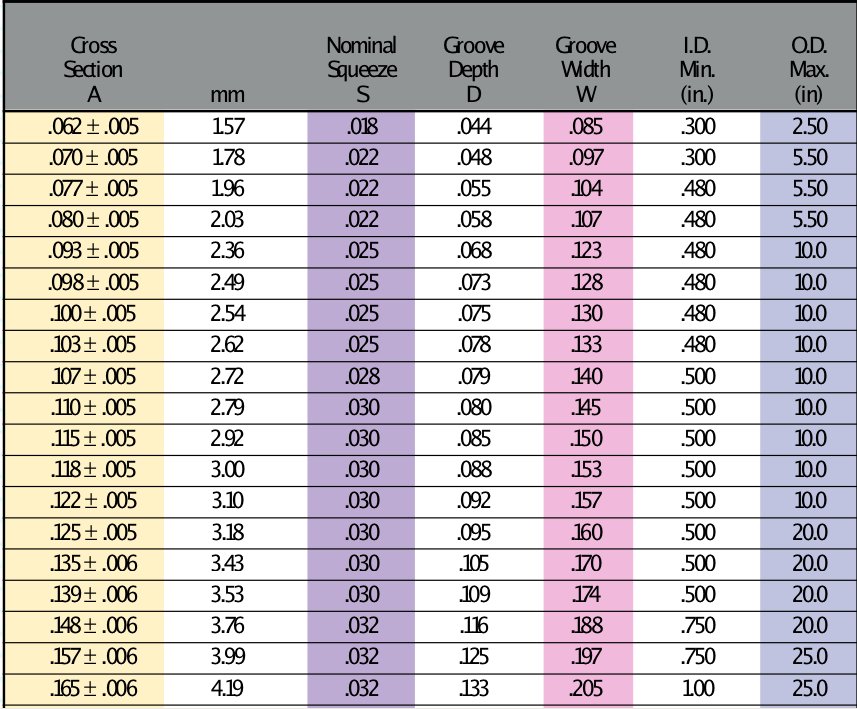
Here is a part of their catalog again showing the small increments in
section diameter that they sell.
http://www.creavey.com/

Take your time and double check your work.

Paul Lamar ...No rotor no motor.

The Rotary Engine NewsLetter. Powered by Linux.
ACRE NL web site. http://www.rotaryeng.net
Copyright 1998-2006 All world wide rights reserved.