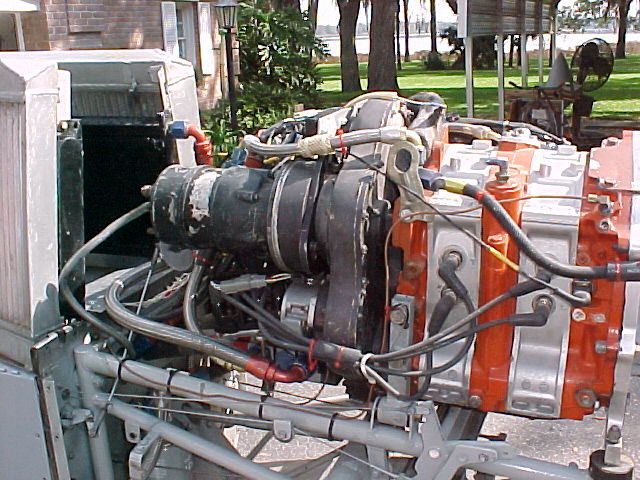
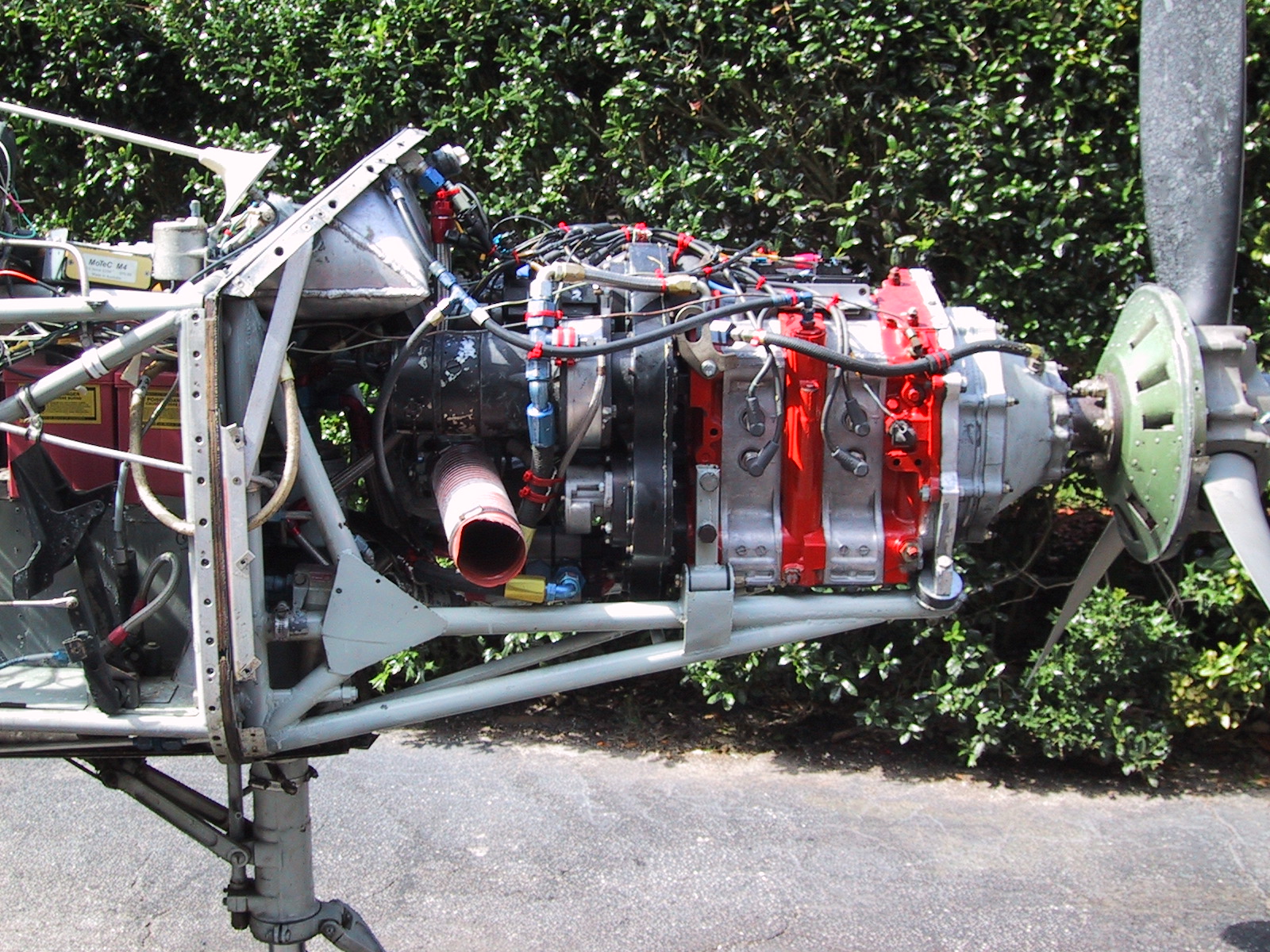
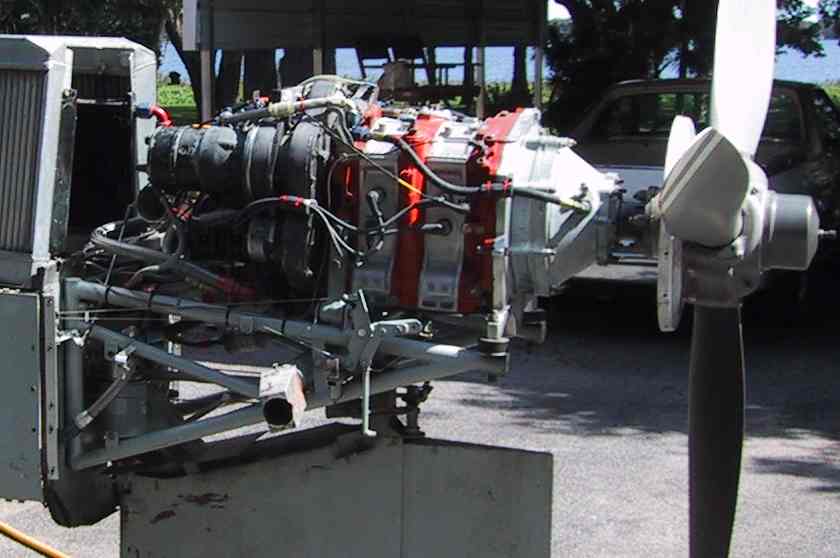
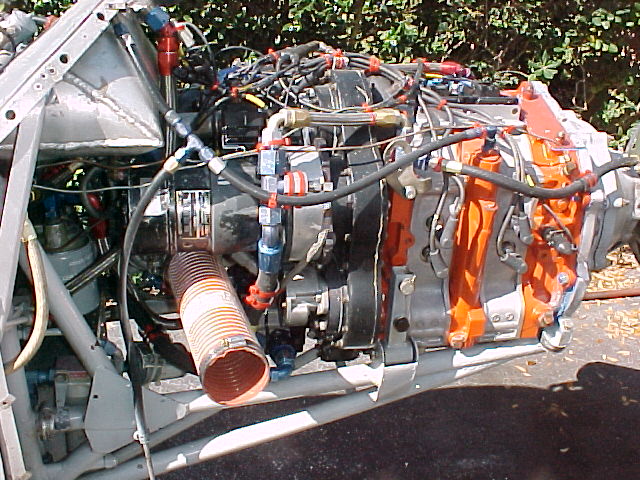
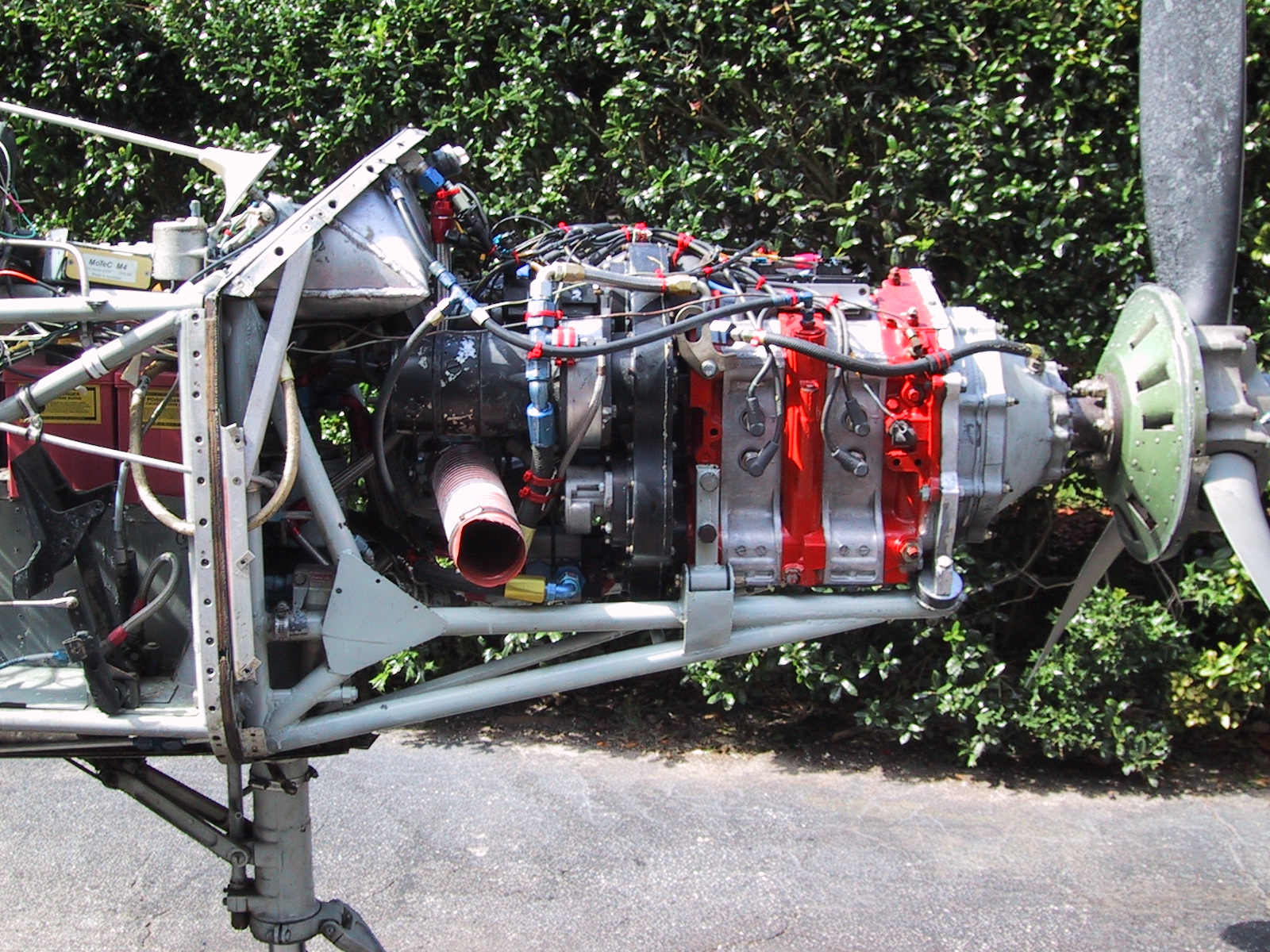
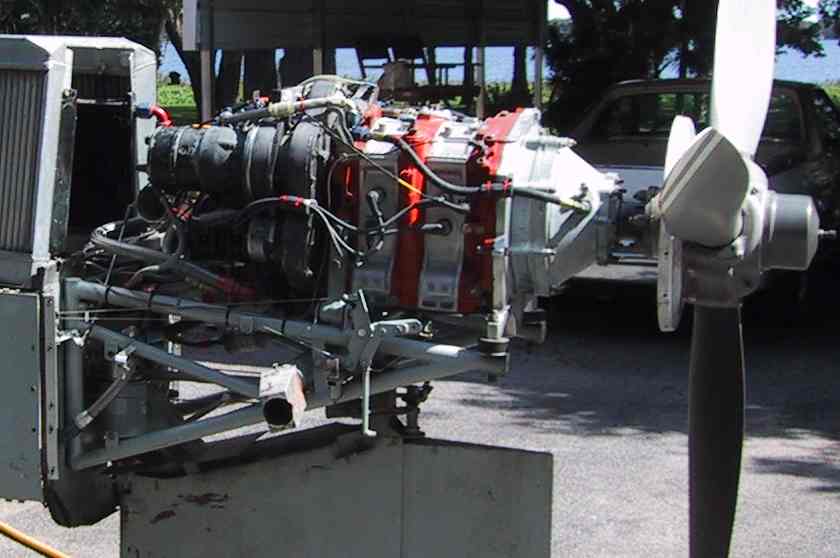
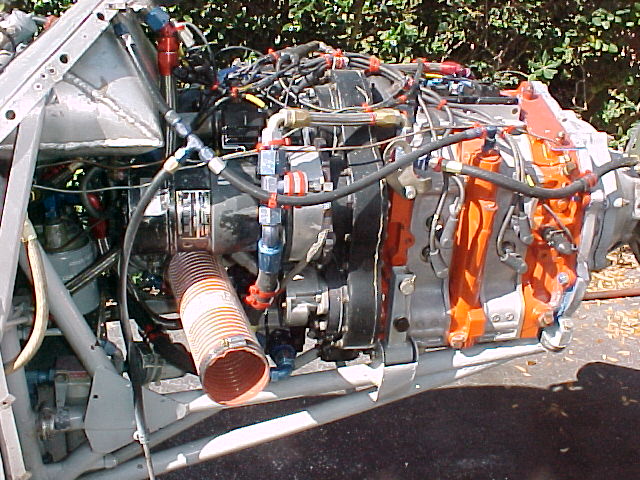
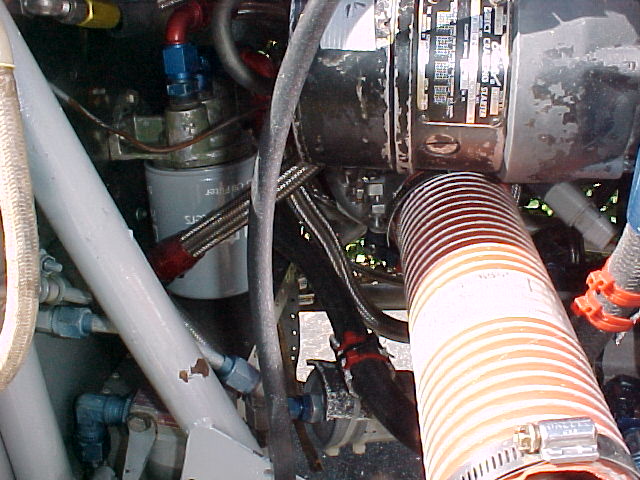
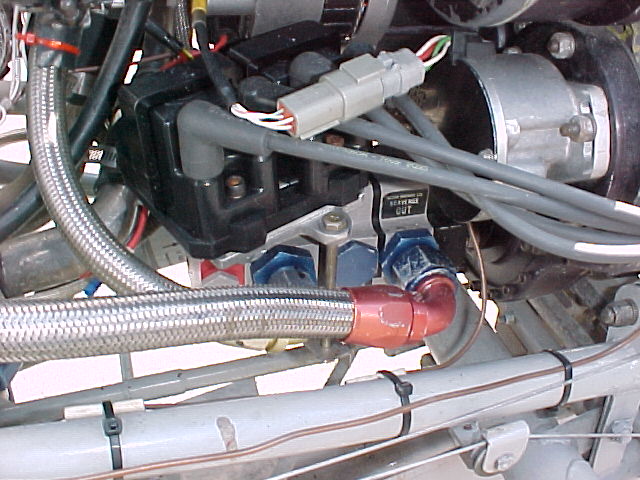
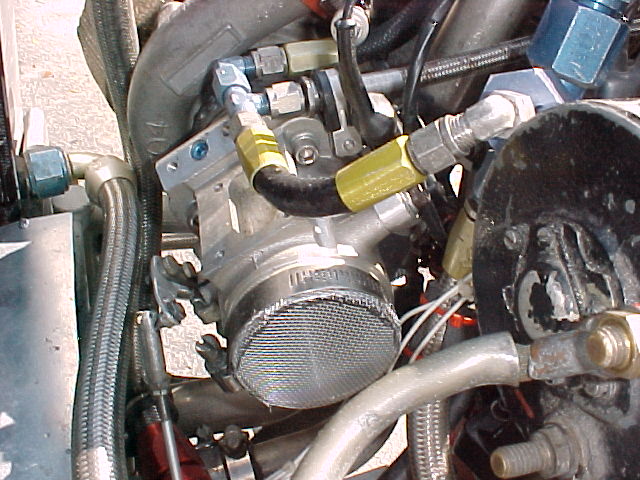
When I borrowed it, towed it to Sun & Fun and ran it up Dave did
ask me to limit the manifold pressure to 45 inches of HG. Try
boosting your typical Lycoming to 45 inches of HG and you will
be killed by the shrapnel :) Dave never really gave up on it. He just
ran out of energy to work on it. I have a lot more pictures. You
might be able to get it Steve as you have plenty of room in your
hangar. I think I can get it to cool. Maybe not 400 MPH but
well over 300.
Here is the last address I have for Dave. At the least it should
go in the EAA museum.
Dave Garber
935 Archer Grove Rd.
Athens GA. 30607
Doug Fir knew him too.
Paul Lamar
---------------------------------------------------------------------------
-----
Paul, that is an interesting idea. I'm insane to even consider it with
everything else going on.
We'll need to find out if Dave's estate have the parts in good
condition...complete fuselage skins,wings, etc.
If you will help with the engineering and will do the outreach to
the estate and they will be willing, I would be willing to consider
establishing
a rotary engine foundation or other volunteer-based, non-profit for the
purposes of attempting to get the aircraft reengined and flying. It
would be with the expressed intent that it eventually reside in the
EAA museum.
In this regard, let's discuss using using two of our three rotor
engine NA peripheral port engines at least in the initial test
phase. With the three rotor engines, we'll need to evaluate how to
reduce weight everywhere we can. Also look at swapping out those
heavy metal C/S props for ligher Hartzel composite CS or other.
Steve Beckham
I'll volunteer my time and travel expenses if somebody can loan us a
pickup truck. I think it is stored in a trailer. I borrowed Dave's
SUV the last time. Perhaps his widow would loan it out again. It may
mean two trips across the US which I don't mind. Perhaps the
Mcminnville Spruce Goose museum would be interested once we are done
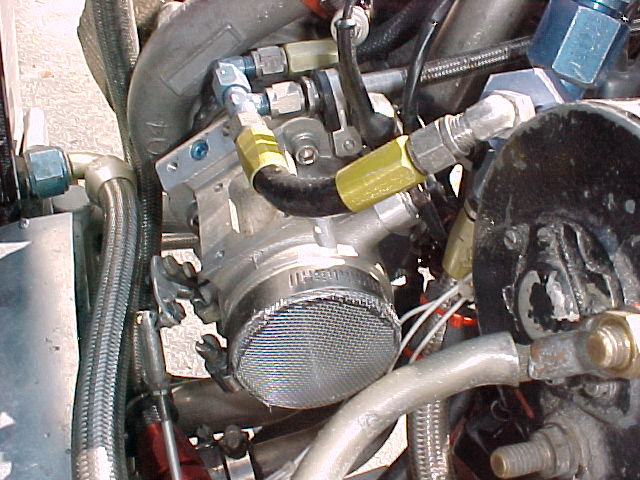
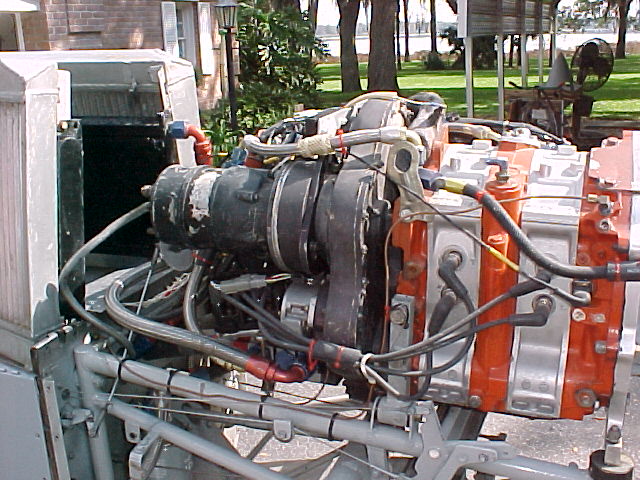
playing with it. The engines are in good shape. I would not change
them. Dave spent big bucks on the accessory drives. Dave had them
over hauled recently. The wood spars need inspection.
Paul Lamar
Paul,
Others
Yes Dave was a great guy and I only knew him for four years but he
was very helpful and gracious in providing me with my Bell 47 parts
for a very reasonable price.
Dave told me he did fly the plane about eight hours but never over engine
rpm of 5500, because of the inferior bearings in the stock Bell 47.
Paul might have run it faster for a few seconds at Sun and Fun:) Up
until he had a stroke a few years ago he was still hoping to rebuilt
the DG-1 and do some speed trials. I was helping to organize the
project, much to his wife's dismay.
The plane is damaged though as something fell on it while it was in the
hangar. I believe he wanted to make new wings and it definitely
needed a new canopy. The design is not without warts and there are several
things he told me he would like to change. I came up with a few myself
mainly in the wing attachment method and the PSRU internals design.
Quite frankly I am surprised the PSRU didn't seize. Some of the roller
bearings in the Bell box had flat spots on them. He had a good oiling
system in it. Dave was especially proud of the tail and rudder and
remarked that because it extended downwards as well it had a lot of
authority.
Dave also let me take of lot of pictures of his Fuji which was
dressed out Japanese colors and pointed out the landing gear
mechanism for my benefit. From my understanding the Fuji sat for
awhile. I don't know what happened on his last flight but a year
ago I also had an engine lose power on takeoff despite sumping the
wing tanks well
(draining them completely actually) and sumping the front. Ground
ran it for almost 20 mins as well. But a little water stayed in the carb
bowl and of course fuel floats on water. Depending on the climb out
angle the water is sucked into the carb and the engine sputters. It
doesn't die it just doesn't make enough power to sustain flight.
Luckily I was prepared for it and had a lot of runway ahead of me to
land again. After several more engine starts and sputters it ran fine.
The local A&P said it is a common problem with planes that sit for
awhile.
Contrary to belief Dave never gave up on the idea of seeing it race
and was quite upset at the Reno crowd. He also licked the cooling problem
showing me some custom radiators he had with angled baffles. He offered
to sell me the plane or the engines several times and as much as I would
have like to, I feel like the rest of you it would be a shame to
part it out. I wanted Dave to see his dream come true, fly, and
kick the pants out of the competition or at least make some records.
After the stroke he was agreeable to having some else fly it. Now
the wiser choice would be to restore it to museum quality. It needs
some work, paint, and I would guess at least a thousand people/hours
to accomplish that.
We are missing out on the company of a great gentlemen. I can
contact his wife about this matter but for the time being I think we
ought to respect her space and give her time to coup. Losing Dave
in a flight accident was one of her biggest fears and she made that
abundantly clear to me when I sat in her kitchen years ago.
Doug in Japan
You can always get silicon nitride rollers for the pinion gears.
They will work at twice the RPM.
Paul Lamar
Hi,
How did they start these engines? It is evident from the photos that there
is no flex plate. I take it that required some one to flip the prop to start.
Dale Davies
-
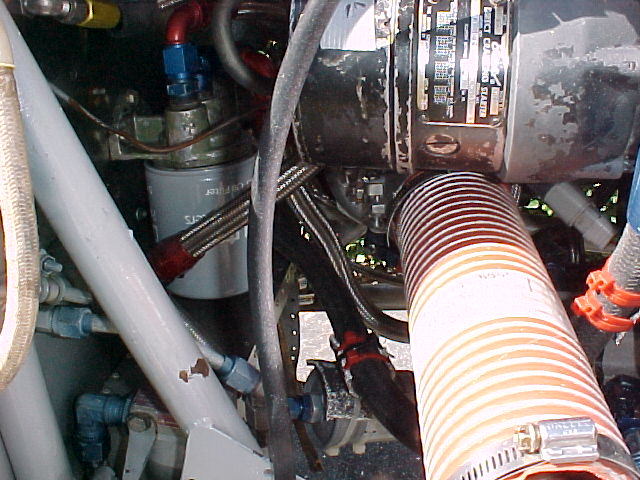
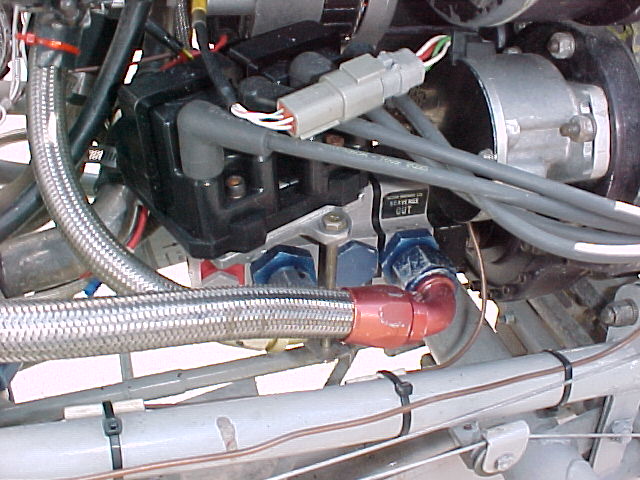
As I recall they had 24 volt aircraft starters/genrators built into the geared accessory
sections. I think Jim Mederer designed the accessory sections. All I had to do was push
the start button.
Paul Lamar
--
The Rotary Engine NewsLetter. Powered by Linux.
ACRE NL web site.
http://www.rotaryeng.net
Youtube key word UTUBPLEASE
Copyright 1998-2009 All world wide rights reserved.