Regarding the 20B exhaust inserts - I think that was me, sort of.
I have a vague memory that the 20B exhaust is more restrictive than the
13B. People have swapped out the inserts or just used 13B housings as
the 20B housings are less common anyways.
Turbos quiet the exhaust considerably while they last. Inserts also
smooth out the flow and may help turbos live longer as well. Turbos a
little downstream would also help. <hint
http://foxed.ca/rx7manual/manuals/Training%20Manual/4._Fuel_&_Emission_Control_Systems.pdf
;
p18
For an NA, the NA inserts are worth 7-8db IIRC (which is a LOT, sorry
can't remember the source) and help keep the exhaust stack together
longer. You can port the exhaust port and keep the NA inserts for the
significant noise reduction. A rounded earlier opening should help with
the port open sound bite (Lynn might have numbers). A rounded later
closing would help with increased flow at high output and soften the
apex landing.
There are lots of exhaust sound reduction tricks, some light and cheap.
Lynn has posted loads of info in various places.
BTW, I have an GSL-SE NA car with a Racing Beat exhaust (no pre-silencer
or inserts), it always sounds like it has a hole in the exhaust. I need
to testbed a few sound reduction ideas there too!
Cheers
Cary
Cary,
I didn't hear about the DB reduction until I had changed my exhaust
inserts
to turbo inserts. Then someone mentioned that they would cost me about
5db
and wouldn't add any noticable power. I didn't realize how loud these
engines can be and how difficult it would be to get my engine quiet enough
to live with. This things overpowers my Lightspeed ANR headset...
amazing.
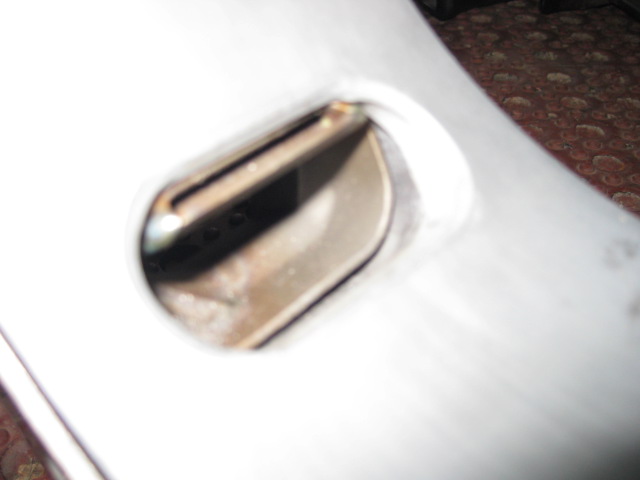
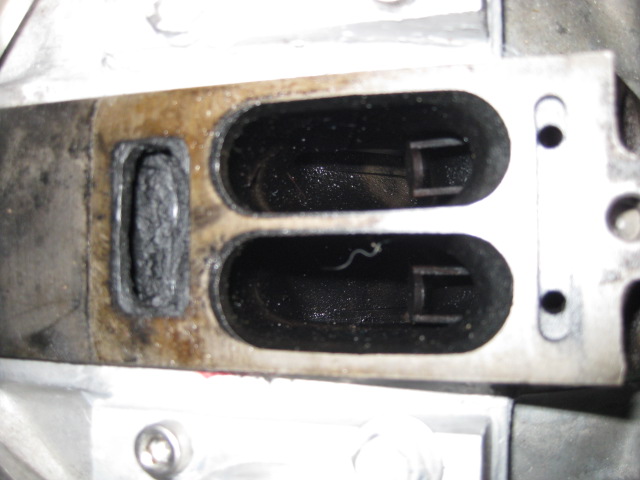
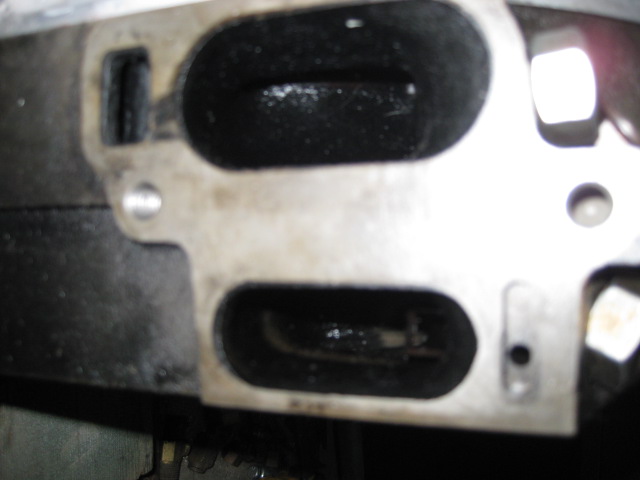
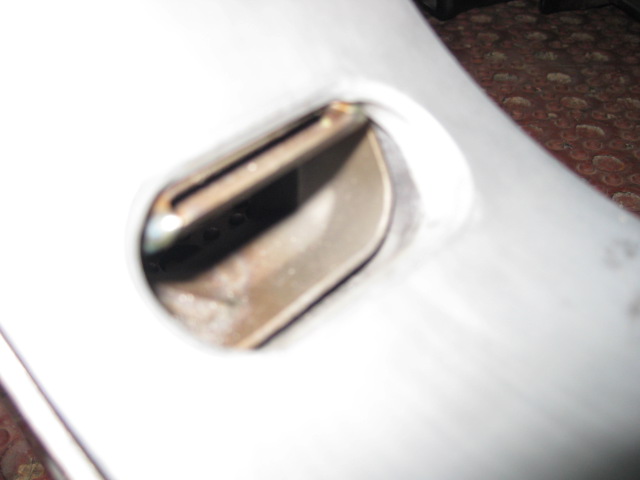
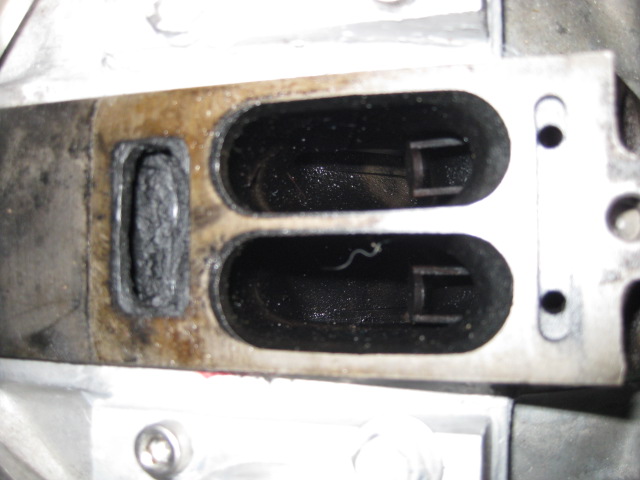
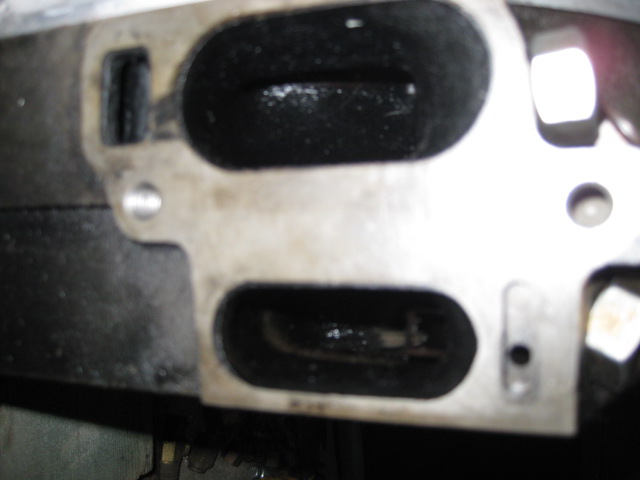
The thing I don't like about the 20b exhaust splitters is that they have a
passage through them for an EGR (my guess) system which we don't need. I
will try to close these on my new engine, either through welding them up
or
smashing them closed. I don't want the hot exhaust gasses passing up
through the engine and heating up the side housings.
Mark Steitle
You don't want your engine to turn into a banana either. The exhuast heat
is designed to
equalize the temperature between the cold side and the hot side.
IMHO everybody should keep a copy of Yamamoto's book "Rotary Engine" on
the nightstand
and read it each night before they go to sleep.
http://foxed.ca/foxed/index.php?page=rx7manual
---------------------------------------------------------------------
More info. You will block off the EGR passages at the exit on the top of
the center housing. Turbo engines already have a cast in blockage at this
location. This is where the EGR valve normally resides.
Paul Lamar
Paul,
As many times as you've posted those figures it has never dawned on me that
the exhaust passages served any other purpose than to channel exhaust gasses
to the EGR valve. And since airplanes don't need EGR systems, I never gave
it much thought. I guess I'll leave them alone as I surely don't want a
banana powering my airplane.
With that said, my current engine has the turbo inserts install (no EGR
passages) and in 150 hours of Texas flying, I haven't had a problems with
the engine "going bananas" on me. I guess I'm just lucky.
Thanks,
Mark S.
Paul,
I checked the side housings of my 20b today and traced the exhaust
passages. They go up through a passage in the side housing to a rectangular
hole just below the secondary intake ports. I could not see any evidence
where they route up through the upper regions of the housing. Based on
that, and how the exhaust inserts are designed, I would conclude that these
passages are an attempt to capture that last little bit of unburned fuel
that gathers right in front of the apex seal and send it back into the
intake to be burned in the next combustion event. Take a close look at your
20b and see if this doesn't seem logical. You'll have to pull the intake
and exhaust to see what I'm talking about.
Since I'm converting to P-port intake, I'll need to block the side intake
ports off anyway, and I'll need to block these exhaust passages off also.
So, the question is, what's the best way to do this. I'm thinking of making
some blockoff plates to fit over the side intake ports and the exhaust
passage.
Mark S
That is interesting. I have never seen that discussed anywhere.
My 20B is all assembled with the twin turbo's bolted on.
Paul Lamar
--
The Rotary Engine NewsLetter. Powered by Linux.
ACRE NL web site.
http://www.rotaryeng.net
Youtube key word UTUBPLEASE
Copyright 1998-2009 All world wide rights reserved.