Perhaps its time for a new front cover. The best place for the water
rad is
turning out to be on the spark plug side of the engine. Unfortunately
that
complicates the pluming somewhat because the water pump inlet and
outlet are
on the other side of the engine. Perhaps we should take a page out of
the
RX8 design and make a new front cover incorporating the water pump
housing
with the water coming out and going in on the other side of the engine.
Another problem is the pump should be mounted as low as possible so
any drop
in water level will not cause the pump to cavitate. We built some
remote
pumps a few years ago that used the stock Mazda pump cartridge. One
other
point is the pump would be more eff. if the water came stright into the
impeller. Here are some shots of that remote pump. I am looking for
feed
back here. Does anybody else have an ideas they would like to see
incorporated.
Paul Lamar
Paul,
A new housing incorporating some of the accesories would be
welcome. I
originally wanted to locate my pump lower than the engine toward the
plug
side as the
exhaust side has the pipes and muffler to the augmentor. I was
going to
use
the Toyota pump. I also would like to get a later front housing so I
can
use a trigger wheel. This also permits mounting the alternator on the
plug
side.
Joe Berki
Limo EZ
Mazier Enterprize here in Escondido, CA makes very light weight remote
electric water pumps in there racing aps...Mount anywhere you want,
firewall, inline off rad, ect. The quality is superb and they have
done this along time.
They have a variety of units with different flow volumes mounting
arrangements. they have a web, check it out.........
Being electric does this remove it from AC use??????????
jeff
Excerpt from my book How to Cool Your Wankel.
"Some have advocated replacing the mechanical pump with an electric
pump. The Mazda 13B rotary requires about three HP to drive the
mechanical pump at 6000 RPM and provide the coolant flow necessary to
keep the metal temperature near the combustion chamber within bounds.
The flow rate required is on the order of 30 to 40 gallons per minute."
"In the last 100 years there have been no breakthroughs in impeller
shapes that would allow a significant improvement in water pump
efficiency. On the contrary impeller shapes have been simplified to
lower the cost. Here are some photographs of a second generation
and third generation Mazda 13B water pump impellers."
"Therefore it would also require about three HP from an electric motor
driving a coolant pump to provide sufficient water flow. There are 746
watts in one HP so three HP is a minimum of 2,238 watts. Since the
electrical system voltage is 12 volts and watts is equal to voltage
times current it would require about 186 amps out of the alternator
just to provide the required coolant flow. None of the after market
car electric coolant pumps available claim that magnitude of current
drain so obviously they cannot pump enough coolant to keep the metal
temperature within bounds in a rotary engine generating 150 HP
continuously. This is not just an opinion. It is based on the laws of
physics. If one wants to reduce the water flow rate in the engine and
take one's chances one must install thermal couples near the
combustion chamber to monitor the metal temperature."
End quote.
All electric water pumps,we have tested so far and that includes
Mezier do not draw anywhere near enough amps to to pump the water at
the required rate.
High water flow velocity in the block helps transfer heat from the
metal to the coolant. If this does not happen hot spots in the rotor
housings could occur. The heat going into the metal is directly
proportional to how much power the engine is generating on a
continuous basis. An electric water pump that might work in a car
where anything over 40 HP is a rare and temporary occurrence will not
work in an aircraft engine. One could be fooled by relying on the
water temperature alone. The water temperature could be below 200 F
while the metal temperature in the rotor housing could be over 500 F
in the hot spots.
Paul Lamar
I told my wife to order the book for Xmas..........
jeff
OK Jeff thanks. Merry Christmas.
Paul Lamar
-
Paul,
I've heard people discuss the option of using an electric water pump versus
a mechanical water pump. Most of the time, the reason I hear for using
an electric water pump is to save HP in situations like drag racing where
even a little bit of saved power can make a difference. In those
situations,
the pump doesn't run for very long at one time, and having never actually
used one myself, I've always wondered if an electric water pump would be
reliable as a stand alone pump under long continuous high rpm runs? I
read
what you wrote about electric pumps being unable to provide enough flow
anyway, and mechanical water pumps seem to have less risk of failure.
But for
sometime now, I've been wondering about the feasibility of running two
water pumps simultaneously. If that is possible, what would you think
about
having an electric water pump in the circuit which could be activated
automatically at a given water temp or rotor housing temp to act as a
"booster
pump" to increase flow while the temp remains elevated? It would require
a
temperature activated controller, but I don't think that would be a big
problem for the electronics guys on this list.
Don
I don't think it would be worth the weight an expense since a mechanical
pump
is so simple and straight forward. Every rotary engine comes with one.
3 HP is a pittance in the over all scheme of things.
In terms of overall power conversion efficiency an electric pump system
goes
like this. The alternator is 80% efficient and the electric pump motor is
80% efficient so the overall conversion efficiency of the system is 64%. For
every mechanical HP the electric pump is putting into pumping the water
the
engine must put in 1.5 HP into the alternator.
Paul Lamar
Thanks Paul,
I totally agree with the need to keep the mechanical water pump, but I was
really trying to stress adding a second ( electric ) pump to help achieve
cooling of the engine during high stress times like taxiing, climbs, and
really hot days when we struggle to keep our engines from overheating. The
drag racers want electric pumps to save every horse they possibly can. I
don't care about that at all because my 20B P-Port should have more than
enough power. But I do worry about keeping this thing cool, increasing ( or
not decreasing ) the TBO, and avoiding an in flight failure. I would be
willing to add a couple of pounds in order to achieve this goal, and if the
weight concerned me, try to trim off a few lbs elsewhere to compensate. Its
something I'm seriously considering, but I was concerned that the second
pump might induce a reverse flow situation unless "one way valves" were used,
kinda like when we plumb 2 fuel pumps into the fuel system like below. If
this was done, what would be your concerns (in addition to weight), if any.
Thanks,
Don
---------------------------------------------------------
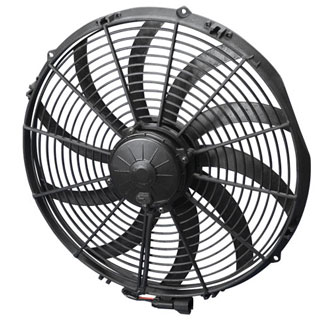
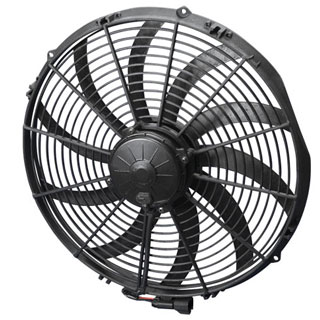
It has plenty of water flow for idle. Low HP. What it needs is more air flow.
Large movable cowl flaps are the best way to go.
Electric fans also help but make sure you buy the high flow versions.
Spal fans seem to be the best.
http://www.spalusa.com/store/main.aspx
Paul Lamar
--
The Rotary Engine NewsLetter. Powered by Linux.
ACRE NL web site.
http://www.rotaryeng.net
Youtube key word UTUBPLEASE
Copyright 1998-2009 All world wide rights reserved.