I am really impressed by your web-page on 555-based EFI systems for
aircraft
engines.
Mazda rotary engines have always been of interest, especially in 200+ hp
airplanes.
However, my main interest for now is obtaining simple EFI systems for my
two
experimental motorglider projects, which have 16 & 42 hp piston engines.
The 16 hp project is a highly modified a Moni motorglider with new landing
gear, composite wing span extensions & Y-tail, and a 4-stroke engine.
The engine I have selected is the Teledyne-Continental 4A032, a flat-4
military engine made for ground-based power units, 8 cu.in. displacement
per
cylinder, for a total of 32 cid.
The stock engine has electronic ignition and an undersized float-type
carburetor, but the carburetor is inadequate for aircraft use, so that sent
me searching for a simple EFI solution.
Such small cylinders could necessitate using a single throttle body
injector, but some very small motorcycle engine injectors are now being
made
that may allow multi-point injection.
The clever way you have integrated the mass flow sensor and lean control
into the timer IC is a really ingenious way to control the engine.
I was thinking that the 555-based system you decribed could be modified to
eliminate the separate shaft trigger by using the ignition spark from one
of
the cylinders, since that is already a pulse trigger coming from the
internal shaft position sensor.
In any case, I was hoping that you might have components available that
could be used to speed the development of a simple EFI system for this
engine.
My other motorglider project is my own two-seat design for which I have
selected a very similar military surplus engine, the 4A084, which is a
flat-4 with 84 cid.
It would be ideal to use same basic EFI system developed for the 32 cid
engine on this larger 84 cid engine.
By the way, several 4A084 engines with conventional EFI systems are flying
today, though these are much more expensive and complicated computer-based
EFI systems.
Les Smoot has a couple of them flying on his J-3 Kitten LSAs... see the
Yahoo "Surplus Engines" group for more info.
The potential market for an EFI system for the 84cid engine is much larger
than for the 32cid.
If you have any 555-based EFI kits, components, plans, etc. that I could
purchase, please send me any information you may have available.
I don't want to bother you with a lot of calls & questions, and don't
expect
anything for free.
Thank you for your time, and please keep up the good work!
Happy Thanksgiving.
Sincerely,
-
Daniel J. Moser, President/CTO
Compositex, Inc.
I moved away from the mass air flow sensor as one, it is non linear and
two, it is more expensive than a FreeScale zero to 5 volt pressure sensor.
Everything else works pretty much the same. I just have not updated the web
site yet.
I have not had the new pc boards made but you are welcomes to copy this
design.
Paul Lamar
Am I correct in assuming that the squirt of fuel from the injector should be
initiated just as the intake valve starts to open?
If this is the case, it seems to me that you can actuate the trigger pulse
into the 555 timer IC with a mechanical contact switch on the intake valve
lifter.
When the intake valve starts opening, the grounds the trigger, sending the
proper width pulse to the injector.
If it works, that switch could replace the pointed steel shaft rotor,
sensors, rectifying diodes, and eliminate the need for the very critical gap
adjustments.
The only thing I can think of to watch for with the switch option is to
design it properly as to not allow engine vibration to bounce open the
switch to avoid sending false trigger pulses.
Did I miss something?
--
Daniel J. Moser, President/CTO
Compositex, Inc.
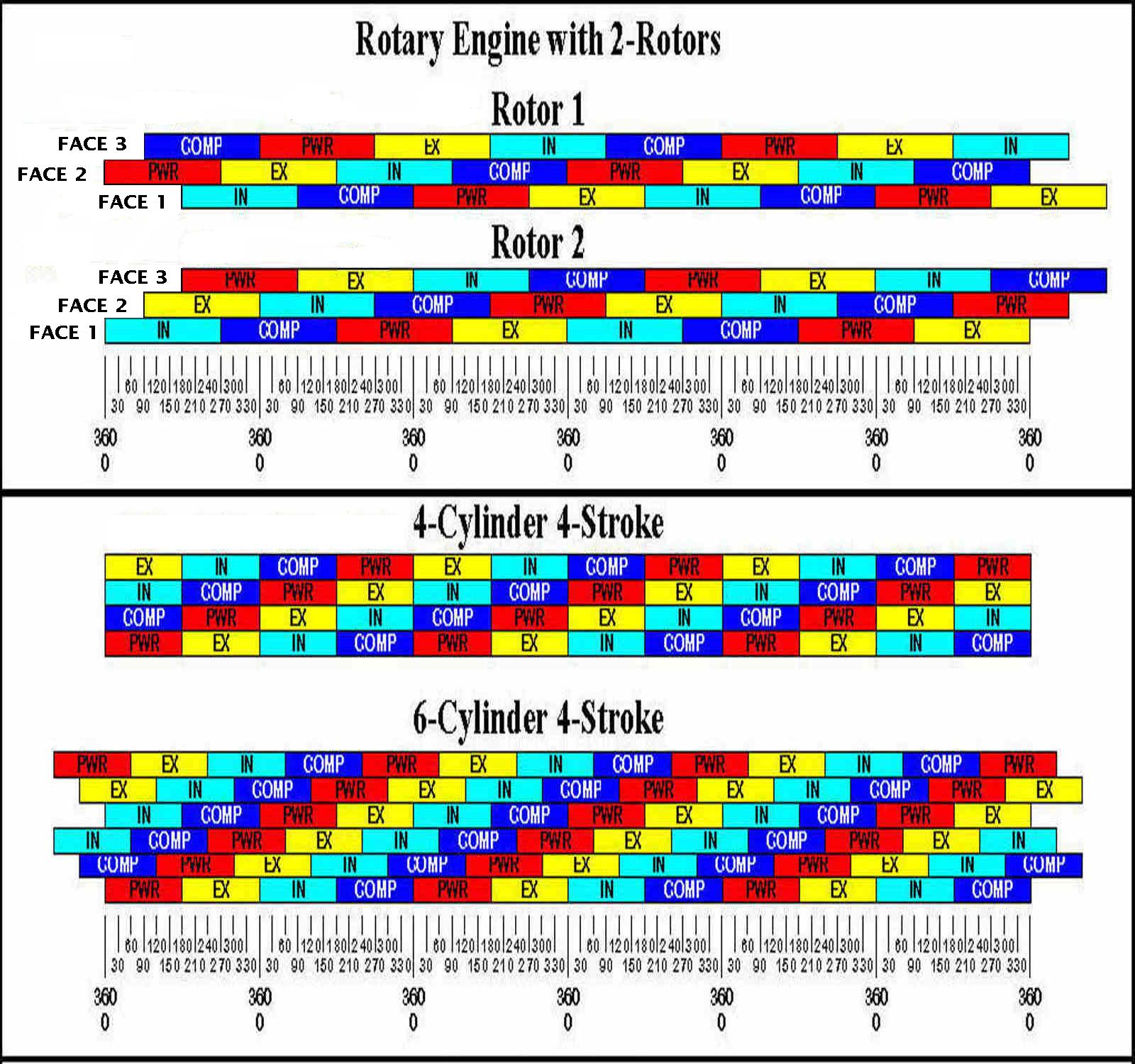
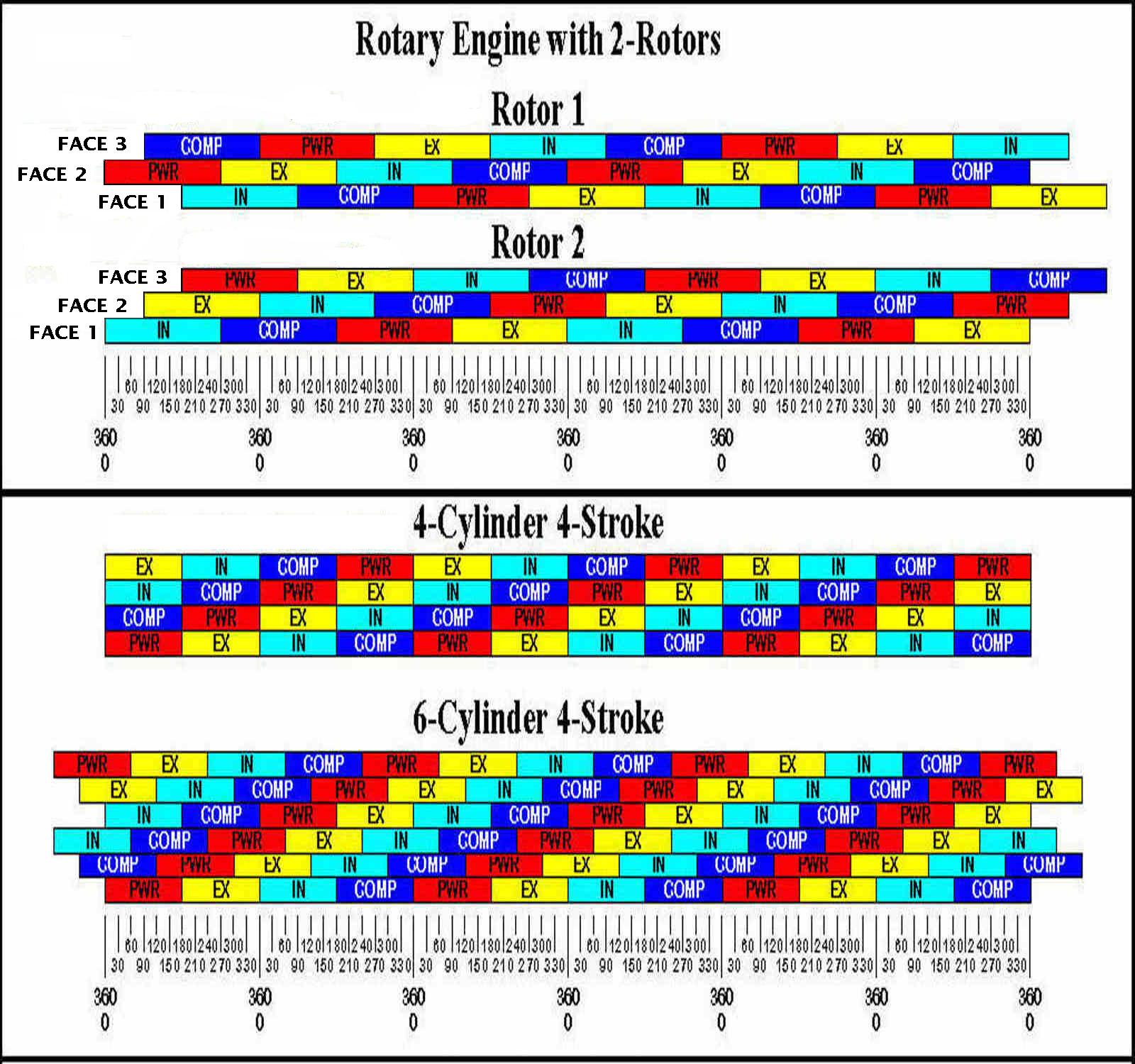
Perhaps for a four stroke piston engine but for a rotary the intake port is
never really closed. It is more akin to a turbo jet in in that regard. All three
faces of the rotor share one intake port.
The other difference is the intake and exhaust port operation is keyed to the
e-centric shaft and not a cam shaft. The cam shaft in a four stroke piston
engine runs at half crank speed so you need to sense the cam shaft position and
not the crankshaft position to know what the intake valve is going to do.
Timed injection is not really possible at high RPM anyway as there is not enough
to to do it. Injector response is just not fast enough. It takes a couple of
milliseconds for the injector to open. If somebody invented an injector that
opened in well under a millisecond then yes it might be possible. Timed EFI was
invented to solve the emissions and fuel consumption problems of low speed car
piston engines.
Paul Lamar
--
The Rotary Engine NewsLetter. Powered by Linux.
ACRE NL web site.
http://www.rotaryeng.net
Youtube key word UTUBPLEASE
Copyright 1998-2009 All world wide rights reserved.