In a message dated 11/28/2009 11:04:39 A.M. Central Standard Time,
rotaryeng@earthlink.net writes:
In a message dated 11/28/2009 8:04:13 A.M. Central Standard Time,
rotaryeng@earthlink.net writes:
Sorry, not sure what happened to that link, but here it is again:
_
http://www.daviescraig.com.au/Electric_Water_Pumps-EWP115__12V___ELECTRIC_W
ATER_PUMP___PART_No__8025-details.aspx_
(
http://www.daviescraig.com.au/Electric_Water_Pumps-EWP115__12V___ELECTRIC_W
ATER_PUMP___PART_No__8025-details.as
px)
Don
Don,
Long links do not come across in email most of the time. There are
several
reasons for this. Perhaps one is you may have sent it using html instead
of
plain text. There is an old saying in the computer world. Something to the
effect of; "if you want it to work for the most number of people, you must
use
the least common denominator." That would be plain text. Each different
O.S.
and email program deal with email things differently. Windows, Linux,
Mac,
etc.,etc.. In fact it is worse than that as each person can set up their
email
programs in different ways. Word wrap with a different character
positions,
different margin settings, different character sizes, different fonts,
etc.,
etc., etc., The situation rapidly turns into a computer nightmare.
There is no real reason to use html as a word is a word. The downside to
using
it as is there is a vast amount of knowledge out in the world in plain
text and
plain text is the most compact form of communication that takes up the
least
amount of storage room on computers. Computers can deal with it in the
least
amount of time. Some computers use hardware to deal with plain text rather
than
having the main processor plotting each pixel on the screen one pixel at
a
time.
The character hardware is ten times faster than plotting each character
one
pixel at a time. Another way of looking at it... is to consider html in
email
it blootware.
Now here is the up side. If you are looking at web site, or you are
trying
to
understand a complex subject, links and pictures can be embedded in the
html
text to take you off in a different direction to understand a concept that
you
may not be familiar with. That was why it was invented. IMHO it is the
only way
to go for web sites.
Here is the solution to long links in plain text.
http://tinyurl.com/create.php
Paul Lamar
To the best of my knowledge, I've never had that problem before.
Oh well, I thought it was a great topic, and as I researched it, I found
that a lot of car manufacturers like BMW and Audi use electric booster
pumps
in their cooling system. That makes me feel better about attempting it.
I was just looking for some specific plumbing recommendations.
Don
This message is a good example of how different email programs and O.S.'s
can
screw up a message.
Electric water pumps work great in cars as 99% of the time the car engine
is
generating less than 40 HP. Here are some numbers. A car frontal area is
about
25 square feet average. Height times width times 80% for rounded corners.
Drag
factor is C sub d and is .3 on average. Therefor the aero drag is .3 X 25
square
feet times the dynamic pressure at 60 MPH which is six pounds per square
foot.
.3 X 25 X 6 = 45 pounds of aero drag. 60 MPH is 88 feet per second. HP is
therefore 88 X times 45 or 3960 pound feet per second. Divide that by 550
to get
HP in terms familiar to the public. 3960 / 550 = 7.2 HP. Double that for
tire
rolling drag and you get 15 HP. Assume the drive train is 80% efficient so
we
are looking at 19 HP out of the engine.
Here is another way of calculating it. Assume for the moment it is 20 HP
and the
BSFC is .5 giving the engine the benefit of the doubt. That means the
engine is
burning 10 pounds of fuel per hour. Fuel weighs 6.25 pounds per gallon so
we
have burned 1.6 gallons of fuel to go 60 Miles or 37 MPG.
One can change these key variable numbers anyway you want.
One can change the speed which will have the largest affect on the HP and
MPG.
One can change the frontal area. Height times width times 80%.
One can change the BSFC in the range of .4 to .6. .4 being real good.
One can change the proportion of rolling drag to aero drag. 40% to 60%.
One can change the aero drag factor. A Prius is .26 and a Ford Model A is
.5.
The bottom line is no matter how one manipulates the numbers one will
still
come out with a number of less than 40 HP. This is also the reason 300 to
400 HP
car piston engines are very light duty indeed and do not make good
aircraft engines.
One can write a QB program in less than half an hour to do the
calculations for
for any of the various key variable numbers.
Paul Lamar
Again I totally understand what you are saying. I realize that a lot of
work and engineering must be done to maximize air flow through the Cooling
system, but I guess I'm not making my question very clear..........with all
the link errors and all. I'm trying to discuss the other part of the
equation.......coolant flow through the block.
You wrote: "High water flow velocity in the block helps transfer heat
from the
metal to the coolant. If this does not happen hot spots in the rotor
housings could occur. The heat going into the metal is directly
proportional to how much power the engine is generating on a
continuous basis. An electric water pump that might work in a car
where anything over 40 HP is a rare and temporary occurrence will not
work in an aircraft engine. One could be fooled by relying on the
water temperature alone. The water temperature could be below 200 F
while the metal temperature in the rotor housing could be over 500 F
in the hot spots. "
I know several people who have struggled to do all the calculations and
meticulously designed the air flow through their cooling system only to be
plagued with engine overheating issues. This makes me wonder if their
problem is more related to inadequate coolant flow due to an inefficient water
pump or cavitation during the extended periods of high RPM that we
continuously run at for aviation use. All the calculations and pain staking
attention to details in the area of air flow is essential, and I acknowledge this
completely. I'm not advocating that anyone ignore that part of the cooling
system design....... I'm simply attempting to open a discussion about other
options for optimizing the other half of the equation......... achieving
adequate water flow through the engine block, especially during high load or
low air flow periods (long climbs, taxi, etc).
I would not advocate attempting to use a solo stand alone electric water
pump and that is not what I'm trying to discuss. I'm attempting to discuss
the merits of maintaining the original mechanical water pump, but adding an
additional pump......... an electric water pump........ to be activated by
a temp switch only when the engine approaches the max set temperature. So
in effect, just using the electric pump as a booster pump only when an
overheating condition is reached. And if this is a feasible way to supplement
coolant flow during periods of overheating, what is the best way to plumb
the second pump into the system? The pump I attempted to provide a link
for will provide 30 gallons per minute ( at 12 volts ) of boosted coolant
flow through the engine block with only a 2.16 lb weight penalty. It has an
electronic controller available or you can just use a thermal switch.
Don
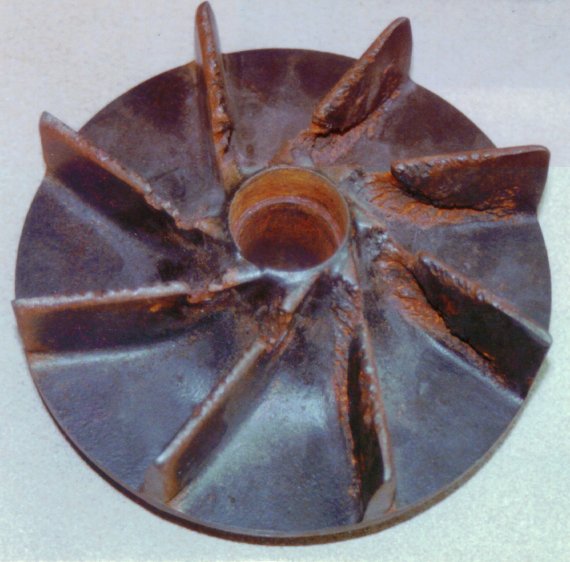
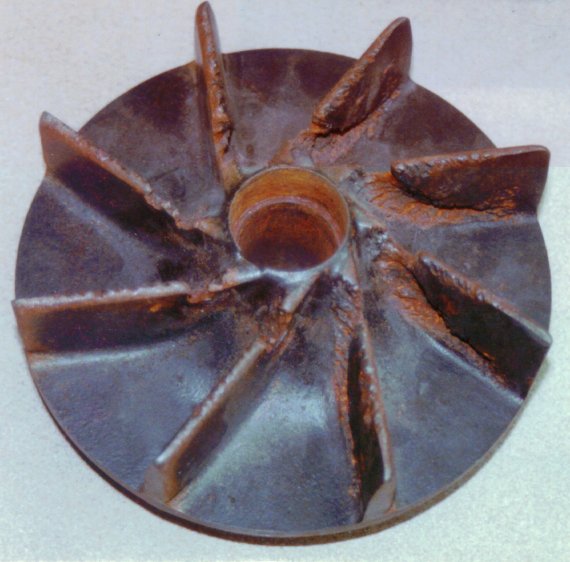
Do you have any pictures of those meticulously "designed the air flow through
their cooling system" that don't work? Who are those people as I may have some
pictures already?
IMHO right now the stock water pump is not the weak link. I think one should get
the air flow working first.
A screw driver held on the pump and to your ear will tell you if the pump is
truly cavitating. It makes a sound like grinding gravel. Also if the pump is
truly cavitating it will be destroyed in short order. I think reports of water
pump cavitation in the rotary is a urban legend.
Paul Lamar
--
The Rotary Engine NewsLetter. Powered by Linux.
ACRE NL web site.
http://www.rotaryeng.net
Youtube key word UTUBPLEASE
Copyright 1998-2009 All world wide rights reserved.