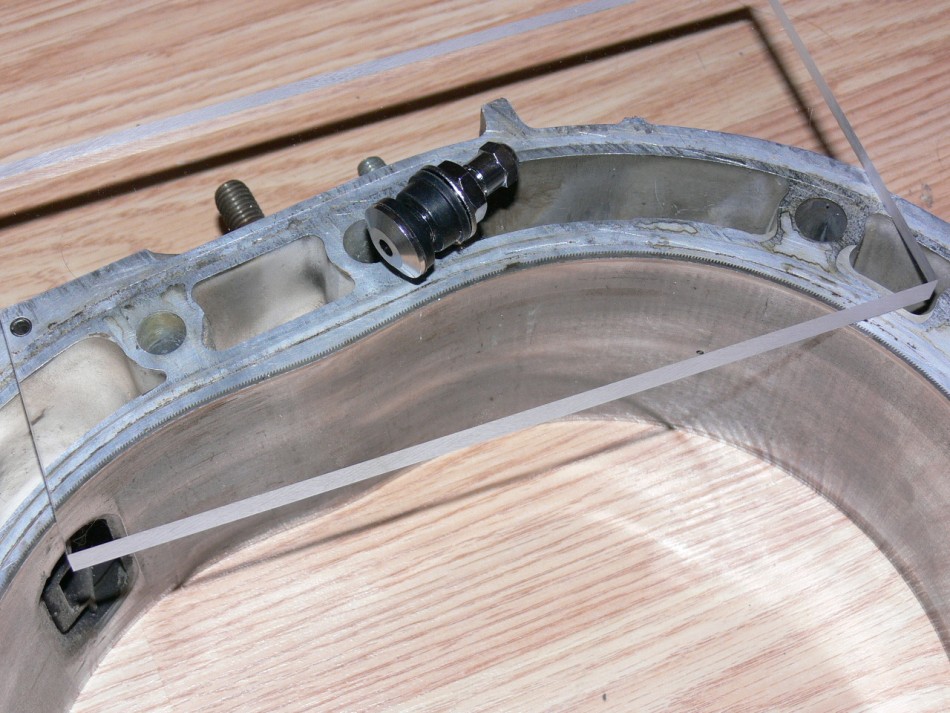
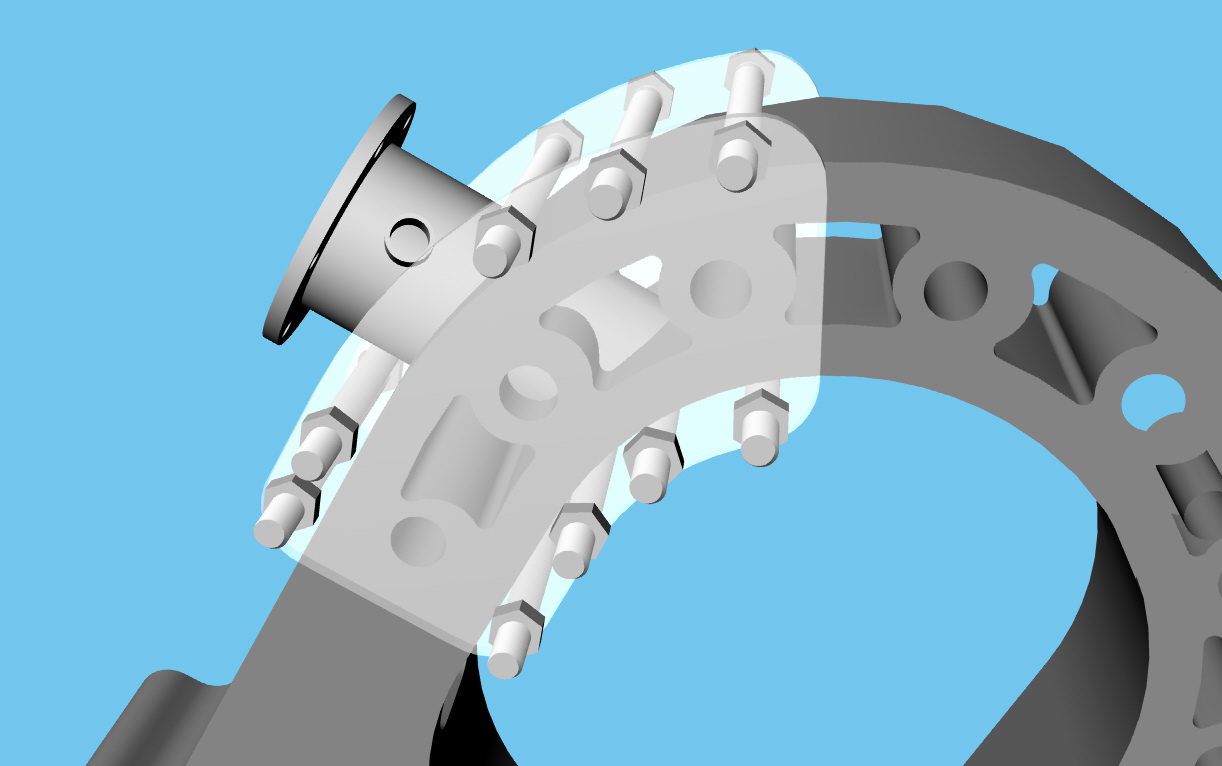
Could someone please take a good 90 deg. Side shot of the cooling chamber
that the port passes through of their finished P-ported housing? Both sides
please, medium res like 1920x1080 there abouts???
Thanks in advance.
C. Smith
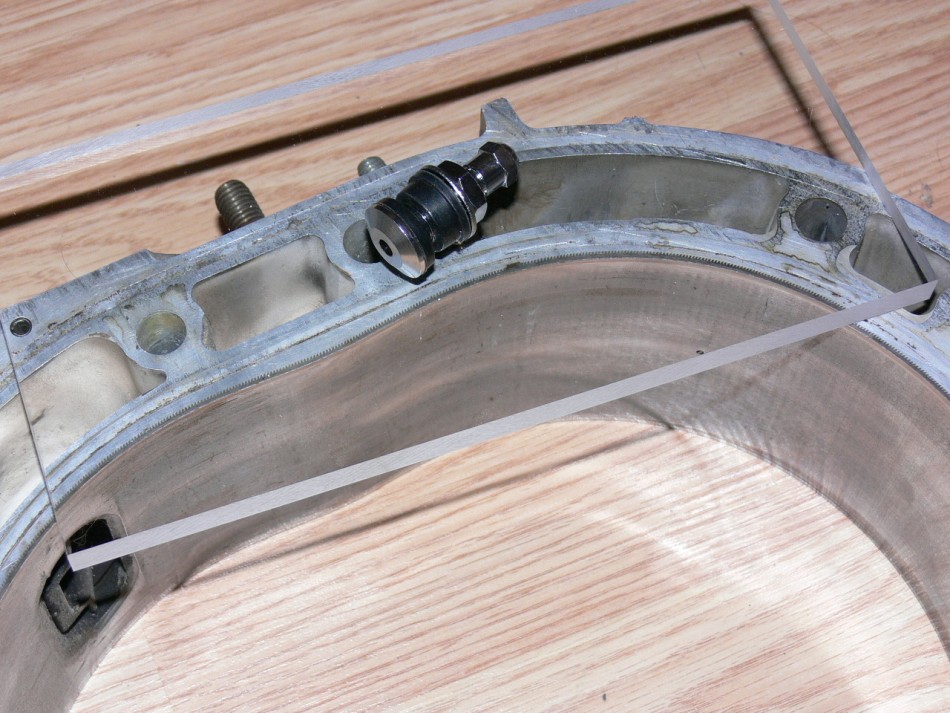
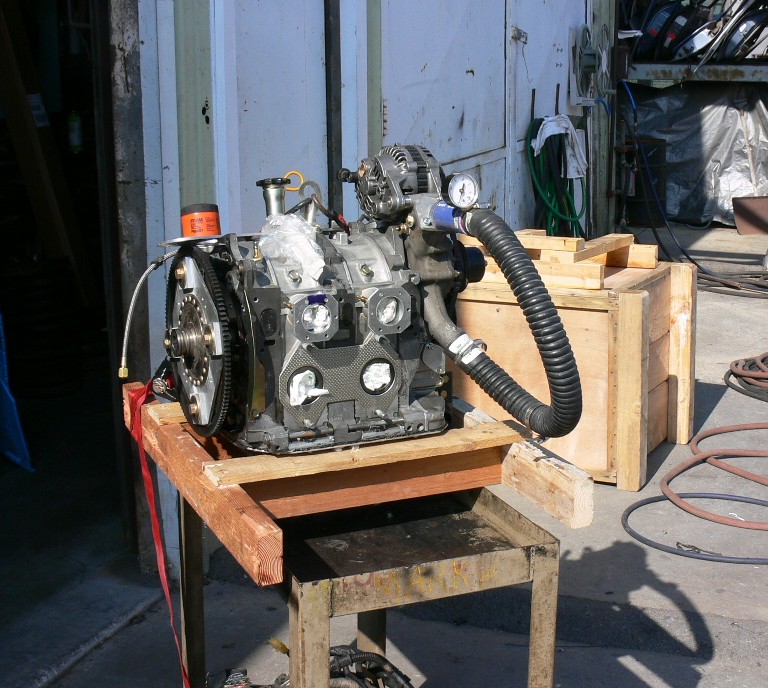
I don't have anything quite that high rez how about these?
What are you looking for? I have some others that may focus on what you are
interested in.
Paul Lamar
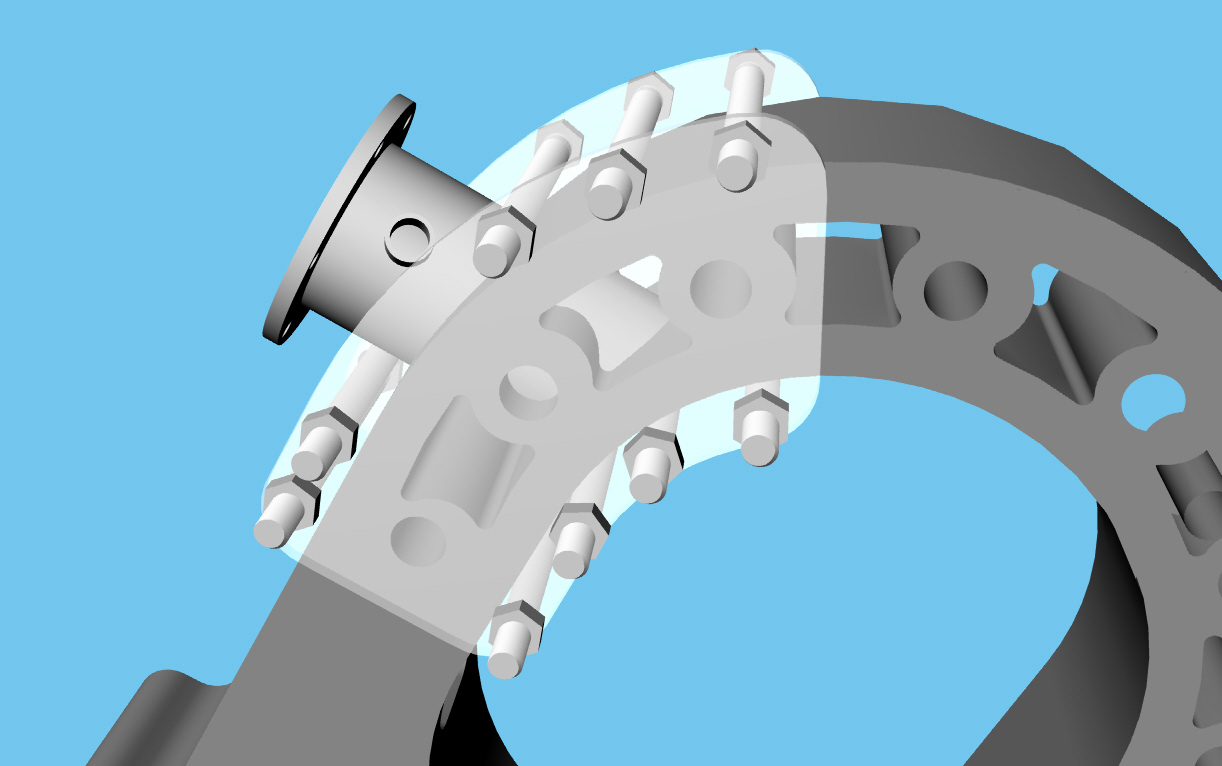
I was hoping for a view with the tube installed (and perpendicular to the
tube axis), to determine if there was a water passage through that chamber.
Looking for possible differences in the cooling (and coolant flow patterns)
of potted and un-pottted P-Port housings.
C. Smith
I'll take some better pictures tomorrow. Yes there are some water passages
around the welded tube version unlike the bonded in version. I am not sure if
its good or bad. I can come up with a few scenarios however. The tubes run ice
cold almost when the engine is running due to the evaporation of the fuel inside
the runner. That may cool off the water and heat the charge. Is that good? It
may result in less power and a more banana shaped engine. On the other hand it
might promote evaporation of the fuel and slightly decrease the BSFC (fuel
burn). Lycomings pass the intake runners through the oil pan for that reason. My
guess is it won't make a heck of a lot of difference either way for our purposes
but for car racing it might be measurable.
Paul Lamar
--
Paul
I received my Housings last night and they look great. This e-mail brings up
a question. I was under the impression that even though we welded the tubes we
should still pot with JB Weld. The process I was planning on using was:
1. Apply Liquid Silicone rubber (the stuff you found at Fry's I think)
2. Contour the tube welds
3. Pot with JB Weld
4. Use JB weld to contour the sealing block contact area (wax paper method)
5. Drill and Tap the Sealing block bolts
6. Install the Sealing Blocks
So are you guys thinking that if we contour the weld area and apply the Liquid
Silicone rubber. Then get a good seal on the sealing block, do a pressure test
of the housing and if we don't have any leaks, there is no need to do the potting?
Mike C.
----------------------------------------------------------------------
You don't needs to pot with JB Weld. That is very hard to do anyway without
getting voids. Devcon liquid aluminun is easier as has much lower viscosity.
Part number F-2 10710. The downside is it is near impossible to fix if you get a
leak somewhere.
The silicone rubber stuff is a good idea around the welded joint as you will
never know you have a pin hole leak there until it is pressure tested.
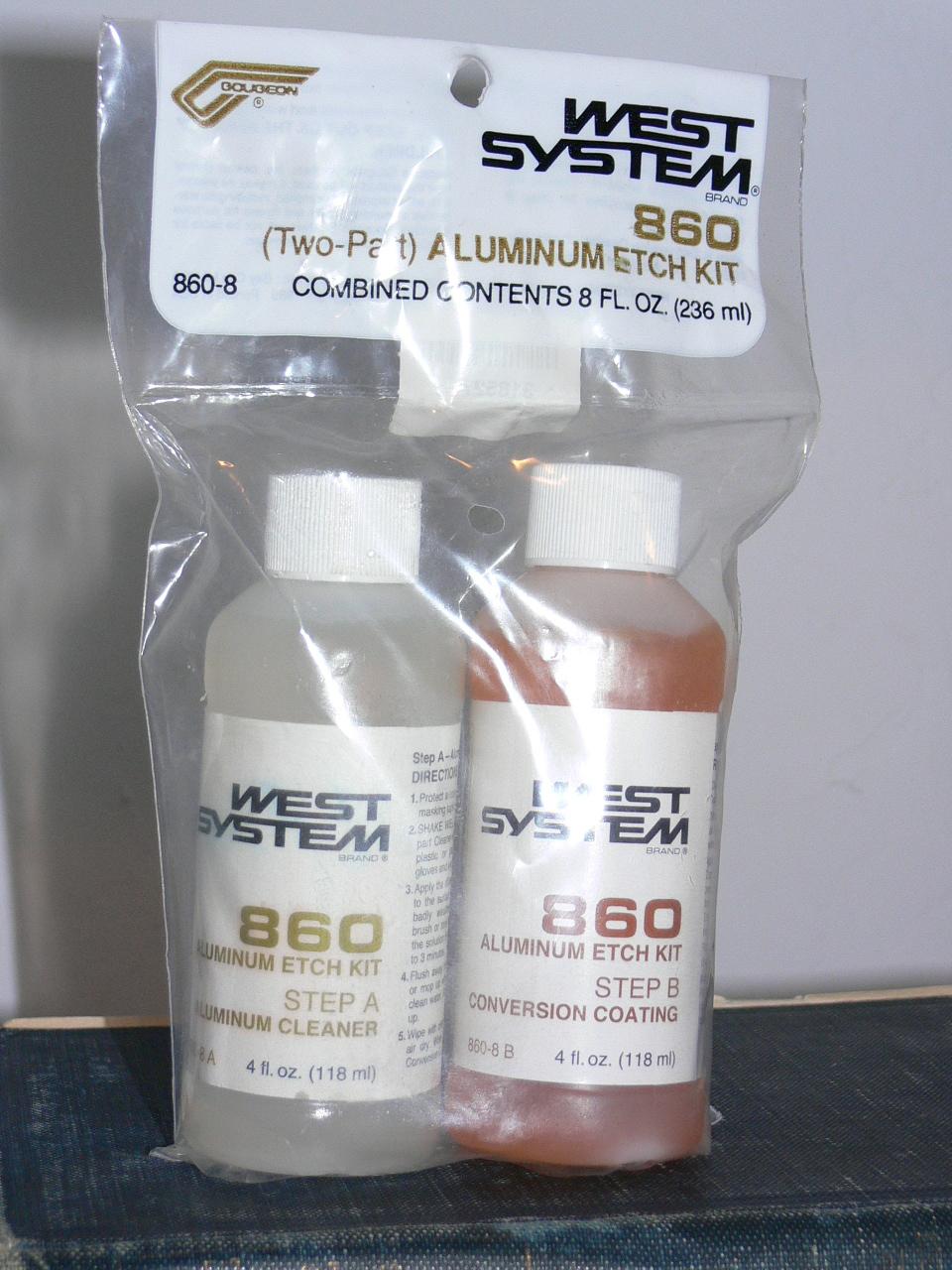
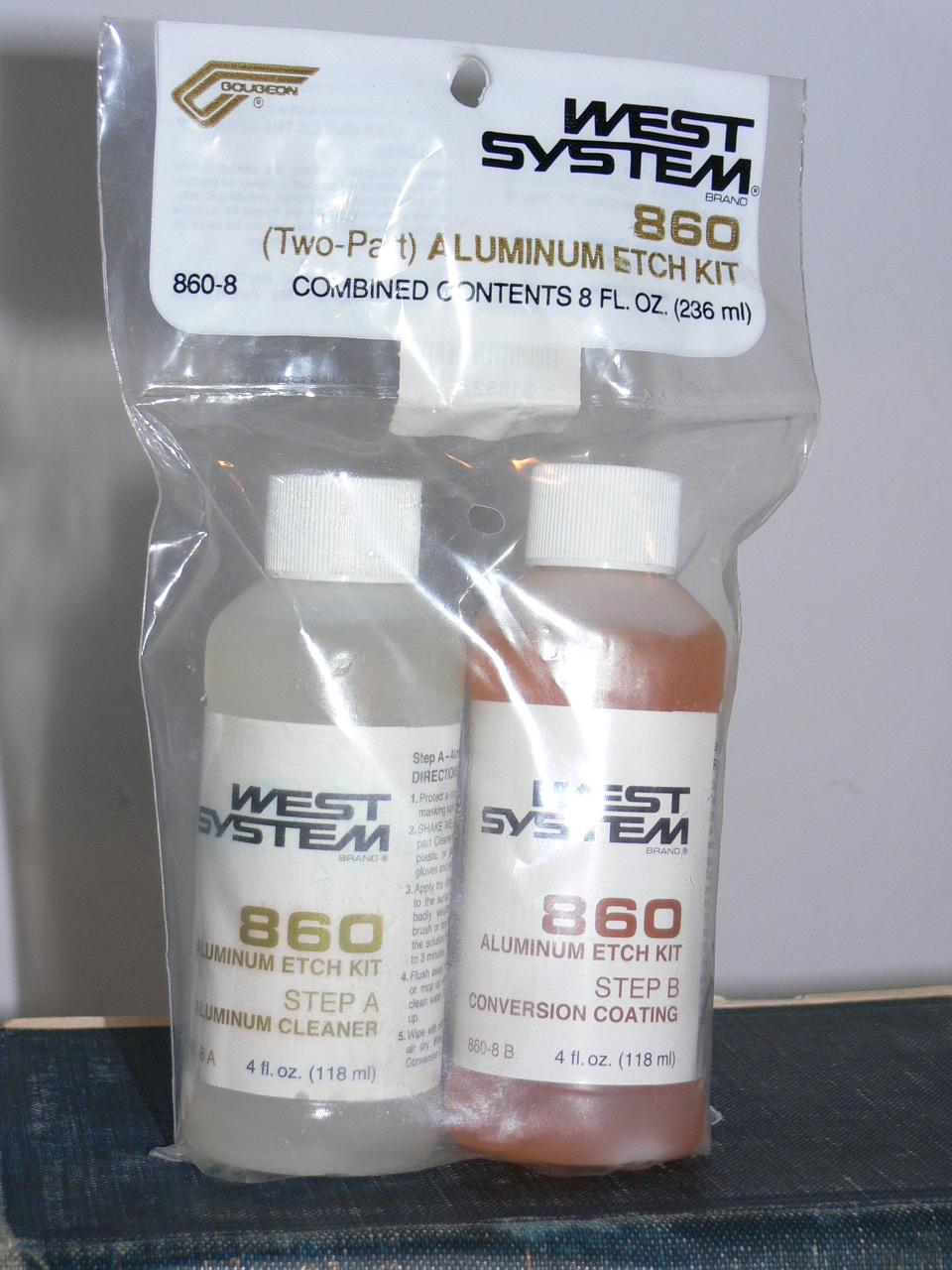
Yes on the JB weld to contour the sealing block area and make sure you use the
conversion treatment on the clean aluminum. Seems like nothing sticks to raw
aluminum very well.
Yes on drilling and taping the sealing block holes. The holes in the block are
the same size as the tap drill so use those as guides. Then drill them out to
clearance size when everything is taped.
You will need to chamfer the end of the SS tubes to get the o-rings installed.
Use a bit of vasoline jelly on the O-ring to help it along.
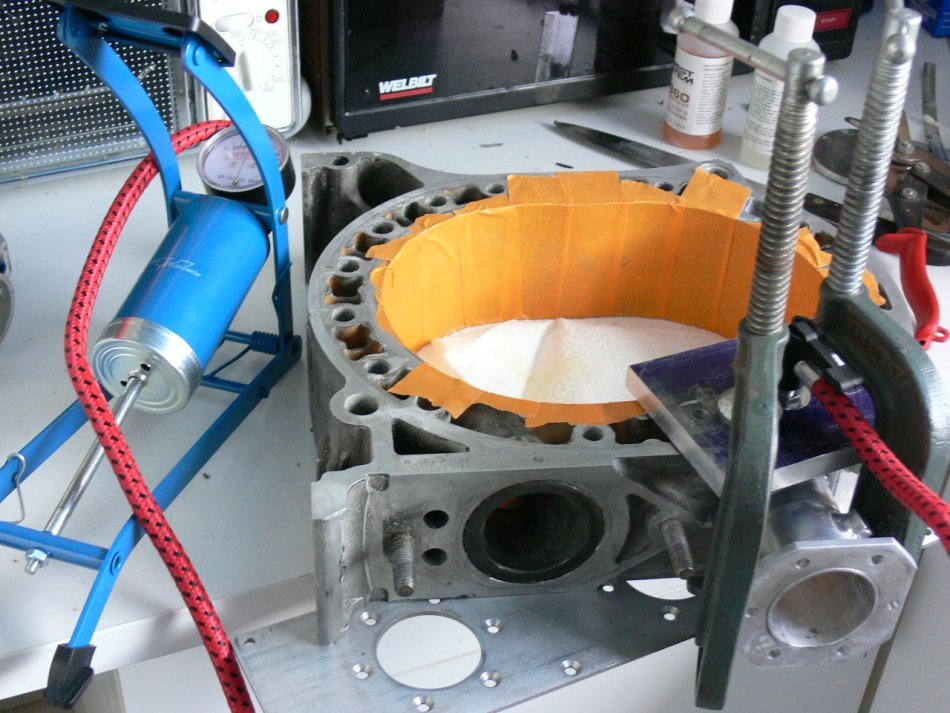
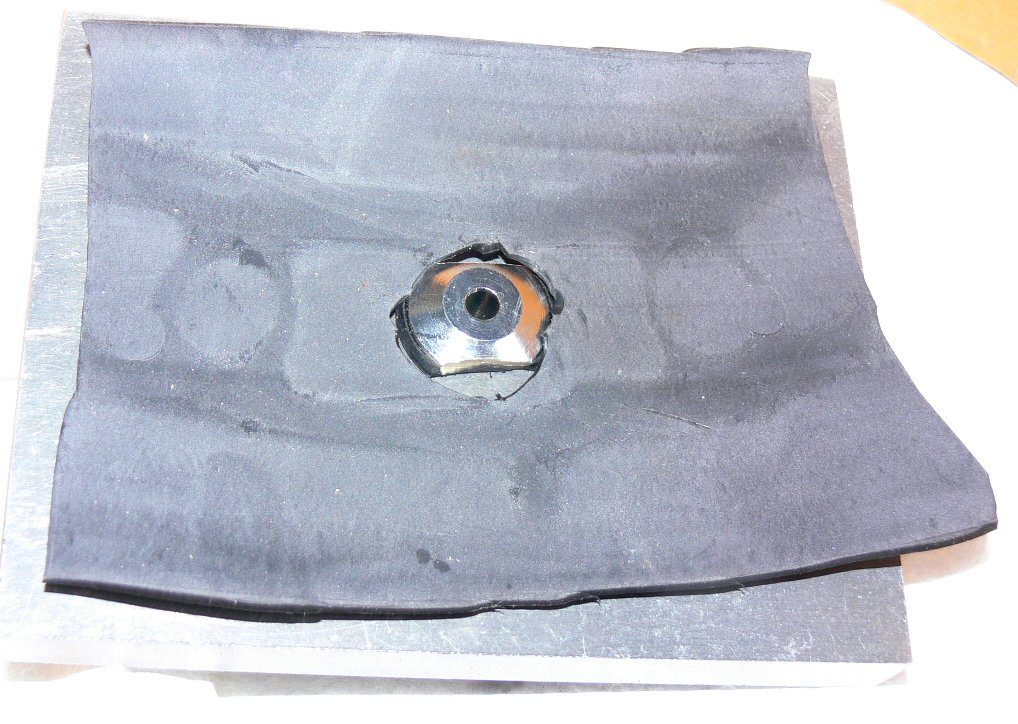
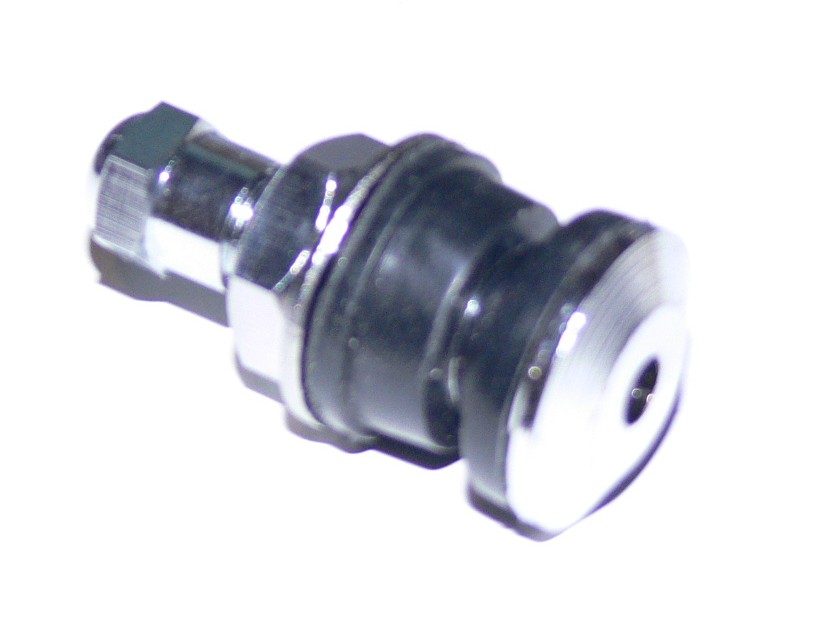
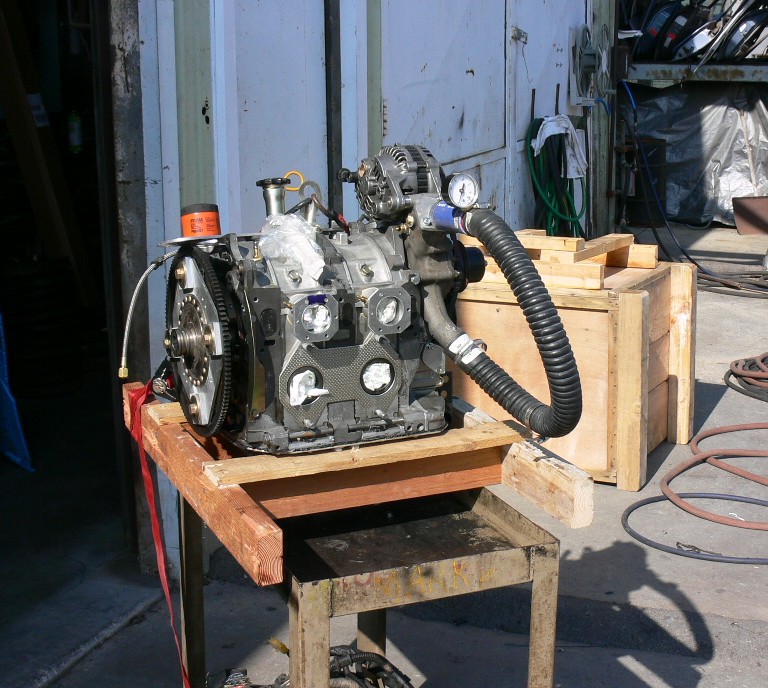
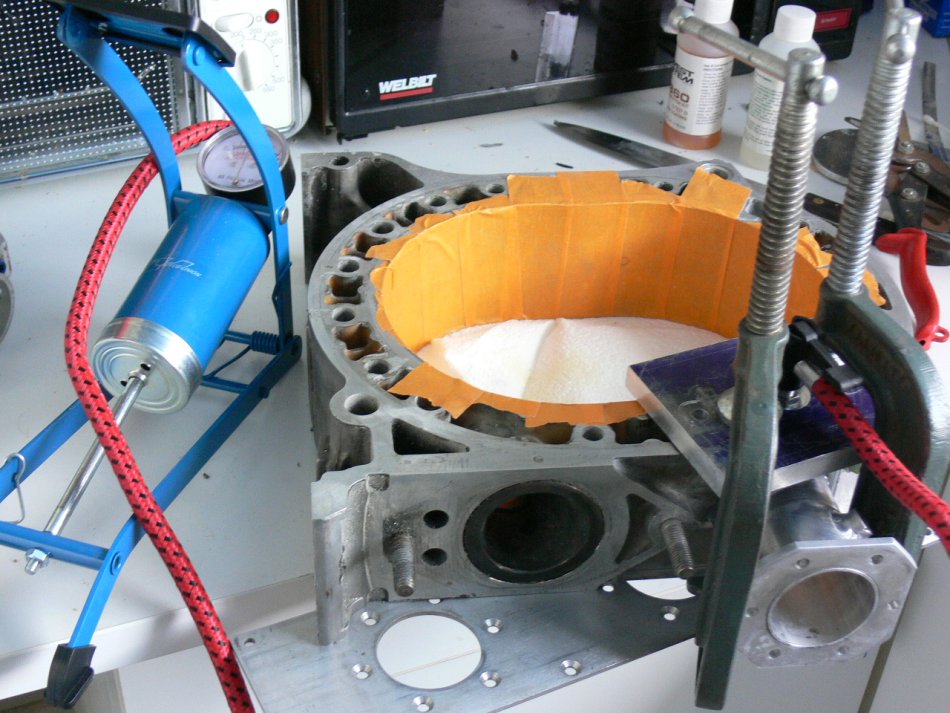
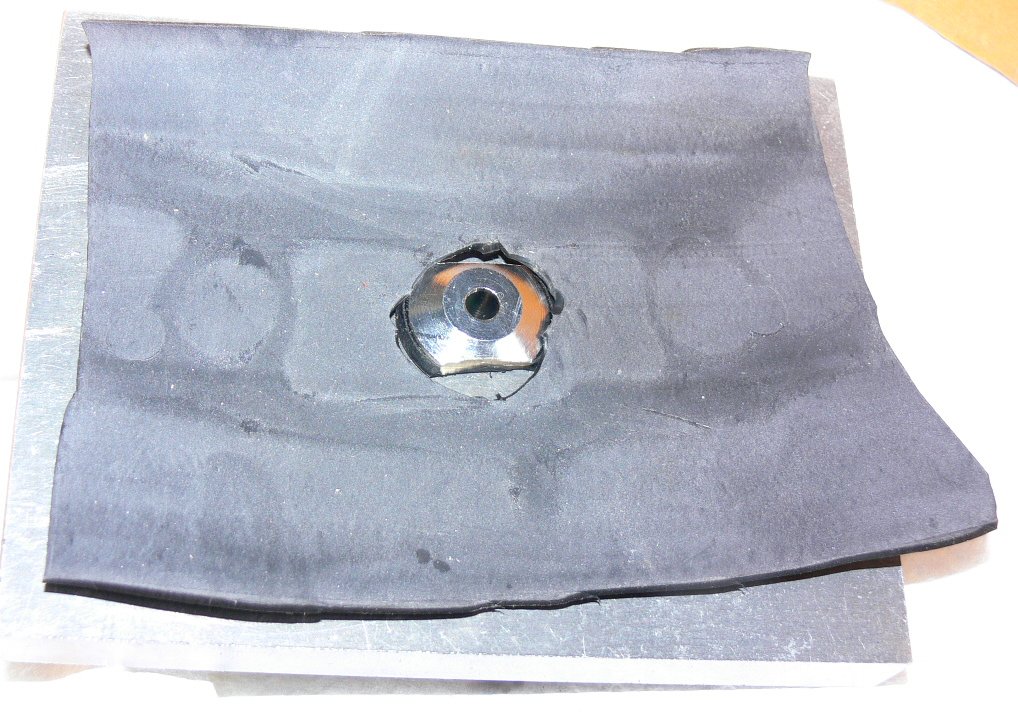
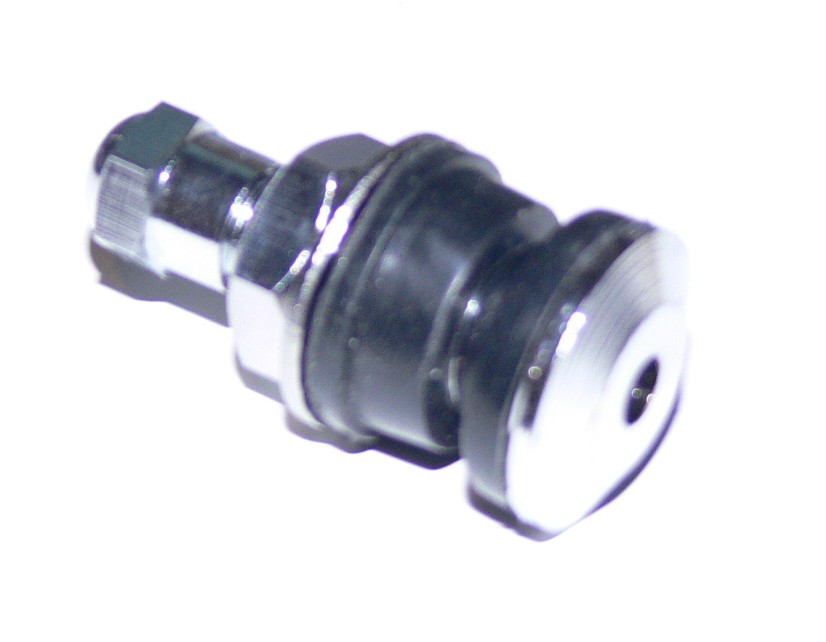
The last thing to do is get an old inner tube or tubeless tire valve and
pressure test the water cavity to 50 psi to see if you have any leaks. You want
to do this before you build the engine as it will ruin your whole day if you
find out it is leaking later.
Here are some pictures on how to do it. I think 1/2 inch plywood would work if
you don't have a metal cutting band saw. On the other hand some guy with a metal
cutting band saw might do it for you or let you borrow his. Some metal shops
will cut the block for you for as little as 5o cents a cut. Industrial Metal
Supply in San Fernando CA will do it and ship anywhere.
Paul Lamar
--
The Rotary Engine NewsLetter. Powered by Linux.
ACRE NL web site.
http://www.rotaryeng.net
Youtube key word UTUBPLEASE
Copyright 1998-2009 All world wide rights reserved.